

When I finally booked a long-awaited trip to Florida, I pictured turquoise water, quiet Gulf sunsets, and breezy drives between palm-lined towns. Instead, I collided with record-breaking tourism, suffocating heat, storms that rearranged itineraries overnight, and moments of fragile beauty that felt like they were constantly at risk. Florida was not what I imagined, but it was far more revealing than any brochure suggested.
Arriving in the Sunshine State at Peak Popularity
Florida today is not the sleepy winter escape of a generation ago. The state welcomed more than 143 million visitors in 2025, a new record that confirmed just how heavily its economy now leans on tourism. I arrived as one more dot in that sea of visitors, stepping off a crowded plane into an airport concourse vibrating with rolling suitcases, theme park T-shirts, and the sound of families negotiating their first rental car of the week.
The numbers were easy to feel, even without seeing a single statistic. At the rental car center, a line snaked past velvet ropes, families huddled over their phones searching for alternate vehicles or shuttle options when compact cars were suddenly reclassified as “unavailable.” Outside, ride-share cars stacked in two hesitant lanes, their drivers toggling between navigation and text messages, trying to thread through unfamiliar airport roads.
On the highway toward Orlando, digital billboards flashed alternating messages: discount tickets to major parks, warnings about severe heat, reminders to hydrate, alerts about possible afternoon storms. The Sunshine State marketing image was still there in the palm trees and bright blue sky, but it was layered with a more complicated reality. Florida was open for business, loudly and relentlessly, and I was just beginning to understand what traveling through that popularity actually feels like on the ground.
I had expected crowds, but I had not understood how crowds could rewrite a trip’s emotional tone. There was an early sense that in Florida, you are rarely alone. The question became whether that energy would feel festive or suffocating.
Theme Parks: Magic, Exhaustion, and Sticker Shock
Like millions of visitors, I started in Orlando, Florida’s engineered capital of escape. The first park morning started before sunrise, with an alarm set for early-entry privileges and a phone full of prebooked reservations. As we joined a tide of people streaming toward the turnstiles, it struck me that the promise here was not just fun, but optimization: timed ride reservations, mobile food orders, route-planning apps, and premium paid passes that promised to trim down wait times.
In practice, the day unfolded as a tug-of-war between delight and fatigue. There were moments that lived up to every childhood expectation: the first glimpse of a castle catching soft morning light, a roller coaster that launched into the sky over a perfectly framed lagoon, a parade that sent children running toward costumed characters as if they had just stepped off a screen. Yet behind each magical beat was a practical calculation about price and patience. Ticket costs, parking fees, and food prices quickly nudged the experience into what felt like a moving target of value.
By midday, heat advisories blinked across the park’s digital boards. The Florida sun, already notorious, felt both stronger and more humid than I expected, turning asphalt pathways into radiating plates. People huddled in sparse patches of shade, faces flushed and damp, clutching water bottles and misting fans. Ride queues spilled into overflow areas, and posted wait times climbed into the triple digits. The carefully choreographed fantasy had a visible breaking point: families negotiating meltdowns, tired grandparents retreating to air-conditioned shops they had no intention of buying from, parents debating whether to purchase another line-skipping add-on or simply accept that some attractions would be missed.
Still, there was genuine joy threaded through the exhaustion. At dusk, when the sun dropped and temperatures softened, the park shifted. Colored lights bounced off the pavement, nighttime shows lit up the sky, and strangers shared small conversations in line about favorite rides and earlier trips. It was here that Florida’s tourism machine, at its most polished and expensive, made sense: not as a simple vacation, but as a major family event that people plan and save for over years. My expectations of effortless fun were replaced by something more layered, equal parts enchantment and endurance.
Beaches Between Paradise and Pressure
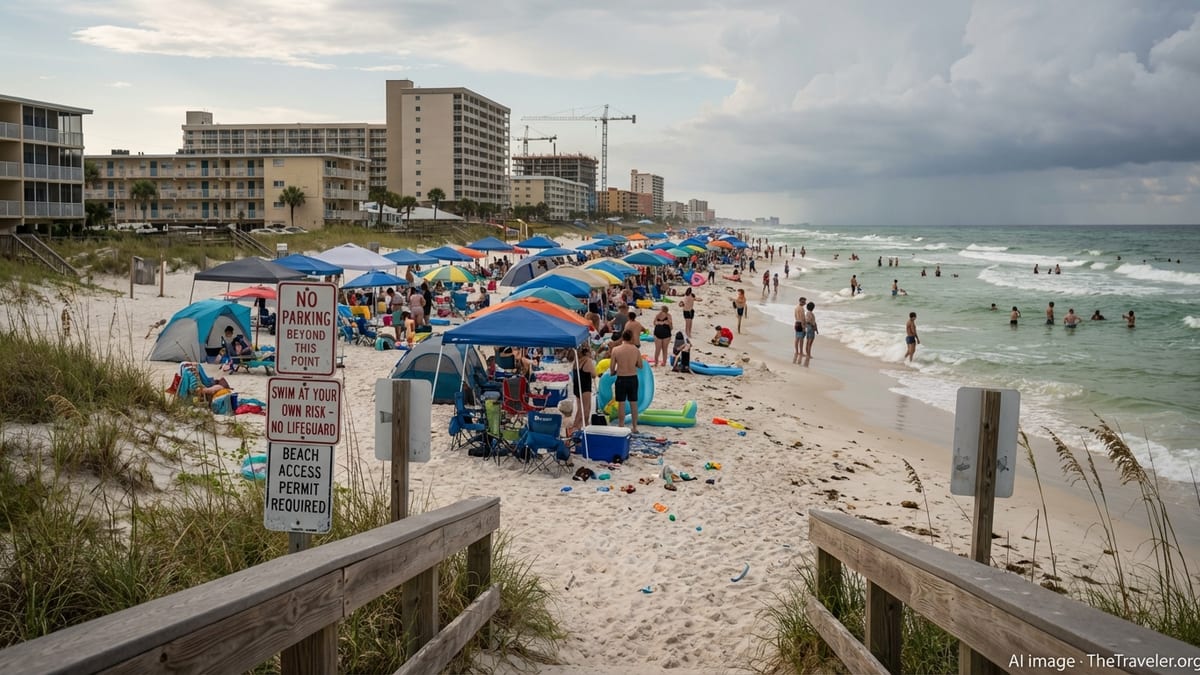
After Orlando, I drove toward the Gulf Coast in search of the “old Florida” escape I had been promised: soft sand, gentle waves, and small independent cafés serving grilled fish under twinkling lights. What I found instead was a shoreline trying to hold its own against the weight of popularity and environmental stress. Parking lots filled by mid-morning. Beach access points spilled over with coolers, tents, and speakers. By the time I carried my chair over the dunes, the sand looked less like a pristine postcard and more like a beach festival that no one had coordinated.
Florida’s beaches are still beautiful, but the veneer of effortless perfection is wearing thin in places. Increased visitation has meant more litter, more pressure on fragile dunes, and more tension between visitors and towns trying to preserve their communities. Some stretches of sand were nearly spotless, the product of constant clean-up and vigilant local ordinances. Others were dotted with cans and plastic utensils left behind by hurried day-trippers. The water itself told its own shifting story: in some areas perfectly clear and turquoise, in others clouded by recent storms or lingering algae blooms that local residents said now appeared more frequently than they used to.
There is also the reality of climate-driven extremes. My visit threaded between late-season storms and unseasonably hot days. News updates from local stations toggled between celebrating record visitor numbers and warning about beach erosion, flood-prone streets, and infrastructure straining under seasonal demand. In one Gulf-side town, a morning walk revealed heavy machinery parked beside the dunes, ready for another round of sand renourishment after recent storms had clawed the shoreline back toward the road.
And yet, there were pockets of quiet that felt almost miraculous. At sunrise, long before day-trippers arrived, the beach was nearly empty. Pelicans skimmed low over calm water, and the only sounds were soft waves and the rustling of sea oats. In those hours, it was easy to understand why Florida’s coastline draws people from around the world. The disconnect lay in how fleeting that serenity could be once the day fully began.
Heat, Storms, and the Emotional Weather of a Trip
Before traveling, I had treated Florida’s weather as a backdrop: sunshine punctuated by quick afternoon showers, a known quantity that barely factored into planning beyond sunscreen and a light rain jacket. On the ground, it felt central to nearly every decision. The state’s subtropical and tropical climate is nothing new, but a combination of record heat and an active storm pattern made the atmosphere feel, at times, like a main character.
Daily forecasts cycled through phrases such as “dangerously hot” and “feels like triple digits,” pushing activities into narrow morning and evening windows. Midday brought not just discomfort but caution: local news anchors reminded viewers about heat-related illnesses, hydration, and the importance of taking breaks in air conditioning. At outdoor attractions, signage urged visitors to drink water frequently and seek shade whenever possible. My own plans shifted constantly, with museum visits and long drives strategically scheduled during the hottest hours, and beach outings compressed into shorter, earlier sessions.
Storms added another dimension. During my stay, a late-season system in the Gulf forced coastal communities to stack sandbags and reconsider outdoor events. Even when the storm ultimately veered away, its ripple effects lingered. Flights in and out of the state saw delays, waterfront restaurants closed for a day to secure patios, and hotel guests swapped information in elevators about possible evacuation routes. It was a sober reminder that in a state so reliant on tourism, weather is not just a talking point but a structural risk that can disrupt jobs, businesses, and long-planned vacations simultaneously.
Emotionally, this created an undercurrent of unease. Enjoying a sunset over the Gulf while watching storm coverage scroll across a bar television creates a cognitive dissonance that is hard to ignore. The trip became a negotiation between savoring the moment and quietly acknowledging that the very landscapes drawing visitors are also increasingly vulnerable to the forces shaping the wider climate.
Hidden Costs, Crowds, and the Human Side of Overtourism
Florida’s tourism success story is often told in celebratory numbers: record visitors, record spending, record occupancy. Experiencing that success at eye level, however, brought a more complex picture into focus. Almost every part of the trip felt more expensive than anticipated, even after budgeting for typical vacation markups. Parking fees stacked onto resort charges, toll roads required constant attention to unfamiliar payment systems, and modest restaurant meals for two frequently matched what I might pay for a special night out at home.
These costs did not exist in isolation. They were entwined with crowds that changed how spaces felt and functioned. Along popular waterfronts, local diners that once catered to year-round residents now seemed calibrated for an endless rotation of short-term visitors. Some staff members were cheerful and welcoming, happy to share tips on quieter side streets and lesser-known parks. Others looked understandably exhausted, cycling through the same questions about reservations, wait times, and menu substitutions with a thin layer of patience stretched over visible fatigue.
Conversations with residents revealed a mixture of gratitude and strain. Tourism brought jobs, business opportunities, and cultural offerings that would be impossible in a smaller, quieter economy. It also brought housing pressures as short-term rentals reshaped neighborhoods, traffic that turned local errands into lengthy endeavors, and seasonal frustrations with visitors who treated communities as temporary playgrounds rather than places where people build their lives. The sense of overtourism that has affected destinations around the world is increasingly part of Florida’s story, too, particularly in coastal and theme-park-centric regions.
As a traveler, it forced me to reconsider my role. Was I supporting local businesses in a sustainable way, or contributing to the very pressures that residents described? Choosing smaller, locally owned accommodations, traveling outside peak holidays, and seeking out lesser-known attractions were small steps, but they made the trip feel more ethical and less extractive. Florida did not match my initial vision of a low-key escape, yet it offered a chance to practice a more considered style of travel.
Discovering a Different Florida in the Quiet Places
For all the energy and intensity of its major destinations, Florida also holds quieter corners that rarely appear in glossy advertising. These were the places that most reshaped my experience, and they emerged only when I was willing to leave the main routes and accept that convenience would not always be part of the package. A detour inland led to small towns where moss-draped oaks shaded historic streets, and cafés served strong coffee to a mix of retirees, local workers, and the occasional curious visitor.
In one state park, far from the coastal rush, a ranger pointed out a boardwalk trail that wound through wetlands alive with bird calls and the subtle movement of hidden wildlife. Here, the crowds thinned to a trickle, and the sounds of traffic faded behind the rustle of palmettos. A posted sign gently reminded visitors to tread lightly, to stay on marked paths, and to respect the delicate habitats that support the state’s biodiversity. It was a clear, if understated, acknowledgment that tourism and conservation must learn to coexist more thoughtfully.
Along lesser-known stretches of river, outfitters rented kayaks and stand-up paddleboards with minimal fuss and a wealth of local advice. Paddling over clear, spring-fed water, I could see fish drifting in the slow current and the intricate patterns of sandy riverbeds below. The pace was the opposite of a theme park queue: no soundtrack, no countdown, just the steady rhythm of paddle strokes and the occasional splash from a turtle sliding off a log.
These experiences did not erase the challenges I had seen elsewhere, but they balanced them. They revealed a Florida that is still nuanced and textured, where natural beauty persists despite pressure and where communities are experimenting with ways to steer tourism toward something more sustainable. It was not the Florida I had pictured when I booked the trip, yet it felt truer to the complex reality of a state living at the intersection of growth, climate, and culture.
The Takeaway
My Florida travel experience diverged sharply from the sun-drenched simplicity I had imagined. Instead of effortless relaxation, I encountered the realities of a destination in high demand: record visitor numbers, inflated prices, heavy traffic, and environmental stress that played out in both subtle and dramatic ways. Theme parks delivered dazzling spectacles layered over logistical puzzles and intense heat. Beaches shimmered between paradise and overcrowding, depending on the hour and the weather. Storms and heat advisories were not background noise, but active forces shaping daily decisions.
Yet disappointment would be the wrong word. The trip was revealing rather than ruinous. It underscored how modern travel often collides with broader forces such as climate change, overtourism, and shifting local economies. Florida became less a personal playground and more a case study in how beloved destinations are evolving under pressure. That shift required letting go of some expectations, and in doing so, it opened space for different kinds of appreciation: for sunrise walks before the crowds, for conversations with residents who shared candid views, and for quiet ecosystems holding their own amid heavy use.
If you are planning a trip to Florida now, it helps to arrive with clear-eyed expectations. The crowds are real, the weather can be intense, and the costs add up quickly. But so, too, are the opportunities for meaningful experiences if you are willing to slow down, step away from the most obvious itineraries, and approach the state with curiosity about its full story, not just its postcard image. My Florida journey was not what I imagined, and in the end, that made it far more instructive than a perfectly frictionless vacation could ever have been.
FAQ
Q1. Is Florida still worth visiting given the record tourist crowds?
Yes, Florida remains worth visiting, but it helps to plan carefully, travel outside peak holidays when possible, and seek out lesser-known areas alongside marquee destinations.
Q2. How can I cope with Florida’s heat and humidity during a trip?
Plan outdoor activities for early morning or evening, take frequent breaks in air conditioning, drink plenty of water, wear light clothing, and listen to local heat advisories.
Q3. Are Florida’s beaches overcrowded everywhere, all the time?
Not everywhere. Popular beaches can be very crowded midday, especially in high season, but arriving early, visiting on weekdays, or exploring smaller towns can offer more space.
Q4. How much should I budget for theme park days in Florida?
Costs vary widely, but tickets, parking, food, and extras add up quickly. Research current prices, add a generous buffer, and expect a full day at a major park to be expensive.
Q5. Is it safe to travel to Florida during hurricane season?
Many people do, but you should monitor forecasts closely, buy flexible tickets and travel insurance, and be ready to adjust plans if storms threaten your destination.
Q6. What are some ways to be a more responsible tourist in Florida?
Respect local rules, support locally owned businesses, avoid littering, stay on marked trails in natural areas, conserve water and energy, and be mindful of residents’ daily lives.
Q7. Can I still find quiet, natural areas in Florida despite the crowds?
Yes. State parks, inland springs, wildlife refuges, and lesser-known rivers often offer calmer experiences, especially outside weekends and major holidays.
Q8. How bad is traffic in Florida’s most popular regions?
Traffic can be heavy around major cities, theme parks, and beach corridors, particularly during rush hours and holidays. Allow extra time and consider staying closer to key sites.
Q9. Are there affordable ways to experience Florida without theme parks?
Yes. Public beaches, state parks, local museums, farmers markets, and small-town festivals can be far more affordable while still offering a strong sense of place.
Q10. When is the best time of year to visit Florida for fewer crowds and milder weather?
Shoulder seasons, such as late fall and early spring outside major holidays, often bring more moderate temperatures and somewhat lighter crowds, though conditions vary by region.