

I went to Duncan, British Columbia, expecting a low-key but character-filled base in the Cowichan Valley: small-town charm, easy access to nature, and enough culture to keep rainy days interesting.
What I actually found was more nuanced. Duncan is not a polished resort town, and it is not the kind of place that bowls you over on arrival. It took time, detours, and a few frustrations before I figured out who this place really works for, and who might be better off staying elsewhere on Vancouver Island.
First Impressions: A Working Town, Not a Postcard
Rolling into Duncan off Highway 1, I did not get the dramatic “wow” moment that some Vancouver Island towns deliver. There is no sweeping harbour view greeting you the way there is in places like Nanaimo or Victoria. Instead, Duncan feels very much like what it is: a small city that services the wider Cowichan Valley, with strip malls along the highway, a compact downtown a few blocks off the main road, and residential streets stretching into North Cowichan. The setting is pretty if you zoom out, with hills and forests in the distance, but the immediate streetscape is unglamorous.
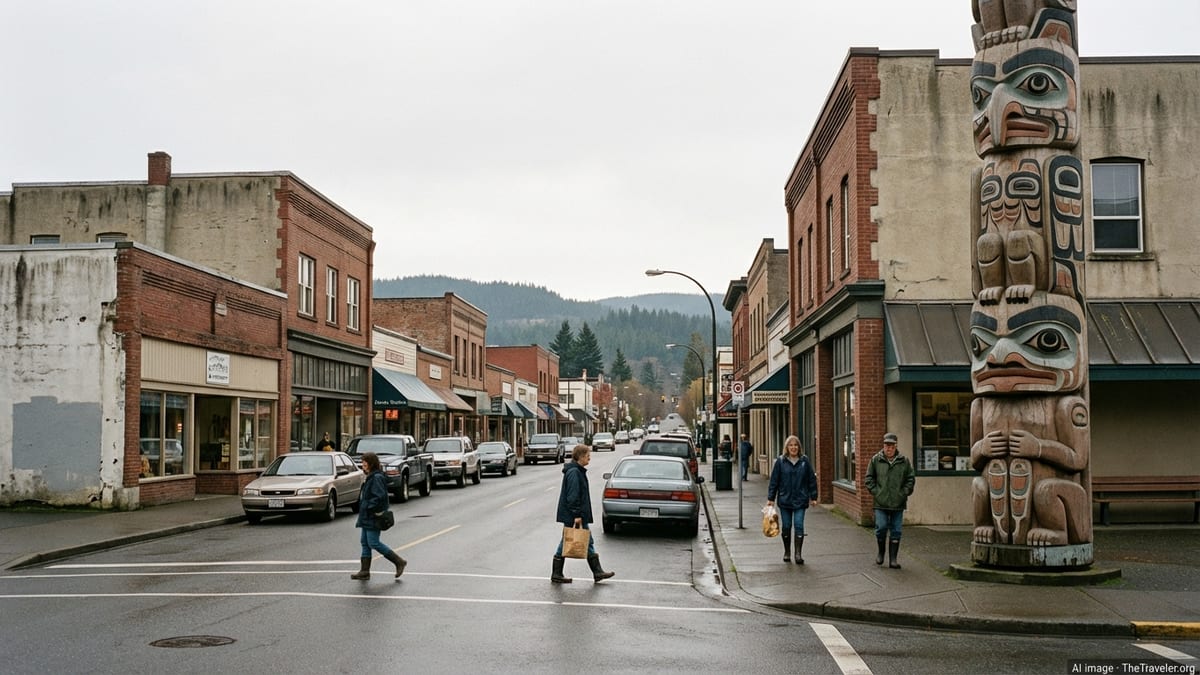
Once I parked and started walking downtown, my impressions softened a bit. The scale is human, the streets are short, and the buildings are a mix of older brick facades and modest newer structures. There are murals, a few cafés trying hard to do something interesting, and of course the famous totem poles scattered through the core. Even so, it felt more like a practical service centre than a destination designed with visitors in mind. If you arrive expecting a picture-perfect heritage town, you are probably going to be underwhelmed at first, as I was.
What I appreciated, though, was that Duncan does not pretend to be something it is not. It is clearly a working community for people who live in the Cowichan Valley, not a stage set for tourists. That authenticity cuts both ways for a visitor: less charm and polish, but also fewer crowds and a more honest sense of place. I had to adjust my expectations away from “quaint getaway” and toward “functional hub with some interesting pockets if you look for them.”
Getting There and Getting Around: Manageable with a Car, Annoying Without
Duncan’s location on southern Vancouver Island is objectively convenient: roughly halfway between Victoria and Nanaimo, about 45 minutes’ drive from each in reasonable traffic. On paper, that makes it an attractive base. In practice, how much you enjoy using Duncan as a hub depends heavily on whether you have your own vehicle. I drove in, which made day trips around the Cowichan Valley easy, but I also tried to understand how it would feel by bus, and that picture is less rosy.
The city sits right on the Trans-Canada Highway, and road access is straightforward. Driving in, I found the main drag a bit congested at peak times, but nothing compared with big-city traffic. What did surprise me was how much of Duncan’s immediate environment is essentially car-oriented. Many restaurants and larger stores cluster in highway-side plazas. Walking between interesting pockets is possible, but you are often crossing wide roads and parking lots. If you are used to more walkable, waterfront-focused communities, this can feel frustrating.
Technically, Duncan is part of a regional transit system that connects to nearby communities and offers options toward Victoria and Nanaimo. In reality, service can be sporadic or disrupted, and planning around bus schedules requires patience and flexibility. During my research and conversations with locals, it was clear that relying solely on transit for exploring wineries, trailheads, or small bays would add a lot of friction to a short trip. If I went back without a car, I would budget extra time, expect some waiting, and possibly base myself closer to Victoria or Nanaimo instead, using Duncan only as a targeted day trip.
Totems, History, and Culture: Meaningful but Not Flashy
Duncan brands itself as the “City of Totems,” and that was one of the main reasons I wanted to stop here instead of just speeding past on Highway 1. The totem pole collection is spread throughout the compact downtown, and walking among them with a printed map felt like the most distinctive thing I did within the city itself. Some poles are in better shape than others, and a few sit in locations that are more practical than picturesque, next to parking lots or along busy streets. Even so, seeing so many carvings in one place, with plaques acknowledging artists and communities, made the walk feel rooted and specific to this part of Vancouver Island.
That said, it is important to recognize the complexity beneath the branding. Duncan is on the traditional lands of the Cowichan Tribes, and the broader valley has a large Indigenous community with deep cultural traditions and ongoing challenges. I went into local museums and read interpretive panels that touched on residential schools, land dispossession, and cultural resilience. The experience was more sobering than “touristy,” and I appreciated that. At the same time, I could not shake the feeling that the totems had been turned into a marketing hook in a way that did not fully match the underlying stories, which are far from simple.
Beyond the totems, there is a modest but worthwhile layer of arts and culture. The local museum is small but informative, especially if you like local history and want context for what you are seeing on the streets. There is also a performing arts centre that hosts visiting orchestras and touring shows, which says a lot about how seriously the region takes culture for its size. I did not specifically plan my visit around a concert, but if I lived nearby, I would. For a short stay, cultural offerings are more of a pleasant bonus than a primary reason to come, and I would not choose Duncan over Victoria if my main aim was galleries and performances.
Nature Access: Great Launchpad, Modest Within City Limits
When I pictured Duncan in my head before arriving, I imagined riverside strolls, lakes on the doorstep, and forest trails starting practically from downtown. The reality is that Duncan itself is more urban than that, with nature-rich experiences starting just beyond the city boundaries. If you are willing to drive 10 to 30 minutes, you have access to a mix of lakes, rivers, and low mountains that can easily fill a few days. If you are hoping to step out of your accommodation and be instantly immersed in wilderness, you might be disappointed.
One of the most distinctive nearby spots is the BC Forest Discovery Centre, a sprawling outdoor museum that tells the story of logging in British Columbia on a large, forested site with heritage equipment and an operational narrow-gauge railway that loops through the property. It is a family-friendly outing more than a deep hike, and some displays feel a bit dated, but I liked how it blended industrial heritage with walking through the woods. It is not cheap if you are on a tight budget, and it will not appeal to everyone, but for me it made for an enjoyable half-day that was different from a standard museum visit.
For actual hiking and viewpoints, I looked to the surrounding hills. Mount Tzouhalem offers well-used trails and broad views over the Cowichan Valley, the Gulf Islands, and even distant coastal mountains on a clear day. The climb is moderate rather than punishing, and the mountain is popular with both hikers and mountain bikers. The flip side of that popularity is that trailheads can feel busy on weekends, and signage is not always crystal clear if you are new to the area. I found myself double-checking my route more than once. Mount Prevost, on the other side of the valley, offers another set of lookouts and a different perspective, but the access roads and unofficial trails require a bit more confidence and planning.
The lakes and wetlands around Duncan, including places like Quamichan and Somenos, are important habitats and pleasant enough for a short stroll or birdwatching stop. They did not, however, feel like destination lakes compared with more dramatic spots elsewhere on Vancouver Island. Shorelines can be limited by private property, and water quality issues have been a concern at times. I enjoyed the calm, open feel of the countryside and the glimpses of water and farmland, but if your image of Vancouver Island is rugged coastline and wilderness beaches, you will not find that edge-of-the-world sensation here.
Food, Wine, and Everyday Vibes
One area where Duncan and the greater Cowichan Valley impressed me more than I expected was food and drink. The town itself has a handful of independent cafés, bakeries, and restaurants that try to punch above their weight, and I did have some genuinely good meals. It is not an endless parade of cutting-edge spots, but for a place this size, the variety is respectable. I found decent coffee, better-than-average pub fare, and a couple of dinner options that focused on local ingredients without being pretentious.
What really elevates the experience, though, is using Duncan as a starting point to explore the valley’s wineries, cideries, and farm-based producers. Within short driving distance, you can visit small vineyards, taste local wines and ciders, and pass roadside stands selling seasonal produce. The atmosphere felt relaxed and slightly scruffy in a good way, far from the more choreographed wine regions elsewhere. At the same time, it takes some planning. Tasting room hours can be limited, and not every place is open year-round, so I had to be flexible and accept that some stops would not work out on the day I wanted.
In terms of everyday atmosphere, Duncan feels grounded and real. You see people running errands, kids going to sports practices, and elders chatting in cafés. There is a visible Indigenous presence, a mix of incomes, and some social challenges, from visible poverty to substance use, especially in certain downtown blocks. I never felt unsafe, but I also did not feel like I was moving through a curated, tourist-only bubble. If you are used to resort towns where visitors are shielded from local realities, Duncan can feel a bit raw at times, and I think that is both one of its strengths and one of the reasons some travellers do not immediately warm to it.
Accommodation and Trip Logistics: Tradeoffs and Mild Frustrations
Finding a place to stay in or around Duncan required more compromise than I was expecting. The city does not have a dense cluster of boutique hotels or waterfront inns, and the options lean toward practical motels, basic hotels near the highway, and scattered vacation rentals. Prices were not exactly low, especially in high season, which made it feel like I was paying near-resort rates for non-resort surroundings. I ended up in a mid-range hotel that was clean and functional but entirely unmemorable, with a view of parking lots and traffic rather than forests or water.
If I were to repeat the trip, I would probably look harder at staying just outside town, perhaps on a small farmstay, near a lake, or at a rural bed and breakfast, even if it meant a bit more driving into Duncan for errands. That way I could enjoy the valley’s natural setting more directly at the start and end of each day, instead of shutting my curtains on a highway strip. The catch is that rural stays often book up quickly in peak months, and you need to plan ahead. This is not the kind of destination where you can always roll in last minute and expect the perfect lodging to be available.
Day-to-day logistics in Duncan are manageable but occasionally exasperating. The downtown is compact and walkable, but as soon as you need groceries, outdoor gear, or specific services, you are back in the car heading to plaza-style developments. Driving through town involves a fair number of traffic lights and slower speed limits, which makes everything feel a bit more drawn out than the distances on the map suggest. None of this is a trip-killer, but it did chip away at the carefree feeling I look for on a short vacation.
How Duncan Compares to Other Vancouver Island Bases
A question I kept asking myself while I was there was simple: if I had limited time on Vancouver Island, would I choose to stay in Duncan again, or would I base myself elsewhere and just visit for the day? The answer depends heavily on what you want out of your trip. Duncan’s strengths lie in its central position within the Cowichan Valley, its authenticity as a lived-in community, and its access to quieter, less touristy corners of the island. It does not compete on waterfront drama or big-ticket attractions.
Compared with Victoria, Duncan offers far fewer restaurants, museums, and historic sites. You do not get the grand harbour, the walkable downtown concentrating most of what you might want to see, or the density of tour options. On the other hand, you also do not get cruise-ship crowds or the same level of tourist pricing. I spent less time weaving through other visitors and more time sharing space with locals, which I appreciated, but I missed the architectural beauty and easily accessible coastal walks that Victoria provides.
Against Nanaimo, Duncan feels smaller and less oriented around the ocean. Nanaimo is hardly a glamorous city, but it does have an extensive waterfront, a harbour with seaplanes and ferries coming and going, and some solid urban hiking opportunities. Duncan, by contrast, looks inward toward the valley’s farms, forests, and lakes. If your main image of Vancouver Island travel is ferries, sea air, and rocky shorelines, Duncan will be a sideways step. If you are more interested in rural landscapes, wineries, and low-key trail systems, then basing in Duncan or nearby makes more sense.
Within the Cowichan region itself, other small communities like Cowichan Bay or Maple Bay arguably offer more inherently scenic settings, with direct water views and a tighter cluster of visitor-friendly businesses. I found Duncan more practical than charming, but it works as the place you pass through for groceries, transit connections, and indoor activities. In some ways, it made more sense to treat Duncan as a functional anchor and spend my peak daylight hours elsewhere in the valley.
The Takeaway: Who Duncan Is Worth It For
By the time I left Duncan, my opinion had settled into a measured middle ground. I did not fall in love with the city, but I also did not regret spending time there. The visit made more sense once I stopped holding Duncan to the standards of a resort town and started appreciating it as a low-key, working hub situated in a rich landscape. There were moments of frustration, especially around car dependence, unremarkable accommodation options, and the gap between the romantic idea of a “valley town” and the reality of strip malls and traffic lights. There were also moments of quiet satisfaction: sipping coffee on a calm side street, tracing the stories on totem poles, driving a few minutes and finding myself on a hilltop looking out over fields, forests, and islands.
If you are a first-time visitor to Vancouver Island with only a few days, I would not make Duncan your primary base. You will get more concentrated impact from staying in Victoria or near one of the island’s more dramatic coastal areas, then dropping into Duncan for a focused half-day: see the totems, visit the local museum, maybe pair it with a winery or two and a hike nearby. Duncan works better as a piece of a broader itinerary than as a standalone destination.
However, if you are on a longer trip, have your own vehicle, and actually enjoy exploring in a slower, more everyday setting, Duncan can make sense. It suits travellers who like to string together small, unspectacular experiences rather than chase a single must-see icon, who appreciate local history and Indigenous presence, and who do not mind that the “wow” moments happen just outside town rather than on its main street. Under those conditions, Duncan is worth your time, not because it will blow you away, but because it offers a more grounded, less polished slice of Vancouver Island life.
FAQ
Q1. Is Duncan, BC worth visiting on a short Vancouver Island trip?
If you only have a few days, I would treat Duncan as a half-day stop rather than a base, combining a look at the totems with a nearby hike or winery.
Q2. Is Duncan a good place to stay without a car?
Personally, I found Duncan much better suited to visitors with a car. Transit exists but is limited for easily reaching trailheads, wineries, and lakes.
Q3. How many days should I spend in Duncan and the Cowichan Valley?
I would give the immediate Duncan area one full day, and then a few extra days in the wider valley if you enjoy hiking, wine tasting, and rural drives.
Q4. Are the totem poles in Duncan really worth a special trip?
The totem walk is distinctive and meaningful, but for me it worked best as part of a broader day in the area rather than the sole reason to come.
Q5. What kind of nature can I access easily from Duncan?
From Duncan you can reach low mountains with viewpoints, forested trails, and valley lakes within short drives, but little of it is right in the city itself.
Q6. How does Duncan compare to Victoria for first-time visitors?
Victoria offers a denser mix of sights, coastal scenery, and restaurants. Duncan feels more like a working hub with pockets of interest and easier access to farmland.
Q7. Is Duncan safe to walk around as a visitor?
I felt generally safe walking downtown during the day, though some blocks show visible social challenges. Staying aware of your surroundings is sensible.
Q8. What is the accommodation situation like in Duncan?
Expect practical motels, basic hotels, and a few rentals rather than boutique stays. Rural options nearby can be more atmospheric but require planning ahead.
Q9. Is Duncan a good base for exploring wineries and cideries?
Yes, Duncan works well as a central base for the valley’s wineries and cideries, provided you have a car and check opening hours before visiting.
Q10. Who will enjoy Duncan the most?
In my experience, Duncan suits travellers who prefer slow, everyday local life, road trips, and modest hikes over polished resort experiences and packed itineraries.