

I landed in Kuala Lumpur expecting another variation on the Southeast Asia stories I had heard for years: backpacker bars, cheap massages, sunset parties and the same well-worn circuit stitched together by budget flights. Instead, traveling across Malaysia in 2025 and early 2026 quietly dismantled almost every assumption I carried about the region. From city sidewalks to remote Bornean rainforests, Malaysia offered a different lens on Southeast Asia, one grounded in everyday multicultural life, subtler tourism and a more nuanced conversation about nature and growth. By the time I left, it had changed not just how I saw the country, but how I understood the region as a whole.
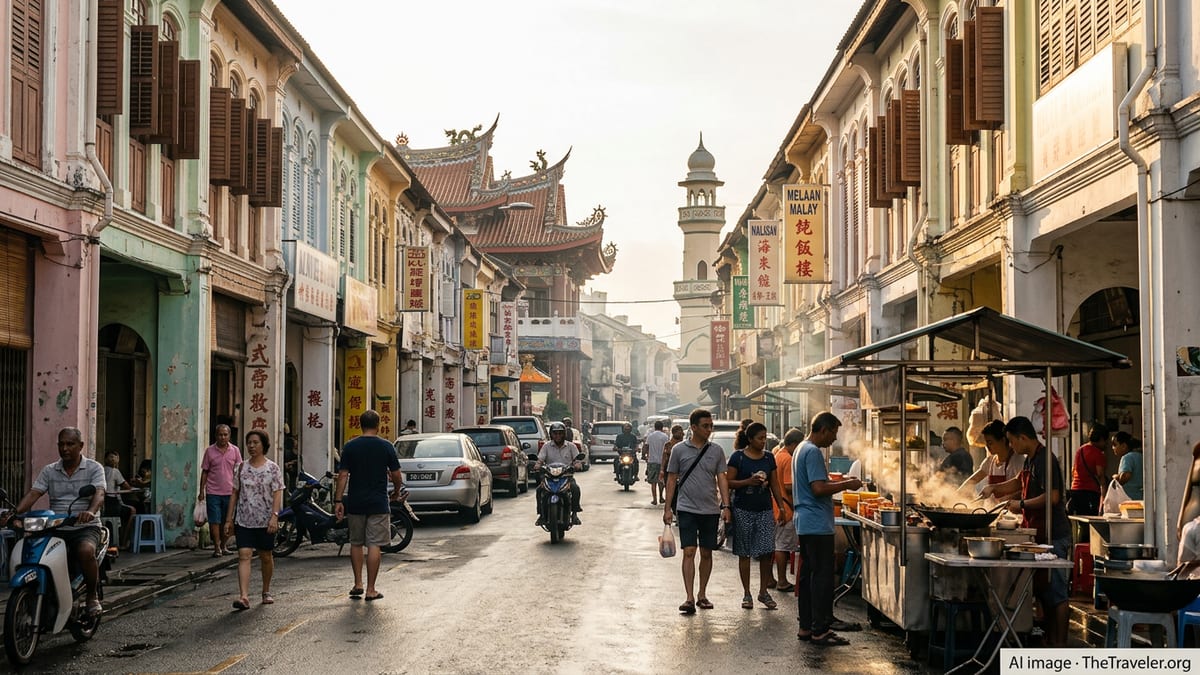
Arriving in Kuala Lumpur: First Impressions That Defied the Script
On paper, Kuala Lumpur seems like a familiar Southeast Asian capital. It has an international airport efficient enough to rival many in Europe, a skyline punctured by the Petronas Twin Towers and climate-controlled malls the size of small towns. Yet stepping out of the train at KL Sentral, what struck me was not chaos or sensory overload, but an easy, ordered rhythm. The trains ran on time, signs appeared in Malay, English, Chinese and Tamil, and the crowd around me looked like a snapshot of modern Malaysia: hijabs and business suits, sneakers and saris, tourists slipping almost seamlessly into the flow of commuters.
Malaysia has rapidly climbed the tourism rankings in Southeast Asia in the last few years, but the energy on the streets in early 2026 felt different from the intense, often hyper-commercial buzz of some neighboring capitals. Visitors were present but not dominant. I watched families from across Asia pose for photos at Merdeka Square, while office workers cut briskly across the frame, unconcerned with being part of any postcard. I realised quickly that Kuala Lumpur is not a city arranged purely around the whims of foreign visitors. It is, first and foremost, a functioning capital whose tourism appeal rests on the way everyday life unfolds in public.
That sense of normalcy had a profound effect on my expectations for the rest of the country. Instead of trying to decode Malaysia through the usual tourist lens, I found myself paying attention to the small interactions: the way a food court in a mall could hold a microcosm of Malaysian society, or how a conversation about traffic with a ride-hailing driver would shift naturally into discussions of language, migration and religion. It made me realise that seeing Southeast Asia primarily as a playground for outsiders was an incomplete, even misleading, frame.
Multicultural Malaysia and a Different Story of “Asia”
Before this trip, I thought I understood the idea of a multicultural Southeast Asia. I had visited cities where Chinese shrines stood next to colonial churches, where Muslim call to prayer overlapped with Buddhist chants. Yet Malaysia made that diversity feel less like an exotic visual collage and more like a lived, negotiated reality. In Kuala Lumpur, Penang and smaller cities in between, I watched how Malay, Chinese, Indian and many other communities share the same urban space in ways that are both harmonious and occasionally tense, but always present.
In Brickfields, the city’s Little India, the scent of jasmine and spices drifted out of shops playing Tamil songs, while at nearby Masjid Jamek the afternoon prayer call echoed through a forest of office towers. A short train ride away in Petaling Street, Cantonese and Hokkien mingled with English and Malay over cups of kopi and bowls of noodle soup. This wasn’t the kind of diversity marketed as a festival, packaged neatly for visitors on a single day of the year. It was weekday life, woven into the commute, the lunch break, the grocery run.
That lived plurality forced me to question the shorthand images we apply to Southeast Asia: the “Buddhist temples,” the “night markets,” the “island getaways.” Malaysia reminded me that the region cannot be captured by a single religious symbol or dominant cultural story. It is Muslim-majority yet home to some of Asia’s most intricate Chinese clan houses and Hindu temples. It is shaped by indigenous cultures from Borneo to the peninsula, whose histories are often glossed over in tourist brochures. Experiencing that complexity in transit lines and food courts rather than curated shows changed the way I looked at every other country on my Southeast Asia map.
Food, Streets and the Quiet Power of Everyday Tourism
If there is one arena where Malaysia’s diversity becomes instantly tangible, it is at the table. In Kuala Lumpur, I began most days at a mamak eatery, where roti canai flipped on hot griddles shared menu space with nasi lemak wrapped in banana leaves. Across from me, office workers ordered teh tarik while students debated whether to go for Indian vegetarian, Malay rice dishes or Chinese porridge. No restaurant sign explained this to visitors as a cultural experience. It was simply breakfast.
Penang, where I traveled next, made this even clearer. George Town’s street food scene is a major draw for domestic and international visitors, and in recent years the city has also started appearing in international guides that spotlight its growing reputation for quality and value. Yet even in famous hawker centres, the majority of diners were locals or Malaysians from other states. I queued beside families who had driven up for the weekend, and grandparents who had been eating at the same stall for decades. The tourism economy certainly existed, but it felt layered over something far older and more grounded.
That balance between visitor interest and everyday habit reshaped my understanding of what sustainable tourism can look like in Southeast Asia. Instead of chasing the newest “secret spot” or “Instagram-famous” cafe, Malaysia nudged me toward experiences that already held meaning for the people who lived there. It made me more sceptical of travel patterns that demand constant novelty and visual spectacle, often at the expense of local routines. In Malaysia, the simple act of joining the breakfast line felt like a more respectful and revealing way to know the country.
Penang, Heritage and Rethinking Colonial Narratives
Walking through George Town, Penang’s UNESCO-listed historic centre, I expected the usual pattern of heritage tourism: restored shophouses polished to perfection, European architecture foregrounded, local communities gently pushed to the margins. What I found instead was a more layered conversation about history that complicated both the colonial and postcolonial narratives I had heard elsewhere in Southeast Asia.
The streets around Armenian, Love Lane and Chulia threw together Chinese clan houses, Islamic mosques, Indian temples and British-era civic buildings in a way that resisted any tidy storyline. Murals and street art, some playful and others more pointed, added yet another voice to the cityscape. Instead of a single heritage “brand,” Penang felt like a palimpsest, with each era partially visible under the next. Cafes and boutique hotels had certainly multiplied, and rental prices had risen, but small workshops, family businesses and incense-filled shrines still anchored many streets.
Spending time there shifted how I looked at heritage-driven tourism around the region. Penang has attracted international attention for its food and architecture, but the city also wrestles openly with questions that many Southeast Asian destinations face less publicly: How do you preserve living culture when historic districts become global destinations? How do you keep communities in place when property values surge? As a visitor, those questions forced me to see the polished side of heritage tourism not as a benign aesthetic, but as a political and economic process with real consequences for residents.
Borneo, Wildlife and a New Understanding of “Paradise”
It was on the island of Borneo, in the Malaysian states of Sabah and Sarawak, that my understanding of Southeast Asia shifted most dramatically. I arrived with a familiar image in mind: boundless rainforest, charismatic wildlife and a sense of remote wilderness untouched by modern pressures. The reality, as I soon learned, was more complex and instructive.
Sabah’s protected areas, run by conservation-focused bodies, have become models for balancing visitor access with the need to safeguard ecosystems. At the same time, the approach to ecotourism here is changing. In recent years, state authorities and tourism boards have highlighted trail upgrades, visitor facilities and partnerships with conservation organisations not simply as conveniences, but as part of a broader effort to tell a more complete story about Borneo’s past and future. Guided walks began not with promises of guaranteed sightings, but with quietly delivered context about habitat loss, community involvement and the limits of tourism as a conservation tool.
Visiting sanctuaries and reserves, I felt my own expectations of “wild Asia” being gently challenged. Rangers and guides talked about the long-term work of protecting orangutans, sun bears and hornbills in a landscape shaped by logging, agriculture and climate change. They spoke about reforestation projects, tourism-linked community funds and the importance of steering visitors away from exploitative wildlife encounters. Instead of the escapist paradise often promised in brochures, Borneo presented itself as a place where tourism, conservation and livelihoods intersect in complicated, evolving ways.
That experience altered how I looked at national parks and wildlife tours throughout Southeast Asia. What had once felt like a simple trade-off between seeing rare animals and supporting local jobs now appeared as a delicate negotiation that demanded more from travelers: more patience, more willingness to accept uncertainty, and more humility about our role in fragile ecosystems.
Community, Responsibility and the Future of Travel in the Region
Another way Malaysia reframed my view of Southeast Asia was in how explicitly many actors talk about responsible tourism. In Sarawak, partnerships between tourism authorities and environmental organisations aim to link festivals, cultural attractions and nature-based tourism with broader goals like reforestation and community development. In Sabah, local and national investments in trails and facilities are increasingly framed around visitor management and education, not just promotion.
On the ground, I saw this in small details. Guides emphasised staying on designated paths and limiting noise near nesting sites. Community-run homestays posted clear guidelines about water and energy use, and about cultural protocols. Operators proudly mentioned awards for responsible tourism, not as marketing slogans but as evidence that a different model of growth is possible. Even in urban settings, there was a noticeable push toward public transport and walkable neighbourhoods, telling a quieter story about sustainable mobility that tourists could easily miss if they moved only by private car.
These experiences made me reconsider how I evaluate destinations across Southeast Asia. For years, the regional conversation about overtourism has focused on the most crowded beaches and cities. Malaysia, by contrast, seemed to be quietly asking a different question: rather than simply managing volume, what kind of tourism is the region trying to cultivate? As a traveler, that question followed me into every decision, from which tours I booked to how long I stayed in one place.
Perhaps most importantly, Malaysia highlighted the role of domestic and regional travelers in shaping tourism futures. With significant numbers of visitors coming from neighbouring countries and within Malaysia itself, the tourism ecosystem felt less dependent on volatile long-haul markets. It offered a reminder that Southeast Asia is not just a destination for outsiders, but a network of journeys made by people within the region, for reasons that go far beyond vacation.
Safety, Nuance and Challenging Single Stories of Southeast Asia
Conversations about safety, especially for solo and female travelers, are unavoidable when discussing Southeast Asia. Before arriving in Malaysia, many of the questions I received from friends centred on concerns about crime, harassment or political instability. Online, opinions ranged widely, but a recurring theme in recent years has been that Malaysia feels comparatively calm and manageable, particularly in major cities and established tourist areas.
My own experience aligned with that broader impression. In Kuala Lumpur, Penang and Bornean gateway towns, I moved around largely on foot or by public transport, returning to my accommodation late in the evening without incident. Local women I spoke with were quick to point out that, as in any country, there are legitimate concerns and that experiences can vary sharply depending on identity, location and circumstance. But they also pushed back against narratives that flatten Southeast Asia into a monolithic zone of risk or danger for visitors.
This nuance became one of the most valuable lessons I took from my time in Malaysia. It reminded me that regional reputations are often built on narrow anecdotal evidence, amplified by social media and headline-driven news cycles. Seeing how Malaysians themselves travel, discuss safety and negotiate public space gave me a more grounded framework for comparing experiences across borders. Instead of asking whether a country is safe or unsafe, I found myself asking: safe for whom, where, and under what conditions?
That shift in questioning has changed the way I read travel advice for the whole of Southeast Asia. Malaysia became a case study in why visitors must balance caution with curiosity, and why listening to a diverse range of local voices is essential before drawing conclusions about any destination.
The Takeaway
By the end of my journey, it was clear that Malaysia had offered more than a memorable itinerary. It had quietly rewritten my mental map of Southeast Asia. Instead of a region defined primarily by outsider expectations and hyper-visible hotspots, I began to see a complex web of societies negotiating questions of identity, development, environment and belonging in ways that do not always make international headlines.
Malaysia showed me a version of Southeast Asia where tourism often follows everyday life rather than leading it, where multiculturalism is lived in school canteens and commuter trains, and where some of the most important stories unfold in the tension between conservation and livelihood, heritage and gentrification, convenience and responsibility. It demonstrated that a country can grow its visitor numbers while still asking hard questions about what kind of tourism it wants, and who ultimately benefits.
For travelers, the lesson is both simple and challenging. To understand Southeast Asia more deeply, we have to move beyond the most photographed vistas and loudest narratives. We need to pay attention to the infrastructure that makes trips possible, the policies that shape who can move where, and the quiet work of communities who welcome visitors into spaces that are first and foremost their homes. In Malaysia, I found a place that invites that kind of attention, and in doing so, it changed not just how I see one country, but how I hope to travel the region in the years ahead.
FAQ
Q1. Is Malaysia a good first country to visit in Southeast Asia?
Yes. Malaysia is often recommended as a first stop in Southeast Asia because of its reliable infrastructure, widespread English use, diverse yet approachable food culture and relatively straightforward entry formalities for many nationalities.
Q2. How many days should I spend in Malaysia to get a sense of the country?
For a first trip, 10 to 14 days is usually enough to experience Kuala Lumpur, Penang and either a highlands or island area. Adding Borneo or more remote regions will require at least an extra week.
Q3. Is Malaysia safe for solo and female travelers?
Many solo and female travelers report feeling comfortable in Malaysia, particularly in larger cities and well-established tourist areas. Normal urban precautions apply, and it is wise to research neighbourhoods, respect local norms and stay informed about current conditions.
Q4. How does Malaysia compare to other Southeast Asian countries for costs?
Malaysia is generally affordable by global standards, often sitting between some of the region’s cheapest backpacker destinations and its more expensive city-states. Street food, local transport and mid-range accommodation usually offer good value.
Q5. What makes Malaysia different from its neighbors culturally?
Malaysia’s mix of Malay, Chinese, Indian and numerous indigenous cultures gives it a distinctive character. This diversity is visible not only in festivals and religious sites, but also in language, food, schooling and everyday social life.
Q6. Do I need to book wildlife and ecotourism experiences in Borneo far in advance?
For popular wildlife areas and peak travel periods, advance booking is strongly advised. Responsible operators often limit group sizes and work with protected areas that control daily visitor numbers, so last-minute availability can be limited.
Q7. What is the best time of year to travel around Malaysia?
Malaysia has a tropical climate, so warm temperatures are common year-round. Rainfall patterns vary by region, with some coasts and Borneo experiencing heavier monsoon seasons. Checking recent local forecasts and regional weather patterns can help fine-tune timing.
Q8. Is it easy to get around Malaysia without renting a car?
Yes. Major cities like Kuala Lumpur and Penang have usable public transport systems, and intercity travel is supported by buses, trains and domestic flights. In more rural or island areas, transfers may rely on pre-arranged vans or boats, but visitors can still manage without driving.
Q9. How can travelers support more responsible tourism in Malaysia?
Travelers can choose locally owned accommodations and operators, respect wildlife viewing guidelines, minimise waste, learn basic local phrases and spend time in smaller cities and rural areas that welcome visitors but receive fewer tour groups.
Q10. Do I need to speak Malay to travel comfortably in Malaysia?
No. Many Malaysians speak conversational English, particularly in urban and tourist areas. Learning a few basic Malay phrases is appreciated and can deepen interactions, but it is not essential for most travelers.