

More news on this day
Myanmar Airways has inaugurated a new twice-weekly direct service between Yangon and Changsha, creating a faster air bridge between Myanmar and central China that industry observers say will catalyze tourism, trade and people-to-people exchanges along the China–Myanmar corridor.
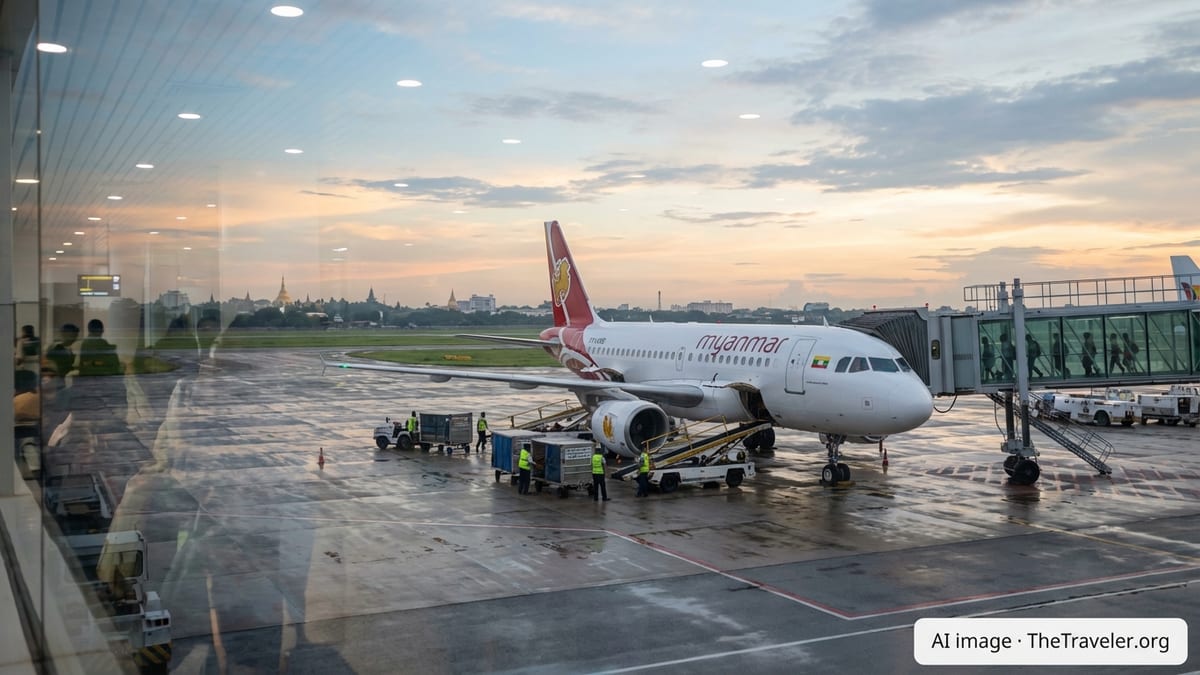
New Direct Link Connects Yangon and Changsha
The new route, operated by Myanmar Airways using Airbus A319 aircraft, commenced on 7 February 2026 and links Yangon International Airport with Changsha Huanghua International Airport. The non-stop service reduces travel time between the two cities to just over three hours, eliminating the need for connections through regional hubs such as Bangkok, Kunming or Guangzhou.
According to aviation schedule data, the flights are currently offered twice weekly, with flight 8M720 operating from Yangon to Changsha and 8M721 on the return leg. Departures from Yangon are timed for late afternoon, arriving in Changsha in the evening, while the return service leaves Changsha late at night and lands in Yangon shortly after midnight, catering to both leisure and business travelers seeking same-day connections onward.
The launch strengthens Myanmar Airways’ growing footprint in the Chinese market, complementing its services to other Chinese cities and reinforcing Yangon’s role as Myanmar’s primary international gateway. For Changsha, a fast-rising provincial capital in Hunan, the connection adds another Southeast Asian destination to its expanding network.
Industry analysts note that the route is debuting at a time when regional carriers are cautiously rebuilding international capacity. The decision to prioritize Changsha reflects expectations of sustained demand from tour groups, traders and migrant communities moving between inland China and mainland Southeast Asia.
Tourism Opportunities Between Myanmar and Central China
Tourism operators in both countries are positioning the route as a new corridor for two-way leisure travel. For travelers from Changsha and wider Hunan province, direct access to Yangon opens the door to Myanmar’s flagship attractions, from Shwedagon Pagoda and the colonial riverfront of the former capital to gateways for beach destinations and heritage sites further afield.
Myanmar-based inbound agencies say the simplified access is particularly attractive for Chinese group and family travelers who previously faced lengthy transit times and additional visa-on-arrival queues after connecting flights. A single non-stop sector, combined with packaged hotel and tour products, is expected to help Myanmar capture a larger share of visitors from China’s inland provinces rather than relying primarily on coastal source markets.
On the outbound side, Changsha’s profile as a cultural and culinary hub in central China is likely to draw a new segment of Myanmar travelers. The city offers historic streets, lakeside parks and easy rail access across Hunan, while its fast-growing retail and entertainment scene appeals to younger visitors seeking urban experiences and shopping.
Regional tourism officials also see scope for multi-destination itineraries that link Changsha with other Chinese cities via the country’s high-speed rail network. Travelers from Myanmar can now use the new flight as a gateway to explore central China more broadly, including scenic mountain and rural regions that are heavily promoted in domestic Chinese tourism campaigns.
Boost to Trade, Investment and Air Cargo Flows
Beyond passenger tourism, the Yangon–Changsha route is expected to support a growing volume of trade and investment between Myanmar and central China. Both governments have highlighted aviation links as a practical pillar of the China–Myanmar Economic Corridor, complementing existing cargo services from other Chinese cities to Yangon.
Hunan province has been positioning itself as an inland logistics and manufacturing hub, with strengths in machinery, electronics, agricultural processing and consumer goods. Direct bellyhold capacity on the Myanmar Airways Airbus A319 flights will provide additional lift for time-sensitive shipments, from high-value electronics and machinery parts to fashion items and specialty foods.
For Myanmar exporters, particularly those in fisheries, horticulture and light manufacturing, shorter transit times to Changsha can improve product freshness and reliability in reaching central Chinese markets. Freight forwarders say the passenger flights, when combined with established cargo routes from cities such as Chengdu, Nanning and Guiyang, deepen Myanmar’s access to interior China beyond the coastal gateway pattern that has dominated in past decades.
Investment officials in Yangon also view the service as a signal to Chinese investors that connectivity risk is declining. More predictable air links are often cited as a prerequisite for project oversight, technical visits and business development trips, especially in sectors such as infrastructure, energy and tourism real estate that draw partners from across China.
Strengthening Cultural and Educational Exchange
The direct flights are likely to encourage a rise in educational, medical and cultural travel between Myanmar and Hunan. Universities in Changsha, including institutions known for engineering, medical science and technology disciplines, already host international students from Southeast Asia, and easier access from Yangon could prompt more Myanmar students to consider programs in central China.
Conversely, academic and cultural delegations from Changsha may find it more convenient to engage with institutions and cultural organizations in Myanmar. Direct flights reduce travel fatigue and cost, making it simpler to organize short-term exchanges, joint workshops and arts events, including language programs and cultural festivals that promote mutual understanding.
Community groups expect the route to benefit diaspora communities and families with ties in both countries. Many residents of Myanmar’s northern regions maintain business, educational or family links in China, and industry observers say the increased choice of direct services to different Chinese cities gives travelers more flexibility to route their journeys through the city most aligned with their needs.
Travel planners note that person-to-person contacts are a crucial underpinning of any broader economic partnership. Frequent travel by students, professionals and cultural practitioners can help build long-term familiarity and reduce information gaps between Myanmar and central Chinese provinces, creating a more resilient foundation for cooperation.
Strategic Step in Myanmar Airways’ China Network
The Yangon–Changsha launch follows a series of new and expanded routes between Myanmar and China, including recent additions linking Yangon to Nanning and a mix of passenger and cargo services connecting other Chinese cities with Myanmar’s commercial capital. For Myanmar Airways, the move into Changsha underscores a strategy of building a diversified China portfolio that serves not only major coastal hubs but also emerging inland centers.
The deployment of the Airbus A319 on the new route reflects a conservative capacity approach, matching aircraft size to the expected mix of tour groups, individual travelers and business passengers. Airlines and airport operators will be closely monitoring load factors and seasonal patterns through 2026 to determine whether frequency increases or larger aircraft might be warranted.
Aviation analysts say the route also enhances Yangon International Airport’s status as a regional junction for travelers from China heading on to other parts of Myanmar and neighboring countries. With carefully timed banks of departures, Myanmar Airways can use the Changsha flights to feed domestic sectors and onward services operated by partner carriers, improving overall connectivity.
While regional geopolitical and economic uncertainties remain, the decision to open a new international route at this stage is being interpreted by the sector as a sign of cautious optimism. Market participants argue that measured network expansion, focused on clearly defined city pairs such as Yangon and Changsha, is one of the most tangible ways airlines can support a broader recovery in cross-border travel and commerce across Asia.