

More news on this day
Myanmar Airways has inaugurated a new international route linking Yangon and Changsha with two weekly flights, a move expected to deepen tourism, trade and cultural ties between Myanmar and central China.
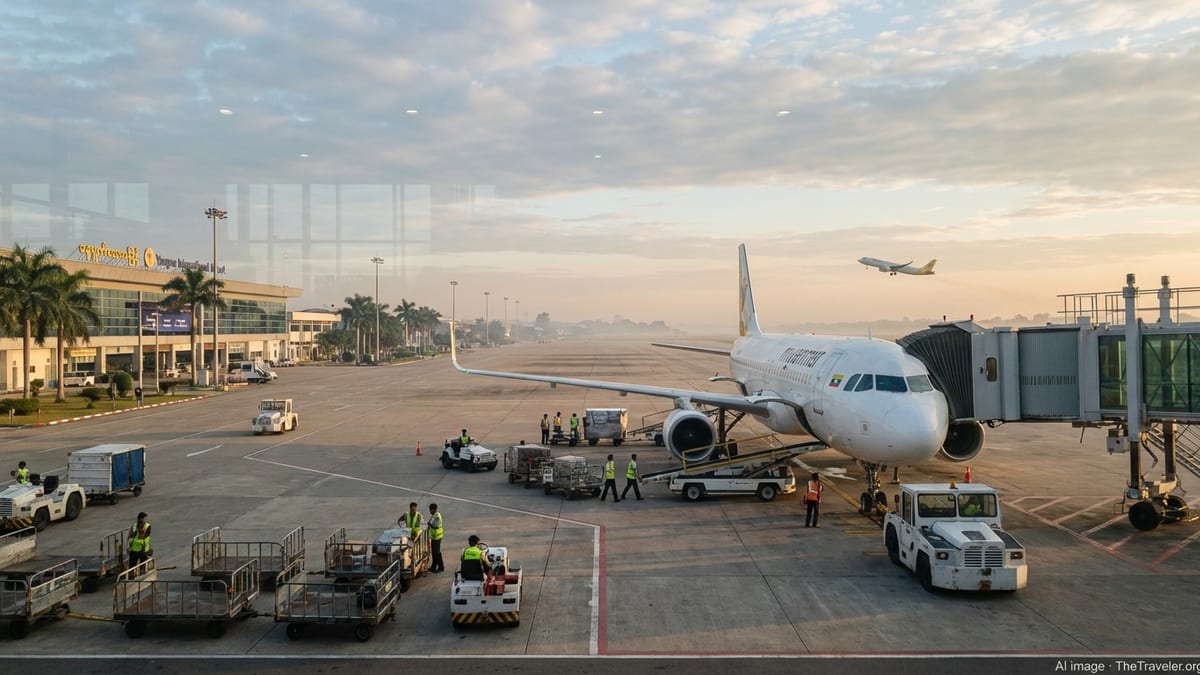
New Gateway Between Yangon and Central China
The launch of the Yangon–Changsha service positions Myanmar’s commercial capital as a more convenient gateway for travelers heading to central China, while giving Chinese visitors a direct entry point to Myanmar’s key tourism hubs. The twice-weekly flights are scheduled to operate with timings designed to support both leisure and business itineraries, easing connections to wider regional networks.
For Myanmar Airways, the route underscores a broader regional strategy of rebuilding and diversifying its international network as outbound and inbound travel across Asia continues to recover. The carrier has been gradually expanding its footprint in Northeast and Southeast Asia, and the addition of Changsha brings a fast-growing Chinese provincial capital into its portfolio.
Changsha, the capital of Hunan province, has emerged as a major second-tier city in China, with rising incomes, a growing middle class and increasing appetite for overseas travel. Direct connectivity from Yangon allows the airline to tap into a sizable new source market while also serving Myanmar nationals traveling for study, work and medical treatment in China.
Aviation analysts note that the choice of Changsha, rather than the more saturated coastal hubs, reflects a shift among regional airlines toward pairing Southeast Asian cities with dynamic inland Chinese markets where competition is less intense and growth prospects are strong.
Boost for Tourism and Cultural Exchange
Tourism stakeholders in both Myanmar and China are expecting the new flights to create fresh opportunities for joint marketing and thematic travel products. Travel agents see particular potential in multi-day itineraries that combine Yangon’s colonial architecture and Shwedagon Pagoda with beach extensions in destinations such as Ngwe Saung or cultural circuits to Bagan and Mandalay.
For Chinese travelers from Changsha and surrounding cities in Hunan, a nonstop service reduces total journey time and eliminates the need to route through third-country hubs. That convenience is especially important for short holidays of four to five days, where every hour in transit can influence destination choice. Tour operators are already preparing Mandarin-language packages tailored to first-time visitors to Myanmar.
The new route is also expected to support religious tourism and heritage travel. Myanmar’s Buddhist landmarks and traditional festivals are a strong draw in the Chinese market, while a growing number of Myanmar travelers are visiting Hunan’s historic temples and scenic mountain areas. The Yangon–Changsha link simplifies planning for such culturally focused exchanges.
Local hotels, guides and small tourism businesses in Myanmar hope the route will help extend the high season and spread visitor flows beyond the most popular sites. With two scheduled flights a week, the service offers a predictable pattern that destination marketers can build campaigns around, including off-peak promotions aimed at more price-sensitive segments.
Strengthening Trade and Investment Links
Beyond tourism, the Yangon–Changsha connection carries strategic importance for trade and investment. Changsha is a key industrial and logistics hub in central China, home to major manufacturers in construction machinery, automotive components and electronics, as well as a growing technology and innovation ecosystem. Direct air links make short business trips and rapid deal-making significantly easier.
Myanmar businesses in sectors such as agriculture, textiles and light manufacturing now have a more direct channel to potential buyers and partners in Hunan, while Chinese companies gain improved access to on-the-ground opportunities in Myanmar’s infrastructure, energy and consumer markets. The airline expects a healthy share of corporate travelers and small consignments of high-value cargo in the belly hold.
Chambers of commerce and business associations in both cities have signaled plans to align trade missions and matchmaking events with the new flight schedule. The twice-weekly frequency allows delegations to fit productive visits into a working week, without the complexity of multi-stop journeys via other regional hubs.
In the medium term, observers say the service could also support educational and medical travel, as universities and hospitals in both countries deepen their partnerships. Student exchanges, research collaborations and specialized treatment trips often rely on reliable, recurring air links rather than seasonal or charter-only services.
Improved Connectivity for Regional and Domestic Networks
The Yangon–Changsha route is being promoted as part of a broader connectivity map, rather than a stand-alone city pair. Myanmar Airways is positioning Yangon as a transfer hub where passengers from Changsha can connect onward to domestic destinations such as Mandalay, Heho for Inle Lake and coastal gateways serving popular beaches.
By synchronizing the new flights with domestic schedules, the airline aims to create smoother through-journeys within a single carrier network. Travelers from Hunan could, for example, depart Changsha, connect in Yangon and reach secondary destinations in Myanmar without needing to arrange separate tickets or change airlines. This hub-and-spoke approach is increasingly important as regional carriers seek to maximize aircraft utilization and network synergies.
The additional international frequencies also support Yangon International Airport’s ambitions to reinforce its role as a key aviation hub for Myanmar. Airport authorities have been working with airlines to restore and expand routes that link Myanmar’s major cities with high-growth markets in Asia, focusing on improved passenger facilities and streamlined transfer processes.
The twice-weekly service to Changsha is expected to complement existing links to other Chinese cities and regional capitals, creating more options for travelers and helping airlines spread demand across the week. Over time, if load factors are strong, industry observers anticipate that the route could see frequency increases or up-gauging to larger aircraft types.
Positioning Myanmar Airways in a Competitive Regional Market
The Yangon–Changsha launch comes as airlines across Asia continue to recalibrate networks in response to shifting demand patterns and evolving travel restrictions. For Myanmar Airways, adding a carefully targeted Chinese destination is a way to compete in a market where low-cost and full-service carriers are racing to rebuild capacity.
By offering a niche combination of direct access to a central Chinese city and onward connectivity to Myanmar’s domestic network, the carrier is seeking to differentiate itself from rivals that focus primarily on major coastal hubs. The airline’s management has emphasized reliability, safety standards and localized service as core selling points for both leisure and corporate passengers.
Industry observers say performance on the Yangon–Changsha route over the next 12 to 18 months will be closely watched as a barometer of demand from central China for less mainstream Southeast Asian destinations. Strong, sustained load factors could encourage further expansion into additional provincial capitals, while also signaling renewed confidence among travelers and investors in Myanmar’s connectivity.
For now, the twice-weekly flights mark a significant step in rebuilding the country’s international air links. As the new service beds in, tourism operators, businesses and local communities on both sides of the route will be measuring its impact not only in passenger numbers, but in the new relationships and opportunities that regular, reliable air connectivity can unlock.