

More news on this day
Myanmar Airways’ newly launched direct service between Yangon and the central Chinese city of Changsha is emerging as a strategic bridge for tourism, trade, and multi-city travel, strengthening Myanmar’s position inside China’s fast-expanding aviation and economic network.
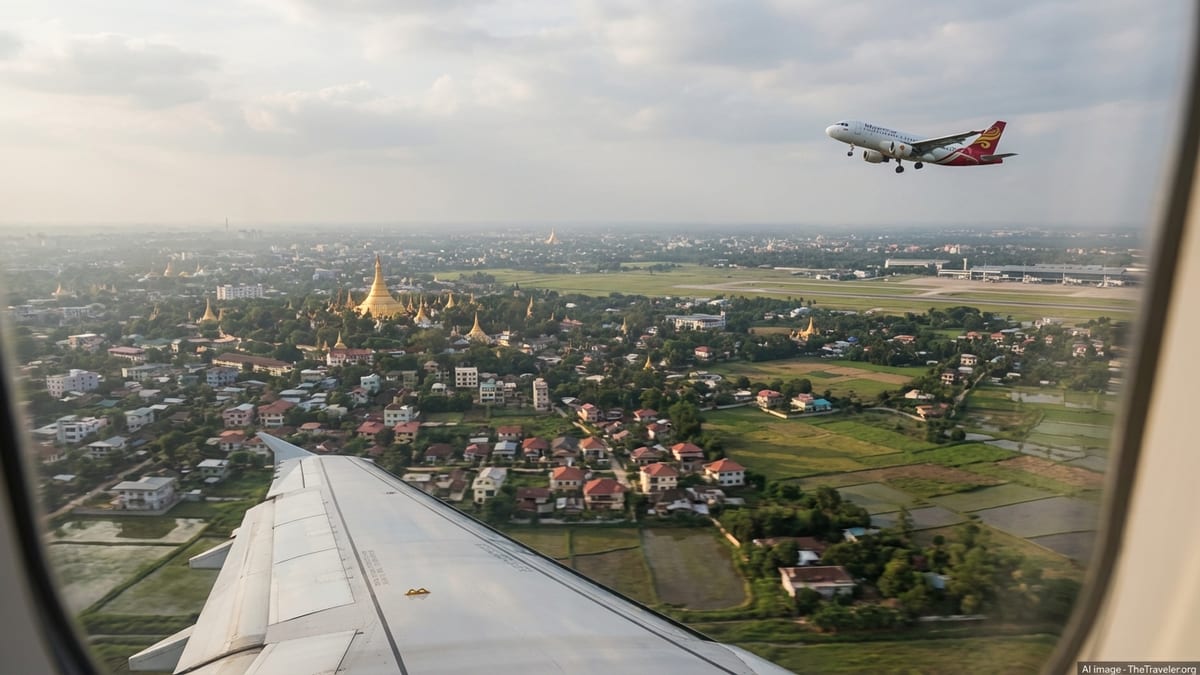
A Timely New Link Between Yangon and Central China
The Yangon–Changsha route, operated by Myanmar Airways with Airbus A319 aircraft, began commercial service in February 2026 with a scheduled weekly flight connecting Yangon International Airport and Changsha Huanghua International Airport. The launch comes as carriers in both countries race to restore and expand regional connectivity after years of pandemic-related disruption.
Industry schedules show flight 8M720 departing Yangon in the late afternoon and arriving in Changsha in the evening, offering a same-day, nonstop option that sharply reduces travel time compared with existing one-stop itineraries through Chinese hubs such as Kunming, Guangzhou, or Beijing. The new route complements Myanmar Airways’ broader push into China following recent expansions to cities including Nanning and other gateways in southern China.
For Changsha, a fast-growing industrial and technology hub in Hunan province, the link opens direct access to Myanmar’s largest city for the first time. Aviation analysts note that the route plugs a geographic gap between earlier Myanmar–China links to coastal cities and southwest hubs, and positions Changsha as a convenient entry point for travelers and cargo bound for the Yangtze River Economic Belt.
The decision to deploy the narrow-body Airbus A319 reflects an effort to match capacity with early demand while retaining flexibility to scale up as passenger and cargo flows deepen. Myanmar Airways has been steadily expanding its A319 fleet, seeking to balance fuel efficiency with the ability to serve medium-haul regional markets such as southern and central China.
Tourism Flows Poised for a Rebound
Tourism officials in both countries are betting that the Yangon–Changsha corridor will accelerate the recovery of visitor numbers, particularly group and family travel. Before the pandemic, Chinese tourists were among Myanmar’s fastest-growing inbound segments, with travelers drawn to Bagan’s temples, Inle Lake’s floating villages, and Ngapali’s beaches. The new route offers Changsha residents and those in nearby Hunan cities a direct gateway to these destinations via Yangon.
Travel agencies in Yangon report early interest from Chinese tour operators looking to package multi-day itineraries that combine Yangon city stays with domestic connections to Mandalay, Bagan, and the southern coastal region. The afternoon arrival pattern in Changsha and late-evening departure opportunities give itineraries flexibility, making it easier to coordinate with domestic Chinese high-speed rail onward to cities such as Wuhan, Guangzhou, and Shenzhen.
For outbound travelers from Myanmar, the service improves access not only to Changsha but to much of inland China. From Changsha Huanghua International Airport, passengers can connect onto dense domestic networks serving cultural destinations such as Zhangjiajie and Fenghuang, as well as major commercial centers. Travel consultants note that this pattern aligns with a shift in Myanmar’s outbound tourism from traditional eastern seaboard cities toward more diversified, experience-driven destinations across China’s interior.
The route is also expected to stimulate short-break travel and business-leisure trips, as visa facilitation measures and promotional campaigns roll out. Tourism authorities have indicated that joint marketing efforts are being prepared, including city-pair branding that highlights Changsha’s food and nightlife with Yangon’s colonial-era architecture and heritage districts.
Boost for Bilateral Trade and the China–Myanmar Economic Corridor
Beyond tourism, the Yangon–Changsha route is strategically aligned with broader trade and infrastructure plans under the China–Myanmar Economic Corridor. Changsha and the wider Hunan region are significant bases for construction machinery, manufacturing, and agricultural technology, sectors that have been increasingly active in Southeast Asian markets.
Direct belly cargo capacity on the A319 flights gives exporters in both countries a faster channel for high-value and time-sensitive goods, including electronics components, fashion items, pharmaceuticals, and specialized machinery parts. Freight forwarders in Yangon say the route can shave one to two days off transit times compared with routings that require a change of aircraft at coastal hubs.
Myanmar agricultural producers, particularly those supplying fresh seafood, fruits, and flowers, are eyeing Changsha as an attractive distribution point into China’s central provinces. The ability to reach Hunan markets overnight by air and then connect by highway or rail to neighboring provinces is seen as a competitive advantage for exporters seeking higher margins and fresher delivery windows.
Hunan-based manufacturers, meanwhile, gain more direct exposure to Myanmar’s infrastructure, construction, and consumer goods markets. Business chambers in both countries have framed the route as a practical tool to support small and medium-sized enterprises looking to test new partnerships or pilot projects without relying solely on slower sea freight and multi-stop air journeys.
Strengthening Myanmar’s Emerging Regional Air Hub
The launch of the Yangon–Changsha route underscores Myanmar Airways’ ambition to position Yangon as a modest but growing regional hub that connects South and Southeast Asia with China’s inland cities. In recent years, the airline has added or revived links to destinations such as Nanning and expanded frequencies on routes to Guangzhou and other Chinese gateways, building a web of services that radiate from Yangon.
While Yangon is still far from rivaling larger Southeast Asian hubs, the gradual enrichment of its China network gives travelers more options, particularly those coming from India, Thailand, or domestic Myanmar cities who prefer to avoid multiple transfers. Aviation analysts suggest that over time, carefully timed banked departures could enable same-day connections from cities like Kolkata or Chiang Mai through Yangon onto Changsha and other Chinese points.
The new service also dovetails with broader efforts at Yangon International Airport to modernize facilities, streamline transfers, and improve ground services. Airport operators and government officials have pointed to additional China links as critical to maintaining aircraft movements, generating revenue for concessionaires, and sustaining jobs in the aviation and tourism sectors during a still-fragile recovery period.
Within the airline’s own network strategy, Changsha offers diversification beyond the more crowded coastal markets, allowing Myanmar Airways to tap secondary cities where competition remains relatively limited but demand for outbound travel and cross-border business is rising. If load factors meet expectations, sources say, the carrier could consider adding a second weekly frequency or seasonal peaks around major holidays and trade fairs.
Opportunities and Challenges Ahead
Despite optimism around the route’s long-term potential, industry observers caution that its early months will test Myanmar Airways’ ability to manage fluctuating demand, regulatory complexity, and regional competition. Any new China service must navigate evolving health protocols, visa rules, and bilateral aviation arrangements, which can affect schedules and seat capacity.
Competition from Chinese carriers and one-stop itineraries via larger hubs also remains a factor. Well-established airlines from China continue to operate through Kunming, Guangzhou, and Beijing, offering multiple weekly departures and powerful loyalty programs. Myanmar Airways will likely rely on competitive pricing, local partnerships, and the convenience of a nonstop service to attract and retain passengers on the Yangon–Changsha leg.
Market conditions in both countries will play a decisive role. Travel demand from Myanmar has been shaped by currency volatility and household purchasing power, while Chinese outbound tourism remains influenced by domestic economic sentiment and policy guidance. Analysts expect that the route may initially attract a mix of migrant workers, traders, and visiting friends and relatives traffic before higher-yield corporate and leisure segments fully emerge.
Even with these uncertainties, the new Yangon–Changsha connection is widely viewed as a forward-looking bet on the deepening of China–Myanmar ties. If sustained, it has the potential to knit together tourism circuits, shorten supply chains, and open new horizons for travelers and businesses on both sides of the border.