

More news on this day
A shallow magnitude 4.5 earthquake in Myanmar shortly after midnight local time has triggered heightened vigilance across neighboring Thailand, where regional monitoring networks and local media are tracking aftershock risks following a year of intense seismic activity along the Myanmar fault system.
Get the latest news straight to your inbox!
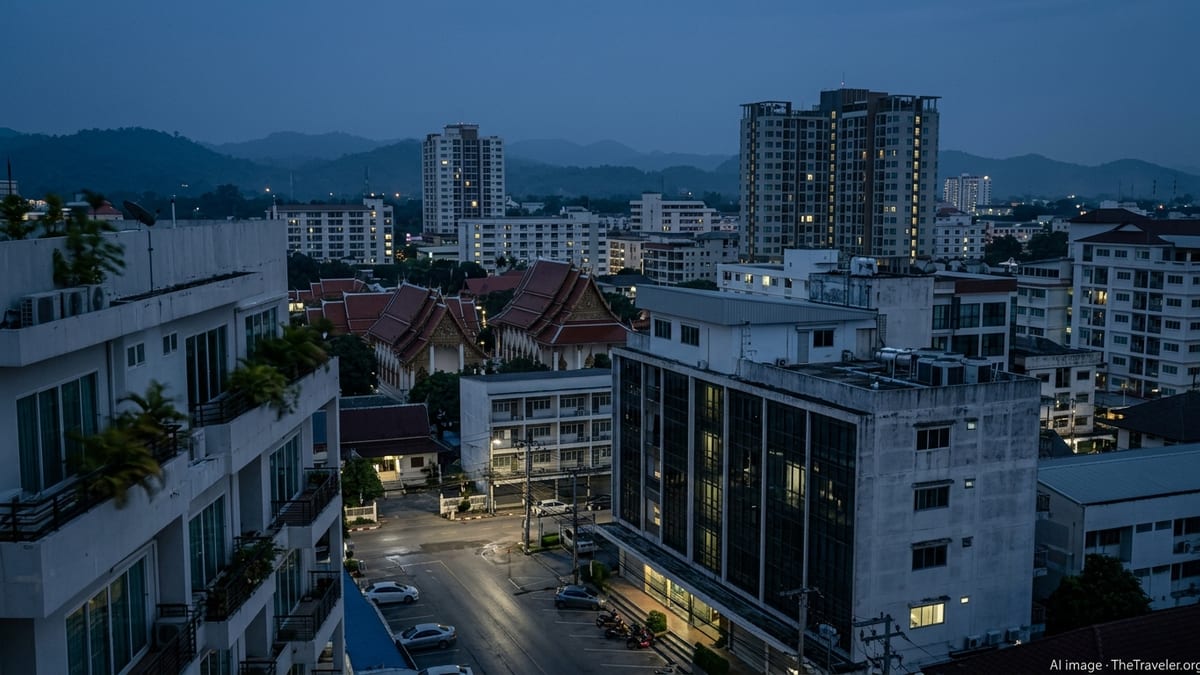
Late-Night Shock Along an Already Strained Fault Zone
According to regional seismic networks and publicly available data from international observatories, the latest magnitude 4.5 tremor originated within Myanmar along the broader tectonic corridor that has produced frequent earthquakes since the devastating 7.7 event near Mandalay in March 2025. The new quake struck at shallow depth, a factor that typically increases the likelihood of localized shaking even at moderate magnitudes.
Reports indicate that the epicentral area lies within a complex web of strike-slip faults accommodating the slow lateral movement between the Indian and Eurasian plates. These structures, which include the prominent Sagaing Fault and several subsidiary fault strands extending toward the Thai border, have been responsible for both historical major events and a persistent sequence of smaller shocks over the past year.
Preliminary readings suggest that the midnight quake was felt closest to the epicenter in Myanmar communities, with only weak or imperceptible tremors reaching across the border into Thailand. Early instrument data show no immediate signs of structural damage in Thailand, but the timing of the tremor at night contributed to anxiety among residents already sensitized by recent seismic headlines.
Seismologists note that while a 4.5 event is modest compared with the 2025 Mandalay disaster, any new movement along an active fault system that has recently produced a major rupture can draw special scrutiny. Publicly available analyses of the 2025 earthquake describe significant stress redistribution along segments that run roughly parallel to the Thai border, increasing interest in how subsequent moderate shocks may fit into a broader aftershock pattern.
Alerts Across Thailand and Public Concern Over Aftershocks
In Thailand, the latest tremor quickly appeared on monitoring dashboards run by national agencies and regional observatories, prompting renewed alerts in provinces that have felt past Myanmar quakes. Thai media coverage highlighted the midnight timing and referenced the legacy of the 7.7 mainshock of March 2025, which was felt in dozens of Thai provinces and contributed to building damage and casualties in Bangkok and other urban centers.
Publicly available information from Thai monitoring bodies in the past year shows that even moderate quakes in Myanmar can trigger a wave of calls, social media posts, and precautionary building evacuations, especially in high-rise districts of Bangkok and Chiang Mai. After the 2025 disaster, high floors in many towers reported prolonged swaying, and some offices and condominiums temporarily introduced informal evacuation practices whenever strong tremors were perceived.
Recent statements and situation updates from Thai agencies following earlier aftershocks stressed that most secondary events have been too small and distant to pose a direct hazard inside Thailand. In several instances, official summaries emphasized that no measurable ground motion was detected domestically even as Myanmar recorded aftershocks in the magnitude 4 to 5 range. That historical pattern is now being revisited in light of the latest 4.5 tremor, with commentators noting both the limits of risk and the importance of rapid, clear communication.
Travel and hospitality operators in northern Thailand continue to monitor seismic notices closely. Industry updates after the 2025 earthquake described short-lived disruptions to hotel operations, temple visits, and mountain trekking routes when structural checks were carried out. For now, early reports suggest that Monday’s midnight shock has not produced comparable interruptions, yet some operators are reiterating emergency briefing protocols for staff and guests as a precaution.
Regional Seismic Network Pivots to Intensified Monitoring
Across mainland Southeast Asia, Myanmar’s active fault systems have long been recognized by scientists as a key seismic driver for the wider region. Analytical reports compiled after the Mandalay earthquake noted that ground shaking from the 2025 event was detected across multiple neighboring countries, including Thailand, Laos, Vietnam and parts of southern China. Those findings have reinforced efforts to integrate national monitoring networks and share data in near real time.
Since early 2025, situation updates from regional disaster coordination bodies have documented dozens of aftershocks linked to the Mandalay rupture, many above magnitude 3 and several above magnitude 5. These reports highlight both the persistent energy release along the Sagaing Fault and the way stress can migrate along parallel structures toward the Myanmar–Thailand frontier. Against that backdrop, a fresh 4.5 tremor is being interpreted by analysts as part of an extended aftershock and adjustment phase rather than an isolated event.
Publicly accessible bulletins describe how Thai and international networks triangulate each new event using arrays of seismometers across northern Thailand, central Myanmar and neighboring countries. The resulting catalogues, which now span from the initial 7.7 shock through months of follow-on activity, are being used by researchers to refine models of how far damaging shaking can extend into Thailand from various segments of the Myanmar fault system.
Experts frequently point out that while sophisticated monitoring provides early information about magnitude, depth and location, it does not eliminate uncertainty around the long-term sequence. A moderate tremor like this latest 4.5 can be either a routine aftershock or a reminder that different parts of the same fault zone remain capable of generating larger events. This uncertainty is one reason regional agencies continue to maintain an elevated watch following any noticeable quake.
Implications for Travelers and Tourism Hubs
For international travelers, the midnight tremor is less about immediate disruption and more about awareness. Major tourism gateways such as Bangkok, Chiang Mai and Chiang Rai are situated hundreds of kilometers from many Myanmar epicenters, and historic data compiled after the 2025 quake show that the most intense damage has consistently been located inside Myanmar rather than in Thai cities. Nonetheless, repeated reports of swaying high-rises have kept seismic safety on the radar for visitors choosing accommodation and planning activities.
Travel advisories and destination updates from media outlets and nongovernmental organizations typically advise standard earthquake preparedness in tectonically active regions: familiarizing oneself with hotel evacuation routes, avoiding overloaded balconies during tremors, and heeding local safety instructions in temples and historic structures. In the wake of the Mandalay quake, some Thai hotels and tour operators in the north quietly updated their safety briefings, a trend that now gains renewed relevance with each new Myanmar event.
For destinations closer to the border, such as the mountainous areas of Mae Hong Son and Chiang Rai, occasional shaking from distant quakes has been reported over recent years, but with limited physical impact. Local tourism boards have generally emphasized that trekking routes, border markets and cultural attractions remain open, even as they incorporate earthquake awareness into broader natural hazard communication that also covers landslides and seasonal storms.
Industry analysts note that the travel sector’s larger sensitivity is to perception. A cluster of sensational headlines about earthquakes can briefly depress bookings, especially among first-time visitors unfamiliar with the geography of the region. Balanced reporting that places moderate events like the latest 4.5 tremor in context, while acknowledging the genuine risks demonstrated by the 2025 disaster, is seen as central to maintaining traveler confidence.
Preparing for a Future of Persistent Tectonic Activity
The latest midnight tremor in Myanmar underscores the reality that the country’s major fault systems are likely to remain active for years, with implications extending across borders. Historical records and modern catalogues alike show recurring moderate and strong earthquakes in northern and central Myanmar, periodically transmitting shaking into Thailand. While the immediate impact of a 4.5 event may be limited, the cumulative picture reinforces calls for resilient construction, clear communication and routine preparedness drills.
In Thailand, publicly available policy documents and expert commentary following the 2025 Mandalay quake have pointed to the need for stronger enforcement of building standards, especially for high-rises that can amplify shaking even when ground motion is modest. Discussions have also highlighted the potential for nationwide cell-broadcast alert systems and improved public education campaigns that explain what different magnitude levels realistically mean for residents and visitors.
For Myanmar, the continued sequence of aftershocks and new moderate events is reshaping approaches to urban planning in cities such as Mandalay and Sagaing. Reports from academic and technical institutions describe efforts to map fault traces more precisely, assess soil amplification in densely populated districts, and prioritize retrofitting for critical facilities like hospitals and transport hubs that serve both local communities and international travelers.
Across the wider Mekong region, the midnight tremor serves as another data point in a long-term story of tectonic adjustment. For travelers, tourism businesses and city planners in Thailand, the main message emerging from current monitoring is not one of immediate crisis, but of ongoing vigilance: a recognition that moderate Myanmar earthquakes, including the latest 4.5 event, will continue to ripple through alert systems and public consciousness even when the physical shaking is barely felt.