

More news on this day
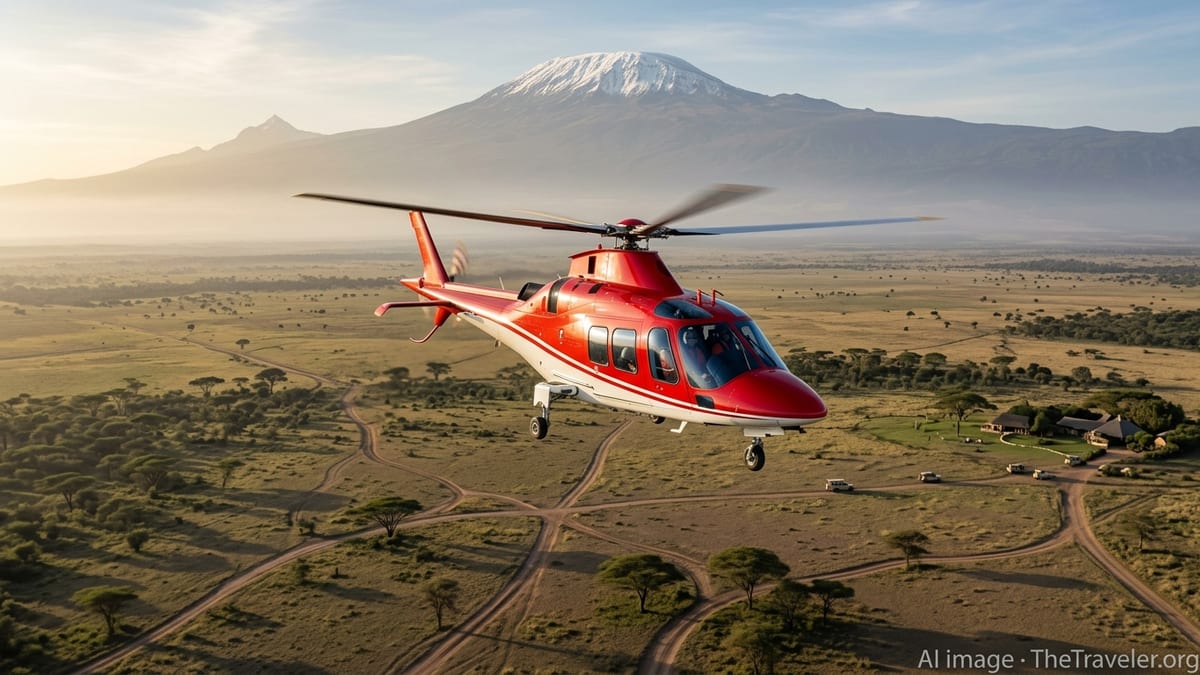
A new rescue helicopter project supported by Dubai-based safety specialist NAFFCO is drawing attention in Tanzania, where aviation-focused investment is increasingly being framed as both a disaster response asset and a confidence boost for the country’s tourism sector.
Get the latest news straight to your inbox!
Aviation Investment Meets a Tourism Powerhouse
Publicly available information shows that Tanzania has been working to modernize its emergency and transport infrastructure as visitor numbers rise to national parks, Indian Ocean beaches, and Mount Kilimanjaro. Against that backdrop, NAFFCO’s support for a dedicated rescue helicopter is being presented as part of a broader push to improve safety for travelers while strengthening domestic disaster response.
Reports indicate that the helicopter is intended to operate as a rapid-response platform, with particular relevance for tourism-heavy regions where terrain and distance can complicate evacuations. Tanzania’s geography, which stretches from remote savannahs to the high-altitude slopes of Kilimanjaro and offshore islands like Zanzibar, often makes ground-based rescue slow and difficult.
Although technical specifications of the NAFFCO-supported aircraft have not been widely detailed, comparable rescue helicopters in East Africa are typically configured for medical evacuation, search and rescue, and support during floods or wildfires. Industry coverage suggests that such aircraft may also be used to transport critical supplies and personnel to cut-off communities when roads are impassable.
The initiative comes as Tanzania continues to spotlight its tourism sector as a pillar of economic growth. A visible, aviation-based rescue capability can serve a dual purpose: offering practical backup during crises and reassuring international visitors that contingencies exist should an accident or sudden health emergency occur during a safari or climb.
Why a Rescue Helicopter Matters for Safaris and Mount Kilimanjaro
Tanzania’s leading tourism experiences often take place in locations that are spectacular but remote. Climbers attempting Kilimanjaro’s summit, for example, can face altitude sickness, sudden weather changes, slips on rocky terrain, and cold-related injuries. In such conditions, getting a patient down from high-altitude camps to hospital care can be a race against time.
In recent years, media reports have underscored both the opportunities and the risks that come with rising adventure tourism traffic on Kilimanjaro. Coverage of high-profile incidents, including crashes involving other operators during rescue attempts, has highlighted the importance of robust aviation safety standards and reliable access to air evacuation when something goes wrong.
Safari travelers in the Serengeti, Ngorongoro, Ruaha, Nyerere National Park, and other reserves also contend with long distances between airstrips, camps, and regional hospitals. Roads can be affected by seasonal rains, and wildlife encounters occasionally lead to serious injuries. In these circumstances, a helicopter capable of landing near remote camps or using basic airstrips can significantly cut evacuation times compared with overland transport.
For tour operators and lodge owners, the availability of a professionally equipped rescue helicopter dovetails with growing demand from international guests for clear emergency protocols. Travel advisers increasingly emphasize contingency planning, and a dedicated aviation asset can become a key selling point when travelers compare safari destinations across East and Southern Africa.
How the Helicopter Fits Into Tanzania’s Disaster Response Landscape
Beyond individual medical emergencies, Tanzania faces a range of natural and man-made hazards that can disrupt tourism and local communities alike. Heavy rains can trigger flash floods around river systems, affecting safari camps and villages. Coastal areas are exposed to severe storms, while seismic activity and bushfires pose localized risks.
Disaster management frameworks in Tanzania rely on coordination between national agencies, regional authorities, security forces, and private operators. A dedicated rescue helicopter supported by a company such as NAFFCO slots into this architecture as a high-mobility tool that can bridge the gap between affected sites and centralized response hubs. It can be deployed to assess damage, ferry responders, or retrieve stranded travelers when conventional access is blocked.
Publicly available regulatory documents from Tanzania’s wildlife and parks authorities outline fee structures and guidelines for helicopter operations within protected areas. These frameworks are designed to manage air traffic, protect wildlife, and ensure that any low-level flights, including those related to tourism and rescue, comply with safety and conservation standards.
In practice, this means that a rescue helicopter must be able to move quickly while still navigating airspace rules for national parks and game reserves. Coordination with aviation regulators and park managers is a crucial part of integrating such an aircraft into both everyday tourism logistics and emergency response scenarios.
Implications for Travelers Planning Trips to Tanzania
For international visitors, the emergence of a tourism-focused rescue helicopter is likely to be most visible in tour operator literature and insurance documentation. Travel packages may highlight air-evacuation arrangements as part of their safety assurances, especially for high-risk activities like trekking at altitude or visiting very remote lodges.
Travel insurance providers typically require clear pathways for medical evacuation before issuing comprehensive cover for adventure trips. A formalized helicopter resource, supported by a specialist in firefighting and rescue equipment such as NAFFCO, can strengthen the case for coverage and, in some instances, expand the range of activities that insurers are willing to underwrite.
However, travelers are still advised to examine the fine print of their policies. Evacuation coverage can depend on factors such as altitude limits, declared pre-existing conditions, and whether the operator organizing a trek or safari is using approved logistics partners. A rescue helicopter may be available in principle, but access can hinge on prior arrangements and the terms set by insurers and ground operators.
From a perception standpoint, the presence of a modern rescue asset can help position Tanzania alongside other adventure destinations that have invested in mountain and wilderness helicopter services. For some travelers, particularly first-time visitors to Africa, visible safety infrastructure is an important factor in their decision to commit to a long-haul trip.
What to Watch Next as the Project Develops
As the NAFFCO-supported helicopter becomes part of Tanzania’s aviation and tourism landscape, observers are watching for more detail on its operational base, coverage area, and integration with existing emergency protocols. Industry commentary often looks at questions such as whether the aircraft will be stationed near Kilimanjaro, Arusha, or key coastal gateways, and how dispatch decisions will be prioritized during overlapping emergencies.
There is also attention on training and maintenance. Rescue-focused helicopters require specialized crews, medical equipment, and rigorous servicing to remain reliable in demanding conditions. Publicly available information suggests that cross-border collaboration, including technical support and knowledge transfer, plays an important role in ensuring that such aircraft remain mission-ready over the long term.
For Tanzania’s tourism sector, the next phase will likely involve weaving the helicopter into marketing narratives, risk assessments, and on-the-ground procedures at lodges and trekking operators. Clear communication to guests about how and when the helicopter is used, and how it connects to their insurance and tour contracts, will shape how much practical reassurance travelers derive from the project.
As destinations around the world compete for adventure travelers who are increasingly sensitive to safety and resilience, Tanzania’s move to align a rescue helicopter with both disaster response and tourism strategy signals an intent to stay competitive while adapting to evolving expectations.