

More news on this day
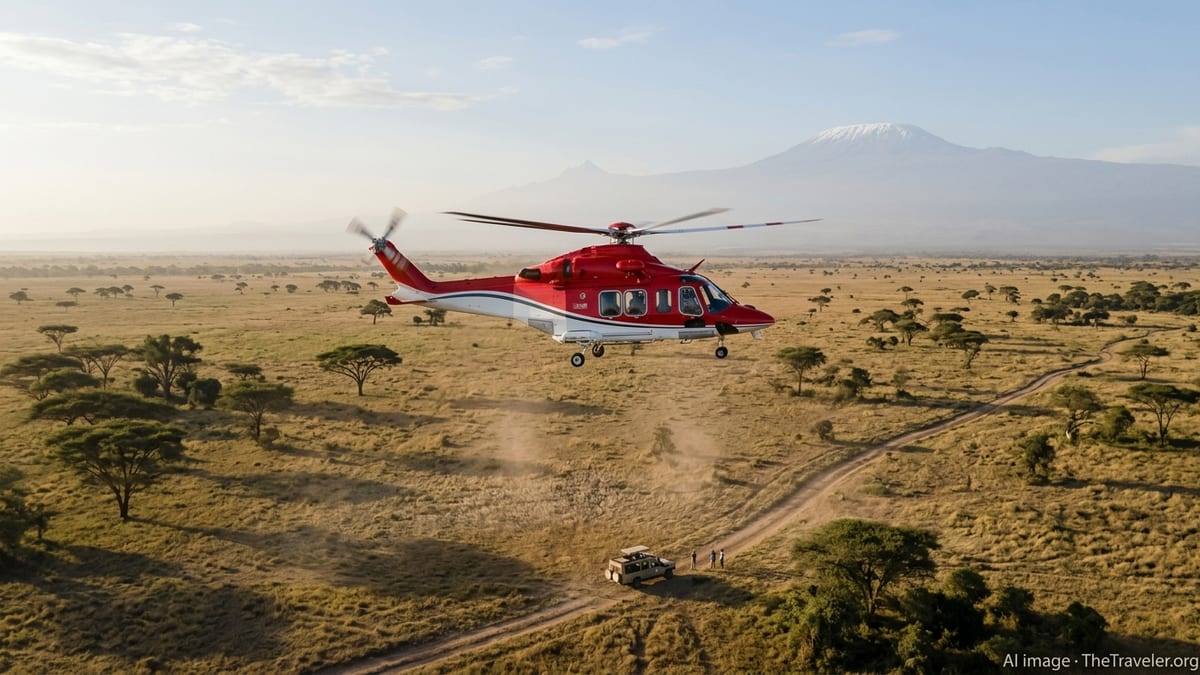
A new rescue helicopter being supplied through Dubai-based emergency specialist NAFFCO is drawing attention in Tanzania’s tourism sector, with the aircraft expected to reinforce disaster response capabilities while offering a critical safety net for visitors heading to Kilimanjaro, the Serengeti and other flagship destinations.
Get the latest news straight to your inbox!
A Strategic Upgrade For Tanzania’s Emergency Fleet
Publicly available information from Tanzania’s Fire and Rescue Force indicates that procurement procedures are under way with NAFFCO FZCO for a new helicopter and a large consignment of emergency vehicles, part of a broader modernisation drive for the country’s disaster response services. Earlier reports outlined a package of around 150 vehicles to be distributed nationwide, with the helicopter positioned as the most visible symbol of this push to improve rapid response capacity.
The decision to work with NAFFCO, a Dubai-based manufacturer known for fire-fighting and rescue equipment, reflects Tanzania’s effort to tap international expertise as tourism, urbanisation and climate-related risks increase the pressure on emergency services. The helicopter is expected to complement ground fleets by providing fast access to remote regions that are central to the country’s tourist economy but often difficult to reach by road.
While final delivery timelines and technical specifications have not yet been widely detailed, the project signals a significant shift from a model that has relied heavily on a small number of private and charter operators for air evacuations. The new aircraft is anticipated to integrate into national disaster and fire-fighting plans, supporting operations that range from search and rescue to medical transport.
Analysts following Tanzania’s safety and tourism developments note that investment in dedicated rescue aviation is increasingly seen as a prerequisite for destinations that market challenging wilderness and high-altitude experiences to international travelers.
Tourism-Focused Mission: From Peaks To Parks
Tourism is a mainstay of Tanzania’s economy, anchored by Mount Kilimanjaro, the Serengeti, Ngorongoro Crater and a network of 21 national parks and other protected areas. In recent years, helicopter services have become more visible around these attractions, performing medical evacuations for high-altitude sickness on Kilimanjaro, assisting with firefighting in mountain forests and supporting wildlife conservation initiatives.
The new NAFFCO-linked helicopter is expected to plug directly into this landscape, with an operational profile tailored to incidents that involve visitors in remote or rugged terrain. Industry coverage suggests that the helicopter will be tasked with missions such as extracting injured trekkers from Kilimanjaro’s upper camps, responding to vehicle rollovers on rough park roads and assisting in flood or landslide responses that may affect safari circuits and lodge access.
Tourism operators and rescue-focused medical providers have been expanding their own partnerships around air evacuation, reflecting growing demand for reassurance from travelers booking premium trips. A state-supported helicopter, configured with rescue and medical capability, is likely to complement these private arrangements by strengthening coordination with national park authorities and regional disaster committees.
The move comes as Tanzania continues to promote year-round adventure tourism, including high-profile climbs and safari events that bring large groups into environments where weather can change quickly and distances to hospital care are substantial.
Safety Context After High-Profile Kilimanjaro Incidents
The emphasis on a robust, tourism-ready rescue helicopter follows a period of heightened attention to air safety in Tanzania’s mountain environments. In December 2025, international coverage highlighted the crash of a helicopter on a medical rescue mission on Mount Kilimanjaro, in which five people lost their lives. Reports described the flight as an evacuation operation between Barafu Camp and the summit area, one of the busiest sections of the mountain for high-altitude rescues.
The tragedy underscored both the life-saving role of aerial evacuations and the operational challenges of flying in thin air and unpredictable mountain weather. Subsequent commentary in Tanzanian and regional outlets pointed to the need for carefully regulated rescue services, improved training and robust aircraft dedicated to emergency work rather than ad hoc charter arrangements.
Against this backdrop, the NAFFCO procurement is being interpreted as part of a broader attempt to professionalise and standardise aerial disaster response. A dedicated helicopter under the Fire and Rescue Force, equipped with the latest safety and communication systems, may support stricter protocols around weather assessment, mission authorisation and coordination with ground teams in national parks.
For prospective visitors, the development is likely to be framed less around the technicalities of aviation safety and more around the assurance that, when issues arise on a climb or safari, the state has its own tools ready to respond swiftly.
What Travelers Can Expect On The Ground
For international tourists planning trips to Tanzania in 2026 and beyond, the most immediate impact of a NAFFCO-backed rescue helicopter will be felt indirectly. Tour operators are expected to highlight enhanced emergency coverage in their pre-departure materials, while travel insurers may adjust underwriting assumptions as state capacity improves and formal air rescue assets expand.
Visitors heading to Kilimanjaro, the northern safari circuit or more remote parks such as Ruaha and Nyerere may increasingly find that itineraries come bundled with information on helicopter evacuation options, recommended insurance limits and emergency contact protocols. National park tariff documents already include fee structures for aircraft landings and flights, indicating that aviation-based support is becoming a more routine part of the tourism management toolkit.
Travel advisories and tourism updates in late 2025 and early 2026 have continued to describe Tanzania’s main destinations as open and operating normally, even amid isolated security or weather-related issues elsewhere in the region. The addition of a dedicated rescue helicopter is likely to reinforce this narrative of resilience, supporting the message that the country is investing in both visitor safety and conservation-minded infrastructure.
Prospective travelers are still advised to consult their tour companies and insurers about specific evacuation coverage, as private medical helicopters and state assets often operate under different cost-recovery and dispatch arrangements. The new aircraft is expected to widen the safety net but not replace the need for comprehensive individual coverage.
Implications For Tanzania’s Tourism Competitiveness
The NAFFCO helicopter initiative also has a strategic, long-term dimension for Tanzania’s place in a highly competitive African tourism market. Destinations across the continent are racing to showcase not only iconic landscapes but also credible safety systems, from modern airstrips in remote national parks to specialised anti-poaching and firefighting aviation units.
By reinforcing its aerial disaster response capacity, Tanzania is signalling that it intends to keep pace with these developments while maintaining strict conservation rules in core parks. The helicopter is expected to work alongside initiatives such as improved park access infrastructure, new airstrips and enhanced collaboration with private helicopter operators already active in tourism, wildlife protection and firefighting roles.
Observers suggest that such investments can have a multiplier effect. Better emergency coverage can encourage higher-end lodge development in more isolated areas, support film and documentary projects that rely on aerial logistics and reassure visitors considering ambitious itineraries that combine multiple remote regions in a single trip.
For the wider travel industry, the key message from the NAFFCO partnership is that Tanzania’s natural drama, from Kilimanjaro’s ice-capped summit to the Serengeti plains, is being matched by a growing focus on preparedness. As the new rescue helicopter comes online, it is likely to become a visible symbol of that shift, circling above the very landscapes that draw travelers from around the world.