

I went back to Vancouver Island recently with a clear mission: stop romanticizing the idea of “island life” and really compare what it feels like to be in Nanaimo versus other nearby cities. I based myself in Nanaimo, then did repeat trips to Victoria, Parksville–Qualicum Beach, and the Comox Valley (Courtenay and Comox) to get a fair sense of each place.
What I found was a mix of charm and frustration, small surprises and a few letdowns that did not match the glossy brochures. If you are trying to choose where to stay or even where to relocate, the differences in character and atmosphere between these cities matter a lot more than the distance on the map.
Nanaimo’s Everyday Energy vs The Rest of Vancouver Island
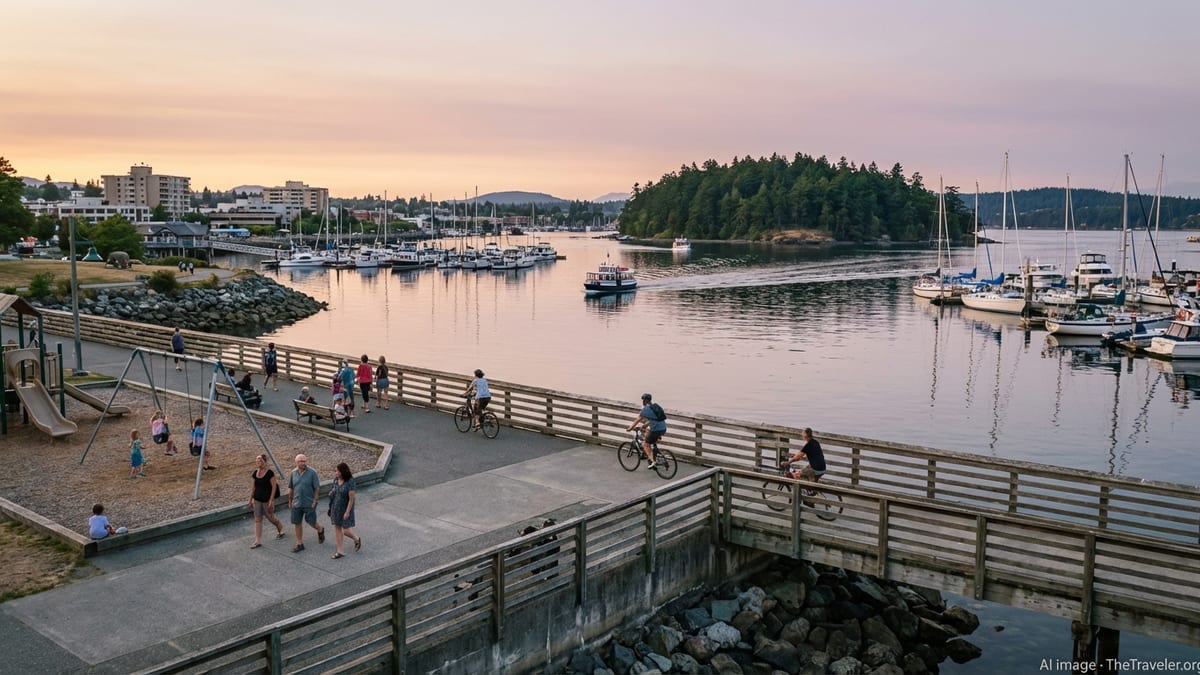
My first impression of Nanaimo was that it felt more like a “real” working city than a resort town, and that turned out to be consistently true. The downtown waterfront, centered around Maffeo Sutton Park and the harbourfront walkway, has a relaxed, slightly scruffy energy: joggers passing by dog walkers, kids swarming the destination playground, and the odd cruise of locals grabbing coffee before work. It never felt manicured in the way some resort communities do, and I actually liked that. The city’s mix of old storefronts, new condos, and ongoing construction gave me the sense of a place still figuring itself out rather than one polished for visitors alone.
In contrast, every time I drove into Parksville and Qualicum Beach I felt the pace drop instantly. Parksville’s waterfront park, boardwalk, and long sandy beach are clearly set up for vacation mode. Even in shoulder season, I saw more strollers, mobility scooters, and leisurely dog walks than briefcases. Qualicum Beach felt even more curated: flower-filled streets, heritage-style buildings, and almost no big-box or franchise presence in its compact downtown. It was pretty and calm, but I also found myself wondering where the messy, everyday life was hiding.
The Comox Valley and Victoria each fell somewhere in between. Courtenay’s downtown has a low-rise, small-town feel with murals, older buildings, and that unmistakable “we know our neighbors” vibe, yet there is real everyday hustle once the shops open. Victoria’s Inner Harbour and downtown, on the other hand, are gorgeous but highly touristed. On a busy summer afternoon I sometimes felt more like I was passing through a set piece for cruise passengers than a lived-in coastal city. Nanaimo sat right in the middle of these extremes for me: rougher around the edges than the resort towns, more laid-back than Victoria, and big enough that I did not keep running into the same people every day.
The decision moment for me was where to base myself for a full week. I ultimately chose Nanaimo because I wanted that “real city” backbone with ferries, transit, and year-round residents at the forefront, rather than spending all my time in a place that exists mostly for visitors and retirees. That choice shaped everything about how I experienced the island’s character afterward.
Downtown Vibes: Walkability, Grit, and Nightlife
When I talk about character, I often start with downtown. Nanaimo’s downtown core surprised me in both good and bad ways. On a sunny afternoon, Commercial Street and the nearby lanes felt pleasant, with local shops, cafes, and a trickle of people heading toward the Port Theatre for evening events. The waterfront path made it easy to connect the harbour with downtown on foot. But once I stayed out past 10 p.m., I noticed the mood shifting. Some blocks emptied out almost completely, and others collected a slightly rough bar crowd. I never felt directly unsafe, but I was more alert than I expected to be in a mid-size island city.
Courtenay’s downtown felt smaller but more consistently comfortable to walk at night. The low buildings, local brewery patios, and views up 5th Street toward the Comox Glacier gave me that “small town, big heart” feeling. Even after dark there were enough people heading to restaurants or the Sid Williams Theatre for shows that I did not feel like the streets had emptied out. The nightlife is not exactly electric, but it lined up better with what I actually do on trips: dinner, one or two drinks, early night.
Parksville and Qualicum Beach were the opposite experience. During the day in summer, Parksville around the beach and Craig Street market thrummed with families and beachgoers. But by 9 or 10 p.m., things quieted dramatically. Qualicum Beach shut down even earlier. Stores closed, restaurants thinned out, and the streets became almost eerily calm. If you value peace, that might be perfect. For me, it felt like the lights went out too soon, and I had to plan dinners carefully because kitchens closed earlier than I am used to in larger cities.
Victoria, unsurprisingly, was where I found the most consistent nightlife and evening atmosphere. The Inner Harbour, Government Street, and adjacent neighborhoods kept a steady flow of people late into the night, especially on weekends. There were buskers, bars, and after-dinner strolls along the water. The tradeoff was crowding. In peak season I often felt like I was swimming upstream through tourists, especially when multiple ferries or cruise ships were in town. In Nanaimo I never had that issue; even when there were events at the Port Theatre, it still felt manageable, which I came to appreciate more than I expected.
Waterfront Character: Harbours, Beaches, and Access
Nanaimo’s waterfront is its best feature and also one of its most frustrating. The stretch around Maffeo Sutton Park, the harbourfront promenade, and the small ferries out to Saysutshun (Newcastle Island) felt vibrant and genuinely local. People were out biking, kids were in the playground, and several times I saw temporary public art pieces I had not expected. Yet as I walked further, I kept hitting dead zones: fenced-off industrial sections, or areas where busy roads cut the city off from the water. I found myself thinking that the waterfront could have been incredible if the planning had been more ambitious.
Compare that to Parksville, where the town seems almost designed around its beaches. Parksville Community Park is a long, open expanse of lawn, playgrounds, sand, and shallow tide pools. Even at low tide, I saw families wandering seemingly endless wet sand. The character here is completely beach-centric; the town flows naturally into the shore, and it feels like the default living room for the whole community. Qualicum Beach has a quieter, more old-fashioned version of the same idea: a pebbly-sand beach, a narrow promenade, and small eateries across the road. It felt tranquil and very “retired coastal village.”
The Comox Valley’s relationship to the water is less obvious at first. Courtenay itself sits slightly inland along the river, while Comox has the marina, Fishermans’ Wharf, and a more classic harbour atmosphere with fishing boats and seafood right on the dock in season. I enjoyed that working-harbour feel more than I expected. Buying fresh fish from the boats and watching the comings and goings of local vessels gave Comox a lived-in authenticity that I sometimes missed in Nanaimo’s more fragmented waterfront.
Victoria’s Inner Harbour is visually stunning, there is no denying that. Historic buildings, floatplanes, whale-watching boats, and crowds posing for photos in front of the Legislature. But because it is such a focal point for tourism, I experienced it more as a stage than a place to simply exist beside the water. For daily life, I actually preferred Nanaimo’s mix of casual waterfront parks and working harbour, even if I had to hunt a bit to find the best stretches.
Culture, Community, and the Arts Scene
I did not expect Nanaimo to feel as culturally active as it did. The Port Theatre anchors a surprisingly ambitious arts scene, hosting everything from local dance to national tours and performances by the Vancouver Island Symphony. Around town, street art, murals, and seasonal temporary public art in places like Maffeo Sutton Park gave me little jolts of creativity when I was just out for a walk. On several evenings, I had more than one interesting event option and had to pick between live music, a theatre performance, and community festivals.
That said, Nanaimo’s culture still feels scattered. One night I left a well-attended performance at the Port Theatre only to find the adjacent streets already quiet by the time the show ended. Another evening, a festival in one park was buzzing while other nearby public spaces felt almost empty. It is an active community, but the energy pockets do not always connect, and as a visitor it took some effort to figure out where things were happening on any given day.
Victoria is the cultural heavyweight, hands down. From galleries and museums to the steady lineup of concerts, festivals, and performances, I never ran out of things to do. On the downside, a lot of it felt curated for visitors or for a more affluent audience. Ticket prices were often higher, and crowds were larger. I found myself enjoying the range of options but not always the feeling of being just one more tourist in a sea of cameras.
In the smaller centers, culture is more community-focused. Courtenay and Comox leaned heavily into local arts events, intimate theatres, and maker-focused markets. Parksville and Qualicum Beach punch above their weight in arts and gardens, especially around Milner Gardens and local galleries, but the tone is gentler and more retiree-focused. If you are looking for edgy or experimental art, you will find more of it in Nanaimo and Victoria. If you want a slower, community craft and garden culture, Parksville, Qualicum, and the Comox Valley delivered that with less effort.
Cost, Convenience, and Getting Around
Atmosphere is not just about ambience; it is also about how easy and affordable it is to live your day. Here Nanaimo quietly won me over. As a transportation hub with major ferry connections and bus routes across town, it made one-day or overnight trips to the other cities surprisingly simple. I did not need a car for every outing, and when I did rent one, getting in and out of Nanaimo was straightforward. Accommodation in Nanaimo also tended to be more affordable than in Victoria and often less booked up than beachfront places in Parksville in peak summer.
Victoria was the most convenient once I was in the city center, but getting in and out by car could be a patience test, especially on weekends and in high season. Parking was often pricier and more competitive. It felt like a big city set on an island, with all the pros and cons that implies. My daily costs for food, drinks, and activities in Victoria were also noticeably higher than what I paid in Nanaimo or Courtenay.
Parksville, Qualicum Beach, and the Comox Valley presented a different kind of tradeoff. Once I reached them, getting around by car was easy and parking rarely a problem. But public transport options were limited compared to Nanaimo and Victoria, and in the more rural pockets I quickly realized I could not rely on transit at all. For travelers without a vehicle, this significantly changes the atmosphere: the world shrinks to what is walkable from your accommodation, and that can mean you see the same few blocks many times over.
One real decision moment for me was where to stay for a long weekend without a car. I debated between central Victoria, downtown Nanaimo, and Parksville. Victoria won in terms of walkable density, but the price tags were steep. Parksville would have left me largely stuck near my hotel and the beach. Nanaimo ended up as my compromise choice: enough transit to reach parks and shopping areas, a walkable core with some character, and prices that did not sting every time I booked a night.
Crowds, Safety, and Overall Comfort
Nanaimo has a reputation in some circles for being a bit rough, and I went in with that in mind. There are visible social challenges in parts of downtown and near some commercial strips: homelessness, open substance use, and worn-down buildings. I encountered a few uncomfortable moments, like aggressive panhandling and loud arguments late at night outside certain bars. None of these felt outright dangerous, but they did affect how relaxed I felt walking alone after dark on quieter streets.
By contrast, Parksville and Qualicum Beach felt almost too quiet at times. Walking along the beach at dusk or wandering the downtown blocks in the evening, I rarely felt uneasy, but I also rarely saw many people at all once the dinner hour passed. The comfort here comes from calm predictability: low noise, low drama, and mostly older residents and families. If you are looking for edge or unpredictability, you will not find much of it. If you want serenity and early nights, the atmosphere will be exactly what you hope for.
Courtenay and Comox struck the best balance for me. The towns felt compact and neighborly, with enough street activity to feel alive but not so many people that crowds became an issue. I did see some of the same social issues I saw in Nanaimo, but on a smaller scale and in more contained pockets. Overall, I felt comfortable walking around day and night, especially in the central areas.
Victoria is a mixed bag. Near the Inner Harbour and main tourist arteries, the crowds can be overwhelming in peak season, and there is the usual big-city mix of buskers, vendors, and people in distress. A few blocks inland, especially in quieter neighborhoods, the feel shifts to leafy and residential. I needed to pay more attention to which area I was in and at what time of day. In Nanaimo, the shift from lively to empty or edgy could sometimes be abrupt block by block, which is something I would tell first-time visitors to be prepared for.
Seasonality and How the Vibe Changes Through the Year
Vancouver Island’s mild climate means none of these cities shut down in winter, but each reacts differently to the seasons. Nanaimo’s size and role as a regional center help it stay relatively steady. Even on cold, wet days I still saw people using trails, attending events, and moving around downtown. Restaurants and cafes stayed open, and I did not feel like I had mistimed my visit if the weather turned sour.
Parksville and Qualicum Beach, on the other hand, felt intensely seasonal. During summer Beachfest in Parksville, the waterfront was packed, sand sculptures drew visitors, and the whole town felt in vacation mode. But in the colder, wetter months, the streets were much quieter. Some activities simply did not make sense in the rain and wind, and I felt the town’s energy compress back into a handful of year-round businesses. That is not necessarily bad, but it is a very different atmosphere than the brochures suggest.
The Comox Valley wears shoulder seasons well. With ski terrain at Mount Washington close by and year-round hiking and biking in the valley, I sensed more of an “outdoors people live here” buzz even outside peak summer. There was a sense of continuity between seasons: people shifted from river tubing and beach days to skiing and storm watching rather than vanishing entirely. Victoria, being the provincial capital and a much larger city, kept its baseline energy all year, though the nature of that energy shifted from street festivals and markets to more indoor cultural events in winter.
Timing my visits became one of my biggest decision points. If I wanted consistent atmosphere and did not want to gamble on seasonality, Nanaimo and Victoria felt like the safest picks. If I was willing to chase a very specific summer beach mood and accept a quieter town the rest of the time, Parksville and Qualicum Beach were better. The Comox Valley sat in the middle, offering something in every season but rarely bursting at the seams with crowds.
Real Decision Moments: Where Nanaimo Won and Lost
Over the course of the trip, a few concrete decisions clarified how these places felt in practice. The first was choosing a home base for exploring the island without a car the entire time. I tried three-night blocks in both Nanaimo and Victoria. In Victoria, I had more options within walking distance, but the constant tourist presence wore on me faster than I expected. In Nanaimo I had fewer blocks to roam, but I felt more like I was part of everyday life, not just passing through a destination. If I were planning a long stay again, I would still lean toward Nanaimo for that reason alone.
The second decision was whether to splurge on beachfront accommodation in Parksville or stick to more modest lodgings in Nanaimo and day-trip to the beaches. I did one night at a beachfront spot in Parksville during summer and loved waking up steps from the sand. But the premium price and the fairly limited evening options made it feel like an occasional treat rather than a practical base. For most travelers, I think it makes more sense to enjoy Parksville and Qualicum Beach as day trips unless your main goal is to sit on the beach and do very little.
The third decision involved choosing a quieter small-town atmosphere: Comox Valley versus Qualicum Beach. I expected to prefer Qualicum Beach for its classic seaside village look, and for a day it was idyllic. But after a couple of nights, I felt restless. The Comox Valley, especially Courtenay paired with Comox, held my attention longer thanks to its diversity of cafes, local shops, river and ocean access, and proximity to mountain activities. The atmosphere there felt less curated and more genuinely lived in.
Across all these decisions, Nanaimo kept reappearing as the flexible middle option: not the most beautiful, not the calmest, not the most exciting, but consistent and well connected. That may not sound glamorous, but if you are actually trying to experience multiple corners of Vancouver Island in a single trip, it matters a lot.
The Takeaway
After weeks bouncing between Nanaimo, Victoria, Parksville–Qualicum Beach, and the Comox Valley, I ended up appreciating each city for what it is rather than what I imagined it would be. Nanaimo is not the picture-perfect island postcard nor the horror story some online comments suggest. It is a working coastal city with a mix of grit and charm, a strong waterfront heart, and an arts scene that is better than it looks at first glance. For travelers who want a practical base with year-round life, reasonably manageable costs, and room to explore in different directions, Nanaimo quietly does an excellent job.
Victoria delivers the most polished urban experience and the fullest cultural calendar, but at the price of crowds and higher daily costs. Parksville and Qualicum Beach shine for slow, beach-centered holidays and retirement-paced calm, but their atmosphere is highly seasonal and can feel sleepy outside summer. The Comox Valley offers an appealing mix of river, ocean, and mountain, with a down-to-earth character that suited me better the longer I stayed.
If you care most about beaches and do not mind early nights, Parksville and Qualicum Beach are likely to make you happiest. If you want museums, nightlife, and grand cityscapes, Victoria is still the clear winner. If you dream of mixing small-town friendliness with outdoor access in every direction, Courtenay and Comox are hard to beat. But if you are trying to balance cost, convenience, culture, and everyday livability in one place, Nanaimo occupies a very practical sweet spot, especially if you are planning to explore more than one community in a single trip.
Next time, I would still base myself largely in Nanaimo, but I would book a short beachfront stay in Parksville during peak summer, and carve out a longer block in the Comox Valley rather than quick day trips. Knowing how the character of each place really feels on the ground makes it much easier to design a trip that matches your own pace and priorities, rather than the marketing slogans.
FAQ
Q1. Is Nanaimo a better base than Victoria for exploring Vancouver Island?
Nanaimo worked better for me as a practical base because it was cheaper, less crowded, and more central for day trips, though Victoria offers more walkable attractions in one place.
Q2. How does Nanaimo’s waterfront compare to Parksville and Qualicum Beach?
Nanaimo’s waterfront feels more like a mix of working harbour and community park, while Parksville and Qualicum Beach are focused almost entirely on leisurely beach time.
Q3. Is Nanaimo safe to walk around at night?
I felt mostly safe but more alert downtown at night than in smaller towns. There are visible social challenges, so I stuck to better-lit, busier streets after dark.
Q4. Which city has the best nightlife on Vancouver Island?
Victoria clearly has the most nightlife and evening options. Nanaimo has some bars and events, while Parksville, Qualicum Beach, and the Comox Valley are much quieter after dinner.
Q5. Are Parksville and Qualicum Beach worth visiting if I stay in Nanaimo?
Yes. They make excellent day trips from Nanaimo, especially in summer. I enjoyed their beaches and quieter atmosphere but would not use them as my only base.
Q6. How does the Comox Valley feel compared to Nanaimo?
The Comox Valley felt smaller, friendlier, and more outdoors-focused, with river and mountain access close by, while Nanaimo felt more urban and central for transport.
Q7. When is the best time of year to experience these cities’ atmosphere?
Summer has the most energy and outdoor events, but also more crowds and higher prices. Spring and early fall struck the best balance for me across all the cities.
Q8. Is a car necessary to enjoy Nanaimo and nearby towns?
A car is helpful but not essential in Nanaimo and Victoria. For Parksville, Qualicum Beach, and much of the Comox Valley, a car made a big difference in what I could see.
Q9. Which city feels most like a “real” working community rather than a resort?
Nanaimo and the Comox Valley felt the most like everyday working communities. Parksville and Qualicum Beach felt more like resort and retirement destinations.
Q10. If I only have one long weekend, should I pick Nanaimo or Victoria?
If you want maximum sights and culture in a compact area, choose Victoria. If you prefer a more relaxed, less touristy base with easier day trips, I would pick Nanaimo.