

When I planned a recent Vancouver Island trip, I assumed Victoria would be the obvious base and Nanaimo more of a ferry stop. After several visits to both cities in different seasons, that assumption did not hold up. Victoria still feels like the polished capital with postcard views and big-ticket attractions.
Nanaimo, on the other hand, quietly undercut my budget, surprised me with pockets of real character, and ended up being a better fit for certain kinds of trips. This is my honest, firsthand comparison of Nanaimo vs Victoria, focused on real costs, convenience, crowd levels, and what you actually get for your time and money.
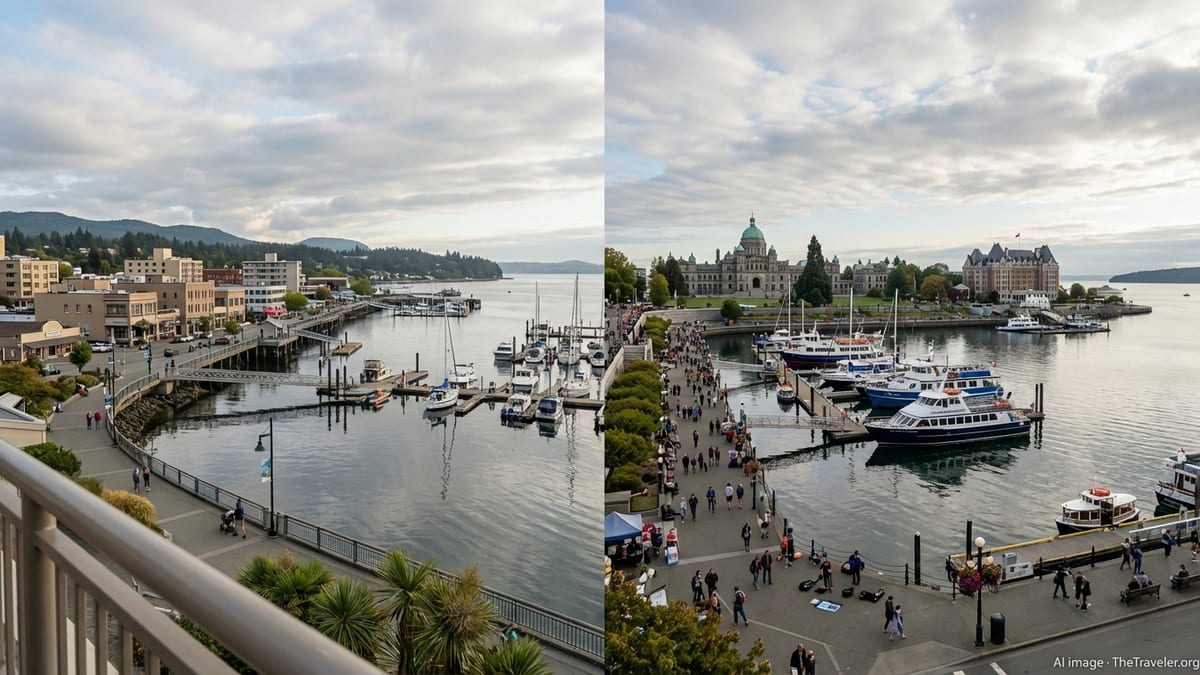
First Impressions and Overall Vibe
Arriving in Victoria, I immediately felt like I had stepped into the highlight reel of Vancouver Island. The Inner Harbour, the Parliament Buildings lit up at night, the Fairmont Empress dominating the waterfront, and busy whale watching boats coming and going all tell you this is the capital and the main stage. It is beautiful, curated, and busy. On my first evening stroll along the harbour, I heard at least five languages in ten minutes and passed more tour groups than locals. It felt exciting, but also like I had joined a very well-oiled tourism machine.
Nanaimo felt very different from the moment I rolled off the ferry at Departure Bay. The waterfront is simpler and lower key, with a working port feel in places and a compact downtown that has clearly been improving but is not fully polished. I could actually hear gulls and harbor sounds without buskers competing for attention. Walking the Harbourfront Walkway in Nanaimo at sunset, I passed dog walkers, joggers and families rather than tour groups. It felt more like I had dropped into an everyday coastal city that happens to have nice scenery, rather than a city that exists primarily for visitors.
Neither vibe is inherently better, but they lead to very different trips. In Victoria, I felt gently nudged toward paid experiences, organized tours, and marquee attractions. In Nanaimo, I felt nudged toward free walks, local bakeries, craft breweries, and spontaneous side trips to islands and parks. Victoria impressed me faster. Nanaimo grew on me slowly but stuck with me longer.
If you want that immediate hit of “I have arrived somewhere special,” Victoria wins. If you are more interested in a slower discovery, fewer crowds, and a city that feels like it is still lived in by locals first, Nanaimo has the edge.
Value for Money: Accommodation, Food and Activities
When I started comparing what I actually spent, Nanaimo pulled ahead on value very quickly. In Victoria, especially in late spring and summer, I struggled to find centrally located hotels that did not creep into what I would normally pay in big North American cities. In the Inner Harbour area, mid-range hotels with walkable access to the Royal BC Museum, the Legislature, and whale watching docks routinely priced well above what I paid for a similar or better room in Nanaimo. Even moving slightly out of Victoria’s core did not always produce the savings I expected, especially on weekends and during festivals.
In Nanaimo, I consistently paid less per night for clean, comfortable rooms, and I had a wider choice of modestly priced motels and smaller hotels within a short drive of the waterfront. I stayed once in a budget-friendly place a few minutes from the Harbourfront Walkway and still spent noticeably less than any comparably located stay I managed to book in Victoria. For travelers watching their bottom line or staying more than a few nights, this price gap makes a real difference. I would easily save enough over a four-night Nanaimo stay to cover a couple of nice dinners or a boat trip.
Eating out followed the same pattern. In Victoria’s core, I found lots of excellent food, but bills added up quickly, especially around the harbour and in the busy downtown streets off Government and Douglas. Happy hours and casual spots kept things reasonable, but the baseline price for a sit-down meal was higher. In Nanaimo, I could still splurge on craft beer and creative menus, but I more often walked away feeling like I had paid neighborhood prices instead of tourist district prices. Coffee, pastries and quick lunches were especially friendlier on the wallet in Nanaimo.
Activities are where the gap can widen further. Big-ticket attractions in Victoria, like Butchart Gardens and major museums, quickly stack up in cost once you add transport, admission, and perhaps a tour. Meanwhile, most of what I loved in Nanaimo was either free or low cost: the Harbourfront Walkway, Bowen Park, Buttertubs Marsh for birdwatching, or a relatively inexpensive passenger ferry to nearby islands. When I added everything, I got more total days of relaxed exploring for the same budget in Nanaimo than I did in Victoria, where I tended to compress expensive highlights into fewer days.
Getting There and Getting Around
From a logistics standpoint, both cities are very accessible, but in slightly different ways. Victoria’s main ferry link to the mainland runs between Swartz Bay and Tsawwassen. The crossing itself is scenic, but Swartz Bay is still about a 30 to 40 minute drive or bus ride from downtown Victoria, longer in summer traffic. The connection works, but it adds a layer of planning and sometimes stress when you are rushing to match sailing times, especially if you are traveling without a car and relying on buses or shuttles.
Nanaimo, by contrast, feels more directly plugged into the ferry network. There are two primary terminals linking Nanaimo with the Vancouver area. From Departure Bay, ferries connect to Horseshoe Bay, which is handy if you are starting from North or West Vancouver. From Duke Point, ferries serve Tsawwassen, which is more convenient for anyone arriving from the south or near the mainland’s major highways. Crossings typically run about two hours on these core routes, and both Nanaimo terminals tie directly into the city by highway. On one trip, I arrived at Departure Bay and was walking along Nanaimo’s harbour in under 15 minutes.
Within the cities, I found Victoria slightly easier to navigate without a car, but that convenience comes at the cost of higher central accommodation. Many of the top spots in Victoria, including the Inner Harbour, Beacon Hill Park, and the Royal BC Museum, cluster together, so I mainly walked and used transit for outlying areas like Butchart Gardens. In Nanaimo, attractions are more spread out, and while there is transit, I found a car or rideshares made life easier, especially for reaching parks, ferries to islands, and trailheads in a reasonable time.
One frustration I ran into in both cities was ferry demand during peak travel months. Vehicle reservations on the major BC Ferries routes are common and, in my experience, practically essential in summer and on holiday weekends. Saver fares and prepaid options exist, but they also tend to sell out for prime times. I have queued as a foot passenger without a reservation and gotten on, but as a driver, I now treat reservations as non-negotiable when my schedule matters. This is not a deal-breaker, but it is a constraint that adds planning pressure for both cities.
Sightseeing, Culture and Nature Access
Victoria still wins on classic sightseeing and cultural depth. The Royal BC Museum near the Inner Harbour, with its natural history collections and First Peoples Gallery, is the kind of institution you can easily lose half a day in, especially if weather turns bad. The Legislature offers guided tours that gave me a surprisingly engaging look at the province’s political history. Fisherman’s Wharf, Craigdarroch Castle, Beacon Hill Park, Chinatown, and the Dallas Road waterfront all offer a dense mix of architecture, history, and coastal scenery that is hard for any other Vancouver Island city to match.
Nanaimo’s attractions are more understated and scattered, but they add up if you give them time. I enjoyed strolling the revived downtown streets, attending a performance at the Port Theatre, and spending a quiet morning looping around Buttertubs Marsh watching herons and ducks. The city’s waterfront trail system, including the Harbourfront Walkway, is genuinely pleasant, with frequent ocean views and a more relaxed feel than Victoria’s Inner Harbour. Nanaimo also acts as a hub to nearby wild spots: short boat rides to places like Saysutshun (Newcastle Island) or Snake Island for wildlife watching and diving, and easy drives to forested parks inland.
The biggest surprise for me was how each city connects to nature in a different way. Victoria tends to frame nature as a curated experience: gardens like Butchart, manicured parks, guided whale watching, and scenic drives. It is lovely, but there is usually a ticket or organized structure involved. Nanaimo feels more like a gateway city for independent exploring. It is easier to wake up, check the weather, and spontaneously decide to hop a small ferry, walk a local trail, or drive toward less busy beaches and forests without much planning or cost.
If you care most about museums, architecture, and highly photogenic urban scenery, Victoria earns its reputation. If you want a base that balances a functioning city with quick, flexible access to outdoor time, Nanaimo quietly competes and sometimes feels more authentic.
Crowds, Seasonality and Atmosphere
Seasonality changed how I experienced both cities. In peak summer, Victoria can feel close to saturated around the Inner Harbour and major attractions. I have shuffled shoulder to shoulder along the waterfront, waited in long lines at popular restaurants, and navigated clusters of tour groups moving from bus to boat. The upside is an energetic atmosphere, long daylight hours, festivals, and outdoor dining everywhere. The downside is that calm, spontaneous moments get harder to find without deliberately heading to quieter neighborhoods or visiting at off-peak times of day.
Nanaimo, even in summer, felt busy but rarely crowded in that same way. There were certainly more people along the waterfront and in parks, but I never felt like I was in a queue the entire day. I could walk into casual restaurants without a booking more often, and local events felt more community focused than tourist focused. When I wanted some solitude, it took just a short drive or a quick ferry to find it.
Off-season, both cities shift gear. Victoria stays more active thanks to its role as the provincial capital and its convention and government business. Some attractions scale back hours in late fall and winter, but the core city still feels alive, and hotel prices usually drop compared to summer. I have had some of my favorite Victoria experiences in the shoulder months, walking Dallas Road in cool weather and ducking into cozy cafés without any sense of rush.
Nanaimo in the off-season feels quieter and can verge on sleepy in some parts of downtown, especially at night. Some smaller operators, including certain tours and seasonal waterfront businesses, cut back or close temporarily. On one winter visit, I misjudged this and found myself with fewer open dining options than I expected on a weeknight. The flip side is that accommodation becomes very affordable, and trails, marshes, and parks become nearly empty. For travelers who value quiet over a packed calendar of events, that can be a big plus, but it is important to manage expectations.
Safety, Comfort and Practical Tradeoffs
In terms of safety, I never felt threatened in either city, but I did notice some differences. Like many mid-sized Canadian cities, both Nanaimo and Victoria have visible homelessness and some street disorder in and around their cores. In Nanaimo, a couple of downtown blocks felt rougher around the edges than I expected, especially after dark. In Victoria, I encountered similar issues near certain streets off the main tourist corridor. I adjusted by staying on well-lit routes at night and choosing accommodation in areas that felt active and well managed.
Comfort also extended to how walkable and navigable each place felt. Victoria’s central core is dense and human scaled; once I parked the car, I rarely needed it. Sidewalks are good, crosswalks frequent, and the main attractions are all within a compact area. Nanaimo’s walkability varies more. The Harbourfront Walkway, older downtown, and some parks are pleasant on foot, but major roads and commercial strips feel car centric. I found that I was more likely to be hopping in and out of the car in Nanaimo, which may bother some travelers and not others.
One tradeoff I did not fully anticipate involved noise and nightlife. Victoria has more nightlife options, but that also means more potential for nighttime noise if you are staying near the busier parts of downtown. On one trip, I made the mistake of booking a centrally located but older hotel near late-night bars and regretted it. Nanaimo is generally quieter in the evenings, with fewer venues that stay noisy late, but that also means fewer options if you want live music, bars, and a late-night scene within walking distance.
Overall, both cities felt safe to me with standard urban precautions. My main advice would be to choose accommodation with location in mind, not just price: stay closer to the Inner Harbour or calmer residential fringes in Victoria if you want quieter nights, and anchor yourself near the waterfront or established, busy blocks in Nanaimo rather than drifting too far into underused downtown corners.
Real Decision Moments: What I Chose and Why
My first big decision was where to base myself when I had six nights to play with. Initially, I planned to spend four nights in Victoria and two in Nanaimo. Once I compared room rates and thought about my priorities, I flipped that, choosing four nights in Nanaimo and two in Victoria. This let me stretch my budget, rent a car, and use Nanaimo as a base for day trips while still having time to enjoy Victoria’s highlights at the end. In hindsight, this was the right call for that trip. I did not feel rushed in Nanaimo, and my two Victoria nights were enough to hit the main attractions I cared about at that time.
The second decision point came when I was choosing activities around Victoria. I really wanted to see both Butchart Gardens and do a whale watching tour, but doing both in one short stay would have made the trip feel like a high-cost checklist. I decided to book the whale watching tour and skip Butchart on that visit, partly because whale sightings are seasonal and not guaranteed and partly because garden visits can more easily be saved for a future, slower trip. I do not regret it, but it highlighted how quickly a Victoria itinerary can become expensive if you try to do everything.
My third major decision involved ferry routes and timing. On one trip, I debated whether to sail directly into Victoria’s area or to land in Nanaimo first. After looking at sailing times and the layout of my broader Vancouver Island route, I chose to arrive in Nanaimo via the Horseshoe Bay route, spend a few days there and exploring nearby islands, then drive south to Victoria and depart from Swartz Bay. This loop let me avoid backtracking and made the most of my ferry reservations. Next time, I might reverse it depending on where I find the best Saver or prepaid fares for my travel dates.
Across all of these choices, the pattern was clear. Whenever I prioritized classic sights and a compact, walkable urban experience, I leaned toward Victoria. Whenever I prioritized cost, flexibility, and easier access to quieter nature, I leaned toward Nanaimo. Knowing which of those matters more to you will probably answer the “which city offers more value” question better than any single rating.
The Takeaway
After multiple trips that included both Nanaimo and Victoria, I would not call one city universally better than the other, but I do think they deliver value in different ways. Victoria gives you that iconic, instantly photogenic Vancouver Island experience, with major cultural institutions, historic architecture, and tightly clustered attractions. You pay more for it in higher room rates, pricier dining in the core, and a lineup of big-ticket activities that can quickly inflate your budget, but if you have never been, the impact per day is high.
Nanaimo, in contrast, delivers quiet value over time. Accommodation and everyday costs are generally lower, and the city works well as a base for independent exploring. It is not as polished and some parts of downtown still feel like they are catching up, but I consistently felt that my money stretched further there. I also appreciated being able to slip into nearby nature without much advance planning or expense.
If you are a first-time visitor to Vancouver Island with limited days and you want maximum wow factor, I would still recommend spending at least part of your trip in Victoria. It is the capital for a reason and it delivers on the promise of grand waterfront views, history, and a sense of occasion. If you have more time, are traveling on a tighter budget, or prefer a less crowded, more local-feeling base, Nanaimo deserves serious consideration and may offer better overall value.
Personally, I now plan future trips around both: a few nights in Nanaimo to decompress, explore islands and parks, and keep costs manageable, then a shorter, more intense burst in Victoria focused on carefully chosen highlights. Used in tandem, the two cities complement each other and turn a single Vancouver Island visit into a more balanced, rewarding trip.
FAQ
Q1. Which city is cheaper overall, Nanaimo or Victoria?
Nanaimo has consistently been cheaper for me, especially for accommodation and casual dining. Victoria’s costs jump quickly near the Inner Harbour and around major attractions, so short stays there tend to feel more expensive per day.
Q2. If I only have two or three days, should I choose Nanaimo or Victoria?
For a first visit with just a couple of days, I would choose Victoria because its key sights are clustered and you can walk almost everywhere. If you prefer a quieter, lower cost trip with more focus on simple coastal walks and local life, Nanaimo can still work, but Victoria delivers a stronger first impression.
Q3. Is it worth visiting both Nanaimo and Victoria on the same trip?
Yes, as long as you have at least five or six days. I like using Nanaimo as a base for a few nights and then finishing with a shorter stay in Victoria for the big-ticket highlights. It does mean managing more ferry and driving logistics, but the contrast between the two cities makes the trip more interesting.
Q4. Do I need a car in Nanaimo or Victoria?
In Victoria, you can get by very well without a car if you stay near the Inner Harbour and use buses or tours for outlying spots. In Nanaimo, I strongly prefer having a car because attractions and parks are more spread out and public transit does not always line up neatly with trailheads and ferry docks.
Q5. How far are the ferry terminals from each downtown?
Victoria’s main ferry terminal at Swartz Bay is roughly a 30 to 40 minute drive or bus ride from downtown under normal conditions. In Nanaimo, the terminals at Departure Bay and Duke Point connect directly to highways, and in my experience I could reach the waterfront and downtown in about 10 to 20 minutes by car, depending on which terminal I used.
Q6. Which city is better for families with kids?
For families, I find it depends on your style. Victoria offers more formal attractions like museums, gardens, and organized tours that are easy to package into a short, activity-filled stay. Nanaimo offers more informal, lower cost options like waterfront walks, parks, and short boat rides, which can be great if you want flexibility and do not need a long list of marquee sights.
Q7. How do crowds compare between Nanaimo and Victoria in summer?
Victoria gets noticeably more crowded in summer, especially around the Inner Harbour and popular sights. It can feel very busy, with lines and fully booked restaurants. Nanaimo feels active but rarely overwhelming; I have found it easier to find last-minute tables and quieter corners even in peak season.
Q8. Which city is better as a base for exploring the rest of Vancouver Island?
If your priority is exploring central and northern Vancouver Island or doing varied day trips, I think Nanaimo is the better base because it sits closer to many inland and coastal routes. Victoria is better as a base if you mostly want to explore the southern tip of the island and nearby destinations like Sooke or Sidney.
Q9. Are there safety concerns I should be aware of in either city?
In both Nanaimo and Victoria, I noticed some areas with visible homelessness and street disorder near parts of the downtown cores. I handled this by sticking to well-lit, busier streets at night and choosing centrally located accommodations in areas that felt active and maintained. With those basic precautions, I felt safe in both cities.
Q10. If I am traveling on a tight budget, which city should I prioritize?
On a tight budget, I would prioritize Nanaimo for longer stays because accommodation and daily expenses tend to be lower. I would then add a short, carefully planned side trip to Victoria if possible, focusing spending there on one or two standout experiences rather than trying to do everything.