

Naoussa on the island of Paros has become one of the most in-demand bases in the Cyclades, and its beaches are a major reason why. Cradled in a protected bay on the island’s north coast, Naoussa gives visitors easy access to a string of coves and sandy stretches, from the sculpted rocks of Kolymbithres to the village-front sands of Piperi and the calm curve of Monastiri.
This guide unpacks how to choose between them, how to get there, and what to expect once your feet hit the sand.
Orientation: Naoussa and Its Beaches
Naoussa is a whitewashed fishing village that now doubles as Paros’s most stylish hub, with waterfront restaurants, boutique hotels and lively summer nightlife. Yet the beaches around Naoussa still cover a surprising range of moods, from low-key local spots to fully serviced party beaches. Understanding the layout of the bay and the main transport options will help you plan your days efficiently.
The core cluster of Naoussa beaches lies within Naoussa Bay, a broad, semi-enclosed stretch of water that offers more shelter from strong winds than the open north coast. Kolymbithres and Monastiri sit across the bay from town, reachable by road or water taxi, while Piperi, Agioi Anargyroi and several smaller coves sit within walking distance of the port. Further afield, Santa Maria and Lageri appeal to those willing to venture beyond the immediate bay.
Most visitors combine a stay in Naoussa with days spent beach-hopping between these options. Water taxis run seasonally between the harbor, Kolymbithres, Monastiri and sometimes Lageri, while buses, rental cars and scooters fill the gaps. With a bit of planning, you can balance convenience, comfort and a sense of discovery.
Kolymbithres Beach: Sculpted Rocks and Shallow Coves
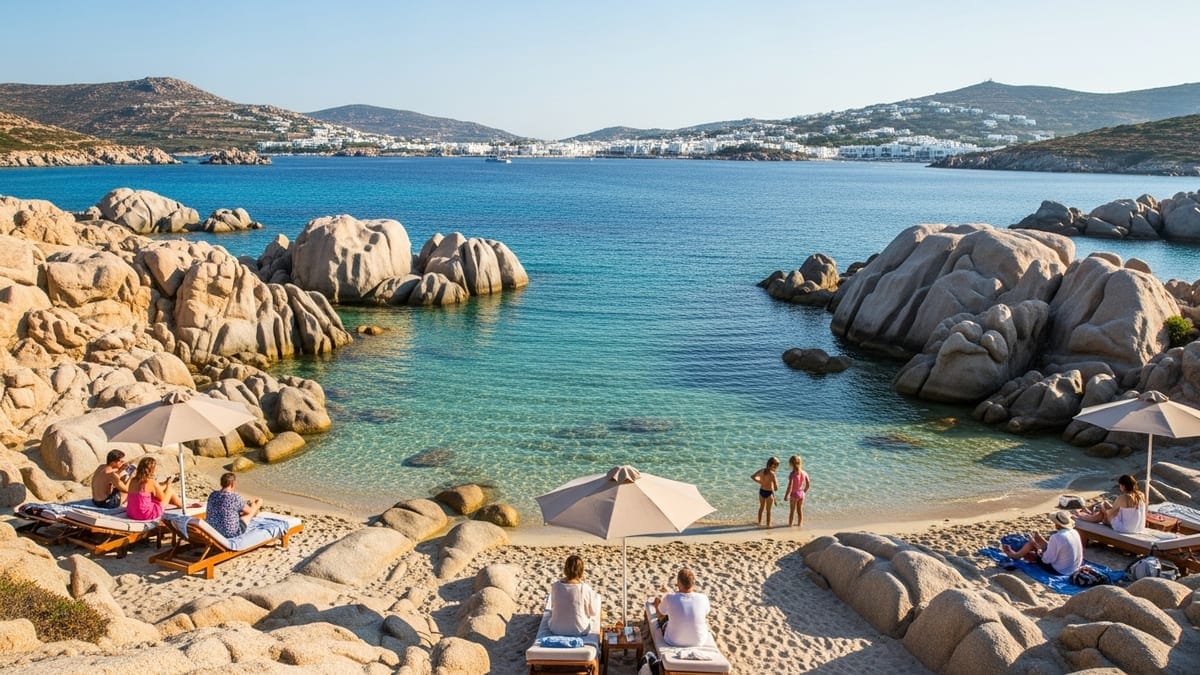
Kolymbithres is the star beach of Naoussa Bay, famed for its smooth granite boulders, shallow turquoise coves and family-friendly waters. Sitting directly opposite Naoussa, it feels both wild and accessible, with a mix of serviced and more natural corners. The name Kolymbithres roughly translates to “baptismal fonts,” a nod to the rock formations that create pool-like inlets scattered along the shoreline.
What Kolymbithres Feels Like
The first impression of Kolymbithres is its landscape. Large, pale rock formations slope gently into the sea, broken up by pockets of soft sand and small coves. The water is extremely shallow close to shore and remains calm thanks to the protection of Naoussa Bay, making it a popular choice for families with children who want to wade and splash without strong waves.
Despite its popularity, Kolymbithres still offers nooks of relative privacy if you are willing to clamber over the rocks. Some coves are organized with sunbeds and umbrellas, while others are informal spots where visitors simply spread their towels on warm stone. A couple of low-key beach bars and tavernas serve snacks, basic meals and drinks through the main summer season.
Swimming, Snorkeling and Activities
Swimming here suits all comfort levels. Confident swimmers can venture beyond the rock pools into slightly deeper water, while those who prefer to stand can stay in the sandy shallows. The clarity of the water makes it a pleasant place for casual snorkeling, particularly around the edges of the rock formations where fish shelter.
Kayak and stand-up paddleboard rentals are sometimes available in high season, offering a different perspective on the unique geology of the bay. Because the water is generally sheltered, conditions are usually suitable for paddle sports except on the windiest days.
Access, Parking and Water Taxis
Kolymbithres is roughly 7 to 10 minutes by car or scooter from Naoussa and about 20 to 25 minutes from Parikia, depending on traffic. A paved road runs right down to the shoreline and there are several informal parking areas behind the beach, though these can fill quickly in July and August, especially late morning and early afternoon.
In high season, local buses connect Naoussa and Kolymbithres a handful of times per day, typically taking 10 to 15 minutes. Schedules vary year by year and taper off in late September, so you should always confirm exact times locally once on the island.
Many visitors opt for the Naoussa water taxi. In recent seasons, small boats have run frequently between the village harbor and Kolymbithres, with journey times around 5 to 7 minutes and typical fares in the region of a few euros each way. Boats generally operate from late May or early June until mid-October, with more frequent departures in July and August and reduced service outside peak months.
Tips for Enjoying Kolymbithres
Kolymbithres can feel crowded by late morning in peak season, but the beach’s segmented layout helps absorb numbers. To make the most of a visit, consider the following tips:
- Arrive before 10:00 if you want your pick of sunbeds or a quieter cove.
- Wear sturdy sandals or water shoes, as some rock surfaces can be slippery.
- Bring snorkeling gear if you are curious about marine life around the rocks.
- Combine Kolymbithres with a late-afternoon visit to Monastiri or a sunset walk in Naoussa.
Piperi Beach: Naoussa’s In-Town Swim Spot
Piperi Beach is Naoussa’s most central stretch of sand, located a short walk from the port and surrounded by low-rise hotels, apartments and village homes. It functions less as a destination beach and more as Naoussa’s informal “local swim” spot, popular with residents and visitors who want a quick dip without committing to a full beach day.
Layout and Atmosphere
Piperi is essentially an urban beach, framed by village streets and small gardens rather than isolated headlands. The coastline is divided into Megalo Piperi (Large Piperi) and Mikro Piperi (Small Piperi), two adjacent coves within a small bay lined with tamarisk trees and rocky outcrops.
The sand is mixed with small pebbles in places, particularly near the waterline, but remains comfortable underfoot once you are in. Houses and small hotels sit close behind the beach, creating a sense that Piperi blends seamlessly into daily life in Naoussa. It is an easy, sociable place to swim, watch the sunset or take a short stroll along the waterfront.
Swimming Conditions and Facilities
The water at Piperi is generally clear and gently shelving, suitable for children and less confident swimmers. On calm days, it is a pleasant place to float and watch fishing boats move across the bay. Light snorkeling is possible near the rocks at either end of the cove.
Unlike more developed beaches, Piperi offers minimal organized facilities. Depending on the season and year, you may find only a few umbrellas or loungers at most. There are no full-scale beach clubs or noisy bars directly on the sand, although cafés, tavernas and mini-markets lie only a few minutes’ walk away in the village. This understated character appeals to those who prefer to bring their own towel and cooler.
Access, Parking and When to Go
Piperi lies roughly 250 meters from Naoussa’s port and can be reached on foot from most accommodation in town in under 10 minutes. This walkability is its defining advantage. For visitors arriving by car from elsewhere on Paros, limited street parking near the beach makes parking somewhat challenging, particularly in high season.
Most drivers leave their vehicles in Naoussa’s public parking lots on the edges of the village and walk down to the sand. In summer, daytime heat can make this walk feel longer than it looks on the map, so carrying water and sun protection is advisable.
Piperi is best enjoyed early in the morning, before the sun is at its highest and before day-trippers return from other beaches. Evening swims followed by dinner in Naoussa’s old port are also popular, particularly on still, clear days when the bay reflects the colors of the setting sun.
Pros, Cons and Who It Suits
Piperi is not Paros’s most pristine beach, but it offers unbeatable convenience. Its strengths include its central location, calm swimming and a low-key local feel. However, limited shade, occasional litter issues and crowding in peak season mean it is rarely the highlight of a Naoussa stay.
It best suits:
- Travelers staying in Naoussa who want an easy morning or evening swim.
- Families with young children who value proximity to their hotel.
- Visitors without a rental car on days when buses and boats feel like too much effort.
Those willing to travel 10 to 20 minutes will usually find cleaner, more spacious beaches elsewhere in Naoussa Bay and around Paros.
Monastiri Beach & Paros Park: Calm Waters and Coastal Trails
Monastiri Beach lies deeper inside Naoussa Bay, tucked into a protected cove beneath rocky hills and the small monastery that gives it its name. It has evolved into a well-organized beach with a relaxed, slightly upscale vibe, complemented by the walking trails and viewpoints of the surrounding Environmental Park of Paros.
Beach Setting and Facilities
The sand at Monastiri is soft and golden, sloping gently into calm, shallow water ideal for families and less confident swimmers. The bay’s geometry keeps waves small, even on breezy days, which is one reason many visitors now rank Monastiri among Naoussa’s most enjoyable beaches.
The main stretch is lined with organized sunbeds and umbrellas, typically run by a beach bar or café that also serves drinks and light meals. Showers and basic changing areas are usually available in season. Music levels tend to be moderate compared to more overtly party-oriented beaches on other Cycladic islands.
Hiking, Views and Activities in Paros Park
Behind the beach, the Paros Environmental and Cultural Park offers several marked walking trails that weave across the headlands. These paths take you past viewpoints, small chapels and historic remains and offer far-reaching vistas across Naoussa Bay towards the village.
Most routes are short enough to complete in under an hour, although summer heat can make them feel more demanding. Sturdy footwear, a hat and water are essential if you plan to combine hiking and beach time on the same day. Occasional cultural events and performances take place in an open-air theater within the park during the high season, adding another layer of interest for evening visitors.
Reaching Monastiri by Car, Taxi and Water Taxi
Monastiri is roughly 15 minutes by car from Naoussa and around 20 minutes from Parikia. A single main road leads into the area, with signs pointing toward both the beach and the Environmental Park. In peak season, traffic can be slow on the final approach, and parking close to the sand fills by late morning.
There is no direct public bus to Monastiri. The closest point reachable by bus is Kolymbithres, from which it is roughly 2 kilometers on foot along the coastal road to Monastiri. This walk takes around 25 to 30 minutes in each direction and is most comfortable early or late in the day.
The most popular option is the seasonal Naoussa water taxi, which runs directly from the village harbor to Monastiri, often via Kolymbithres. Travel time is around 10 to 12 minutes. Recent seasons have seen return fares commonly in the range of around 8 to 10 euros per person, with services operating hourly or more frequently in high summer, usually between mid-morning and early evening. Operations remain weather-dependent, especially on very windy days.
Planning a Day at Monastiri
Monastiri works well for visitors seeking a full-day beach experience with added variety. A typical plan might involve a morning hike along one of the Paros Park trails, followed by lunch and afternoon relaxation on the sand. Because the water remains shallow close to shore, the beach is particularly appealing for families, though couples also appreciate the calm and scenery.
For comfort, consider reserving sunbeds in advance through your hotel or by contacting the beach club in high season, when demand can exceed supply on weekends. Bringing a light cover-up or shirt is also sensible if you plan to move between beach and trails in strong sun.
Beyond the Big Three: Santa Maria, Lageri & Nearby Options
While Kolymbithres, Piperi and Monastiri draw most of the attention around Naoussa, several other beaches within easy reach are worth knowing about. Santa Maria offers a more expansive, activity-focused scene, while quieter coves like Lageri and Agioi Anargyroi appeal to those seeking space and a softer soundtrack.
Santa Maria: Wide Sands and Watersports
Santa Maria lies a few kilometers east of Naoussa on the northeastern tip of Paros. It is one of the island’s best-known beaches, combining long arcs of sand with clear water, organized facilities and a social summer atmosphere. Depending on the exact section you choose, you can find both family-friendly zones and livelier beach bar areas.
The main beach at Santa Maria typically features rows of sunbeds and umbrellas, watersports centers offering windsurfing, paddleboarding and sometimes diving excursions, and a choice of snack bars and restaurants. The open exposure to the Meltemi wind can bring stronger breezes and small waves on some days, which is part of the appeal for active travelers.
Access from Naoussa is easiest by car, scooter or taxi, usually taking around 10 to 15 minutes. In high season, buses link Naoussa with Santa Maria on a limited schedule, though service tends to be less frequent than routes to Parikia. For visitors who want a single beach with many amenities and do not mind a busier feel, Santa Maria is a reliable option.
Lageri: Quiet, Natural and Semi-Naturist
Lageri Beach lies across Naoussa Bay from the village, near the northern shore opposite the port. It is known for its relatively undeveloped character, golden sand and shallow, transparent waters. Dunes and low vegetation back the beach, creating a more natural atmosphere than organized spots closer to town.
Lageri has long had a reputation as a discreet, semi-naturist beach, particularly in its more secluded corners. There are no formal facilities: no sunbeds, no organized bars, and only limited natural shade. As a result, visitors should bring water, snacks, and their own umbrellas or sun tents if they plan to stay for more than a brief swim.
Access is either by car followed by a short walk along sandy tracks or, in season, by the Naoussa water taxi, which has in recent years extended some services to Lageri on a schedule that is generally less frequent than boats to Kolymbithres and Monastiri. This combination of relative privacy and easy swimming makes Lageri a favorite for travelers who value quiet over convenience.
Agioi Anargyroi and Other Local Beaches
Agioi Anargyroi sits roughly 1.5 kilometers from central Naoussa, an easy 15-minute walk east along local streets. It is a longer, more open beach than Piperi, with some organized sections of sun loungers and umbrellas, as well as a scattering of trees providing natural shade.
Restaurants and small hotels line the back of the beach, but it retains a relaxed feel compared to Santa Maria. For travelers staying in Naoussa who want a beach they can walk to within 20 minutes but that feels more spacious than Piperi, Agioi Anargyroi is a strong candidate.
Smaller coves and rocky swimming spots also fringe the coastline around Naoussa, accessible by short paths from village streets or coastal roads. These are not destination beaches as such, but they reward visitors who like to explore on foot and stumble across low-key places for a dip.
How to Get Around: Buses, Water Taxis, Cars and Scooters
Choosing the right transport is key to enjoying Naoussa’s beaches without stress. Distances are short, but summer heat, traffic and limited parking can make seemingly simple journeys take longer than expected. Each option has its advantages depending on your budget, comfort level and appetite for independence.
Public Buses
Paros’s bus network connects Naoussa with Parikia, the airport and several major beaches. In the context of Naoussa’s beaches, the most relevant routes usually run between Naoussa and Parikia and between Naoussa and nearby beaches such as Kolymbithres and Santa Maria during high season.
Services are generally more frequent in July and August and thin out from late September. Buses are an economical option, but schedules can change slightly from year to year. It is wise to check the latest timetable posted at Naoussa’s bus stop upon arrival and treat departure times as approximate rather than precise to the minute.
Naoussa Water Taxi
For many visitors, the Naoussa water taxi is both transport and experience. Seasonal boats typically operate from the old port in Naoussa to Kolymbithres, Monastiri and sometimes Lageri, offering scenic journeys of 5 to 15 minutes across the bay. Fares are modest, and some operators sell return tickets or day passes that allow for beach-hopping.
In recent seasons, peak summer schedules have seen departures every 20 to 30 minutes during the day to Kolymbithres and Monastiri. Early and late in the season, departures are less frequent, and operations may pause on particularly windy days. Tickets are bought at kiosks on the harbor just before boarding, usually paid in cash, though card acceptance is slowly improving.
Renting a Car or Scooter
Renting a car or scooter offers the greatest flexibility, especially if you plan to explore beyond Naoussa Bay to other parts of Paros. Driving times between Naoussa and most northern and eastern beaches are short, usually under 25 minutes, and roads are generally in good condition.
The main consideration is parking. In Naoussa, visitors are encouraged to use designated public car parks and walk into the center to reduce congestion. At popular beaches like Kolymbithres and Santa Maria, parking areas fill quickly during the middle of the day in high season. Arriving earlier or later, or combining driving one way with a water taxi return, can mitigate these pressures.
Scooters and quad bikes are another common choice for younger travelers, but they require extra care, particularly on gravel or sandy access roads. Helmets and basic protective clothing are advisable, even on short journeys.
Taxis and Private Transfers
Conventional taxis link Naoussa with Parikia, the port, the airport and major beaches. They can be a practical solution for those who do not want to drive themselves but prefer not to rely solely on buses. However, availability can be limited in peak hours, and prices rise accordingly.
Pre-booked private transfers and hotel shuttles sometimes fill gaps, particularly for airport and port runs. For short hops between Naoussa and nearby beaches, you should clarify approximate fares in advance and be prepared for higher prices in the late afternoon and evening.
Planning Your Naoussa Beach Days
With multiple beaches competing for your attention, a little planning helps ensure you match each day’s mood and weather to the right stretch of sand. Factors such as wind direction, season, desired level of facilities and transport options all shape the ideal itinerary.
Matching Beaches to Weather
Naoussa Bay’s semi-enclosed shape means beaches like Kolymbithres and Monastiri are more sheltered than open north-coast spots and often remain swimmable even when winds freshen. On particularly windy days, Piperi and Agioi Anargyroi may see more chop, while Santa Maria can feel exposed.
If a strong Meltemi is forecast, choosing a deeply inset bay like Monastiri can significantly improve comfort. Conversely, on still days, more open beaches such as Santa Maria offer refreshing breezes that help offset the heat.
Suggested Itineraries
For a short stay in Naoussa, sample itineraries might include:
- Day 1: Morning swim at Piperi, afternoon exploring Naoussa’s alleys and harbor, sunset drinks in town.
- Day 2: Water taxi to Kolymbithres, relax among the rock pools, late-afternoon return and dinner in Naoussa.
- Day 3: Full-day at Monastiri with a morning hike in Paros Park and afternoon on sunbeds.
- Day 4: Drive or bus to Santa Maria for watersports and a livelier atmosphere, sunset back in Naoussa.
- Optional: Quiet half-day at Lageri or Agioi Anargyroi for a more low-key swim.
Seasonality and Crowds
From late June through early September, Naoussa’s beaches are busy, with peak crowds in late July and August. During this period, early starts and advance planning for transport are particularly important. Shoulder months such as late May, June, September and early October offer a more relaxed experience, though some facilities and water taxi services operate on reduced schedules.
Outside these months, Naoussa becomes quieter and some beach clubs, tavernas and boat services close entirely. Sea temperatures remain swimmable for many visitors into October, but those prioritizing beach life should plan for the core summer window.
The Takeaway
Naoussa’s beaches form a compact yet varied coastline that can satisfy most tastes. Kolymbithres offers photogenic rocks and sheltered coves, Monastiri blends calm water with hiking in Paros Park, while Piperi provides an in-town swim on your doorstep. Santa Maria, Lageri and Agioi Anargyroi round out the picture with options ranging from lively to near-untouched.
By paying attention to wind conditions, understanding how water taxis and buses operate through the season, and being realistic about parking and crowds in high summer, you can shape each day around the bay that best matches your mood.
Whether you are hopping between beaches by boat, strolling from your hotel to Piperi at sunrise, or watching Naoussa’s lights flicker on from a sunbed at Monastiri, the coastline around this Cycladic village is likely to become a highlight of your time on Paros.
FAQ
Q1. Which Naoussa beach is best for families with young children?
Monastiri and Kolymbithres are particularly well suited to families thanks to their shallow, calm waters and protected positions inside Naoussa Bay. Both offer organized sections with sunbeds and umbrellas, while Monastiri adds easy entry into the sea and a gently shelving seabed that gives parents more peace of mind.
Q2. How reliable is the Naoussa water taxi service?
The Naoussa water taxi generally runs daily from late May or early June through mid-October, with the most frequent schedules in July and August. Services are usually reliable in calm conditions but may pause or run less frequently on very windy days. It is always best to check the day’s timetable at the harbor and allow some flexibility in your plans.
Q3. Can I visit Kolymbithres and Monastiri on the same day without a car?
Yes. In high season, you can use the Naoussa water taxi to reach one beach, then either walk between them in about 25 to 30 minutes or use a boat that serves both stops if available that year. Another option is to travel by bus or taxi to Kolymbithres and then continue on foot to Monastiri, returning to Naoussa by water taxi in the late afternoon.
Q4. Is Piperi Beach worth visiting if I have a rental car?
Piperi is most valuable for its convenience. If you already have a rental car and are happy to drive a few minutes, you will likely find more spacious and scenic beaches such as Kolymbithres, Monastiri or Santa Maria more rewarding. Piperi is ideal for quick swims near your accommodation or for early-morning and sunset dips when the beach is quieter.
Q5. Do I need to reserve sunbeds in advance at Naoussa’s beaches?
In peak season, advance reservations are recommended at the more popular organized beaches, particularly Monastiri and parts of Santa Maria, where sunbeds can sell out by late morning. Kolymbithres has a mix of organized and unorganized sections, so you can usually still find a spot on the rocks or sand even when official loungers are taken, though comfort levels vary.
Q6. Are there truly quiet beaches near Naoussa in summer?
Even in July and August, you can still find quieter stretches if you are willing to walk a little or accept fewer facilities. Lageri remains one of the calmest options, with a natural, semi-naturist feel and no formal services. Parts of Agioi Anargyroi and smaller unnamed coves along the coast can also feel less crowded, especially early or late in the day.
Q7. What should I pack for a day at Kolymbithres or Monastiri?
Besides standard beach essentials such as swimwear, towel and sunscreen, it is wise to bring water shoes or sturdy sandals for walking on rocks at Kolymbithres, a hat and sunglasses for strong midday sun, and enough cash to pay for water taxi fares and sunbed rentals. A light cover-up is useful if you plan to explore Paros Park trails around Monastiri.
Q8. Is renting a scooter safe and practical for reaching Naoussa’s beaches?
Renting a scooter can be a practical and economical way to reach beaches around Naoussa, provided you are comfortable riding on sometimes busy summer roads and occasional gravel access tracks. Wearing a helmet, avoiding alcohol when riding and being cautious on sandy or uneven surfaces are all important for safety. For groups or families, a small car is often more practical.
Q9. When is the best time of year to enjoy Naoussa’s beaches?
The best balance of warm sea temperatures, open facilities and manageable crowds usually falls between mid-June and late September. July and August bring the liveliest atmosphere but also the most congestion. Early June and October can still offer pleasant swimming, though some beach clubs, water taxis and tavernas may operate on reduced hours or close altogether.
Q10. Can I rely on public transport alone to explore Naoussa’s beaches?
If you are staying in Naoussa and visiting in high season, you can explore most key beaches using a combination of buses and water taxis, supplemented by walking. However, services may be infrequent at certain times of day and less predictable outside July and August. If you want maximum flexibility or plan to explore more remote parts of Paros, renting a car or scooter provides a significantly wider range of options.