

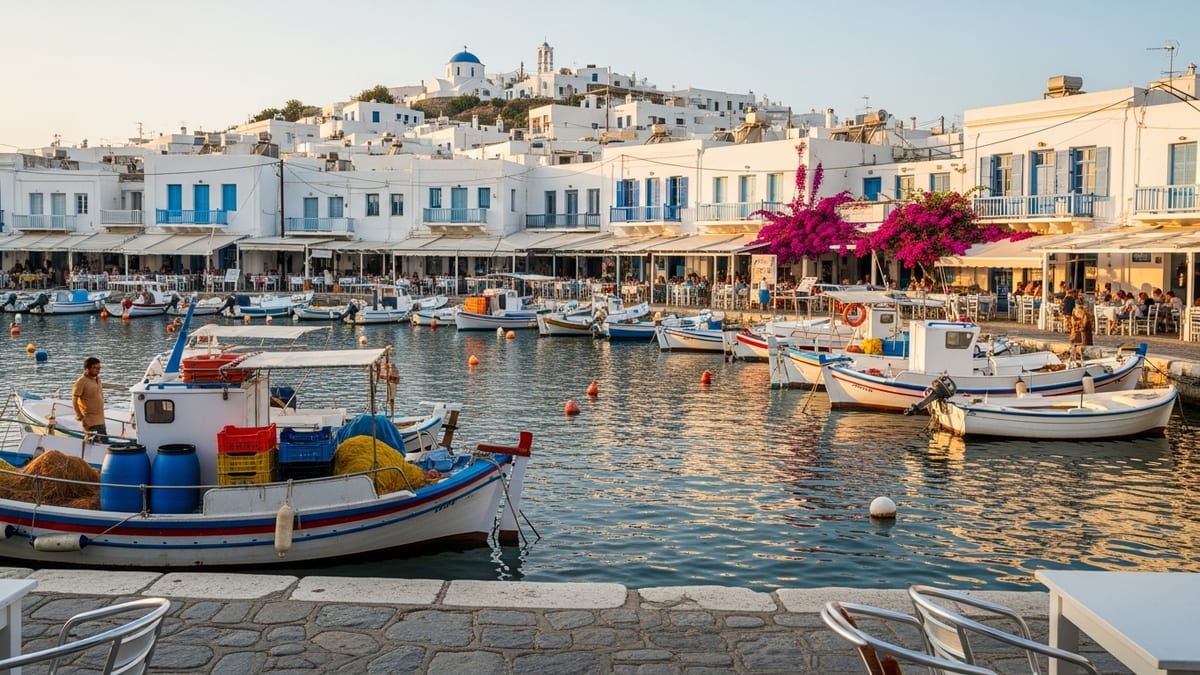
Naoussa on the island of Paros has quietly evolved from a sleepy fishing port into one of the most sought after bases in the Cyclades. Whitewashed alleys wrapped around a horseshoe harbor, chic cocktail bars tucked between boat sheds, and easy access to some of the Aegean’s best beaches make it a standout for first timers and return visitors alike.
Getting to Naoussa and Getting Around
Most travelers reach Naoussa via the main port of Parikia, where ferries arrive from Athens and neighboring islands. From Parikia, Naoussa is around 10 kilometers away and usually a 15 to 20 minute drive by taxi in normal traffic. Taxi fares between the port and Naoussa typically sit in the range of 20 to 30 euros in high season, with prices a little lower at quieter times of year. From Paros Airport, which is on the southern side of the island, you can expect a longer ride and a higher fare bracket, often quoted between 30 and 50 euros depending on the month and time of day.
If you prefer to keep costs down, Paros has a relatively reliable KTEL bus network that links Parikia and Naoussa year round. Typical one way fares on this route fall just above 2 euros, and in peak summer months buses usually depart every 20 to 30 minutes from early morning into late evening. Outside July and August, expect longer gaps and a reduced timetable, and plan connections more carefully, especially if you are trying to catch a ferry or flight the same day.
Once in Naoussa, the compact town center is entirely walkable. It takes less than 10 minutes to cover the distance between the bus stop at the town entrance and the fishing harbor if you are not stopping for photos. Many hotels and guesthouses sit within this radius, so you can comfortably explore the old town on foot and leave driving or buses for beach days. There is also a seasonal water taxi service from Naoussa harbor to beaches such as Kolymbithres and Monastiri in Paros Park. These small boats usually run every 20 to 30 minutes in high season, cost a handful of euros per ride, and provide a scenic shortcut that avoids parking hassles on busy days.
For more flexibility, especially if you want to explore the rest of Paros or stay out late at remote beach bars, consider renting a small car or scooter. Road conditions are generally good on main routes, and Naoussa is a straightforward drive from Parikia, Lefkes, Piso Livadi and other key spots. In July and August, limited parking around Naoussa itself means it can be wiser to leave a car at your hotel and walk into the center during the evening peak. If you are not confident on a scooter, stick to a car or rely on buses and water taxis, as Meltemi winds and loose sand on the roadside can make two wheel travel challenging in places.
Naoussa’s Harbor, Old Town and Nightlife
The emotional heart of Naoussa is its picturesque harbor, where colorful fishing boats bob in the water framed by stone quays and low white buildings. In the morning, this is still a working port, with local fishermen unloading the day’s catch and cafés opening their doors. Later, the same quayside becomes a lively promenade lined with tables for dinner and drinks, and the fishing boats form part of the evening scenery rather than purely a practical fleet.
Behind the waterfront, a maze of narrow lanes winds through the old town, shaded by bougainvillea and punctuated by tiny chapels and old stone doorways. Many of these backstreets are pedestrian only and filled with small boutiques selling linen clothing, Greek jewelry and local ceramics alongside more conventional souvenir shops. It is easy to drift in circles here, but getting lost is part of the charm and the town is compact enough that you will end up back at the harbor or main square without much effort.
As the sun goes down, Naoussa’s character shifts from fishing village to stylish evening hub. Around the old port, clusters of restaurants serve seafood, meze and modern Greek dishes at tables spread across flagstone terraces and along the water’s edge. Later still, cocktail bars and music bars take center stage, some in restored stone buildings and others closer to beach clubs on the edges of town. In peak season, nightlife runs late, and Naoussa draws a mixed crowd of Greek holidaymakers and international visitors who come precisely for its social scene.
Despite the buzz, Naoussa retains a softer side. Away from the harbor, quiet residential streets and small churches remind you that this is a year round community, not just a summer resort. Visiting in May, June, September or early October offers a taste of local life with more space in the lanes and shorter waits for a harbor side table, while still delivering warm evenings and open businesses.
Beaches in and Around Naoussa
One of Naoussa’s greatest advantages is its proximity to several of Paros’s top beaches. You do not need to drive long distances to find clear water and fine sand, and in some cases you do not need to drive at all. Right on the edge of town, Piperi Beach offers a narrow but pleasant strip of sand within easy walking distance of the harbor. It is ideal for a quick swim between strolls and meals, though its small size and closeness to the road mean it feels more like a town beach than an all day escape.
Just a short hop by water taxi or car from Naoussa, Kolymbithres has become one of Paros’s most iconic beaches. The shoreline is broken into a series of small coves carved by smooth, pale granite rocks, which create natural pools of shallow turquoise water. These rock formations make the beach visually striking and provide some shelter from waves, which is useful if you are swimming with children. In summer there are sunbed and umbrella rentals and a couple of simple tavernas nearby. Space is limited among the rocks, so it is worth arriving earlier in the day in July and August.
Across the same bay, Monastiri Beach sits at the edge of Paros Park in a protected cove. The water here is calm and shallow, making it suitable for less confident swimmers and families, and most of the small bay is occupied by an organized beach club with loungers and a bar restaurant. Above the shore, low hills and the small monastery of Agios Ioannis Detis add a scenic backdrop. While Monastiri can feel busy in the peak of summer, the surrounding parkland and walking trails mean you can easily combine a few hours on a sunbed with a short hike or sunset viewpoint.
On the other side of Naoussa, Santa Maria Beach stretches along a longer arc of sand and offers a livelier, more social atmosphere. Clear water and soft sand make it attractive for swimming and sunbathing, and in season beach bars, music and watersports centers give it an upbeat feel, especially in the afternoons. Small Santa Maria, a neighboring cove, is quieter and can be a better choice if you want the same scenery with a less intense soundtrack. A bit farther away, more secluded spots such as Lageri and Stefano offer fewer or no facilities and more natural surroundings for those who prefer to bring their own towel and supplies.
Paros Park, Activities and Day Trips
Paros Park, also known as the Environmental and Cultural Park of Paros, lies just across the bay from Naoussa and plays a significant role in the area’s outdoor life. Anchored by the small monastery that gave Monastiri Beach its name, the park covers a rugged promontory threaded with walking trails of varying lengths. These paths lead to lighthouses, viewpoints and little coves, and they are well suited to modest hikes in the cooler morning or late afternoon hours. From many spots in the park, you can look back across the water to Naoussa and its harbor, giving a broader sense of where the town sits on the island.
During the summer, the park also hosts cultural events, concerts and open air cinema evenings in a stone amphitheater set among the hills. Programs vary from year to year, but you can often expect a mix of Greek music performances and film screenings, which add an alternative to the bar scene for evenings out. Combining a swim at Monastiri, a walk along one of the marked trails and a show under the stars can make for one of the most memorable days of a Naoussa stay.
Out on the water, Naoussa’s position on the north coast of Paros makes it a natural starting point for boat excursions around the island and to nearby Antiparos. Day cruises typically loop around the northern and eastern shores, stopping at remote coves for swimming and including lunch on board. Shorter trips cross to hidden beaches that are less practical to reach by road, while some operators offer sunset cruises timed to catch the last light behind neighboring islands. In high season, advance booking is sensible, particularly for smaller boats with more limited capacities.
For a broader change of scene, you can pair a base in Naoussa with day trips inland or to the south. The hill village of Lefkes, once Paros’s capital, is a common target, offering cobbled lanes, views over the island and a more traditional pace of life. On the eastern shore, coastal settlements such as Piso Livadi and Logaras present a quieter alternative to Naoussa’s nightlife, while the south of the island around Aliki and Faragas Beach tends to feel calmer even in peak periods. Regular buses run from Naoussa to several of these destinations in summer, although frequency drops outside the high season.
Where to Stay and When to Visit
Naoussa’s rise in popularity over the past decade has brought a noticeable expansion in accommodation options. Around the town center you will find a cluster of small guesthouses and boutique hotels set in renovated Cycladic buildings, often with just a handful of rooms and a focus on design details. Many of these properties are within a five to ten minute walk of the harbor, which makes them ideal bases if you plan to dine and go out in Naoussa most evenings. They do, however, book up far in advance, especially for July and August, so early planning is important.
Along the beaches near Naoussa, including Agioi Anargyroi and the road toward Santa Maria, larger contemporary hotels and resorts have appeared in recent years. These typically offer pools, sea views and on site restaurants, appealing to travelers who want resort style services but still be close enough to town to venture in by foot or a short taxi ride. In some cases, these beachfront properties allow you to step directly from your room to the sand, which is particularly convenient for families with young children or travelers prioritizing relaxation over nightlife.
Self catering apartments and villas form the third major category of stays. On the hills around Naoussa you will find houses and suites with private pools and wide terraces looking over the bay. These suit groups of friends or extended families who value privacy and space, and they often come with the trade off of needing a car to reach town and beaches comfortably. Prices across all categories spike in late July and August, moderate in June and September, and are most forgiving in May and October when the sea is still swimmable but crowds are thinner.
Choosing when to visit Naoussa has a significant impact on your experience. High season runs from roughly late June through early September, with the most intense period occurring from mid July to the third week of August. During this time, all restaurants, bars and shops are open, and nightlife is at its most animated, but beaches and lanes are busiest and accommodation and taxi availability can tighten. Shoulder months like late May, June, September and early October offer warm weather and largely complete services, with more manageable numbers of visitors and a slightly more relaxed feel in town. Winter sees many tourist oriented businesses close, though Naoussa remains inhabited and can appeal to those wanting to experience the Cyclades in a quieter, more local light.
Food, Drink and Local Culture
Naoussa’s culinary scene is one of its strongest draws. Around the harbor and in the alleys fanning out behind it, you will find everything from classic family owned fish tavernas to sleek modern Greek kitchens and wine focused bars. Fresh seafood features heavily on menus, often grilled simply and served with lemon, island capers and locally grown vegetables. Octopus drying on lines in the sun along the harbor wall is still a common sight, and sampling it grilled at a quayside table remains a Naoussa ritual.
Beyond seafood, look for regional dishes like chickpea stews, slow cooked goat, and cheeses made on Paros or neighboring islands. Many restaurants place an emphasis on local produce and Greek wines, with lists that showcase Cycladic and mainland vineyards. Wine bars and small meze spots tucked into side streets offer a more casual way to explore these flavors, pairing glasses of Assyrtiko or other varieties with small plates and allowing you to move between venues over the course of an evening.
Daytime café culture is just as present. Around Naoussa’s main square and seafront, cafés serve coffee, pastries and light snacks from early morning. This is the time when residents and visitors mix most naturally, with kids playing in the squares and older locals watching the day unfold. Slower mornings after late nights are often spent lingering on shaded terraces, which also double as informal offices for digital nomads and remote workers using Naoussa as a summer base.
While Naoussa today feels modern and cosmopolitan, its roots as a fishing and trading port run deep. Small churches and chapels are dotted through the town, and you will hear their bells marking the hours. Local festivals and religious holidays bring processions and celebrations at different points in the season. Even if your primary aim is beaches and bars, taking a moment to step into a quiet church or to observe a small village celebration can add context to your stay and underline that Naoussa’s story stretches well beyond the last wave of tourism development.
Practical Tips, Costs and Responsible Travel
A stay in Naoussa today can be tailored to a range of budgets, but it is fair to consider it one of the more polished and therefore pricier hubs in the Cyclades. Accommodation costs in high season are notably higher than in smaller villages elsewhere on Paros, and popular restaurants often price in line with demand and waterfront views. You can, however, manage expenses by mixing harbor front meals with simpler tavernas a few streets back, using the bus network for some beach trips, and taking advantage of free stretches of sand at organized beaches rather than always paying for sunbeds.
As in much of Greece, cash is still useful, especially for buses, water taxis and smaller purchases, though card acceptance is widespread in hotels, established restaurants and shops. In July and August, it is worth booking key dinners, boat trips and car rentals in advance to avoid disappointment. For daily logistics, check bus timetables locally upon arrival, as schedules can shift slightly across the season even if overall patterns remain similar from year to year.
Weather in Naoussa in summer is typically dry and sunny, with daytime temperatures often reaching the high twenties or low thirties Celsius. The Meltemi wind that blows across the Aegean in July and August can make the heat more comfortable but can also kick up waves at exposed beaches and make some boat services and water activities more dependent on conditions. Packing light layers for breezy evenings, along with good sun protection and sturdy sandals for cobbled lanes and park trails, will make your days more comfortable.
With increased popularity comes a responsibility to tread lightly. In Naoussa, that means respecting local residents in quieter streets, keeping noise down when returning to accommodation late at night, and following requests around beach cleanliness and protected areas. Avoid leaving litter on remote coves and be mindful of where you anchor if you rent a boat, as some seagrass beds are environmentally sensitive. Supporting year round or locally owned businesses where possible helps ensure that the benefits of tourism are more evenly shared across the community.
The Takeaway
Naoussa manages a difficult balance. It offers the postcard images that draw many people to the Cyclades: whitewashed alleys, a fishing harbor glowing at sunset, chapel domes against a blue sky, and a choice of beaches with clear water. At the same time, it provides a level of dining, nightlife and accommodation variety that makes longer stays comfortable and engaging. For couples, groups of friends and solo travelers who like the idea of a lively base with quiet corners still within reach, it has few rivals in the central Aegean.
Planning ahead makes a real difference. Deciding when to travel, understanding how to move between Naoussa, Parikia and the beaches, and thinking about how you want to divide your time between water, walks, food and nightlife will help shape a visit that feels right for you. Whether you spend most days lazing on nearby sand, hiking the headlands of Paros Park, or hopping on boats to reach more remote coves, Naoussa offers an appealing combination of convenience and character.
If you arrive with a sense of curiosity and a willingness to explore beyond the harbor’s most photographed corners, you will find that Naoussa still has layers to uncover. It is this blend of scenic polish and underlying authenticity that keeps travelers returning, and that makes Naoussa a compelling choice for anyone planning a trip to Paros in the coming seasons.
FAQ
Q1. How many days should I spend in Naoussa?
Most travelers find that three to four full days in Naoussa works well, allowing time for the town itself, at least two different beach days and a half or full day exploring Paros Park or inland villages. If you want to use Naoussa as a base for island hopping or additional day trips, a week gives you a more relaxed pace.
Q2. Is Naoussa suitable for families with children?
Naoussa can be a good choice for families, particularly those with school age children. The town is walkable, nearby beaches such as Monastiri and Kolymbithres have shallow, calm waters, and many hotels and apartments cater to families. The main considerations are crowds and late night noise in high season, so families often prefer to stay slightly outside the center or visit in June or September.
Q3. Do I need a car if I stay in Naoussa?
You can comfortably spend several days in Naoussa without a car, using buses and water taxis to reach popular nearby beaches and Parikia. A car becomes more useful if you want to explore the south and east of Paros, visit multiple inland villages in one day, or stay in a villa outside town. Many visitors split their time, relying on public transport at first and renting a car for one or two targeted exploration days.
Q4. When is the best time of year to visit Naoussa?
The most popular time to visit Naoussa is from late June through early September, when weather is reliably warm and all services are open. For a balance of good swimming conditions and fewer crowds, late May, June, September and early October work well. Winter can be peaceful and appealing to those seeking quiet, but many seasonal businesses close and ferry schedules are less frequent.
Q5. How crowded does Naoussa get in summer?
In late July and August, Naoussa is very busy, especially in the evenings when visitors from other parts of Paros also come for dinner and nightlife. Harbor side tables, popular bars and organized beaches near town can fill up quickly. If you travel in this period, booking accommodation and key restaurants in advance and planning beach visits earlier in the day will help you avoid the worst bottlenecks.
Q6. Are there quiet areas to stay near Naoussa?
Yes. While the town center is lively, nearby areas such as Agioi Anargyroi Beach, the hills above the harbor and roads toward Santa Maria host a range of hotels, guesthouses and villas that offer a calmer environment. From these spots you can typically walk or take a short taxi into the heart of Naoussa while enjoying quieter nights and more space.
Q7. How expensive is Naoussa compared with the rest of Paros?
Naoussa is generally one of the more expensive parts of Paros for accommodation and dining, particularly along the harbor. That said, prices are often still below those of the busiest parts of Mykonos or Santorini. You can manage costs by choosing midrange accommodation a short walk from the center, eating at tavernas set back from the waterfront and using public buses for some excursions.
Q8. Is Naoussa a good base for exploring the rest of Paros?
Naoussa works well as a base if you are comfortable using buses or renting a car or scooter for some days. It has direct bus links in summer to Parikia and nearby beaches, and by connecting in Parikia you can reach the south and east coasts. Because Naoussa sits on the north coast, some drives to places like Golden Beach or Aliki take longer, but they are still manageable as day trips.
Q9. What should I pack for a trip to Naoussa?
Light, breathable clothing, swimwear, a hat and high factor sunscreen are essential in summer. Comfortable walking sandals or trainers are useful for the cobbled alleys and park trails, and a light layer for breezy evenings is recommended, especially when the Meltemi wind picks up. If you plan to visit more rugged beaches or Paros Park, consider water shoes and a small daypack for water and snacks.
Q10. Is Naoussa safe for solo travelers?
Naoussa is generally considered safe for solo travelers, including solo women, with low levels of violent crime and a friendly local population. As in any busy resort town, you should take normal precautions in crowded nightlife areas, keep an eye on your belongings on packed buses and at beaches, and avoid swimming alone after dark or in rough conditions, but most visitors report a relaxed and secure atmosphere.