

More news on this day
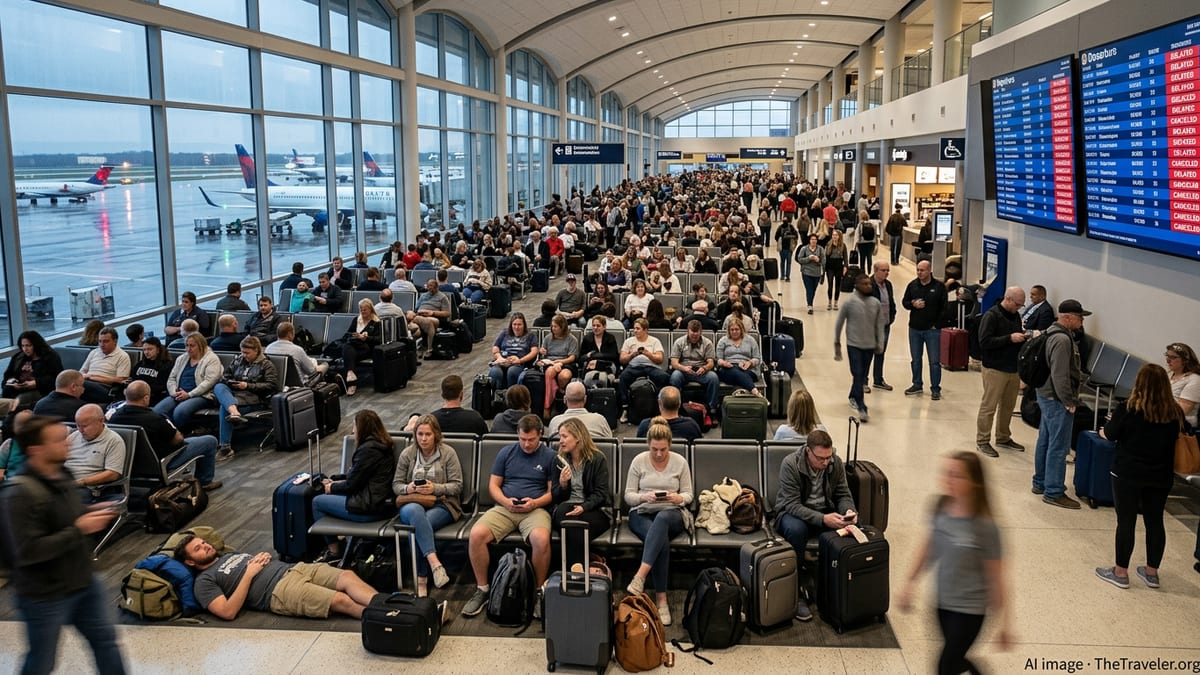
Travel at Nashville International Airport descended into severe disruption this week as a powerful storm system colliding with a prolonged partial U.S. government shutdown triggered cascading delays and cancellations across one of the South’s fastest‑growing hubs.
Get the latest news straight to your inbox!
Storm System Turns Busy Spring Travel into Gridlock
The disruption around Nashville International built rapidly as a sprawling March storm complex swept across the eastern half of the United States between March 13 and March 17, bringing heavy rain, thunderstorms, snow and high winds to key aviation corridors. Publicly available flight-tracking data shows that thousands of flights nationwide were canceled or delayed, with ripple effects reaching Tennessee as major hubs struggled to keep aircraft and crews on schedule.
Published coverage of the storm indicates that large airports in Atlanta, Chicago and New York were among the hardest hit, creating a knock-on effect for medium-sized hubs like Nashville that depend on timely connections to those cities. When departure banks at the bigger airports began to collapse under weather holds, diversions, and equipment checks for hail and wind damage, arriving and departing services into Nashville were pushed hours behind schedule.
Even as conditions in Middle Tennessee fluctuated between manageable rain and low clouds, national airspace constraints effectively turned Nashville into a holding point, with passengers watching their departure times slide repeatedly on terminal boards. For many travelers, the perception was that local weather looked acceptable while flight operations remained at a standstill, a gap explained by network-wide safety restrictions and aircraft repositioning challenges unfolding far beyond the city.
The timing of the disruption has magnified its impact. March is already a busy travel period, with spring break traffic and fans heading to college basketball tournaments pouring into airports. With airlines operating at high load factors, there has been limited slack in the system to rebook disrupted passengers, amplifying the sense of chaos as some travelers faced waits of a day or more to secure alternative itineraries through Nashville.
Shutdown-Driven Staffing Strains Add to the Turmoil
The weather alone did not account for the extent of the breakdown. According to national reporting on current aviation conditions, a partial U.S. government shutdown that began in mid-February has continued to strain staffing at federal agencies that underpin air travel, including security screening and air traffic control. Those pressures have been felt in varying degrees at airports across the country, and Nashville has not been immune.
Publicly available information from traveler accounts and industry briefings points to longer security lines at peak times and more frequent use of traffic management initiatives that slow the flow of aircraft in and out of busy airspace sectors. When layered on top of severe weather, those constraints can quickly turn isolated delays into a full-day operational logjam. Ground delay programs issued for Nashville in recent months, including during past staffing disruptions, illustrate how even modest reductions in controller availability can sharply curtail departures.
Federal flight statistics and Department of Transportation data underline how fragile the system has become under the twin pressures of high demand and staffing uncertainty. Recent winter storms earlier in the year produced some of the worst single-day cancellation totals since the early months of the pandemic, leaving carriers with thin crew reserves and complex repositioning tasks. The latest storm has arrived before those imbalances were fully resolved, exacerbating bottlenecks at connecting points like Nashville.
The result has been an environment where a backlog at a distant control center or security checkpoint can reverberate through the network and suddenly ground a departure board in Tennessee, even when the local terminal appears calm. For travelers trying to understand why flights are repeatedly pushed back or abruptly cancelled, the underlying web of staffing limits, duty-time rules, and national flow control measures has often remained opaque.
Passengers Confront Long Waits, Limited Options
On the concourses at Nashville International, the operational stress translated into long, uncertain hours for travelers. Publicly shared accounts across social platforms over recent days describe passengers camping out in gate areas overnight, scrambling for scarce hotel rooms, and lining up at airline counters for rebooking assistance as rolling waves of delays gave way to outright cancellations.
For those with tight connections, missed opportunities have been particularly painful. Travelers connecting through Nashville to reach family events, international departures, or critical business meetings reported itineraries unraveling after one delayed inbound flight left them stranded without viable same-day alternatives. With high demand across spring routes, standby lists have been long and the odds of securing a seat on later departures have been slim.
Families traveling with small children, elderly passengers, and those with mobility challenges have faced added strain navigating crowded terminals as schedules shifted. While airport managers and airline ground staff have worked within established contingency plans, the scale and duration of the disruption have tested the capacity of customer service desks, call centers, and online rebooking tools, prompting visible frustration among stranded passengers.
Published consumer travel guidance has urged anyone flying through Nashville and other affected airports this week to allow extra time for check-in and security, monitor airline apps relentlessly for schedule changes, and prepare for the possibility of overnight delays. For many, however, the speed at which conditions have deteriorated once a storm band or new staffing advisory appears has left little room to adapt in real time.
Operational Safeguards and Contingency Plans Under Scrutiny
The turmoil has drawn renewed attention to how airports such as Nashville prepare for and manage extended operational disruptions. The Metropolitan Nashville Airport Authority maintains a publicly available tarmac delay contingency plan that outlines how airlines and the airport coordinate during excessive ground holds, diversions, and irregular operations. The document details requirements for allowing passengers to deplane within set time limits and describes communication channels between carriers and the airport duty manager when storms or staffing disruptions threaten normal operations.
Recent events have effectively stress-tested those safeguards. While no widespread reports have emerged of aircraft exceeding federal tarmac delay limits at Nashville during this latest episode, the high volume of diversions across the region and the lingering government shutdown have amplified concerns about how quickly contingency protocols can be activated when multiple factors converge. Past episodes of ground stops and staffing-related restrictions at the airport offer a reference point, but the current combination of severe weather and prolonged federal uncertainty is unusual in scope.
Industry analysts note that Nashville’s rapid growth as a destination and connecting hub has outpaced some legacy assumptions about how much disruption the facility can absorb before passenger experience degrades dramatically. With more airlines adding routes and upgauging aircraft, the margin for error during peak travel periods has narrowed. The latest chaos is likely to fuel ongoing discussions about infrastructure investment, technology upgrades, and staffing resilience at both the local and national level.
For now, the practical advice for travelers remains unglamorous: build in significant buffers, favor nonstop flights when possible to reduce exposure to cascading delays, and keep contingency funds available for last-minute hotel stays or alternative ground transport. As the storm system moves off and federal budget negotiations continue in Washington, Nashville International’s performance in the coming days will serve as a bellwether for how quickly the broader U.S. air travel network can recover from one of its most chaotic stretches of the year.