

More news on this day
Travelers moving through Nashville International Airport on Tuesday faced mounting disruption as publicly available tracking data showed 72 departure delays and two cancellations, snarling flights on Southwest, Spirit, Delta and American Airlines to Atlanta, New York, Dallas and other major U.S. cities.
Get the latest news straight to your inbox!
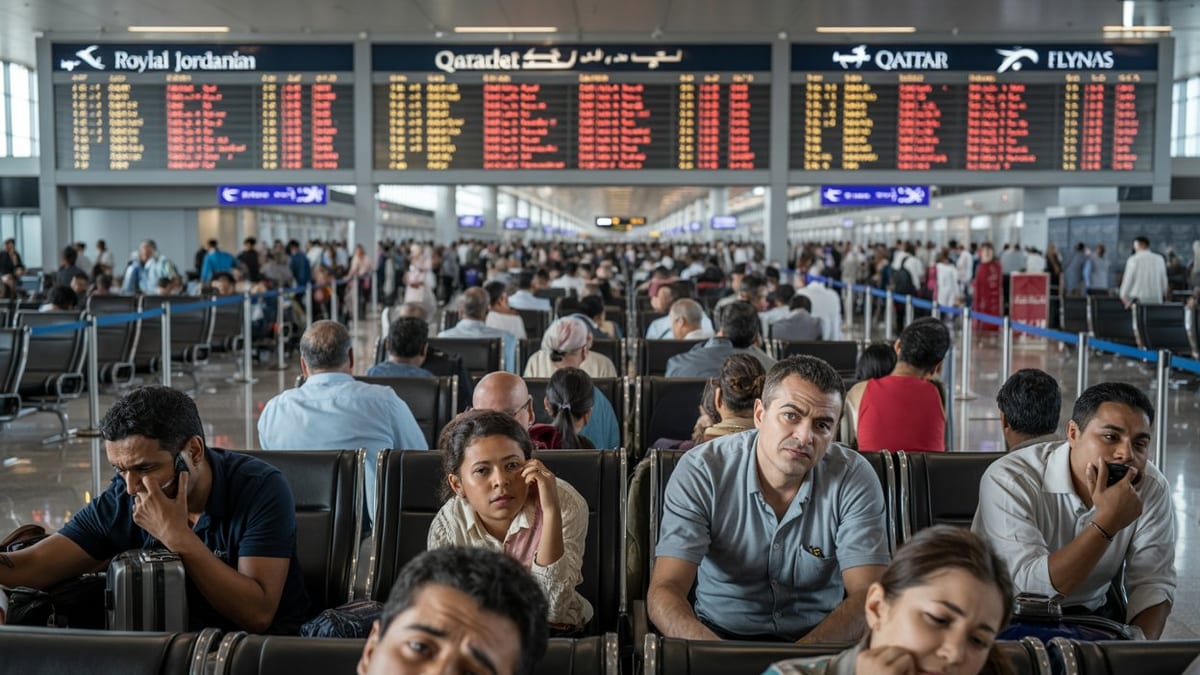
Delays Ripple From Nashville to Major U.S. Hubs
The latest disruption at Nashville International Airport comes amid an already busy spring travel period, with flights to key domestic hubs bearing the brunt. Services bound for Atlanta, New York area airports, Dallas and other large U.S. cities experienced repeated pushbacks in their departure times, according to live airport and airline tracking boards.
Southwest, Delta, American and Spirit collectively account for the vast majority of daily operations in Nashville, a role documented in recent airport authority reports that show Southwest alone operating roughly half of all scheduled flights. With those four carriers now reporting dozens of delayed departures within a single day, relatively small timetable slips quickly accumulated into significant terminal crowding and missed onward connections.
Published operational data for Nashville in recent years typically show on-time performance above the national average, but the current spike illustrates how quickly conditions can change when weather patterns, tight schedules and heavy demand converge. Passengers booked on popular trunk routes to Atlanta and New York were particularly exposed, as disruption on those services can reverberate through entire national networks.
For travelers heading to Dallas and other connecting hubs, the delays meant an elevated risk of missed evening links and late-night arrivals. As the day progressed, departure boards at Nashville featured a dense block of yellow and red status updates, signaling a challenging end to the travel day for many passengers.
Southwest, Spirit, Delta and American Under Pressure
The four airlines most affected by the Nashville disruption are also among the country’s largest domestic carriers, and recent performance analyses highlight how sensitive their networks can be to localized issues. Industry rankings released earlier this year noted that while overall cancellation rates have improved since the pandemic era, delays remain a persistent pain point across all major brands.
Southwest, which operates the largest share of flights from Nashville, has spent the past two years working to rebuild traveler confidence after a series of operational breakdowns that drew national attention. More recent data has pointed to fewer outright cancellations, but delays on popular point-to-point routes, including services linking Nashville with Dallas and other key cities, still occur frequently when schedules are compressed or storms move through busy corridors.
Delta and American, both key players on Nashville routes to Atlanta, New York and other hubs, have similarly seen mixed operational results. Comparative reports on recent travel seasons show Delta maintaining relatively strong on-time performance overall, while American has tended to record higher cancellation rates among major carriers. Spirit, which has been expanding its footprint in Nashville from a smaller base, remains more vulnerable to disruption because it operates fewer daily frequencies on each route and has less slack in its system.
Across these four airlines, the day’s 72 delays and two cancellations at Nashville represent a fraction of nationwide operations but a sizable disruption for one regional gateway. For affected travelers, the carrier logo on the boarding pass mattered less than the practical challenge of rebooking and reaching final destinations on an already busy day.
Weather, Congestion and Tight Turnarounds Drive Disruption
While precise causes for each individual delay out of Nashville varied, the pattern fits with broader national trends documented in federal aviation statistics and recent travel-industry research. Analysts regularly point to a combination of congested airspace, limited runway capacity at major hubs, staffing constraints and routine weather systems as key drivers of delay spikes.
National data show that so-called national aviation system delays, which include nonextreme weather, air traffic flow restrictions and airport congestion, account for a significant share of disruptions across major U.S. carriers. Even relatively minor thunderstorms or low cloud ceilings over Atlanta or New York can trigger ground stops or flow control measures that ripple back to origin airports such as Nashville.
In addition, smaller and mid-sized airports are often more vulnerable when disruptions begin, because they have fewer spare gates and less flexibility to swap aircraft or crews. Nashville’s growth over the past several years has increased its connectivity but also tightened its operating margins. As airlines push for high aircraft utilization with quick turnarounds, any delay early in the day can cascade into successive late departures.
Recent studies of delay patterns across the United States also highlight a strong seasonal component, with spring and summer thunderstorms, as well as winter storms further north, regularly pushing national delay rates above normal. On days when major hubs such as Atlanta, New York or Dallas experience difficult conditions, airports feeding those networks can see waves of late departures even if local skies remain relatively clear.
What Today’s Disruption Means for Nashville Travelers
For passengers moving through Nashville amid the latest wave of delays, the immediate impact was measured in hours spent in gate areas and reworked itineraries. Travelers with tight connections in Atlanta, New York or Dallas faced the most acute challenges, as a short delay out of Nashville could easily eliminate the buffer needed to make onward flights during peak evening banks.
Industry guidance suggests that travelers dealing with rolling delays should keep a close eye on their airline’s mobile app and departure boards and be prepared to request rebooking options as soon as a significant schedule change appears likely. Publicly available resources compiled by consumer advocates emphasize that same-day rebooking on later departures, or reroutes through alternative hubs, can often be secured more easily earlier in the disruption cycle than at the last minute.
Recent changes to federal transportation rules have also strengthened refund rights for U.S. flyers when cancellations or major schedule changes occur. While the majority of Nashville’s affected flights on this particular day were delayed rather than canceled, consumer information produced in the wake of the new regulations encourages passengers to review what counts as a significant change and what forms of compensation or reimbursement may apply to their specific situation.
With Nashville’s passenger volumes continuing to grow and the spring and summer travel seasons approaching, the latest outbreak of delays serves as a reminder that even airports with strong historical on-time records are not immune to sudden operational stress. For those planning trips through the city in the coming weeks, building in extra connection time and monitoring developing conditions at key hubs such as Atlanta, New York and Dallas could make the difference between a smooth journey and an unplanned overnight stay.