

More news on this day
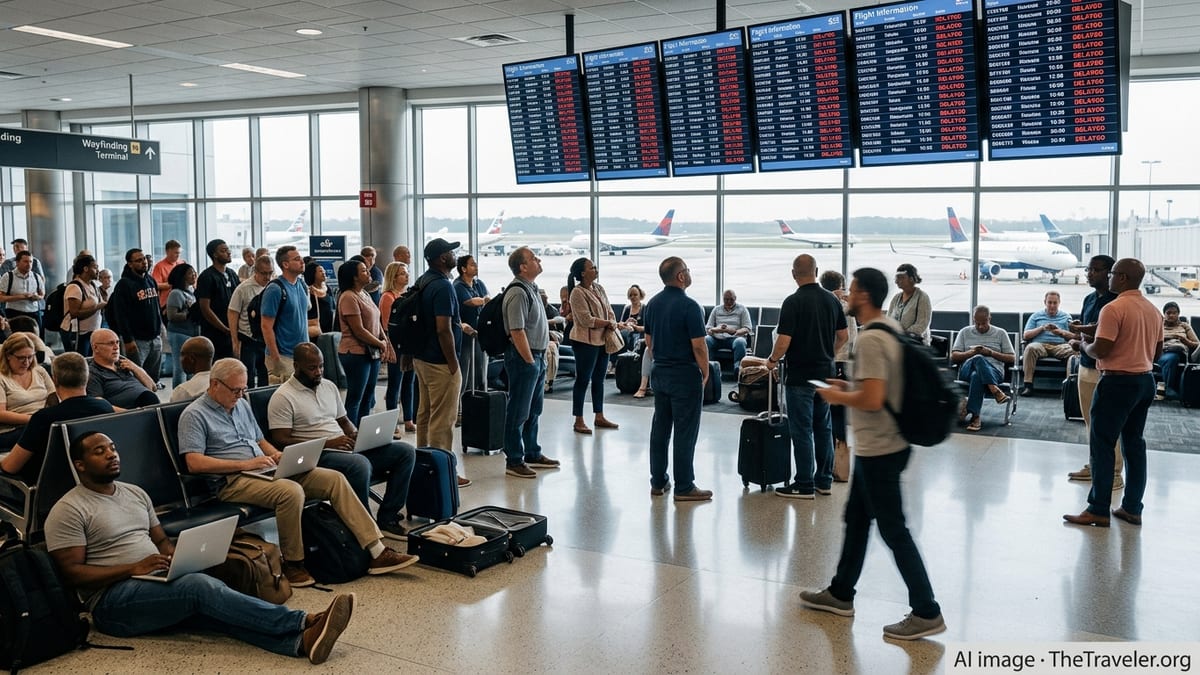
Passengers at Nashville International Airport faced a turbulent start to the week as more than 70 delayed flights and at least two cancellations disrupted connections to Atlanta, New York, Dallas and other major U.S. cities, according to nationwide flight-tracking data compiled on April 7.
Get the latest news straight to your inbox!
Ripple Effects From Nationwide Disruptions Reach Nashville
Publicly available aviation data and industry coverage indicate that flight disruption remained elevated across the United States on April 7, with Nashville International Airport emerging as one of several mid sized hubs feeling the strain. National reports pointed to thousands of delayed flights and close to 100 cancellations across major airports, including Atlanta, New York, Chicago and Miami, as airlines worked through congested schedules and residual operational pressures from the busy Easter travel period.
Within that broader picture, tracking summaries cited Nashville with dozens of delayed departures and arrivals, alongside a small but significant number of outright cancellations. One set of U.S. performance tables published on April 7 listed Nashville with close to 60 delays and a handful of cancellations, placing the airport among a second tier of affected facilities behind the hardest hit hubs such as Hartsfield Jackson Atlanta and New York area airports.
The pattern at Nashville aligned with what flight data showed nationwide on the same day, with Delta Air Lines, American Airlines, Southwest Airlines and Spirit Airlines all experiencing sizable delay counts and scattered cancellations. These disruptions translated into rolling knock on effects across their networks, affecting passengers well beyond the origin airports where the delays first appeared.
While the precise mix of causes varied from route to route, aviation reports pointed to a blend of air traffic management initiatives, crowded holiday schedules and lingering weather related constraints in parts of the country, all of which limited operational flexibility when even minor issues emerged.
Key Routes to Atlanta, New York and Dallas Hit Hardest
The most visible impacts for Nashville based travelers were on high demand domestic connections, particularly to Atlanta, New York area airports and Dallas. These corridors function as major transfer points in the U.S. network, so even relatively small disruptions can trigger wide ranging itinerary changes and missed connections.
Atlanta, consistently one of the busiest airports in the country, recorded substantial disruption in national data snapshots on April 7, including triple digit delay totals and several dozen cancellations. Flights between Nashville and Atlanta, operated primarily by Southwest and Delta, encountered extended departure holds and arrival queues as air traffic management programs slowed traffic flows into the Georgia hub.
New York area airports also featured prominently in the day’s delay tallies, with LaGuardia and John F. Kennedy reporting heavy congestion in separate nationwide roundups. Services linking Nashville with New York are a mix of American, Delta, Southwest and, on some routes, Spirit, and the congestion in the Northeast translated into delayed turnarounds, gate changes and schedule shuffles that propagated back to Tennessee.
Dallas, a major focus city for both Southwest and American, saw delays ripple through connecting banks as well, according to travel trade coverage that tracked performance at central and southern hubs. For Nashville passengers booked to Dallas, this meant extended waits in departure lounges, tighter connection windows on onward flights, and, in some cases, same day rebooking when delays threatened to stretch into the night.
Southwest, Spirit, Delta and American Among Most Affected Carriers
Across the U.S. network on April 7, published flight tracking tallies showed Delta, American, Southwest and Spirit among the carriers experiencing the highest overall disruption counts, both in delays and cancellations. While the absolute numbers were greatest at their largest hubs, the impact was clearly visible at secondary airports such as Nashville, where all four airlines maintain a notable presence.
Data compiled in performance snapshots indicated that Southwest logged several hundred delays nationwide, alongside a smaller number of cancellations, reflecting the scale of its domestic point to point network. American recorded one of the largest delay totals of any carrier in the reports, with several hundred affected flights, while also reporting scattered cancellations on trunk routes. Delta and Spirit similarly appeared with elevated delay figures and single digit to low double digit cancellation counts.
At Nashville, where Southwest has long been a dominant carrier and American, Delta and Spirit all operate key domestic links, this translated into a crowded departures board marked by rolling delay updates across multiple concourses. Passengers heading for major business and leisure destinations such as Atlanta, New York, Dallas, Chicago and Orlando faced a mix of moderate and extended holds, with some services pushed back by an hour or more.
Aviation analysts quoted in recent performance studies have noted that carriers can usually absorb small schedule shocks, but a combination of peak holiday demand, staffing constraints and weather sensitive routing can quickly overwhelm buffers. The disruption wave observed on April 7 appeared to fit that pattern, with modest irregularities at several hubs compounding into a broader national slowdown.
Passenger Experience: Longer Lines, Tighter Connections and Uncertain Timelines
For travelers moving through Nashville, the operational statistics translated into a familiar but unwelcome experience of longer security lines, crowded gate areas and a constant churn of updated departure times on information screens. As delays stacked up through the morning and early afternoon, passengers attempting to connect onward through Atlanta, Dallas or New York often found themselves rechecking itineraries and, in some cases, requesting rebooking to alternative routings.
Travel industry advisories published around the same period have emphasized the importance of proactive planning during disruption prone windows, recommending longer connection times at busy hubs and early morning departures where possible. On a day such as April 7, when nationwide delay counts climbed into the thousands, these strategies became critical in reducing the risk of missed connections or overnight stranding.
Some travelers arriving into Nashville reported rolling delays that shortened already tight connection windows to under an hour at downstream hubs, increasing pressure on both airline operations teams and airport ground staff. Others faced relatively modest initial delays that later expanded as congestion built, a common pattern on days when air traffic control restrictions and weather systems intersect.
Observers of U.S. aviation performance note that while cancellation totals have often improved compared with some past disruption spikes, the frequency and length of delays remain a central pain point, particularly during peak travel periods. The events of April 7, with Nashville caught firmly in the middle of a wider national slowdown, offered a clear example of how even limited cancellations can still translate into broad inconvenience when delay volumes rise.
Broader Context: A Fragile System Heading Into Peak Season
The turbulence experienced by Nashville travelers comes against a backdrop of sustained scrutiny of U.S. airline reliability as the industry heads toward the busy late spring and summer period. Recent analyses of on time performance from federal transportation data and independent researchers have shown incremental improvements in some metrics, but they also highlight that overall delay volumes remain stubbornly high on key domestic corridors.
Airports across the Southeast and along the East Coast, including Atlanta, Miami, Orlando and New York, have repeatedly appeared near the top of delay rankings in recent months. As Nashville continues to grow with new gates, expanded concourses and additional routes, its exposure to those wider network stresses is likely to increase, particularly on popular leisure and business links.
For passengers, the disruption pattern seen on April 7 reinforces standard advice from consumer advocates and travel planners: allow generous connection buffers at the largest hubs, monitor flight status closely on the day of travel, and consider alternative routings when severe congestion is reported on particular city pairs. Flexible ticketing options and proactive communication tools offered by many airlines can help, but they remain a partial solution in a system where capacity is tightly tuned to demand.
As airlines and airports analyze the latest wave of delays and cancellations, the experience at Nashville will likely feed into broader discussions about staffing levels, schedule padding, air traffic modernization and infrastructure investment. For now, travelers using the Tennessee hub are being reminded once again that even on days with relatively few cancellations, widespread delays can be enough to turn an ordinary trip into a test of patience.