

More news on this day
National Geographic Expeditions is doubling down on small-ship exploration in 2026, rolling out new and expanded expedition cruise itineraries in Greece, Turkey and Canada that position the three regions as must-visit hubs for culture-rich, adventure-focused travel next year.
Get the latest news straight to your inbox!
Small Ships, Big Focus on Place in 2026
The 2026 program, operated in partnership with Lindblad Expeditions, leans into National Geographic’s trademark blend of science, storytelling and light-impact adventure, using ice-strengthened expedition vessels and nimble coastal ships rather than traditional megacruise hardware. The aim is to get travelers closer to shore, wildlife and working communities from the Aegean to Atlantic Canada, while keeping group sizes intentionally small.
Across the portfolio, itineraries are built around longer port calls, Zodiac landings and guided walks in historic neighborhoods, fishing villages and national parks, with on-board teams of naturalists, historians and photographers. In contrast to conventional cruising’s packed entertainment schedules, evenings on these sailings are more likely to feature talks on marine ecosystems, regional cuisine or current cultural issues in Greece, Turkey and Canada.
The 2026 season also underscores a wider pivot in the cruise sector toward destination-first design. Departures are timed to shoulder seasons and key natural events, from the high-summer light of the Aegean to the peak wildlife months in the Canadian Maritimes, reflecting a growing demand from travelers for immersive, place-led trips rather than checklist sightseeing.
Greece and Turkey: At the Crossroads of Civilizations
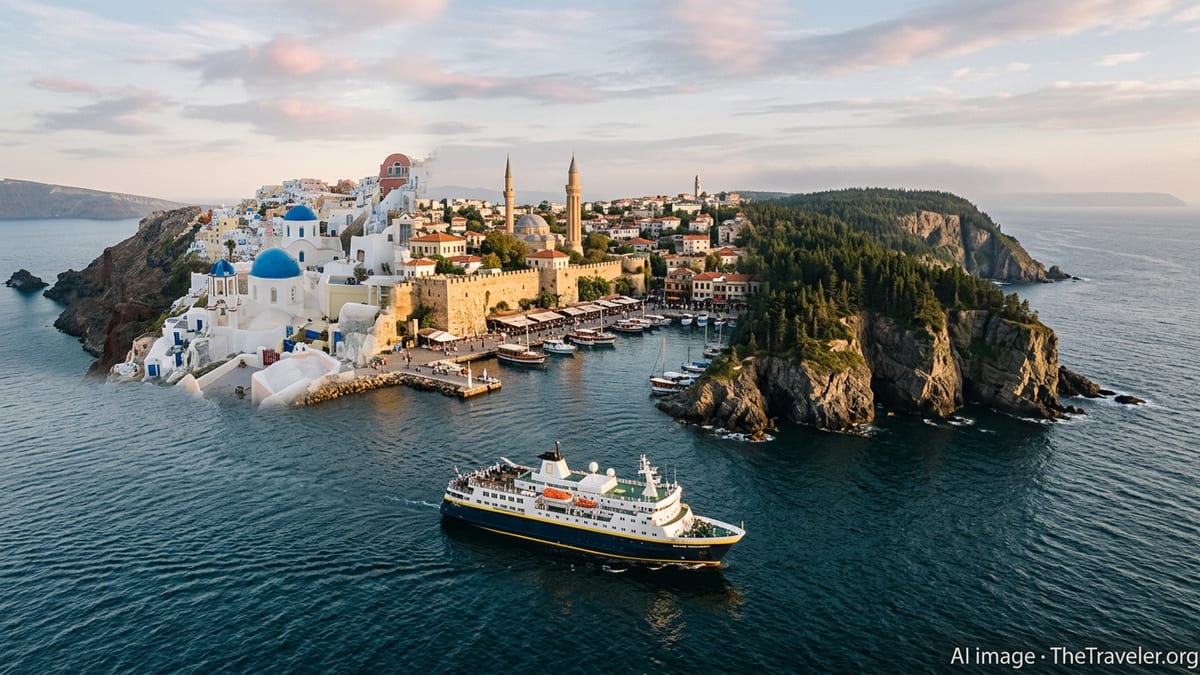
In the eastern Mediterranean, National Geographic’s 2026 expeditions frame Greece and Turkey as a single cultural landscape shaped by millennia of exchange. The line’s "Crossroads of the Ancient World: Exploring Greece and Turkey" itinerary, scheduled on the expedition ship National Geographic Orion, links whitewashed Aegean harbors with atmospheric Turkish ports, highlighting how Greek, Roman, Byzantine and Ottoman legacies overlap in today’s streets, cuisines and religious sites.
Guests can expect days that begin with archaeological walks among temples and theaters and end with meze tables on waterfront promenades, punctuated by onboard lectures that unpack everything from classical mythology to contemporary politics and regional migration routes. In popular stops such as Athens and the Turkish coast, the program favors small-group excursions, including visits to lesser-known ruins, village markets and family-run tavernas, to keep experiences intimate even in heavily visited destinations.
The voyages are designed with flexibility in mind, allowing the captain to adjust for weather and crowd patterns, and to add unscheduled swimming stops or coastal hikes when conditions permit. That spontaneity, combined with the guidance of archaeologists and cultural experts on select sailings, is pitched to appeal to travelers who have already "done" the Mediterranean’s headline cities and now want to understand how daily life in ports like Kusadasi or the Greek islands relates to the deeper currents of history.
Canada’s Maritimes and Wild Atlantic Frontiers
On the other side of the Atlantic, Canada is a breakout focus of the 2026 program, with expedition cruises spotlighting the country’s rugged eastern seaboard. The "Canadian Maritimes & Newfoundland" itinerary, typically offered on the National Geographic Explorer, threads through fishing outports, seabird-rich islands and fjord-carved coasts, bringing travelers into close contact with both Atlantic wildlife and working maritime cultures.
Days at sea in this region are framed by Zodiac excursions to search for whales, seals and puffins, plus landings in places where wooden churches, weathered wharves and contemporary Indigenous art scenes sit side by side. Onboard interpretation zooms in on topics such as cod fisheries, climate change in the North Atlantic, and the revival of local foodways, turning scenic cruising into an ongoing seminar on how coastal communities are adapting to environmental and economic shifts.
For 2026, the Maritimes sailings are positioned as a compelling alternative to more crowded North Atlantic routes, with an emphasis on slow travel and time ashore rather than quick photo stops. Extended daylight hours in late summer and early autumn allow for long golden-hour hikes on headlands and opportunities to linger in small towns after the last ferry has departed, sharpening the sense of being momentarily woven into local life.
Immersive Experiences Over Traditional Cruise Amenities
Across both Mediterranean and Canadian itineraries, National Geographic’s 2026 expedition cruises are calibrated for travelers who prioritize enrichment over onboard spectacle. Ships carry kayaks, snorkeling gear in warmer waters and a fleet of Zodiacs for landings in coves and harbors that lack conventional cruise infrastructure, putting guests in close proximity to cliffs, sea caves and remote beaches.
Cabins and public spaces skew toward understated comfort rather than glitz, with libraries, observation lounges and open decks treated as extensions of the expedition, not a retreat from it. Dining programs increasingly showcase regional ingredients and recipes, from Aegean seafood and olive-oil dishes to Maritime Canada’s shellfish and foraged coastal plants, often accompanied by talks from local chefs or producers brought on board for specific segments.
Crucially, the 2026 program continues National Geographic’s emphasis on responsible tourism, with measures that include citizen-science projects, partnerships with local researchers and a focus on leaving a lighter footprint at small ports. Guests are invited to participate in wildlife counts, plankton sampling or shoreline cleanups, and to learn how their presence contributes to conservation funding in sensitive coastal ecosystems in both Greece and Turkey and along Canada’s Atlantic rim.
Positioning Three Regions as Essential Destinations
By foregrounding Greece, Turkey and Canada in its 2026 calendar, National Geographic Expeditions is effectively issuing a short list of places it views as essential for travelers seeking meaningful encounters with culture and landscape in the coming year. Each region offers a different expression of the same core appeal: textured history, active days outside and a chance to see how people are living on the front lines of environmental and social change.
The eastern Mediterranean cruises underscore the continued draw of the Aegean and Anatolian coasts, but shift the narrative away from resort culture toward layered stories of migration, empire and everyday resilience in waterfront districts and island communities. In Canada, the focus on the Maritimes and Newfoundland reframes the country not only as a wilderness destination, but as a set of coastal cultures negotiating their future at the edge of the North Atlantic.
For travelers planning 2026 trips, the message is clear: whether watching sunset light catch on white stone in a Greek harbor, tracing Roman and Ottoman footprints in Turkey or scanning for whales off Newfoundland, National Geographic’s expedition cruises are positioning these three regions at the heart of next year’s most compelling seagoing journeys.