

More news on this day
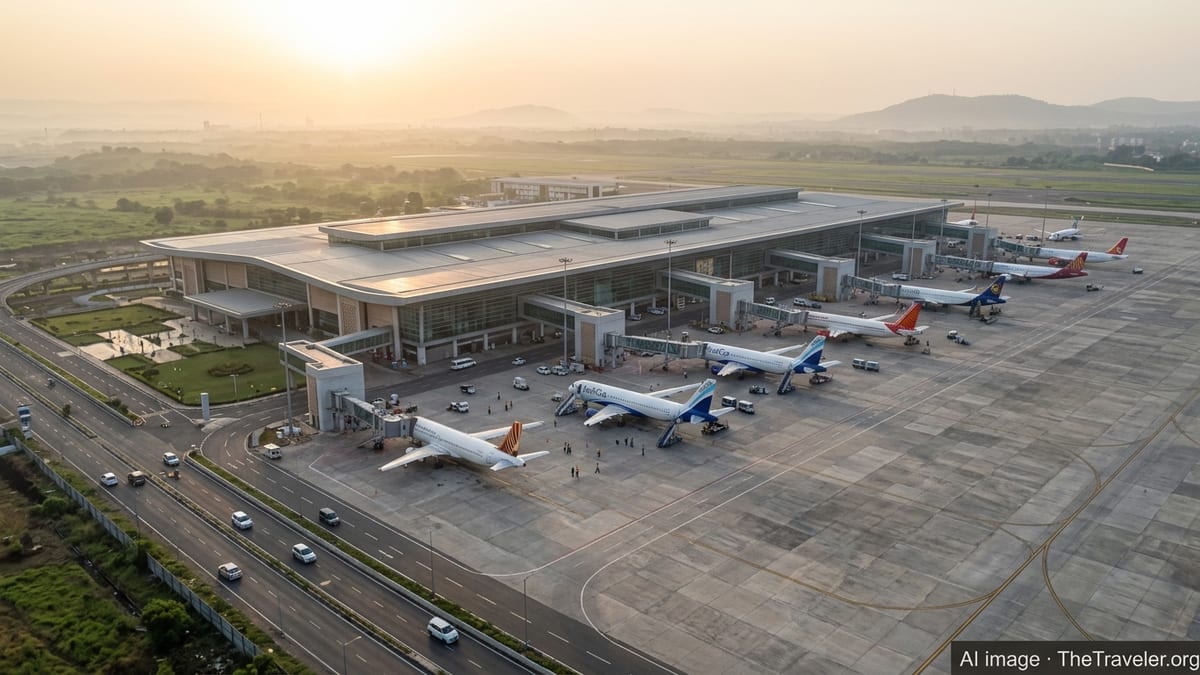
Navi Mumbai International Airport is set to dramatically expand India’s domestic air network this summer, with a 46-destination schedule that positions the new hub as a powerful counterpart to Mumbai’s overburdened primary airport and signals a major shift in how travelers access the country’s western and central regions.
Get the latest news straight to your inbox!
A New Domestic Powerhouse for the Mumbai Region
The ramp-up of domestic services at Navi Mumbai International Airport comes at a pivotal moment for the wider Mumbai aviation market, where rising passenger volumes and infrastructure upgrades at the existing Chhatrapati Shivaji Maharaj International Airport have intensified pressure on runway and terminal capacity. Publicly available information shows that Navi Mumbai was conceived precisely to share this load and to anchor a dual-airport strategy for the metropolitan region.
The launch of an extensive summer schedule featuring 46 domestic destinations effectively moves Navi Mumbai into the first rank of Indian domestic hubs rather than a secondary relief airport. The breadth of the network, covering major metros, high-growth tier-two cities and regional gateways, is intended to provide both point-to-point options and smoother onward connections across India.
Aviation analysts note that this level of domestic reach, so early in the airport’s operational life, reflects strong airline interest in shifting capacity from the constrained main Mumbai airport. It also underscores confidence in Navi Mumbai’s catchment area, which extends deep into Navi Mumbai, Thane, the Raigad district and fast-developing industrial and logistics corridors along the Mumbai–Pune and Mumbai–Goa axes.
Airlines Bet Big on Navi Mumbai’s Summer Wave
Reports indicate that India’s leading low-cost carriers are at the forefront of the expansion, using Navi Mumbai as a fresh platform for growth during the peak summer travel season. Several airlines have already signalled multi-wave deployment strategies, beginning with dense domestic schedules before progressively adding international flying once regulatory clearances and market conditions align.
Published coverage of recent airline partnership announcements points to aggressive ramp-up plans, with carriers outlining triple-digit weekly domestic departures in the initial phases and far higher frequencies projected over coming seasons. The summer timetable at Navi Mumbai is therefore not just a one-off seasonal spike, but an early glimpse of the airport’s long-term role in the competitive dynamics of India’s aviation market.
For airlines, the appeal lies in a combination of lower congestion, brand-new infrastructure and strong local demand. By anchoring early operations at Navi Mumbai, carriers can secure slots at preferred times, construct more reliable schedules and offer new city pairs that were difficult to accommodate within the constraints of the older airport.
46 Destinations Redraw Domestic Travel Patterns
The new summer schedule’s 46 domestic destinations connect Navi Mumbai to a mix of national metros, state capitals, tourism hotspots and industrial centres. This wide spread gives the airport immediate relevance for both business and leisure travellers, reducing the need for time-consuming road or rail journeys and shifting more traffic into the air network.
Travel planners note that the pattern of routes emerging from Navi Mumbai is likely to rebalance how passengers from Mumbai’s eastern and southern suburbs, as well as neighbouring cities in Maharashtra and Gujarat, choose to begin their journeys. For many, Navi Mumbai may now represent the nearest and most convenient departure point for trips to central, northern and southern India.
In practical terms, the 46-route framework also means greater redundancy and flexibility in India’s domestic system. During disruptions at other hubs or seasonal load spikes, Navi Mumbai’s growing capacity can serve as an alternative gateway, absorbing overflow traffic and allowing airlines to re-route operations while maintaining network integrity.
Infrastructure, Access and the Dual-Airport Strategy
Navi Mumbai International Airport has been developed with multimodal connectivity at its core, and that design philosophy is now critical to sustaining the expanded summer schedule. Publicly available project documentation highlights direct road links via the Mumbai Trans Harbour Link, the Sion–Panvel corridor and expressways toward Pune and beyond, alongside planned and emerging rail and metro connections.
These transport links are expected to influence passenger choice between the two airports serving the Mumbai region. Travellers based in Navi Mumbai, along the harbour and in the rapidly urbanising nodes of Raigad may find door-to-door journey times shorter via the new airport, especially in peak traffic periods. As the 46-destination domestic schedule matures, this advantage is likely to entrench Navi Mumbai’s position as the de facto primary airport for large swathes of the region’s population.
The dual-airport configuration also carries strategic implications for Mumbai’s long-term aviation capacity. With Navi Mumbai handling an expanding share of domestic movements, planners envision additional room at the original airport to focus on long-haul international services and premium connectivity, gradually reshaping how the metropolis competes with other global hubs in the Gulf and Southeast Asia.
Economic Ripple Effects Across Navi Mumbai and Beyond
The growth in domestic connectivity tied to the summer schedule is already being linked, in real-estate and logistics analyses, to broader economic shifts in Navi Mumbai and surrounding districts. According to recent project and market reports, expectations of increased passenger and cargo throughput at the airport are supporting new residential, commercial and warehousing developments, particularly around the designated airport influence areas.
Enhanced access to 46 domestic cities improves the viability of locating corporate offices, technology parks and manufacturing facilities closer to Navi Mumbai, with executives, specialists and goods able to move more freely within India. Tourism operators, too, are eyeing opportunities for short-break packages that begin and end at Navi Mumbai, making use of more frequent flights to coastal, cultural and hill destinations on the expanded domestic map.
Over time, these ripple effects may help rebalance growth across the wider Mumbai metropolitan region, easing pressure on traditional central business districts and encouraging investment in new corridors linked directly to the airport. As the current summer season unfolds, Navi Mumbai International Airport’s domestic push offers an early indication of how aviation infrastructure can reshape urban and regional development when combined with a broad, carefully structured network of routes.