

More news on this day
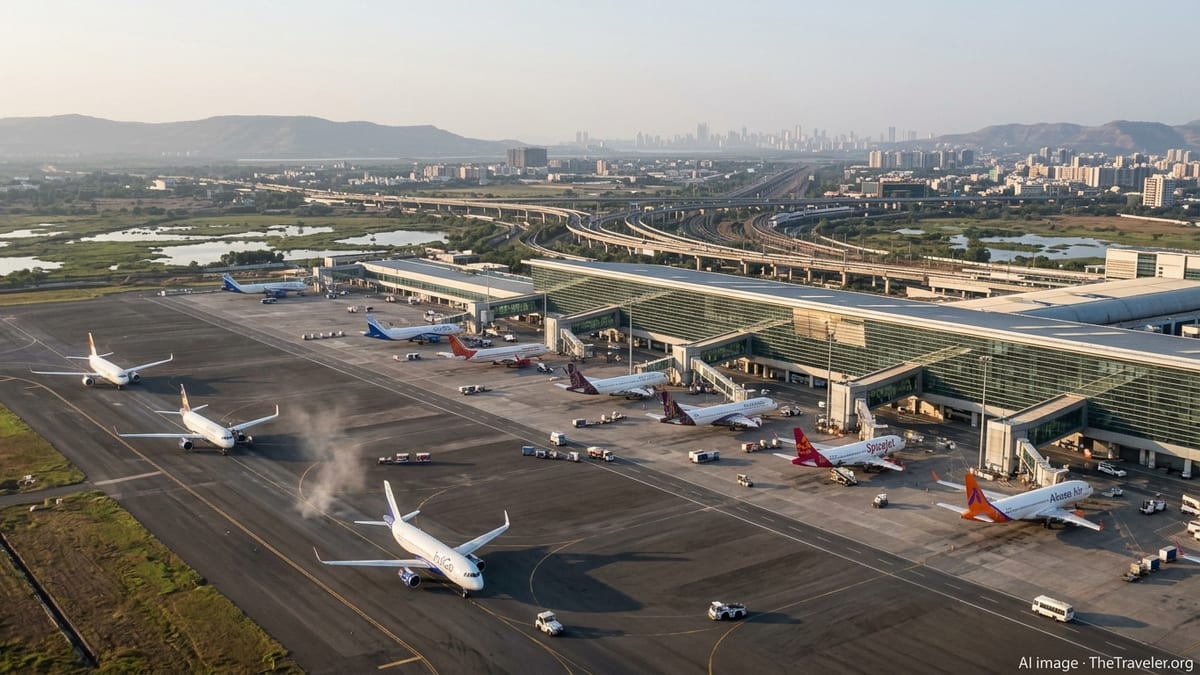
Navi Mumbai International Airport is set to sharply expand India’s domestic aviation map this summer, rolling out an extensive schedule that links the new hub to 46 destinations and eases mounting pressure on Mumbai’s overburdened primary airport.
Get the latest news straight to your inbox!
A Transformative Summer for Mumbai’s Second Airport
The expanded summer schedule marks the most ambitious phase yet in the ramp-up of Navi Mumbai International Airport, which began commercial operations in late 2025 and has progressively added routes with each timetable change. Publicly available airline schedules indicate that the new network combines trunk routes to major metros with thinner regional links that were previously underserved from the Mumbai metropolitan region.
The move comes as Chhatrapati Shivaji Maharaj International Airport continues to operate near its declared capacity, constrained by a single-runway configuration and growing domestic demand. By shifting a growing share of point-to-point and low-cost domestic traffic across the harbor, Navi Mumbai is emerging as a pressure valve for the wider Mumbai air system.
Industry analyses suggest that the summer build-up will be crucial in establishing passenger habits, as airlines encourage travelers in Navi Mumbai, Panvel, Raigad and parts of Pune district to treat the new airport as their primary gateway. As schedules stabilize, the dual-airport model around Mumbai is expected to resemble systems in global hubs such as London and New York, where traffic is spread across multiple facilities.
The airport’s first-phase design capacity of around 20 million passengers a year gives planners significant headroom to grow domestic operations before long-haul international flights scale up. The 46-destination domestic grid is being positioned as the backbone for future international connectivity, particularly to the Middle East and Southeast Asia.
Airlines Deepen Domestic Networks from Navi Mumbai
Major Indian carriers have steadily layered new services into Navi Mumbai’s timetable as aircraft, crews and slots become available. Publicly available information from airline booking systems shows IndiGo continuing to anchor the airport’s domestic presence, having led initial operations and now extending its reach deeper into tier two and tier three cities with a mix of narrowbody and ATR turboprop flights.
Air India Express, part of the Air India group, has complemented this with a portfolio of domestic point-to-point routes aimed at leisure and visiting-friends-and-relatives traffic, especially from northern and southern India. Reports indicate that the carrier’s plan to operate dozens of daily domestic movements from Navi Mumbai is aligning with the summer expansion, reinforcing the airport’s role as a secondary base for the group.
Akasa Air and regional operators such as Star Air have added further density by targeting short-haul domestic sectors where turnaround times are quick and demand is stable year-round. According to published coverage of the airport’s early operational phases, these airlines initially focused on a smaller set of key routes, then progressively introduced additional cities as load factors firmed up.
Together, these deployments translate into a domestic network that now reaches across much of the country’s aviation map, from major metros like Delhi, Bengaluru and Hyderabad to important secondary cities in Gujarat, Rajasthan, Uttar Pradesh, Karnataka and Kerala. The 46-destination summer schedule reflects not only the scale-up of existing sectors but also the launch of new nonstop links designed specifically around Navi Mumbai’s catchment.
46-Destination Grid Redraws India’s Domestic Map
The expanded summer schedule effectively turns Navi Mumbai into a full-fledged domestic hub rather than a spillover field for Mumbai’s main airport. Analysis of current and upcoming timetables indicates that the 46 destinations include a balance of high-frequency trunk routes and lower-frequency spokes, allowing airlines to optimize both business and leisure demand.
On the high-traffic side, multiple daily frequencies to Delhi, Bengaluru, Hyderabad, Chennai and Kolkata provide business travelers and transit passengers with greater choice of timings. These routes also position Navi Mumbai as an alternative connecting point for itineraries that do not require using the more congested terminals across the harbor.
At the same time, the schedule broadens access to regional centers such as Ahmedabad, Jaipur, Lucknow, Nagpur, Kochi, Coimbatore, Mangaluru and Goa’s airports, among others. Public schedules suggest that many of these routes are being operated by a mix of larger jets in peak periods and smaller aircraft in off-peak windows, giving airlines flexibility to match capacity with seasonal demand.
The net result is a domestic network that allows passengers in Navi Mumbai’s rapidly growing suburbs, along with neighboring industrial and logistics clusters, to reach most major Indian cities without transiting through the older airport at all. Travel planners note that this is likely to redistribute passenger flows across western India’s road and rail corridors as travelers reorient toward the new hub.
Multi-Modal Access Underpins the Airport’s Catchment
Unlike many legacy airports that were retrofitted into growing cities, Navi Mumbai International Airport has been developed with an integrated surface-access plan that extends its effective catchment beyond Navi Mumbai itself. Government and project documentation highlight a combination of highway links, suburban rail connections and planned metro integration designed specifically around the terminal precinct.
Improved road connectivity from Panvel and the wider Mumbai metropolitan region has already shortened journey times for many travelers in eastern and southern suburbs, who previously faced long cross-city commutes to reach the existing airport. Over time, planned expressway upgrades and new bridge links across the harbor are expected to further reduce travel times and make the new airport competitive for central Mumbai residents as well.
Rail and metro projects, including extensions of the Navi Mumbai Metro and proposed connections toward Mumbai’s broader urban rail grid, are intended to provide a higher-capacity, lower-emission alternative to road access. While some of these links remain under development, planning documents describe the long-term goal of allowing passengers to reach the terminal via an interconnected public transport network rather than relying solely on private vehicles and taxis.
This multi-modal strategy is an important enabler for the 46-destination domestic schedule, as airlines typically weigh ground-access quality when deciding where to base aircraft and open new routes. As transport links mature, analysts expect more point-to-point routes to be viable from Navi Mumbai, particularly to smaller cities where yields can be sensitive to door-to-door travel time.
Implications for Mumbai’s Dual-Airport System
The strengthened domestic network at Navi Mumbai comes at a pivotal moment for Mumbai’s wider airport system. Publicly accessible planning material for Chhatrapati Shivaji Maharaj International Airport outlines redevelopment and capacity-management measures that rely in part on diverting selected domestic operations to the new facility.
By handling a growing share of low-cost and point-to-point domestic flights, Navi Mumbai allows the older airport to focus more on long-haul international services and premium domestic traffic, a pattern already visible in other cities that operate dual-airport systems. Aviation analysts note that this separation of roles can improve punctuality and ground efficiency while creating clearer choices for passengers.
For airlines, the expanded summer schedule and 46-destination reach provide an opportunity to de-duplicate some routes, refine bank structures and reduce ground congestion. Carriers that operate at both airports can adjust their networks so that certain city pairs are primarily routed via Navi Mumbai, freeing up scarce slots and terminal capacity across the harbor.
For travelers, the practical impact is expected to grow more visible during the current summer season. With more direct domestic options from Navi Mumbai, passengers in the wider metropolitan region may find it easier to choose flights that align with their preferred departure points, reducing surface travel times even as India’s aviation market continues its rapid expansion.