

More news on this day
Navi Mumbai International Airport is set to roll out a new summer schedule featuring 46 domestic destinations, sharply expanding Mumbai’s aviation footprint with fresh links to Delhi, Goa, Bengaluru, Kochi, Hyderabad, Kolkata, Lucknow, Varanasi, Indore and dozens of additional cities across India.
Get the latest news straight to your inbox!
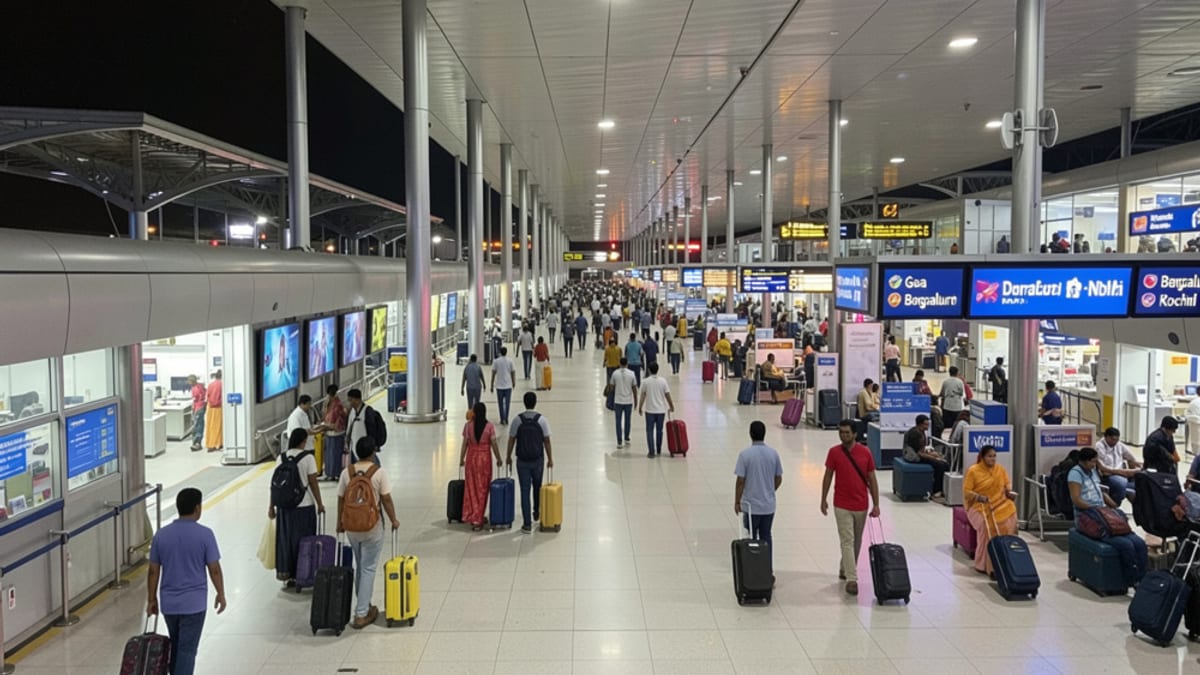
Image by Latest International / Global Travel News, Breaking World Travel News
A Major Domestic Network From Mumbai’s Second Airport
The expanded summer schedule positions Navi Mumbai International Airport as a complementary domestic gateway to the Mumbai region, with a network designed to ease pressure on the city’s existing Chhatrapati Shivaji Maharaj International Airport. Publicly available information indicates that the new timetable clusters most operations in the peak summer travel window, when demand for both leisure and family travel typically rises.
The 46 domestic destinations span India’s principal metro corridors and a wide range of Tier II and Tier III cities. Key trunk routes such as Delhi, Bengaluru, Hyderabad and Kolkata appear prominently, reflecting sustained demand for business and government travel, while popular leisure-focused sectors like Goa and Kochi are expected to help divert holiday traffic from the already congested primary Mumbai hub.
The broader strategy, as reflected in published coverage and network announcements, is to use Navi Mumbai as a growth platform for incremental capacity that could not easily be accommodated at the existing airport. By concentrating a dense domestic schedule at the new facility, airlines gain additional slots and the ability to offer more competitive timings on high-demand routes.
The summer schedule also underlines Navi Mumbai’s intended role as a feeder and reliever airport rather than a marginal overflow facility. With dozens of daily departures covering most major population centers, the airport is being positioned as a first-choice option for travelers living in Navi Mumbai, Pune corridor suburbs and parts of coastal Konkan who previously depended almost entirely on the original Mumbai airport.
Key Routes: From Metros To Pilgrim And Business Hubs
Among the 46 destinations, the high-frequency metro routes are expected to form the backbone of the summer program. Delhi, Bengaluru, Hyderabad and Kolkata typically rank among the busiest domestic sectors in India, and stronger representation from Navi Mumbai is likely to appeal to corporate travelers and government officials looking for alternative flight options and potentially shorter ground access from the eastern side of the metropolitan area.
Goa and Kochi add a strong leisure component to the schedule, tying Navi Mumbai directly into two of India’s most in-demand coastal tourism states. The timing of the launches for the summer window aligns with the traditional uptick in domestic tourism, when families and younger travelers look for quick breaks along the Konkan and Malabar coasts.
Other destinations mentioned in the expanded list, including Lucknow, Varanasi and Indore, highlight a diverse mix of demand drivers. Lucknow and Indore are important regional business centers with growing corporate and startup activity, while Varanasi remains one of India’s most significant pilgrimage and heritage cities. Direct services from Navi Mumbai to these locations are expected to reduce transit times for both religious travelers and small-business passengers who previously needed to route through the main Mumbai airport or via other hubs.
Industry observers note that such a mix of metro, leisure, religious and commercial destinations is typical of Indian domestic expansion strategies, where airlines look to balance yield, load factors and network connectivity. Navi Mumbai’s summer schedule appears to follow that pattern, with a strong emphasis on proven demand corridors supplemented by medium-size markets that can grow alongside the region’s wider economic development.
Airline Strategies And Capacity Deployment
The rollout of 46 domestic destinations also illustrates how airlines are using Navi Mumbai to reshape their western India networks. Low-cost and full-service carriers alike have been signaling interest in shifting or adding flights to the new airport, citing slot constraints and terminal redevelopment at the existing Mumbai facility.
Publicly available announcements from leading Indian carriers describe phased ramp-ups in departures from Navi Mumbai, with some airlines indicating a preference to base aircraft and crew at the new airport to support early morning and late evening waves. This approach typically allows for better utilization of aircraft, tighter turnarounds and improved connectivity across a national network.
Network maps shared in recent coverage show a clear tendency to replicate core Mumbai routes at Navi Mumbai while also testing new city pairs. For example, trunk sectors like Delhi, Bengaluru and Hyderabad are being complemented by connections to secondary cities that may not sustain multiple daily flights from both airports but can support at least one or two well-timed frequencies from Navi Mumbai.
Capacity allocation for the summer period appears to be calibrated against expected seasonal demand, with additional flights on high-traffic routes coinciding with school holidays and regional festivals. Airlines are likely to adjust frequencies as the season progresses, using load data and fare performance to fine-tune the balance between Navi Mumbai and the traditional Mumbai hub.
Passenger Experience And Access Across The Mumbai Region
For travelers, the expanded domestic schedule from Navi Mumbai presents the most substantial new choice in years for accessing the wider Mumbai metropolitan area by air. Residents of Navi Mumbai, Thane and Raigad districts, in particular, may see significant reductions in surface travel time, as they can avoid cross-city journeys to the original airport, especially during peak traffic hours.
The airport’s design and location have been promoted as a key part of this value proposition. Public information describes an integrated layout intended to support smoother passenger flows, with a focus on shorter walking distances and streamlined security and check-in processes. Combined with a schedule that clusters flights around popular departure and arrival windows, the aim is to create a reliable, time-efficient alternative for domestic travel.
Connectivity between the two Mumbai airports remains an important consideration for travelers who may arrive at one and depart from the other. While the current summer schedule is primarily domestically focused at Navi Mumbai, the possibility of future international operations suggests that the airport could evolve into a more complex transfer point. For now, the expanded domestic network is expected to benefit primarily origin-and-destination traffic, particularly those whose homes or workplaces lie closer to the new facility.
Local travel agencies and online booking platforms are beginning to showcase Navi Mumbai in their city selection menus and fare comparisons, bringing greater visibility to the new options. Fare patterns observed across Indian domestic routes often reflect competition between airports in the same metropolitan area, and some analysts anticipate that Navi Mumbai’s 46-destination network could introduce modest downward pressure on select routes during the most competitive summer weeks.
Implications For Western India’s Aviation And Tourism Growth
The deployment of a 46-destination domestic schedule from Navi Mumbai is being interpreted by aviation watchers as a meaningful structural shift in western India’s air transport landscape. By anchoring a large set of domestic routes at the new facility, airlines are effectively treating the airport as a full-fledged node in the national network, rather than a limited-capacity satellite.
For tourism, the implications are wide-ranging. Easier access from Navi Mumbai to coastal destinations like Goa and Kochi, as well as to cultural and pilgrimage centers including Varanasi and Lucknow, is expected to stimulate weekend and short-break travel from Mumbai’s large and relatively affluent population. Conversely, travelers from these cities gain a more direct path into the Navi Mumbai and eastern Mumbai suburbs, which are seeing rapid growth in hospitality, retail and residential development.
Business travel is also likely to feel the impact, particularly in sectors such as logistics, manufacturing, technology and services that have been clustering along the Navi Mumbai and Pune corridors. Additional nonstop links to Bengaluru, Hyderabad, Kolkata and northern business hubs are poised to support more frequent corporate trips, supplier visits and investor travel.
As the summer season unfolds, attention will focus on how quickly load factors ramp up across the 46 routes and whether airlines choose to add, consolidate or reschedule flights in response to demand. The performance of this first full summer schedule will offer an early indication of Navi Mumbai International Airport’s long-term role in balancing Mumbai’s air traffic and shaping new travel patterns across India’s western seaboard.