

More news on this day
Navi Mumbai International Airport has unveiled a new summer schedule connecting the greenfield hub to 46 domestic destinations across India, signaling a major realignment of air traffic in the Mumbai metropolitan region ahead of the peak travel months.
Get the latest news straight to your inbox!
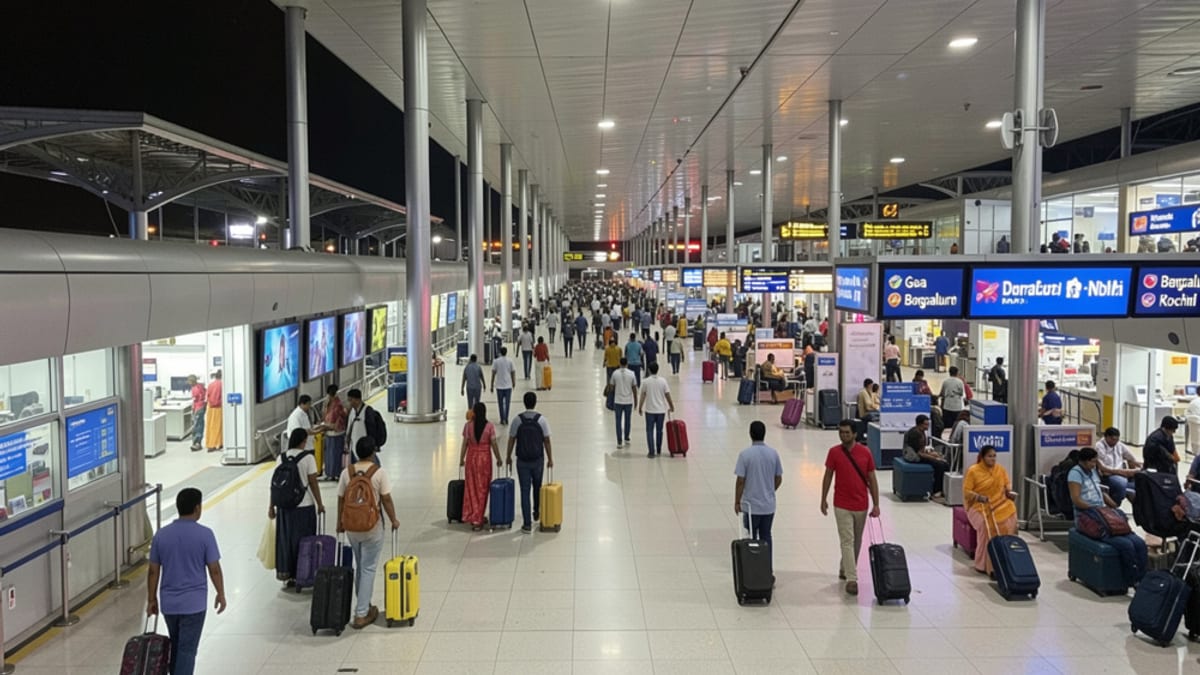
Image by Travel and Tour World – Tourism, Airline, Destination, MICE, Gobal Travel Market, Hotel news that you will find only over here.
A New Domestic Network for India’s Newest Gateway
The expanded summer timetable marks the first full-season schedule for Navi Mumbai International Airport since commercial operations began in late 2025. Publicly available information indicates that the airport is ramping up from an initial start-up phase to a more mature network footprint, with airlines now deploying additional capacity in anticipation of strong domestic demand in 2026.
The new schedule covers 46 domestic destinations, anchored by high-frequency services to major metros including Delhi, Bengaluru, Hyderabad, Kolkata and Chennai. These trunk routes are being supported by increasing services to Tier 2 and Tier 3 cities, positioning Navi Mumbai as a complementary hub to Mumbai’s existing Chhatrapati Shivaji Maharaj International Airport rather than a direct replacement.
Reports on aviation capacity in western India suggest that the move is aimed at easing congestion at Mumbai’s primary airport while tapping into the fast-growing residential and commercial clusters around Navi Mumbai, Panvel and the Mumbai Trans Harbour Link corridor. The broader strategy is to distribute traffic more evenly across the metropolitan area, especially in the domestic segment.
Industry coverage of the rollout notes that the summer schedule coincides with rising passenger numbers on domestic routes across India, with carriers increasingly focused on secondary hubs that can feed both point-to-point traffic and future international services.
Key Routes: Delhi, Goa, Bengaluru, Kochi and Hyderabad Lead
Among the 46 destinations, the strongest initial emphasis is on high-demand city pairs. Delhi emerges as a flagship route, reflecting sustained business, political and visiting-friends-and-relatives traffic between the national capital region and the Mumbai urban belt. Multiple daily frequencies are expected on this corridor as airlines compete to capture corporate and connecting traffic during peak morning and evening banks.
On the leisure side, Goa features prominently in the new schedule, aligning with seasonal demand from Mumbai and Navi Mumbai residents seeking short-break coastal holidays. Summer typically sees a shift from purely winter tourism to a more diversified travel pattern, and additional seats from Navi Mumbai are likely to support both budget-minded travelers and last-minute bookings.
In southern India, Bengaluru, Kochi and Hyderabad form a core trio of tech and trade routes. Travel industry reports point out that these cities are among the fastest-growing domestic markets, driven by IT services, start-ups and intra-corporate mobility. The new flights from Navi Mumbai are expected to offer schedule flexibility for business travelers who previously had to cross the city to use Mumbai’s older terminals.
Kolkata and Lucknow also appear as early beneficiaries of the expanded timetable, adding eastern and northern connectivity for students, migrant workers and small-business travelers. Frequent services on these routes are likely to be central to how airlines build loyalty among passengers who now have an alternative departure point within the wider Mumbai urban region.
Tier 2 and Pilgrimage Destinations Gain New Access
Beyond the major metros, the summer schedule highlights a set of Tier 2 and niche destinations that reflect wider travel trends inside India. Cities such as Indore, Jaipur, Nagpur, Mangaluru and Coimbatore appear in route announcements as carriers seek to link emerging industrial and educational hubs directly to Navi Mumbai.
Varanasi stands out among the new connections as a key spiritual and cultural destination. Travel analysts have observed a consistent rise in religious and heritage tourism, and non-stop links from Navi Mumbai are expected to shorten journey times for pilgrims traveling from across the Mumbai metropolitan area. The route is also likely to attract international visitors once more overseas flights begin operating and through-ticketing becomes available.
Additional services to cities like Rajkot, Surat and Vadodara mirror the growing economic importance of western India’s manufacturing and trading belts. Publicly available schedule data indicates that airlines are positioning Navi Mumbai as a convenient origin for business travelers who need same-day returns to these markets, particularly traders and small manufacturers who rely on quick access to suppliers and clients.
The broader mix of destinations suggests that the airport is targeting a balanced portfolio of business, leisure, visiting-friends-and-relatives and religious traffic rather than concentrating exclusively on one segment, a strategy that can help stabilize load factors throughout the year.
Airlines Scale Up Operations as Capacity Shifts from Old Mumbai
Reports on airline planning show that several Indian carriers are progressively shifting part of their Mumbai-area capacity toward Navi Mumbai, while still maintaining substantial operations at the older airport. This dual-airport strategy is seen as a way to relieve slot pressure and improve on-time performance, long a concern in Mumbai due to limited runway capacity and dense traffic.
Low-cost airlines are especially active in the rollout, attracted by the opportunity to secure more favorable slots and faster turnarounds at a less congested field. Early coverage highlighted IndiGo and other budget carriers as among the first movers, deploying a mix of high-frequency trunk routes and shorter, point-to-point services from Navi Mumbai to regional cities.
Full-service airlines are also using the new terminal to test additional domestic sectors that could later become feeders for international flights. By building a base of domestic passengers from Navi Mumbai’s catchment area, carriers aim to support future long-haul services without overburdening the main Mumbai airport’s infrastructure.
Publicly available airport planning documents indicate that as daily movements increase at Navi Mumbai, some of the domestic traffic currently handled at Mumbai’s older terminals may gradually be redistributed, particularly during reconstruction or expansion phases at the existing facilities.
What the New Schedule Means for Travelers in the Mumbai Region
For travelers living in Navi Mumbai, Panvel, Thane and along the Mumbai Trans Harbour Link, the new summer schedule represents a significant reduction in surface travel time to catch domestic flights. Instead of crossing the city to reach the older airport, many passengers can now opt for an origin that is closer to emerging residential corridors and business parks.
Travel industry commentary notes that the increased choice of departure point may encourage more spontaneous and short-duration trips, especially to destinations such as Goa, Kochi, Jaipur and Varanasi. Improved connectivity can also benefit families who often travel in groups and have been sensitive to long road transfers before and after flights.
At the same time, travelers now have to pay closer attention to which Mumbai-area airport is listed on their ticket, particularly when arranging onward connections. With domestic flights split between two airports, same-day self-connections between Navi Mumbai and the older Mumbai airport may require careful planning and generous transit time allowances.
Looking ahead to the remainder of 2026, aviation analysts expect the Navi Mumbai route map to continue evolving as airlines refine schedules based on load factors, yields and passenger feedback. The current summer plan connecting 46 domestic destinations is being viewed as a baseline from which the airport could expand into a more prominent role in India’s aviation network, particularly once international services begin to ramp up.