

More news on this day
King Fahd International Airport in Dammam has become one of Saudi Arabia’s fastest‑growing gateways, and in 2026 travelers are seeing a busier, more connected and steadily modernizing hub that still rewards knowing the layout before arrival.
Get the latest news straight to your inbox!
Current Status: A Busy but Fully Operational Gulf Gateway
Publicly available aviation data for 2024 and 2025 show that King Fahd International Airport, serving Dammam and the Eastern Province, is handling close to 13 million passengers a year, with growth in the mid‑teens percentage range. That places it firmly among Saudi Arabia’s top three airports by traffic and a significant secondary hub for the wider Gulf region.
Reports indicate that in early 2026 the airport continues to operate normally despite regional disruptions affecting some neighboring hubs. Discussion in regional travel forums in March 2026 points to Dammam flights running on schedule even while airports in Kuwait, Bahrain and Qatar have faced temporary closures, making Dammam a key alternative for some travelers.
For passengers, this means fuller flights, busier check‑in zones and more competition for parking and ride‑hailing pickup space at peak times, but without the large‑scale operational suspensions seen elsewhere. Travelers connecting through Dammam in 2026 are generally dealing with congestion rather than outright cancellations.
The airport operator, Dammam Airports Company, is pursuing a long‑term expansion program aligned with Saudi Vision 2030, which aims to raise capacity and improve connectivity across the Eastern Province. That ambition is visible on the ground in the form of new services, more airlines and ongoing infrastructure work in and around the main terminal area.
Terminal Layout in 2026: What Has Changed and What Has Not
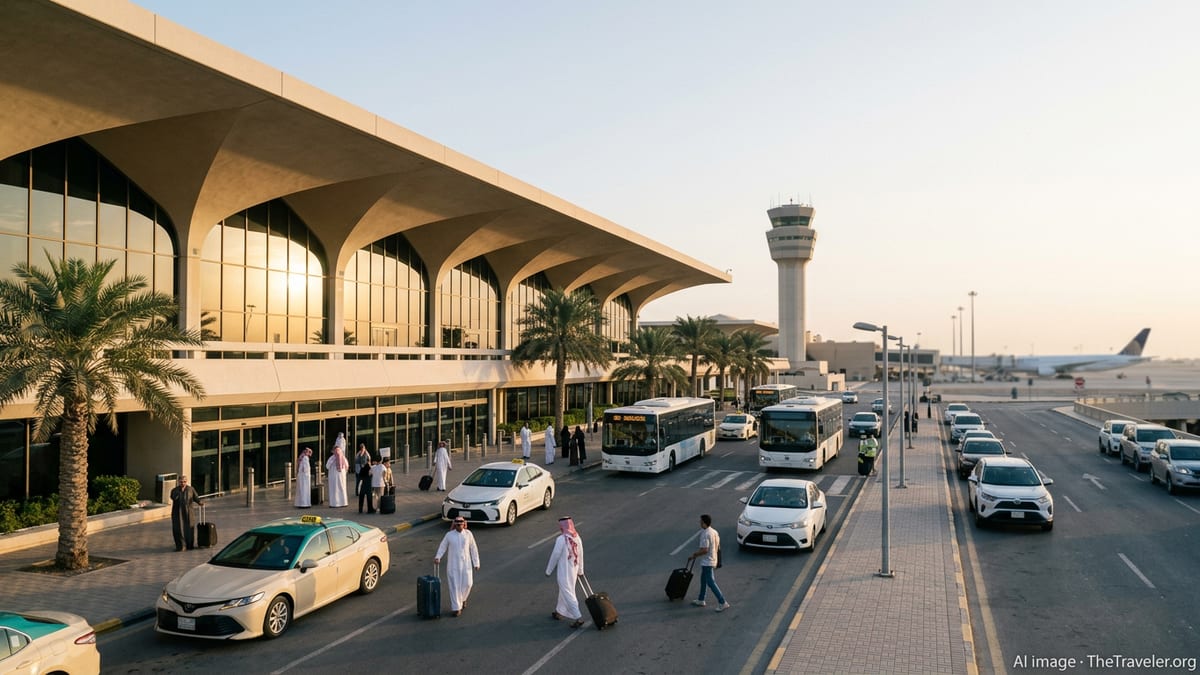
Despite the airport’s enormous land area, the core passenger experience in 2026 still centers on a single large multi‑level passenger terminal handling the bulk of scheduled commercial traffic. This horseshoe‑shaped complex accommodates both domestic and international departures, with check‑in halls on the departure level and arrivals facilities on the lower level.
Inside, domestic and international operations are separated primarily beyond security and immigration rather than by completely distinct terminal buildings, so passengers should pay close attention to overhead signage and flight information screens that direct travelers to the correct wing and set of gates. Airlines serving Gulf and regional routes generally use the same check‑in concourses as long‑haul carriers, then diverge toward different gate clusters after security.
In addition to the main passenger terminal, Dammam hosts dedicated spaces for cargo operations and for general and business aviation. In February 2026, industry coverage highlighted a new general aviation terminal at Dammam that has been awarded to a specialist operator, signaling a more formal separation between corporate and private aviation facilities and the busy commercial terminal used by most travelers.
For the average passenger, the practical impact in 2026 is that scheduled commercial flights, whether operated by Saudi carriers or international airlines, still use the main terminal. The new general aviation facility sits on the airfield but functions separately, so it will not affect wayfinding for regular travelers, other than marginally reducing pressure on premium check‑in counters and curb space.
On the Ground: Check‑In, Security and Passenger Services
With double‑digit passenger growth in recent years, crowding at check‑in and security has become one of the main issues for travelers using Dammam. Publicly available statistics and airline schedules suggest that peak pressure occurs in the late evening and early morning waves, when multiple departures to Gulf, South Asian and domestic destinations leave within relatively tight time windows.
Travelers in 2026 are encouraged by airlines and travel agents to arrive well ahead of departure, particularly for international flights. Early check‑in options, online boarding passes and self‑service kiosks, where available, help ease the process, but queues for baggage drop and passport control can still build quickly at busy times, amplified by seasonal surges around school holidays and the Hajj and Umrah travel periods.
Inside security, the mix of services reflects the airport’s role as a regional hub. There are airside food courts offering familiar international chains alongside local outlets, prayer rooms, children’s play areas and a growing range of duty‑free and specialty retail. Frequent travelers report that seating can be at a premium near popular gate clusters, so passengers may benefit from moving further down the concourse for quieter waiting areas.
Several lounges serve premium‑class passengers and eligible frequent flyers, supplemented by pay‑in facilities that accept lounge membership programs. These spaces have become more important as traffic increases, offering quieter work areas, showers and buffet dining away from the main concourse crowds, especially during the overnight bank of departures.
Connectivity and Ground Transport in 2026
King Fahd International Airport’s location, around 20 to 40 minutes by road from central Dammam, Dhahran and Al Khobar depending on traffic, means ground transport planning is a critical part of any 2026 itinerary. Taxis and app‑based ride‑hailing services continue to be the primary modes for most passengers, with dedicated pickup areas outside the arrivals level.
Publicly available information from regional transport providers and traveler reports indicates that bus links between the airport and Dammam’s main bus station are in operation, with connections onward to Al Khobar and other Eastern Province destinations. Services across the King Fahd Causeway to Bahrain, however, remain less predictable, and travelers in early 2026 frequently discuss the absence of a direct, regularly scheduled public bus from the airport into Bahrain.
Looking slightly further ahead, planning documents and local media reports reference the proposed Dammam Metro, which is expected to include a link to King Fahd International Airport as part of a wider Eastern Province rail network. As of March 2026, this remains a future project rather than a construction site visible to passengers, but it underscores that longer‑term improvements to airport access are on the agenda.
For now, travelers with tight connections to intercity buses or cross‑border road transport are advised by travel agents and forums to build in extra time for highway traffic and causeway formalities. The airport’s growing role as a substitute gateway when neighboring airports face disruptions makes road planning all the more important for multi‑leg overland itineraries.
Planning Ahead: Practical Tips for 2026 Travelers
The combination of rapid growth, evolving infrastructure and regional airspace dynamics makes preparation especially valuable for anyone using Dammam in 2026. With airlines continually adjusting schedules and adding routes to meet demand, published information shows that new point‑to‑point connections in the Gulf, South Asia and North Africa are appearing regularly, often with relatively short booking windows.
Travelers are therefore encouraged by industry advisories and consumer reports to double‑check terminal information, departure times and visa or transit requirements close to travel dates rather than relying on assumptions from previous trips. This is particularly relevant for passengers who might now be routed through Dammam because their usual hub is operating at reduced capacity.
Within the terminal, knowing the basic layout helps reduce stress during peak times. Passengers arriving on domestic flights with same‑day international connections should factor in the need to clear immigration and, in many cases, recheck bags, since Dammam does not function as a fully integrated transfer hub in the manner of some larger Gulf airports. Allowing generous connection times remains a prudent strategy.
For many visitors, Dammam in 2026 represents both a growing regional hub and a work in progress. Expansion plans, rising passenger numbers and the introduction of a dedicated general aviation terminal all point to an airport moving up the regional hierarchy, while the day‑to‑day experience still hinges on navigating a single busy terminal and planning carefully for ground transport across the Eastern Province.