

More news on this day
As Saudi Arabia’s Eastern Province grows as a business and transit hub, Dammam’s King Fahd International Airport is entering 2026 busier, more connected, and more strategically important than ever for regional and long-haul travelers.
Get the latest news straight to your inbox!
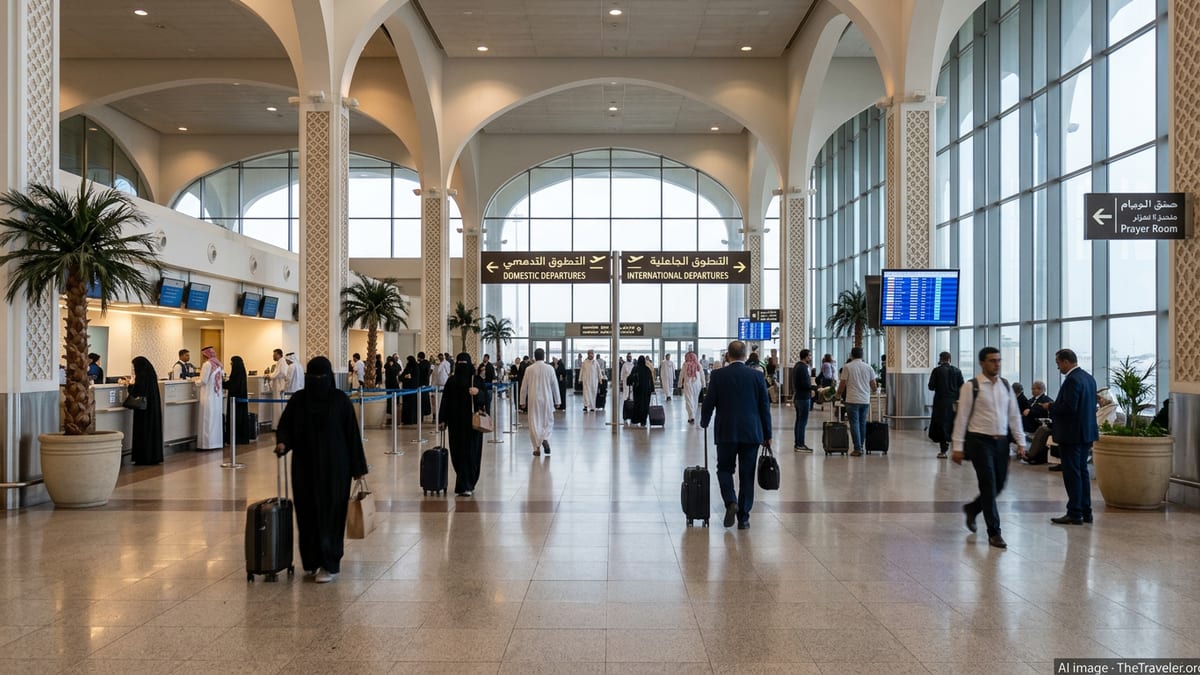
Airport Status and Growth in 2026
King Fahd International Airport, serving Dammam and the wider Eastern Province, remains fully operational in early 2026 and continues to function as Saudi Arabia’s third-busiest passenger gateway. Publicly available aviation statistics show that the airport handled roughly 12 to 13 million passengers in 2024, with double-digit year‑on‑year growth as Saudi Arabia’s air travel market expanded.
Sector data for 2025 indicates that passenger volumes across Saudi airports reached new records, with Dammam maintaining a solid share of national traffic and a growing role in cargo. Recent reports highlight that the airport handled more than 140,000 tons of freight in 2024, underscoring its importance in the logistics corridor linking the Gulf, Asia, and Europe.
The airport is operated by Dammam Airports Company under a long-term development framework aligned with Saudi Vision 2030. Master plan documents describe a multi‑billion‑riyal program aimed at boosting King Fahd’s annual passenger capacity toward the 20‑million mark by the end of this decade, with phased upgrades to terminals, airside infrastructure, and cargo facilities.
Despite regional volatility, traveler accounts and aviation tracking platforms in March 2026 continue to show normal commercial operations at Dammam, even when some neighboring hubs have experienced temporary suspensions. Flight schedules remain subject to change, however, so passengers are advised to monitor their airline’s latest updates on the day of travel.
Terminals, Layout and Passenger Flows
King Fahd International Airport is laid out around a single large main passenger terminal complex that handles both domestic and international flights, supported by two specialized side terminals. The main building houses check‑in halls, immigration, security screening and the bulk of the commercial services, with separated flows for arrivals and departures inside the same overall structure.
Within the wider airport area, two additional terminals serve specific user groups. One is dedicated to Saudi Aramco traffic, handling company employees on shuttle and charter operations. The other is a royal terminal reserved for state and ceremonial use. These facilities sit on the same vast airport site but are not part of the regular passenger experience for commercial travelers.
For most visitors, the key to navigating Dammam in 2026 is understanding how the main terminal is zoned. Domestic and international passengers share common entry doors and check‑in desks by airline, then split after security and immigration into gate areas serving regional and long‑haul routes. Updated wayfinding signage in Arabic and English helps direct travelers between check‑in islands, security lanes, prayer rooms, lounges and boarding gates.
Reports from frequent travelers in late 2025 and early 2026 describe a terminal that can grow busy at peak hours, particularly during holiday periods and school breaks, but which generally maintains manageable queues compared with the kingdom’s largest hubs. Self‑service kiosks, staffed counters and separate premium check‑in areas are now standard for major carriers operating at Dammam.
Technology, Services and On‑the‑Ground Experience
King Fahd International has been gradually upgrading its technology and passenger services as traffic grows. Recent airport and travel‑guide updates describe free Wi‑Fi throughout the terminal under a unified airport network, allowing travelers to work, stream or access airline apps while waiting to board. Charging points and seating clusters have also expanded in many gate areas.
Retail and dining options remain concentrated airside beyond security, with international coffee chains, fast‑food outlets and local brands serving regional dishes. Duty‑free shops cater to travelers on international sectors, with cosmetics, fragrances, electronics and confectionery among the most visible categories. Landside, smaller cafés and convenience outlets serve greeters and early arrivals.
Lounge coverage has widened as more airlines and independent operators target the Eastern Province market. Business‑class passengers, elite frequent flyers and holders of certain bank or lounge passes can access facilities that typically include hot and cold buffets, quiet seating zones, showers and prayer rooms. For economy travelers, paid‑access lounges advertised by international lounge networks provide a calmer environment on longer layovers.
Security and border‑control processes continue to reflect Saudi Arabia’s tightening of aviation standards in recent years. Passengers are encouraged to allow extra time for departures, especially during busy seasons, to accommodate check‑in, security screening and immigration checks. Families and elderly travelers may find dedicated lanes available at peak times, although exact arrangements can vary by day and carrier.
Getting To and From King Fahd International Airport
Reaching King Fahd International Airport in 2026 still largely depends on road transport. The airport sits about 40 kilometers from central Dammam and roughly 55 kilometers from Al Khobar, connected by multi‑lane highways that can see heavy traffic at rush hour but generally flow smoothly outside peak periods. Travel‑time estimates typically range from 30 to 45 minutes from Dammam and around an hour from Al Khobar, conditions permitting.
Taxis and app‑based car services are the most widely used options for individual travelers. Fare calculators and recent travel‑cost guides updated in early 2026 show that fixed‑price or metered rides remain competitively priced compared with many global hubs, particularly for shared family trips. Travelers are advised to confirm whether their ride provider has airport pickup permissions and to agree on a fare structure before departure where meters are not standard.
Public transport from the terminal has been evolving, but information remains inconsistent. Some regional guides describe Saudi Public Transport Company bus services linking the airport with Dammam, Dhahran and Al Khobar at set intervals, while other up‑to‑date travel portals state that no scheduled bus, metro or rail option currently operates directly from the terminal. In practice, availability can depend on the time of day and the specific route, so passengers relying on public transport should verify schedules close to travel.
Many hotels and corporate campuses in the Eastern Province continue to arrange private shuttles for groups and crew, especially along the Dammam–Dhahran–Khobar corridor. Travelers with significant luggage or arriving late at night typically find pre‑booked transfers or taxis the most reliable way to reach their final destination.
Airlines, Routes and What Travelers Should Watch in 2026
By 2026, King Fahd International Airport has consolidated its position as a regional hub connecting the Eastern Province to more than 90 destinations across the Middle East, North Africa, South Asia and selected European and African cities. National carriers, Gulf airlines and low‑cost operators all maintain a presence, with dense frequencies to Riyadh and Jeddah and multiple daily services to Gulf Cooperation Council capitals.
Saudi Arabia’s aviation liberalization has encouraged new entrants and route launches, and Dammam has benefited from this broader trend. Reports on the country’s airport master plans indicate that regulators view King Fahd as a growth platform for additional point‑to‑point international services as fleet capacity expands and domestic tourism increases.
Travelers in 2026 should expect seasonal adjustments to schedules tied to Hajj and Umrah, school holidays and regional demand patterns. Late‑night and early‑morning departures are common on long‑haul and connecting itineraries, while midday waves serve many domestic and short‑haul regional routes. Checking airline notifications shortly before departure remains important as carriers respond to shifting conditions across the Gulf.
Looking ahead, infrastructure projects outlined in development plans suggest a steady pipeline of enhancements to terminals, parking and ground‑handling facilities at Dammam. While many of these works are phased through the late 2020s, the direction of travel is clear: King Fahd International Airport is expected to handle more passengers, more cargo and more complex networks, reinforcing its role as the primary aviation gateway for Saudi Arabia’s Eastern Province in the years after 2026.