

More news on this day
Riyadh’s King Khalid International Airport is entering 2026 in the midst of its most sweeping overhaul since opening in the early 1980s, with terminal assignments, capacity and future expansion plans all shifting as Saudi Arabia positions the capital as a global aviation hub.
Get the latest news straight to your inbox!
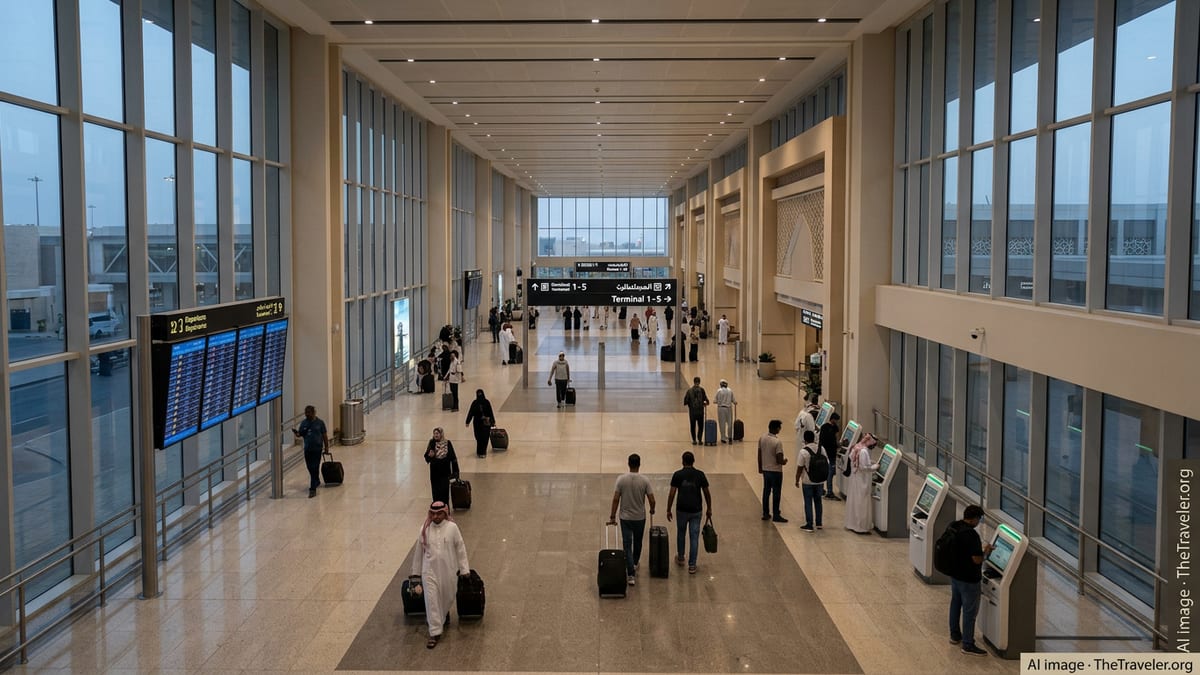
Airport Status in 2026: A Hub in Transformation
King Khalid International Airport remains Riyadh’s primary commercial gateway in 2026, but its role is being reframed by a multi‑year transformation program and the parallel development of the planned King Salman International Airport on adjacent land. Publicly available information shows that King Khalid handled tens of millions of passengers in 2024 and 2025, and official statistics cited by local media point to a target capacity of around 56 million passengers a year by the end of 2026, a one‑third increase on pre‑overhaul levels.
Recent coverage from Saudi and regional outlets indicates that construction and refurbishment works continue across several parts of the airfield, particularly around Terminal 1 and associated concourses, as operators add gates, upgrade infrastructure and adjust passenger flows. For travelers in 2026, this means a busier but more modern airport experience, with new check‑in areas, refreshed security zones and an expanding range of retail and dining options gradually coming online.
At the same time, planning milestones for King Salman International Airport have moved forward, including completion of the master plan and steps toward awarding major terminal contracts. These developments are important context for passengers using King Khalid in 2026 because they explain why so much attention is being paid to transit capacity, airline connectivity and terminal efficiency in the current facility.
Despite the long‑term ambition to shift traffic to the new megaproject by 2030, all mainstream scheduled commercial flights to and from Riyadh in 2026 continue to operate through King Khalid International, with no published date yet for a full transfer of passenger operations.
New Terminal Layout: Who Flies From Where
The most immediate change passengers notice in 2026 is a new terminal allocation model that Riyadh Airports Company began rolling out in February. According to airport statements summarized in Saudi Gazette and other regional media, a tightly choreographed 10‑day transition between 16 and 25 February 2026 reassigned airlines across Terminals 1 through 5 in what has been described as the largest operational reshuffle in the airport’s history.
The new layout, as reflected in airport information and traveler reports, groups Saudi carriers and foreign airlines more systematically by route type. Flyadeal’s international flights are now concentrated in Terminal 1, alongside other selected operators, following a renovation program aimed at turning Terminal 1 into a more efficient international facility. Terminal 2 is emerging as a primary base for Saudia’s international network and for growing operations by other full‑service Middle Eastern and Asian airlines.
Terminals 3 and 4 are increasingly focused on domestic and regional services for Saudi carriers including Saudia, Flyadeal and Flynas, simplifying connections for passengers traveling within the Kingdom. Terminal 5, previously known mainly as a domestic terminal, has taken on an expanded role as the main facility for many foreign international airlines, particularly those not aligned with the Saudia and Riyadh‑based network strategies.
For travelers, the key takeaway in 2026 is that airline‑terminal pairings at Riyadh may no longer match past experience. International passengers in particular are advised by airline and airport notices to double‑check their terminal on tickets, boarding passes or day‑of‑travel flight information screens, as the February transition has moved many flights to new locations even when flight numbers remain unchanged.
Getting Around the Terminals: Transfers, Times and Tips
King Khalid International Airport’s five passenger terminals sit along a central spine, with airside and landside connections that have evolved as the airport has expanded. Travelers posting on public forums in 2025 and early 2026 describe the walks between certain terminals, such as Terminals 2 and 3 or 3 and 4, as relatively straightforward, while movements involving Terminal 5 or newly reconfigured gates can require more time and, in some cases, shuttle assistance.
Airport guidance indicates that passengers connecting between domestic and international flights should allow additional buffer time after the 2026 reshuffle, especially if their journey involves immigration, security re‑screening or a change of airline. The redesigned layout is intended to streamline flows over the long term, but in the early months of implementation some wayfinding signage and passenger habits are still catching up with the new configuration.
Transfers are further affected by the increasing role of Riyadh as a transit hub. Capacity projections for 2026 highlight a several‑fold increase in annual transit passengers, which in turn has led to expanded transit security lanes, more seating in gate areas and a broader spread of lounges across the terminals. Lounge directories published by global access programs in late 2025 list facilities in both Terminals 4 and 5, with more expected as airlines consolidate operations in their new homes.
Passengers changing terminals should pay close attention to directional signs, departure boards and staff instructions at check‑in and security, as routeing between terminals can shift when construction zones or temporary closures are in place. Publicly available traveler accounts suggest allowing at least 45 to 60 minutes between flights involving a full terminal change, and more if passport control or baggage reclaim is required.
Travel Experience: Check‑in, Security, Lounges and Ground Access
The operational overhaul at Riyadh is not limited to terminal assignments. Airport communications at the end of 2025 and early 2026 outline a broader push to digitalize and speed up the passenger journey, with more self‑service check‑in kiosks, automated bag drops and biometric gates being introduced in phases across the terminals.
Security screening has also been reconfigured in several areas, with recent industry coverage noting additional lanes and upgraded scanning equipment designed to handle higher throughput. While peak‑hour queues remain a reality at busy times of day, available data suggests that on‑time performance at King Khalid improved significantly through 2024 and 2025, and the airport has been highlighted in international rankings for punctual departures.
On the comfort side, Riyadh’s terminals now host an expanding mix of airline, pay‑in and membership‑based lounges, particularly in Terminals 2, 4 and 5. Updated lounge lists circulated in 2025 show facilities catering to both international and domestic travelers, offering showers, quiet areas and business services. Retail and food and beverage options continue to grow, with more international brands appearing alongside local Saudi concepts as concession contracts are renewed.
Access to and from the airport remains primarily by road in 2026, with taxis, ride‑hailing services, private transfers and parking widely available. However, transport planning documents and urban development reports highlight future rail links and express bus services intended to connect King Khalid and, eventually, King Salman International Airport to new districts such as King Abdullah Financial District, New Murabba and King Salman Park. These projects are at various stages of planning and construction and are expected to reshape surface access over the next decade.
Looking Ahead: Riyadh Air and the King Salman International Project
Broader aviation developments in Riyadh are also reshaping how travelers think about using the capital’s airport in 2026. The new national carrier Riyadh Air has secured regulatory approvals and, according to aviation industry reports, is building toward a full launch of scheduled services centered on King Khalid. Preliminary network data for the northern summer 2026 season points to a growing list of regional and intercontinental destinations, which will increase the number of connecting itineraries flowing through the airport.
At the same time, the King Salman International Airport project continues to advance. Architectural and construction industry coverage notes that design work is well underway and that enabling works have begun on a site spanning roughly 57 square kilometers, with plans for up to six parallel runways and multiple large passenger terminals. Contract awards for key components, including a major new terminal, are targeted around 2026, with the longer‑term goal of handling up to 100 million passengers annually near the end of the decade.
In practical terms for 2026 travelers, King Salman International remains a future development rather than an alternative airport. All commercial traffic continues to route through King Khalid, and there is no announced date for a partial or full shift of passenger flights to the new complex. Nevertheless, the scale of the planned megaproject helps explain the intensity of current upgrades at King Khalid, as authorities seek to ensure that Riyadh’s aviation infrastructure can support rapid growth in tourism, business travel and transit flows in the interim.
For anyone flying through Riyadh this year, the message from publicly available guidance is clear: expect a busier, more ambitious airport that is still settling into a new operating rhythm. Checking terminal information carefully, allowing extra time for transfers and staying alert to wayfinding signs are the most reliable strategies for navigating King Khalid International Airport in 2026.