

More news on this day
Thousands of travelers across India and key hubs in the Asia-Pacific and Europe faced early-morning chaos on February 19 after a global outage at Navitaire, a core airline reservations and check-in platform, forced carriers to fall back on manual processes, triggering long queues, tense scenes at airports such as Delhi and Mumbai, and uncertainty over flight timings and rebookings.
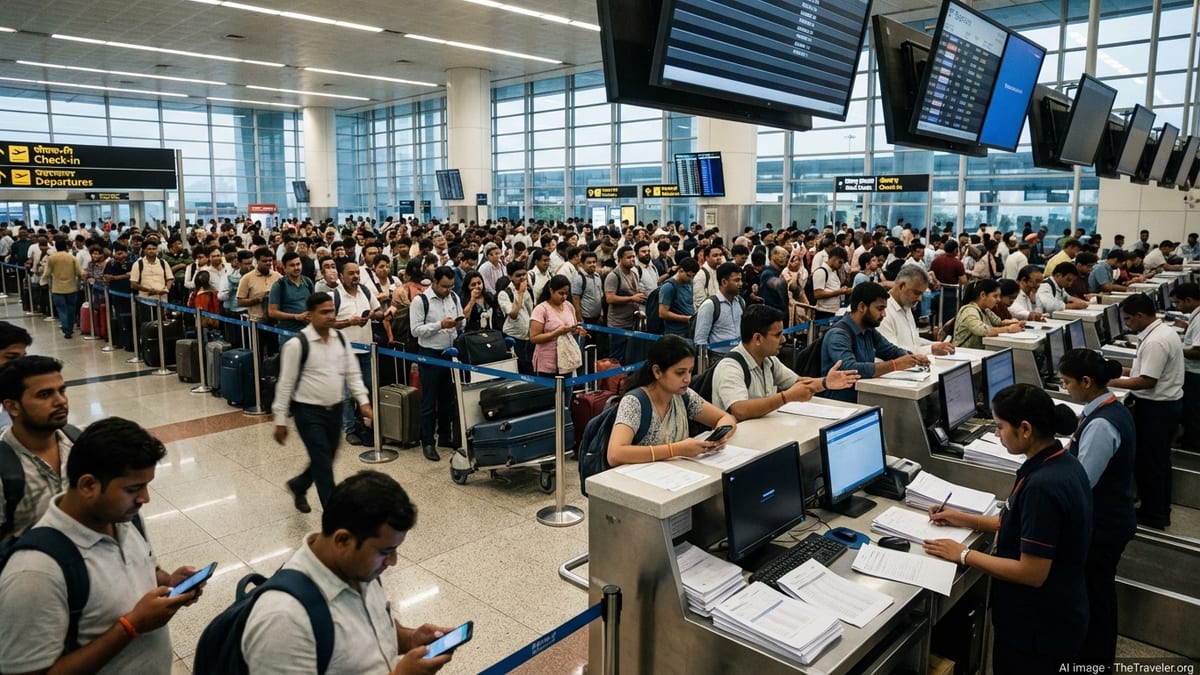
What Happened in the Early-Morning Global Navitaire Meltdown
According to airline and airport officials, the disruption began around 6.45 am India Standard Time on Thursday, February 19, when Navitaire’s passenger service system suddenly went offline for carriers that rely on it for reservations, check-in and departure control. Services remained unstable for nearly an hour, with a second, shorter disruption reported a little later in the morning, before systems were fully restored.
Navitaire, a subsidiary of technology giant Amadeus, later said a planned maintenance change had unexpectedly triggered network instability across its hosted airlines. Technical teams moved to roll back the change and stabilize the platform, with the core outage window lasting roughly 45 to 50 minutes before normal operations resumed for most customers.
Although the technical issue was relatively short-lived, the impact in crowded terminals was immediate. Early-morning departures are among the busiest bank of flights at many airports, and the sudden loss of automated check-in and baggage systems forced airline staff to scramble, turning to paper manifests and manual data entry just as passenger flows were peaking.
By mid-morning, airlines and Navitaire were declaring systems stable, but the operational hangover continued in the form of residual delays, missed connections and confused travelers still trying to understand whether their flights were on time.
Delhi and Mumbai Bear the Brunt of India’s Check-in Gridlock
In India, the sharpest disruptions were felt at Delhi’s Indira Gandhi International Airport and Mumbai’s Chhatrapati Shivaji Maharaj International Airport, the country’s two busiest hubs. Airport sources said check-in counters and self-service kiosks for several carriers froze almost simultaneously, forcing terminal operators to hold back passengers at entry points and redirect them into manual queues.
At Delhi, the issue lasted roughly from 6.45 am to 7.30 am, just as morning departures were ramping up. Long lines formed at check-in desks, and some passengers found themselves waiting outside security zones while airline teams attempted to verify bookings and seat assignments by hand. Inside the terminal, staff tried to make public announcements and guide people between counters, but the sheer number of travelers created visible bottlenecks and frayed tempers.
Mumbai reported similar scenes, with photos and eyewitness accounts describing snaking queues at domestic terminals as staff printed boarding passes manually and tagged baggage without the usual automated verification. Industry sources said that while most flights eventually departed, a number of services pushed back later than scheduled as boarding was delayed and manifests were reconciled.
Some passengers reported worries about missing connections or critical appointments, especially those traveling for business or onward international flights. For many, the experience revived memories of previous disruptions in India’s aviation sector over the past year, including widespread scheduling chaos at IndiGo in late 2025 and air traffic control issues that snarled operations at major hubs.
Asia-Pacific and European Carriers Also Hit by System Failure
Industry executives indicated that the problem was not confined to India. The same Navitaire outage affected carriers in the broader Asia-Pacific region and parts of Europe, many of which use the platform’s New Skies passenger service system, particularly low-cost and hybrid airlines.
While not every affected carrier has disclosed details, people familiar with the incident said check-in counters for certain budget airlines in Southeast Asia temporarily reverted to manual processing as well. In Europe, some operators reported brief interruptions to online check-in and mobile boarding passes, leading to longer waits at airport counters as staff printed documents on-site.
Because local time zones differ, the precise impact varied from country to country. In some Asia-Pacific markets, the disruption overlapped with mid-morning departures, while in parts of Europe it affected early morning flights. However, most airlines reported that once Navitaire stabilized its network, they were able to clear backlogs over the course of the day, avoiding widespread cancellations.
The episode has nonetheless drawn renewed attention to the aviation industry’s reliance on a relatively small number of critical technology providers for reservations, inventory management and departure control. A failure in one system can cascade across continents in a matter of minutes, affecting passengers far beyond any single airport.
Which Airlines Were Affected and How They Responded
In India, the most visible impact was on carriers that publicly acknowledge using Navitaire, including IndiGo, Air India Express, Akasa Air and SpiceJet. These airlines account for a significant share of the domestic market, and their simultaneous technology issues created the impression among travelers that “every airline was down,” even though some full-service operators on different systems continued to function normally.
IndiGo, India’s largest airline by market share, said internally that its systems were restored within roughly half an hour. People at the airline described a rapid shift to backup procedures and manual check-in while technical teams worked with Navitaire to bring services back online. IndiGo’s operations have already faced close regulatory scrutiny in recent months after a scheduling crisis and crew-time rule changes led to mass cancellations, so the carrier was quick to stress that Thursday’s disruption was driven by an external vendor system.
Akasa Air and Air India Express also acknowledged being caught up in the outage but downplayed the operational impact, saying that only limited check-in functions were affected and that flights themselves continued with minimal delay. SpiceJet indicated that while it uses Navitaire technology, its services saw only a short-lived issue and were not materially disrupted.
Air India, which relies on a separate passenger service system, reported no significant impact, underscoring how technology stack choices can make the difference between a normal operating day and near-chaos when a vendor platform stumbles.
How the Outage Affected Check-in, Baggage and Boarding
For passengers on the ground, the most immediate effect was at the first point of contact: check-in. With Navitaire offline, airlines lost access to real-time booking data, seat maps and automated baggage tagging at counters and kiosks. Many travelers found that web check-in and mobile boarding passes were unavailable or could not be verified at airport entry points, forcing them into physical queues even if they had checked in earlier.
Airlines responded by activating manual procedures that still underpin aviation operations but are rarely seen at scale in modern terminals. Staff printed temporary manifests, verified identities against static lists, and issued handwritten or manually printed boarding cards. Baggage tags were sometimes filled out by hand and cross-checked with passenger names rather than automatically linked to booking references in the system.
These manual processes inevitably slow down throughput. Even when flights are not canceled, the time required to process each passenger increases dramatically, especially during peak hours. As lines grew longer in Delhi and Mumbai, some travelers reported being held back at the entrance to security until their flight’s check-in counters could confirm that systems were working again or that manual capacity was available.
Boarding, too, became more cumbersome. Without automated scanners linked directly to live passenger records, gate agents had to manually reconcile boarding passes against printed lists, increasing the risk of errors and adding precious minutes to already-tight turnaround windows. Although there were few reports of passengers being denied boarding incorrectly, the process contributed to departure delays for certain flights.
Were Flights Canceled or Just Delayed, and How Long Did Disruption Last?
Despite dramatic images of queues at major airports, most official statements from airlines and airport authorities described the operational impact as limited mainly to delays rather than large-scale cancellations. Sources at Indian airports said the core outage window ran from approximately 6.45 am to 7.28 am, with a secondary glitch around 8.10 am that was resolved within about 15 minutes. By around 8.25 am, systems were reported to be stable, and airlines began working through the backlog.
Given that the disruption overlapped with a particularly busy morning bank of flights, a number of departures did leave late as check-in and boarding processes spilled over their scheduled windows. However, airlines in India and abroad have emphasized that most flights eventually operated, and that there were no prolonged, multi-day consequences comparable to the major global IT outages seen in recent years.
Passengers’ experiences varied widely. Those who arrived at the airport just before check-in cut-off times found themselves at greater risk of missing flights, because manual processing could not be accelerated to accommodate last-minute arrivals. Others who had longer buffers reported extended waiting times but ultimately boarded and departed, sometimes with their flights making up lost time in the air.
By late morning and early afternoon, queues at Delhi and Mumbai had largely thinned, and both Navitaire and the affected carriers said they were monitoring systems closely for any sign of recurrence. At that point, delays were mostly confined to flights that had been caught mid-process during the outage.
What Travelers Should Do if Their Flight Was Affected
For travelers whose flights were delayed or whose check-in process was disrupted, the first step is to confirm the final status of their journey with the airline, either through updated messages, call centers or airport information desks. Even though systems have largely stabilized, some bookings may show changed departure or arrival times that need to be reconfirmed before heading to the airport.
Passengers who missed flights because they could not complete check-in during the outage should preserve boarding documents, receipts and any written communication from the airline, as these may be important when seeking rebooking or refunds. Many carriers have internal guidelines for handling passengers disrupted by technical failures, which can include waiving change fees, honoring fare differences or providing complimentary re-accommodation on later flights, subject to seat availability.
Travelers with onward connections, especially those involving separate tickets or different airlines, should double-check minimum connection times and allow for extra buffers in case of residual delays. Where possible, contacting the onward carrier early can improve the chances of a smooth rebooking if the first segment was pushed back by the outage.
For those who were not traveling on February 19 but have upcoming flights with airlines that use Navitaire, there is no indication at this stage of continued disruptions. Still, aviation experts advise completing online check-in as early as allowed, arriving at the airport earlier than usual during peak periods, and keeping an eye on airline advisories, particularly if traveling through major hubs that experienced the brunt of Thursday’s problems.
Why This Matters for the Future of Airline Technology and Passenger Rights
The Navitaire incident is the latest reminder that aviation has become deeply dependent on complex, centralized technology platforms. A short-lived glitch at a single vendor can ripple through busy hubs in India, the Asia-Pacific and Europe almost instantaneously, affecting thousands of passengers who have no direct relationship with the underlying technology provider.
Regulators and passenger-rights advocates are likely to scrutinize how airlines responded to the outage, particularly in markets where carriers are already under pressure for reliability issues and previous mass disruptions. Questions will center on whether there were adequate contingency plans, how quickly manual procedures were activated, and whether travelers were clearly informed about the nature and expected duration of the problem.
For Navitaire and similar technology suppliers, the episode adds urgency to efforts to build greater resilience, redundancy and transparency into core systems. While the company has emphasized that the failure stemmed from a planned maintenance change rather than an external cyberattack, passengers tend to focus on the practical impact: missed meetings, lost sleep, and hours spent in queues at terminals from Delhi and Mumbai to airports across the Asia-Pacific and Europe.
From a traveler’s perspective, the lesson is that even as airlines and airports tout digital, touchless journeys, paper manifests and manual check-in lines remain the ultimate fallback when critical systems go dark. For now, the February 19 outage appears to have been contained within a single chaotic morning, but it has once again exposed the fragility that lies beneath the promise of seamless global air travel.