

More news on this day
Nigeria’s Civil Aviation Authority is flagging an extended period of weather-related disruption, warning that longer and more intense rainy seasons are expected to fuel domestic flight delays and cancellations through December 2026.
Get the latest news straight to your inbox!
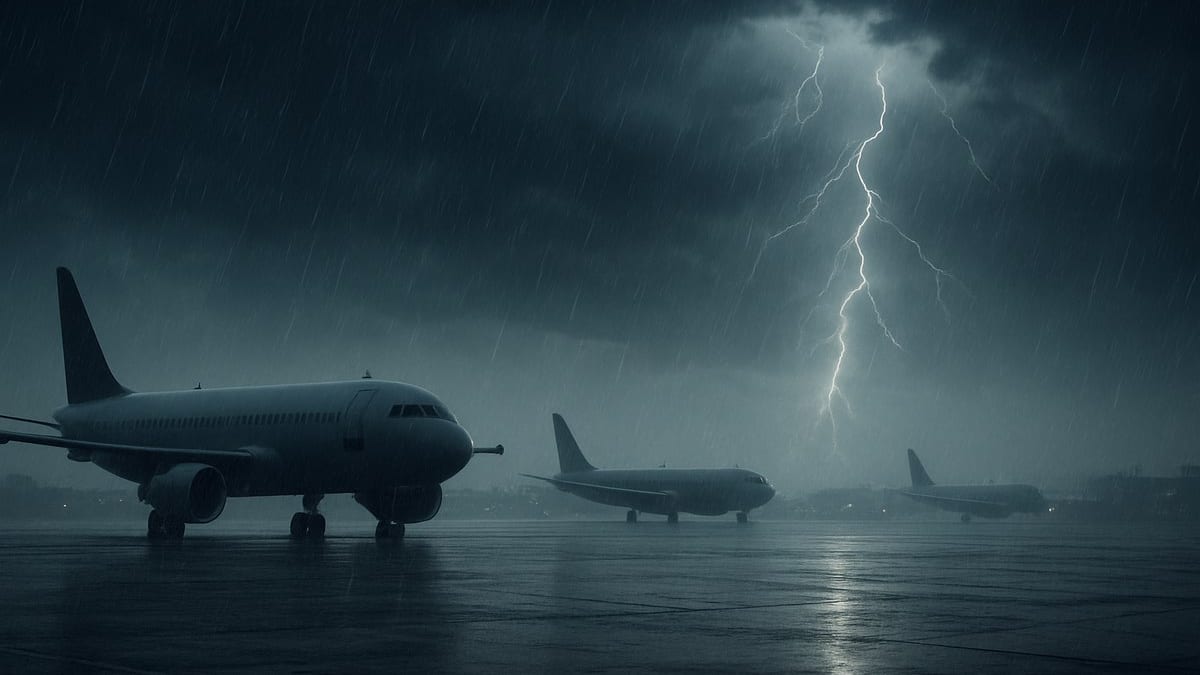
Longer rainy seasons collide with a busy domestic market
Publicly available information from recent NCAA advisories and airline performance data indicates that seasonal weather is now a defining factor in Nigeria’s on-time performance. Historically, thunderstorms, low cloud and poor visibility have been concentrated in a shorter core rainy period, but meteorological reports show more frequent heavy downpours stretching further into the calendar year.
That shift is colliding with a domestic network that has expanded rapidly since the pandemic. Data compiled from aviation industry analyses shows that Nigerian carriers operated more than 17,000 domestic flights in the third quarter of 2025 alone, with delay rates still in the double digits despite modest improvements on the previous year. The result is a system where even routine convective storms can trigger knock-on disruptions across multiple airports.
Travel and aviation outlets report that the NCAA has repeatedly highlighted thunderstorms and reduced visibility as key drivers of operational bottlenecks during both the rainy season and the dusty harmattan period. With forecasts pointing to more prolonged wet conditions, regulators are now signalling that those pressure points are likely to persist, rather than ease, over the next two years.
Industry commentary suggests that the impact will be most visible on high-density domestic corridors and during peak leisure periods, when limited spare capacity leaves airlines with little room to re-accommodate passengers once a weather system slows the morning wave of departures.
Forecast: disruption risk elevated through December 2026
Aviation and climate analyses referenced by local media point to an elevated probability of intense rainfall events recurring through the 2025 and 2026 rainy seasons. When translated into operational terms, this means more frequent temporary airport closures, additional spacing between aircraft in terminal airspace and a higher likelihood of diversions during evening storms.
While individual downpours are short-lived, traffic management measures introduced for safety reasons can quickly cascade into multi-hour delays. International disruption trackers have charted similar patterns in other regions, where a single storm system has led to hundreds of delayed flights in a day as airlines struggle to reposition aircraft and crews once the weather clears.
In Nigeria, where several airports still have limited night operations and shorter opening hours, those ripples can be particularly severe. If departures are pushed beyond daylight or published operating windows, flights may be rescheduled to the following day, extending the initial weather delay into an overnight disruption for passengers.
Given these constraints, publicly available scheduling guidance suggests that elevated disruption risk is likely to remain a feature of the network at least until the end of 2026, even as airlines add new aircraft and regulators press for better planning.
Impact on passengers, tourism and business travel
Extended rainy-season delays are set to affect more than just airport departure boards. Tourism and entertainment hubs that rely on busy “Detty December” traffic have already seen how weather-induced disruptions can spill into hotel occupancies, event timetables and onward connections. Previous NCAA summaries of December 2024 operations showed that more than half of domestic flights in that festive month arrived late, underscoring how vulnerable peak travel remains to seasonal patterns.
Business travel is similarly exposed. Analysts note that domestic air routes underpin corporate activity between Lagos, Abuja, Port Harcourt and other regional centres. When storms ground aircraft or force diversions, meetings slip, project timelines shift and companies face higher costs as staff spend unplanned nights away from base.
There is also a consumer-rights dimension. Legal and regulatory reviews highlight that Nigerian passengers are entitled to care and, in some cases, compensation when flights are heavily delayed, although entitlement can be more limited when weather is the primary cause. Nonetheless, oversight reports point out that many travellers are still unaware of their rights or how to lodge claims, a gap that can amplify frustration when disruptions occur.
Travel commentators indicate that a prolonged period of perceived unreliability could weigh on demand if customers begin to factor in significant buffer time or choose alternative modes of transport for shorter journeys during the wettest months.
Airlines and regulators adjust strategies for resilience
Airlines and airport operators are not standing still in the face of these projections. According to industry coverage, carriers are working with the NCAA and other aviation agencies to refine schedules, reduce unrealistically tight turnarounds and prioritize early-morning departures that are less exposed to afternoon and evening thunderstorms.
Some operators have moved to boost fleet resilience by adding aircraft ahead of peak seasons, providing more flexibility to swap in spare capacity when a plane is held up by weather at an outstation. Airport authorities, in turn, are focusing on infrastructure and airfield lighting upgrades at select facilities to extend operational hours and create more options for recovering disrupted schedules once conditions improve.
Regulatory communications emphasize the importance of conservative decision-making when weather deteriorates, even at the cost of punctuality. Navigation and safety agencies have reiterated that flights must remain within strict visibility and wind thresholds, reinforcing the message that delays and cancellations prompted by storms are a safety requirement rather than a discretionary choice.
Travel-industry observers note that while such measures cannot prevent weather systems from forming, they can help limit the scale of knock-on disruption and shorten recovery times after major storm events.
What domestic travelers can expect in upcoming seasons
For travelers planning journeys between now and December 2026, the practical implications are starting to come into focus. Advisory material circulating among travel agents and consumer platforms encourages passengers to build additional time into tight itineraries during the heart of the rainy season, particularly for same-day connections to international flights or time-sensitive events.
Flexible tickets and early departures are expected to take on new importance. Seating demand is likely to be strongest on morning flights, which historically have a higher chance of operating close to schedule before convective weather builds up in the afternoon. Travel guidance also recommends that passengers maintain up-to-date contact details with airlines so that schedule changes and rolling delays are communicated quickly.
Observers expect digital tools to play a larger role as well. Many Nigerian carriers now provide app-based notifications and real-time flight-tracking, while third-party platforms aggregate disruption information across multiple airlines. Access to these channels can help passengers rebook faster when weather interrupts operations.
Ultimately, publicly available forecasts and regulatory signals converge on the same message: longer and more unsettled rainy seasons will remain a defining feature of Nigerian domestic air travel through at least the end of 2026. Travelers who plan around that reality, rather than treating storms as one-off anomalies, are likely to navigate the coming seasons with less disruption.