

More news on this day
Travelers flying within and from Nigeria are being advised to brace for persistent weather-related disruption, as the Nigeria Civil Aviation Authority highlights an unusually long rainy season that climate projections suggest could fuel flight delays and cancellations through December 2026.
Get the latest news straight to your inbox!
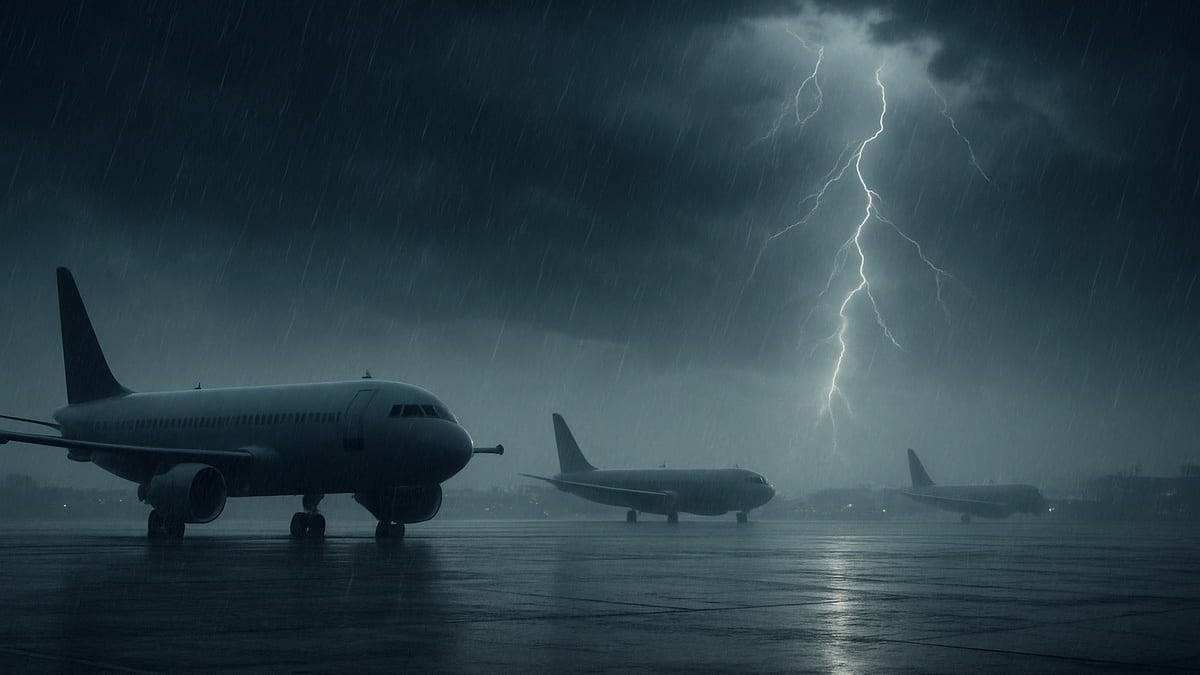
Climate outlook signals longer, wetter seasons
Recent seasonal climate predictions from Nigerian and international meteorological agencies point to a wetter than usual pattern across parts of West Africa in 2026, with indications that rainfall could start earlier and persist later into the year in coastal and southern states. Publicly available forecasts from the Nigerian Meteorological Agency describe an extended rainy period in key regions including Lagos and Ogun, heightening concerns for aviation operations that already contend with intense thunderstorms and low visibility during the core wet months.
The shifting pattern is being linked by climate researchers to broader changes in atmospheric circulation and sea surface temperatures, including a transition in the El Niño Southern Oscillation that can alter tropical rainfall belts. While exact outcomes remain uncertain at a local scale, regional and global outlooks increasingly converge on a scenario of heightened rainfall variability, with longer wet spells and more extreme downpours emerging as recurring risks for transport infrastructure.
These projections arrive against the backdrop of recent flood emergencies in Nigeria and neighboring countries, when heavy rainfall inundated cities, displaced communities and disrupted road and air connectivity. For airlines and airports, a longer rainy season does not simply mean more wet days, but also a higher probability of convective storms, lightning, wind shear and waterlogged aerodromes that can halt or slow operations.
Industry analysts note that even modest changes in the timing of the rainy season can upend established scheduling assumptions. Routes that have traditionally been planned around relatively predictable wet and dry windows may now face a more complex risk profile, with weather-sensitive periods stretching deeper into what used to be considered the start of the dry season.
Rain-driven disruption compounds existing reliability challenges
Available operational statistics from the Nigeria Civil Aviation Authority and local industry reporting already show a high share of delays during peak travel months, particularly around the end-of-year festive period. For December 2024, publicly released summaries cited more than half of domestic flights as delayed, with stakeholders pointing to a combination of harmattan haze, heavy traffic, infrastructure constraints and fuel availability as drivers of disruption.
Weather has consistently featured as a major factor in these records. Separate assessments by the Nigerian Airspace Management Agency have underlined how thunderstorms, low cloud and reduced visibility can force diversions, ground stops and extended holding patterns, particularly at Lagos and Abuja, the country’s busiest gateways. Aviation specialists observe that as rain episodes become more prolonged and intense, those existing vulnerabilities are likely to be exposed more frequently.
Across the wider aviation network, similar patterns are emerging. In March 2026, for example, severe late-winter storms across the United States and Canada triggered thousands of flight cancellations and delays, with ripple effects reported by travel-industry outlets across the Americas. Those events underscored how meteorological shocks in one region can cascade through interconnected airline schedules worldwide, affecting Nigerian routes that rely on long-haul connections and tight transfer windows.
In that context, a Nigerian rainy season that stretches deeper into the calendar year could mean that local weather risks increasingly overlap with disruption spikes in other markets. This stacking of hazards, analysts warn, heightens the likelihood that passengers will encounter longer travel times, missed connections and irregular operations well into the final quarter of 2026.
Regulator urges early planning and passenger awareness
In light of the evolving climate outlook, the Nigeria Civil Aviation Authority has been using public advisories and media briefings to draw attention to weather-related operational risks. These communications build on earlier rainy-season notices in which the regulator described thunderstorms, turbulence and wind shear as particularly hazardous phenomena, and reminded travelers that safety-driven delays and cancellations are often unavoidable when such conditions emerge.
Current messaging focuses on aligning expectations ahead of time. Publicly available information from the authority emphasizes that flight schedules during the wet season are inherently vulnerable to short-notice changes, and that airlines may need to adjust departure times, reroute aircraft or consolidate services when weather systems persist along major corridors. The aim, industry observers suggest, is to encourage passengers to factor in extra buffer time and to remain flexible with itineraries through at least December 2026.
Travel experts following Nigerian aviation stress that transparent communication is likely to be as important as operational resilience. When weather triggers cascading delays, passengers often struggle to distinguish between safety-related decisions and avoidable service failures. By flagging the extended rainy season months in advance, the regulator and airlines have an opportunity to frame disruptions within a broader climate and safety narrative, potentially easing tensions at crowded terminals during peak episodes.
Consumer advocates, however, continue to highlight the need for carriers to meet their obligations under Nigeria’s aviation regulations, particularly regarding care, information and compensation when disruption is not strictly weather-driven. The interplay between unavoidable meteorological hazards and airline-controlled factors such as crew rostering and fleet maintenance is expected to remain a point of contention as the 2026 travel season unfolds.
Operational adaptations at airports and airlines
Airports and carriers operating in Nigeria are already experimenting with measures designed to cope with more frequent weather-related interruptions. Public reports indicate that aerodrome operators are prioritizing drainage improvements, runway surface maintenance and better water management systems to reduce the risk of standing water and temporary closures during heavy downpours. Enhanced coordination between meteorological services, air traffic management and ground operations is also being promoted as a way to anticipate storms and adjust traffic flows more efficiently.
Airlines, for their part, are reassessing schedules, fleet allocation and turnaround times through the rainy period. Aviation commentators note that some carriers are adding modest slack into rotations to absorb short delays, while others are looking at rescheduling the most weather-sensitive flights away from the late afternoon and evening hours when convective storms are more common. Training programs on wet-weather procedures and decision-making are also in focus, building on regulatory requirements and international best practice.
Regionally, there is growing interest in integrating more detailed, airport-specific forecasts into daily planning. Seasonal outlooks provide a broad signal that the rainy season may be longer or more intense, but operational teams require high-resolution, short-term guidance on storm cells, wind shear risk and visibility thresholds. Investments in nowcasting tools and advanced radar coverage are being discussed within West African aviation forums as part of a wider resilience agenda.
Despite these efforts, experts caution that no level of preparation can fully eliminate weather delays. Instead, success will be judged by how well the system absorbs and recovers from shocks, keeps passengers informed and protects safety margins during difficult conditions.
What this means for travelers through December 2026
For travelers planning trips within, into or out of Nigeria over the next eighteen months, the prospect of an extended rainy season translates into a higher likelihood of schedule changes, missed connections and longer queues at check-in and customer service desks. Travel-advice platforms are already recommending that passengers build generous layover times into complex itineraries touching Lagos or Abuja during the wet months, and to avoid last-flight-of-the-day options where possible.
Flexible booking policies have become another point of focus. Some airlines serving the Nigerian market have, in recent seasons, introduced limited-fee or no-fee change options during severe weather episodes, allowing travelers to move flights by a day or two when major storms are forecast. Observers expect similar measures to be used more frequently if rainy-season disruption persists into late 2026, particularly around high-demand periods such as public holidays and year-end festivities.
Travel insurers are also adjusting their products and messaging. Policy outlines available from regional providers increasingly reference weather-related delays as a distinct risk category, with guidance on documentation needed to support claims for missed connections, additional accommodation and alternative transport. Consumers are being encouraged to read policy details carefully, as coverage conditions can vary widely between providers and plan types.
Ultimately, the warning about prolonged rainy-season disruption through December 2026 reinforces a broader trend facing global travelers, in which climate variability is becoming a routine part of trip planning. For those flying to, from or within Nigeria, paying close attention to seasonal forecasts, airline advisories and airport notices may prove just as essential as securing a seat in the first place.