

More news on this day
College teams and fans planning to fly to tournaments over the next two years may face a bumpier journey than usual, as new climate outlooks and scheduling analyses point to heightened disruption risks during rainy seasons through 2026.
Get the latest news straight to your inbox!
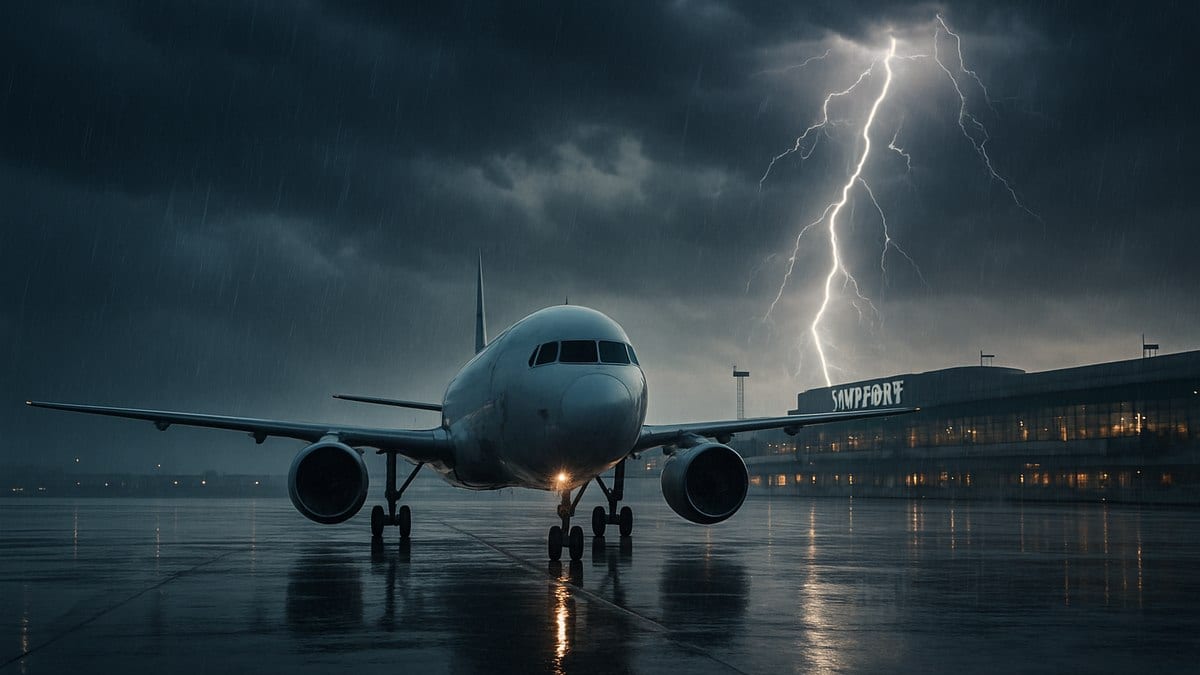
Climate Outlooks Point to Wetter, Less Predictable Seasons
Recent long range climate assessments indicate that several key travel regions for U.S. college sports are heading into wetter and less predictable rainy seasons between now and 2026. Research on midlatitude weather extremes published this month highlights an emerging pattern of more intense moist weather events, with stronger downpours increasingly clustered around frontal systems that often coincide with peak travel windows for major sports calendars.
In North America, forecasters tracking Pacific sea surface temperatures are monitoring the possibility of a stronger than usual El Niño style pattern developing into late 2026. According to recent model summaries, anomalously warm waters in the equatorial Pacific could amplify storm tracks, prolong periods of heavy rain, and increase the likelihood of flooding and low cloud ceilings across parts of the United States at various times of year. These conditions are closely tied to convective weather and visibility challenges that are already among the leading causes of flight delays and cancellations.
Regional forecasters are also signaling wetter outlooks in other NCAA linked travel markets. For example, a 2026 seasonal forecast from the Japan Weather Association anticipates earlier and more intense rainy periods across much of Japan, with higher rainfall than in 2025 and greater typhoon risk. While primarily focused on local conditions, such outlooks reinforce a broader global pattern in which airports face heavier precipitation events clustered into shorter timeframes, increasing the likelihood of ground stops and extended delays.
Climate assessments compiled by international bodies point to a rise in compound events, such as heavy rain following dry spells that reduce soil absorption and increase runoff. For aviation, this raises the prospect of more frequent surface flooding, temporary runway closures, and ground handling disruptions at hubs that serve as gateways for overseas NCAA tours, preseason trips, and holiday tournaments.
Weather Driven Flight Disruptions Already Straining Schedules
Recent travel seasons offer a preview of the challenges that worsening rainy outlooks could pose for college sports logistics. Publicly available incident summaries from late 2025 and early 2026 show repeated examples of dense fog, severe thunderstorms, and winter storms forcing large scale schedule changes at some of the busiest North American and European hubs. In one December 2025 event, thick fog at Hartsfield Jackson Atlanta International reportedly delayed more than a thousand flights in a single day, with over a hundred cancellations.
European reporting from the 2025 to 2026 windstorm season describes how storms such as Anna generated heavy snow, crosswinds, and intense rainfall that severely disrupted operations at airports including Amsterdam Schiphol, Florence, and Milan. Hundreds of flights were canceled or delayed within hours as runway capacity was reduced and crews reached duty time limits while waiting out adverse conditions. While these incidents centered on commercial traffic, they demonstrate how quickly available seat capacity can evaporate just as teams and fans are trying to reach neutral site events and international tournaments.
Closer to home, advisories circulated in March 2026 through airline channels and traveler forums documented multiple weather waivers across the U.S. Midwest and East Coast tied to late season winter storms and embedded thunderstorms. These waivers, which allow itinerary changes without penalty for passengers traveling into affected airports on specific dates, have become a regular feature of peak travel periods. For college programs locked into fixed competition windows, such last minute changes can complicate arrival plans, recovery time, and even roster availability.
Beyond individual storms, sector wide performance reports compiled by air traffic organizations show that weather remains a dominant driver of air traffic flow management delays. Although European data for mid 2025 highlighted some improvements in average delay minutes, convective weather outbreaks still produced sharp, short term spikes in disruptions that cascaded through networks for days. As rainy season outlooks worsen, similar volatility is expected to recur more frequently across both sides of the Atlantic.
New Forecast Tools and Aviation Research Target Convective Hazards
At the same time that climate outlooks are turning wetter, aviation specific forecasting tools are becoming more sophisticated. In the United States, a recent service notice from the National Weather Service detailed plans to implement a Domestic Aviation Forecast System upgrade in March 2026. The updated system is designed to better represent hazards such as supercooled rain and large droplets that affect aircraft icing and performance during stormy conditions.
Academic research is also exploring new approaches to managing air traffic in convective weather. A study released in early 2026 examined the use of so called pathfinder flights routed through storm impacted corridors to test the viability of keeping certain routes open. By modeling how dispatchers and controllers might sequence these flights under uncertainty, the work suggests ways to maintain some traffic flow even when thunderstorms or squall lines limit available airspace.
Other recent studies investigate how large scale climate patterns, including El Niño Southern Oscillation and stratospheric wind cycles, can influence jet stream position, storm frequency, and ultimately flight times and fuel use along major corridors. Findings indicate that the combined impact of these processes can produce substantial monthly variations in operating costs as airlines adjust routings around strong headwinds or more active storm tracks. For college athletic departments contracting charter services or group blocks, such variability could translate into higher fares on key dates if carriers anticipate increased weather exposure.
Industry environmental outlooks compiled by international aviation organizations likewise stress that rising sea levels and more frequent extreme rain events can directly affect airports built in low lying coastal zones. In these locations, heavy rainy season downpours on top of elevated tides increase the likelihood of ramp flooding and infrastructure stress, adding another weather sensitive variable into flight planning for international tournaments and early season exhibitions.
Implications for NCAA Travel Planning Through 2026
While the NCAA has not released a single unified travel risk forecast, recent climate data, operational reports, and aviation research together point to a clear message for college sports stakeholders. Between now and 2026, rainy seasons in several key regions are expected to be more intense, more variable, or both, and flight networks are likely to feel the impact through repeated bouts of delays and cancellations.
Regular season schedules already demand tight turnarounds, particularly for sports that rely on Thursday to Sunday travel patterns or back to back away games. When storms trigger extended ground stops at hub airports, even short regional connections can become overnight disruptions, forcing programs to scramble for replacement flights, hotels, and contingency ground transport. Such scenarios are most acute during spring and early summer rainy patterns in the Southeast and Gulf Coast, and during late season tropical activity that can push heavy rain and gusty winds far inland.
Postseason tournaments and championship events pose additional challenges. Neutral site venues often depend on a limited number of nearby airports, and heavy rain can quickly saturate runway systems and access roads. For international competitions, exposure multiplies as teams navigate intercontinental segments, regional connectors, and local weather regimes that may be entering or exiting monsoon, typhoon, or cyclone seasons. Published seasonal outlooks for the South West Indian Ocean and the Atlantic basin underline how active storm years can compress safe travel windows around key dates.
For travelers, the practical takeaway is that trips tied to NCAA calendars through 2026 will be operating against a backdrop of heightened rainy season volatility. Publicly available advisories from airlines and airports increasingly encourage passengers to build more flexibility into itineraries during storm prone months, monitor forecasts closely in the days leading up to departure, and prepare for the possibility of rebooking or overnight delays.
Strategies for Teams and Fans Navigating a Wetter Era
In response to these evolving risks, athletic departments and fan travel organizers are beginning to adapt their planning assumptions. Some programs are reportedly reviewing whether to build in additional buffer days before high stakes postseason games, particularly when travel requires connections through weather sensitive hubs. Others are looking at spreading team travel across multiple flights or carriers on select routes in order to reduce the impact of a single cancellation.
Insurance and contracting practices are also under quiet review. With climate assessments suggesting a higher likelihood of heavy rain events during traditional rainy seasons, there is growing attention on how charter agreements, hotel blocks, and ground transport contracts allocate costs when storms force last minute changes. Industry outlooks from airline associations note that carriers expect operating costs to remain under pressure through at least 2025, reinforcing the incentive for all parties to clarify responsibilities in advance.
For fans, particularly those following their teams to conference tournaments or early season invitationals, the practical advice is becoming more consistent across published guidance. Booking nonstop flights when possible, allowing generous connection times, and avoiding last departures of the day into storm prone regions can reduce exposure to rolling disruptions during rainy months. Travelers may also increasingly weigh the value of flexible tickets and travel waivers that become available when forecast models point toward organized storm systems.
As climate science and aviation data converge, the picture that emerges for the NCAA travel ecosystem is one of heightened but manageable risk. Rainy season outlooks through 2026 suggest that intense downpours and storm related disruptions will remain a recurring feature of the college sports calendar, requiring more deliberate planning from teams and supporters looking to take to the skies.