

More news on this day
Intensifying rainy seasons and a growing catalogue of weather-related aviation snarls are prompting the NCAA to caution schools, teams and fans that flights tied to college sports events could face elevated disruption risks through 2026.
Get the latest news straight to your inbox!
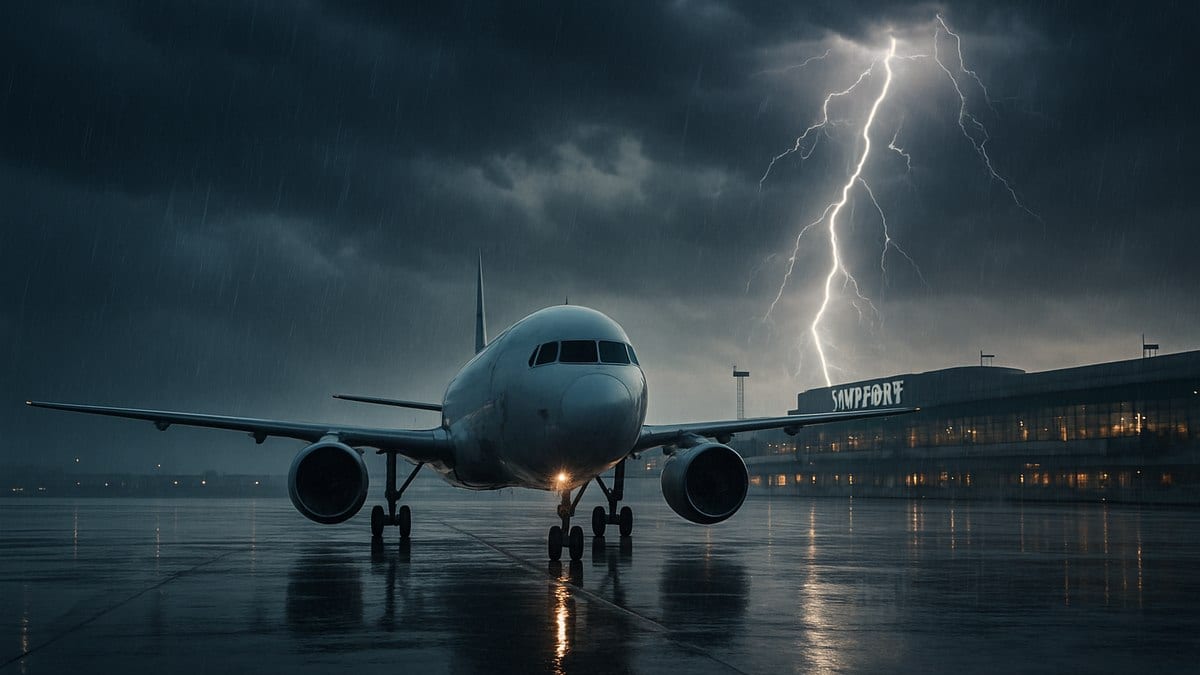
Climate Outlooks Point to Stormier Travel Windows
Seasonal forecasts from major meteorological agencies indicate that many key college sports regions are likely to see heavier and more erratic rainfall through at least late 2026. Outlooks for the Atlantic and Pacific tropical basins suggest an active pattern, while regional climate assessments highlight an increasing tendency toward intense convective storms, short-notice downpours and localized flooding during traditional shoulder and rainy seasons.
Recent assessments of aviation and environmental trends note that extreme weather events have already been straining airport infrastructure and airline operations, as heavier rain, strong winds and low visibility conditions interact with capacity-constrained networks. Industry analyses of delay statistics in the United States show that weather remains one of the leading causes of disruption, particularly during storm-prone periods when demand for air travel is high.
Publicly available climate summaries for 2024 and 2025 underscore a broader shift in rainfall patterns, with more frequent episodes of high-intensity precipitation rather than steady, predictable showers. For college sports stakeholders who depend on tightly timed charter and commercial flights, the implication is that the same calendar windows used for years now intersect more often with disruptive weather.
Against that backdrop, NCAA travel planners are incorporating these longer-range signals into scenario planning for regular seasons, conference tournaments and championships through 2026, treating extreme rainfall and convective storm outbreaks as baseline risks instead of rare outliers.
Recent Weather Disruptions Offer a Preview
In the past year, several major hubs and regional gateways that serve college sports markets have experienced significant weather-related flight disruption during rainy or stormy periods. In the United States, powerful storm systems this spring produced long lines of thunderstorms, heavy rain and strong winds across multiple regions, leading to waves of delays and cancellations at major airports and exposing how quickly schedules can unravel when weather and high demand collide.
Internationally, aviation coverage has highlighted how even short-lived bouts of heavy rain can ripple through tightly scheduled hubs. Reports from the United Arab Emirates in March 2026, for example, described how bursts of unstable weather brought delays and cancellations at Dubai and Abu Dhabi as rain, wind and reduced visibility temporarily constrained operations at already busy airports. Similar patterns have appeared in Europe and Asia, where monsoon downpours and windstorms have forced temporary runway closures and diversions.
In Africa, flooding in early 2026 in parts of East Africa triggered disruptions at major airports as runways and taxiways were affected by standing water and reduced visibility. These events, while regional, illustrate the broader vulnerability of aviation networks when heavy precipitation overwhelms drainage systems and ground infrastructure.
For collegiate programs that increasingly schedule international tours, neutral-site games abroad and overseas preseason exhibitions, these recent episodes serve as tangible examples of the kinds of interruptions that could intersect with team and supporter travel in the coming seasons.
Why College Sports Travel Is Especially Exposed
Unlike purely leisure travel, college sports aviation relies on highly choreographed movements that must align with competition windows, academic schedules and broadcast commitments. Teams often travel on narrow turnarounds, with late-night or early-morning departures selected to minimize time away from campus. That timing frequently overlaps with periods of maximum thunderstorm activity or daily rainfall peaks in many regions.
Football, soccer and cross-country seasons coincide with the height of the North American hurricane and late-summer storm period, while basketball and other winter sports increasingly see impacts from strong frontal systems that deliver heavy rain along with snow and ice. The compression of postseasons into short timeframes means that any extended ground stop at a hub, or repeated waves of storms, can cascade into missed connections or severely delayed arrivals.
Published analyses from aviation data providers show that during peak storm seasons, a single afternoon of strong thunderstorms can trigger thousands of delayed flights across large portions of the network as air traffic managers implement ground-delay programs and rerouting. When college teams depend on a particular flight or a very limited set of alternatives to reach a host city, the margin for recovery is often smaller than for flexible leisure travelers.
The NCAA’s concern extends to fans and alumni groups who follow programs on the road. Charter packages, band travel and supporter sections now routinely span multiple flights and carriers. If rainy-season storms stall arrivals into a single hub that many itineraries share, entire fan contingents may arrive late or not at all, affecting gate revenue and game atmosphere as well as traveler experience.
Operational Responses and Risk Mitigation Through 2026
Aviation regulators and industry bodies are already promoting strategies to manage a future with more weather volatility, including improved use of convective weather forecasts, more flexible crew and aircraft scheduling, and infrastructure upgrades aimed at better drainage and quicker recovery after heavy rain. Environmental and aviation outlook reports emphasize that planning for extreme rainfall and stormier seasons is now integral to maintaining acceptable levels of on-time performance.
Airlines serving college-heavy routes have begun to lean more on dynamic schedule management tools, real-time meteorological modeling and preemptive waivers during high-risk windows. Public information from major carriers in early 2026 shows a pattern of issuing travel alerts and flexible rebooking options ahead of forecast thunderstorms or rainstorms near large hubs, with the goal of smoothing demand and reducing day-of chaos.
Within this landscape, NCAA travel planners are encouraging member schools to build more slack into itineraries where possible, especially for critical postseason games and international travel. That can include favoring earlier arrival dates, avoiding last flights of the day during stormy periods, and considering alternative routings that bypass the most weather-prone hubs during monsoon or peak convective seasons.
Campus-level risk management teams are also examining insurance coverage, contingency busing plans for shorter segments, and communication strategies for students and families. By assuming that some level of rainy-season disruption is likely between now and 2026, rather than exceptional, athletic departments can better shield schedules and budgets from sudden shocks.
What Travelers Tied to NCAA Events Should Expect
For individual travelers planning to follow college teams through 2026, publicly available guidance from aviation regulators and consumer organizations points to a consistent message: assume that weather-related disruptions will be a recurring feature of busy travel periods. That does not mean every trip will be delayed, but that flexibility and preparation are increasingly important, especially during rainy or storm seasons.
Travelers can expect airlines and airports to rely more heavily on day-of operational tools such as ground-delay programs, temporary flow restrictions and dynamic rebooking when storms reduce capacity. Over a multi-year horizon, these measures are likely to become more common, not less, as climate variability continues to influence rainfall and storm patterns.
In practical terms, fans and families heading to NCAA events may wish to favor nonstop flights when available, allow generous connection times when they are not, and arrive in host cities earlier than the absolute minimum. Choosing flights earlier in the day, monitoring forecast discussions for key hubs, and signing up for carrier alerts are likely to remain prudent steps during the wetter, more volatile seasons highlighted by current outlooks.
As the NCAA looks ahead to packed calendars through 2026, the message emerging from climate and aviation data is less about alarm and more about adaptation. Rainy seasons are expected to be more disruptive than in the past, and college sports travel is adjusting, aiming to keep games on schedule even as the skies grow more unsettled.