

More news on this day
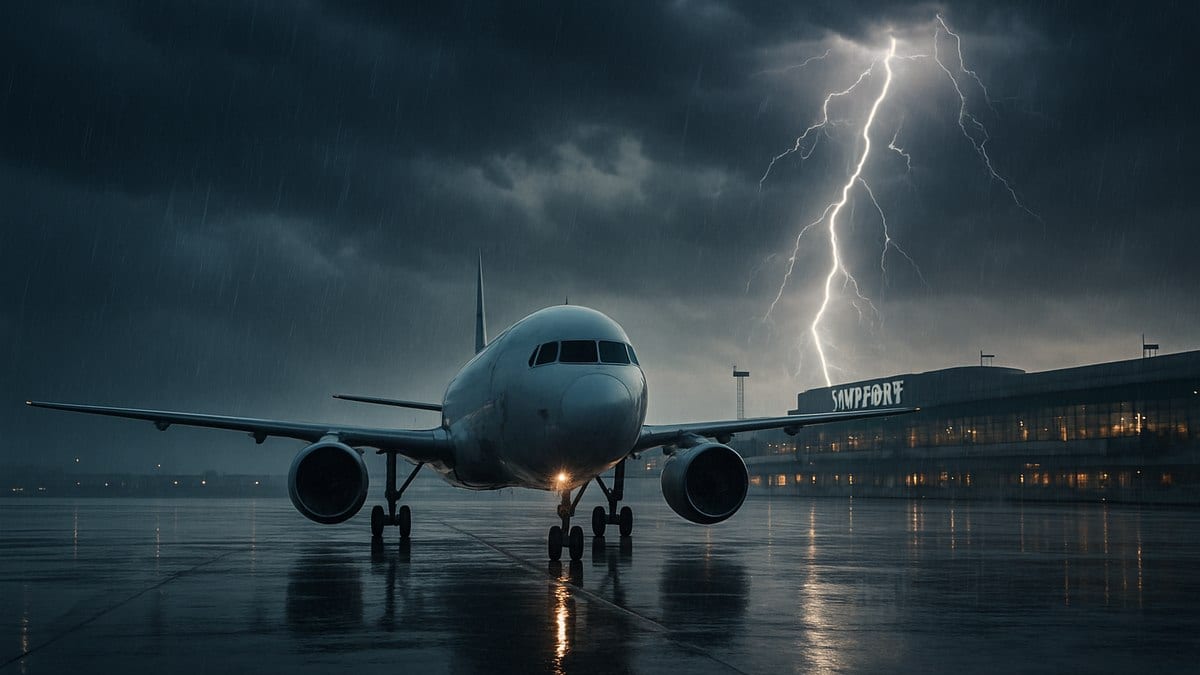
Nigeria’s Civil Aviation Authority has flagged a heightened risk of weather related flight disruptions through December 2026, as shifting rainy season patterns and more intense storms threaten already stretched airline schedules and airport infrastructure.
Get the latest news straight to your inbox!
Regulator Extends Weather Disruption Horizon
Recent public information from Nigeria’s Civil Aviation Authority indicates that airlines and passengers should brace for recurrent schedule disruption during both the rainy and dry seasons through at least the end of 2026. Earlier advisory circulars focused on dry season hazards such as dust haze and early morning fog, but officials have increasingly linked delay patterns to a longer, less predictable rainy season and more frequent thunderstorms affecting key domestic routes.
Weather has long been listed among the leading causes of delays in Nigeria’s domestic aviation statistics, particularly during mid year rains and the late year harmattan period. An executive summary of operations released for previous years showed that more than half of domestic flights in peak festive months departed late, with visibility related restrictions compounding congestion at Lagos, Abuja and other busy hubs. Industry coverage suggests that similar dynamics are likely to persist, and could deepen, as climate variability alters traditional wet season timelines.
These concerns have now been framed in a longer horizon. Aviation planners are working with seasonal projections that run into 2026, incorporating scenarios in which rain events begin earlier, last longer and arrive in shorter, more intense bursts. For operators, this means a higher probability that thunderstorms or low cloud ceilings will temporarily shut down departures and arrivals, forcing ground stops and diversions that ripple across the network for hours.
Climate Shifts Blur the Line Between Wet and Dry Seasons
Climate specialists and recent Nigerian meteorological outlooks point to a weakening distinction between the country’s traditional rainy and dry seasons. Reports highlight unusual rainfall episodes in what used to be reliably dry months and a near absence of a typical harmattan season in late 2025 and early 2026. These shifts complicate long established scheduling assumptions that once allowed airlines to plan around a relatively stable pattern of heavy rains between April and October.
Publicly available climate commentary notes that rain can now fall at almost any time of year, including periods historically dominated by dust haze. For aviation, that means aircraft and crews can encounter both heavy precipitation and reduced visibility from haze or fog within the same operational window. In practical terms, more flights are exposed to crosswinds, wind shear, waterlogged runways and lightning, all of which may require delays or diversions according to global safety standards.
Academic work on Nigerian aviation delays reinforces this picture. Recent studies examining passenger behaviour and weather related disruptions identify the rainy season as a major driver of schedule instability, citing visibility degradation, storm cells along common flight paths and runway contamination as recurring factors. Researchers also point to infrastructure gaps, with only a fraction of airports able to support low visibility approaches that would otherwise allow operations to continue during adverse weather.
Data Show Heavy Delays in Peak Travel Months
Domestic performance data compiled for 2024 and reviewed in press coverage show how quickly weather stress can translate into large scale disruption. In December of that year, more than half of all domestic departures were reported delayed, with carriers citing a mix of demand spikes and weather related constraints. Analysts note that when storms or low visibility halt operations at Lagos or Abuja for even a short window, the resulting backlog can cascade through the system for the rest of the day.
Broader statistics from the regulator indicate tens of thousands of delayed flights annually and more than a thousand outright cancellations in 2024, much of it clustered in the heart of the rainy months and again during the late year festive period. Reports suggest that losses mount as airlines burn extra fuel on holding patterns, absorb crew duty time overruns and manage passenger care obligations at crowded terminals.
Forecasts for the 2025 and 2026 rainy seasons suggest that similar patterns are likely, especially if storms intersect with holiday peaks such as the mid year school break and the end of year travel rush. Local and international operators flying into Nigeria’s main gateways may therefore face tighter operating margins, as contingency buffers are consumed by weather that does not align neatly with historical averages.
Airports Race to Upgrade, but Gaps Remain
Coverage of Nigeria’s airport network stresses that infrastructure remains a weak point in the country’s response to more volatile weather. Out of the federal airports, only a small number are currently equipped for full 24 hour operations, and not all have the most advanced instrument landing systems or approach lighting required for low visibility procedures. Industry experts have repeatedly linked this shortfall to avoidable delays during both harmattan haze and intense rains.
There are signs of investment. Reports describe ongoing calibration of navigational aids ahead of seasonal weather, as engineers flight test instrument landing systems and other ground equipment to comply with international standards. Investments in higher category landing systems at Lagos and Abuja are expected to improve resilience during periods of poor visibility, although these upgrades do not fully address challenges at secondary airports that handle significant holiday traffic.
Nonetheless, infrastructure improvements are playing catch up with shifting climate realities. Even where advanced systems are installed, they depend on stable power supplies, regular maintenance and trained personnel. In smaller airports with daylight only operations, late afternoon storms common in the rainy season can effectively close the field for the rest of the day, leaving passengers to face overnight delays or lengthy road journeys as alternatives.
What Travelers Can Expect Through December 2026
Based on current regulatory advisories, seasonal climate projections and recent operational data, travelers flying within Nigeria or connecting through its hubs should anticipate a higher baseline risk of disruption through at least December 2026. The most vulnerable periods are likely to coincide with the core rainy months, when thunderstorms, heavy downpours and low cloud frequently interrupt normal operations, and the late year window when residual rains may overlap with haze and fog.
Industry watchers recommend that passengers factor in greater flexibility when planning itineraries, especially for time sensitive connections or events. Longer layovers, early day departures and contingency plans for missed links are widely suggested strategies in recent travel coverage. Travel insurance products that explicitly cover weather related disruption are also drawing attention, as consumers seek to manage financial exposure in an increasingly unpredictable operating environment.
For airlines and airports, the extended disruption horizon to December 2026 underscores the need for coordinated planning across scheduling, crew management and infrastructure investment. Public reports suggest that collaboration between the aviation regulator, meteorological services and airport operators will be central to mitigating the impact of an evolving rainy season on Nigeria’s air travelers in the coming years.