

More news on this day
With Nigeria’s 2026 rainy season approaching, the Nigeria Civil Aviation Authority is drawing renewed attention to how intense weather patterns can disrupt flight schedules, leaving both domestic and international travellers facing longer delays, diversions and cancellations.
Get the latest news straight to your inbox!
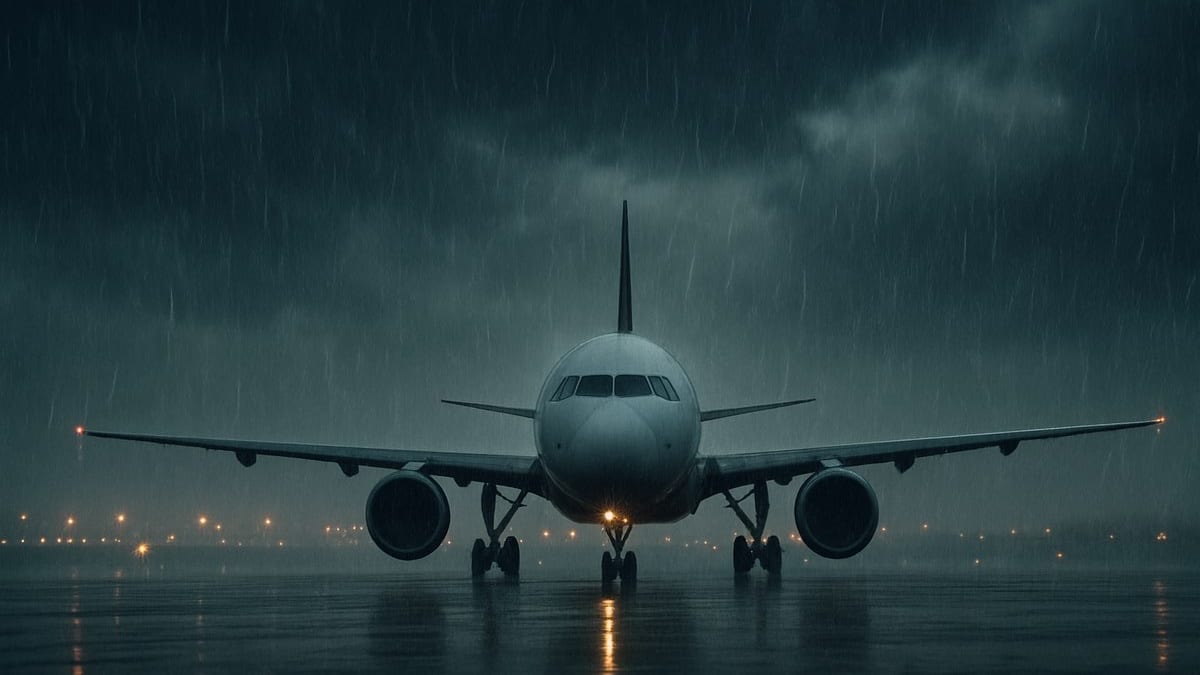
Regulator Focuses On Weather As A Growing Operational Threat
Publicly available information from previous rainy seasons indicates that the NCAA has repeatedly highlighted thunderstorms, microbursts, low-level wind shear and heavy rain as key aviation hazards, particularly between April and October when conditions become more volatile across much of the country. Earlier advisories have noted that the onset of the rainy season in coastal and southern regions typically precedes the central belt and the north, creating a staggered pattern of disruption risk across major routes.
Recent statistics shared by the regulator and reported in local media show the scale of the wider problem. Coverage of the 2024 and 2025 operating seasons points to tens of thousands of delayed departures and well over a thousand cancellations, with weather frequently cited among the compounding factors alongside technical and operational issues. Analysts say these trends suggest that 2026 is likely to bring another challenging season for on-time performance if forecast rainfall patterns hold.
Industry-focused reporting also reflects a tougher stance by regulators on how airlines manage disruption. The NCAA has signalled that repeated delays, poor passenger handling and inadequate communication around weather-related schedule changes will attract stricter penalties in 2026, aligning consumer protection efforts with broader safety and reliability concerns.
Rainy Season Patterns Set The Stage For 2026 Disruptions
Climatological studies and aviation commentary describe Nigeria’s rainy season as both geographically uneven and highly intense, with heavy downpours, embedded thunderstorms and rapidly changing visibility. The coastal south and commercial hub of Lagos usually see the rains begin around March and April, while Abuja and the central belt follow in late April or May. The far north tends to enter its wettest period later, often in June or July, but can still experience isolated storms earlier in the year.
For airlines, this pattern produces a moving band of weather risk across domestic and regional networks. A flight that departs a dry Lagos can encounter strong convective activity en route to Kano or Port Harcourt, forcing altitude changes, speed reductions or holding patterns. In more severe cases, aircraft may divert to alternate airports when storms build over destination runways or when crosswinds and low cloud ceilings reduce landing margins.
Reports from previous seasons show how quickly conditions can deteriorate. Episodes of intense rainfall around major airports have led to extended ground stops, queues for take off and arrivals stacked in the air waiting for gaps between storm cells. Such bottlenecks ripple through the rest of the day’s schedules, with morning disruptions frequently cascading into night-time delays and missed connections for international departures.
Forecasts for 2026 suggest another active wet season for West Africa, reinforcing the likelihood that Nigerian airports will once again contend with weather-driven congestion. Even without exact storm predictions, aviation planners generally expect the April to October window to require more conservative scheduling and greater use of alternates.
Passenger Rights, Compensation And What Travellers Can Expect
Alongside safety messaging, NCAA documentation on consumer protection has become increasingly prominent. Public information on the Nigeria Civil Aviation Consumer Protection Regulations, updated in recent years, sets out what passengers are entitled to during disruptions, including refreshments, accommodation in specific circumstances and refunds when flights are significantly delayed or cancelled for reasons within an airline’s control.
Coverage of enforcement actions indicates that the regulator has sanctioned multiple domestic and foreign airlines over failures to comply with these obligations. Reports highlight cases where passengers were left stranded overnight without adequate care, prompting NCAA interventions and follow up investigations. These precedents are shaping expectations for how airlines should treat customers if 2026’s rainy season once again strands large numbers of people at hubs such as Lagos and Abuja.
However, the line between weather as an unavoidable safety issue and disruption within an airline’s control can be complex. Operational experts note that while storms and poor visibility can make flying temporarily unsafe, how carriers plan fleets, crew and recovery efforts around predictable seasonal patterns is also critical. Public commentary suggests that regulators are paying closer attention to whether companies are using weather as a blanket explanation for wider scheduling or maintenance shortcomings.
For travellers, this environment means that documentation of delays, clarity on the cause given in official notifications and awareness of published rights will be important tools during the 2026 rainy season. Consumer advocates frequently encourage passengers to keep boarding passes, booking records and any written communication from airlines when seeking redress.
Operational Lessons From Past Weather Disruptions
Nigeria’s aviation history contains several notable incidents in which adverse weather played a significant role, providing sobering context for current precautions. Accident investigation reports and safety analyses of crashes in the mid-2000s have pointed to wind shear, poor visibility and storm activity as critical factors in some of the country’s worst tragedies, reinforcing why regulators stress conservative decision-making during the rainy season.
More recent non-fatal events have also illustrated the operational challenges. Media accounts describe aircraft diverting from Abuja to alternate airports due to storms, as well as runway excursions and difficult approaches linked to heavy rain and turbulence. Although these episodes did not result in major casualties, they disrupted schedules and drew attention to the need for pilots, controllers and airline operations centers to have real-time weather data and clear protocols.
Sector-focused publications report ongoing collaboration between the NCAA, the Nigerian Airspace Management Agency and meteorological services to improve forecasting, radar coverage and communication of weather alerts to crews. Investment in ground infrastructure, such as better runway drainage and more resilient power and navigation systems, is also cited as part of the broader effort to reduce rain-related disruption.
Nonetheless, experts caution that no amount of technology can remove the need to slow or suspend operations when thunderstorms and microbursts are present near flight paths. In that context, delays and cancellations during the rainy months are often described as a necessary safety trade off rather than a sign of system failure.
What Nigerian And Transit Travellers Can Do Ahead Of 2026
With the NCAA sharpening its focus on rainy season risks for 2026, Nigerian residents and foreign travellers transiting through the country are being encouraged by travel advisers and aviation commentators to build more flexibility into their plans. Recommendations highlighted in local and international coverage include allowing longer connection windows, particularly when linking domestic flights to long haul services, and avoiding tight same day turnarounds for essential meetings or events.
Travel analysts also point to the value of early morning departures, which are statistically less exposed to the cumulative effect of afternoon and evening storms on an already stretched schedule. Booking directly with airlines, maintaining up to date contact details and monitoring airline apps or airport information channels can help passengers receive faster updates when weather threatens operations.
For those with travel scheduled deep into the 2026 rainy season, observers suggest paying close attention to evolving airline performance. Media monitoring of delay statistics, enforcement actions and passenger experiences in the early months of the rains may indicate which carriers are managing the conditions more smoothly and which routes are persistently affected.
Ultimately, while Nigeria’s aviation regulator continues to warn of the elevated disruption risks that come with another year of intense rainfall, the emerging framework of stricter oversight, clearer passenger rights and more robust weather planning aims to make the 2026 rainy season more predictable, even if it cannot be made perfectly punctual.