

More news on this day
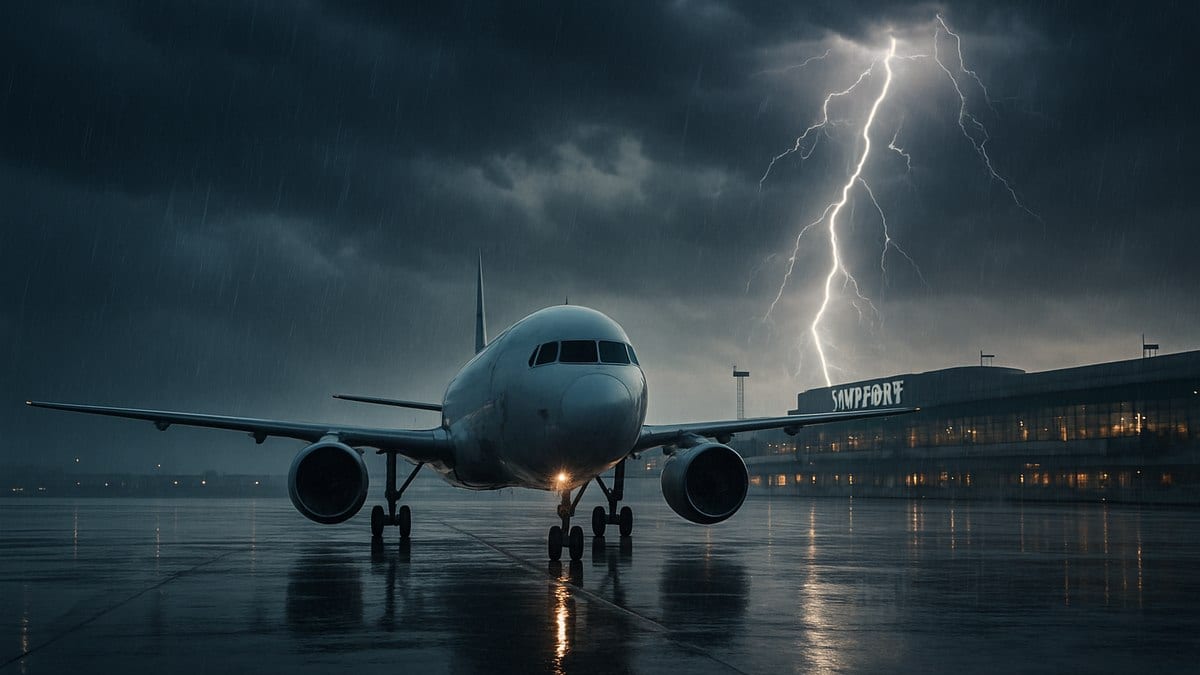
Nigeria’s civil aviation regulator is cautioning air travelers to prepare for another stretch of weather-related delays and cancellations, as new outlooks for the 2025 and 2026 rainy seasons point to more frequent storms and operational strain across the country’s already stretched airline network.
Get the latest news straight to your inbox!
Rainier Outlook Extends Timeline for Disruption Risk
Recent public statements from the Nigeria Civil Aviation Authority indicate that flight disruption risks tied to the rainy season will remain elevated at least through 2026, as the regulator responds to worsening seasonal forecasts and recent experience with convective storms across the country’s main aviation corridors. According to Nigerian press coverage, the authority has warned that passengers should expect delays and cancellations as heavy rain, lightning and low visibility return with the onset of the southern rainy season in March and April and later in the year across the central and northern regions.
The Nigeria Meteorological Agency’s seasonal outlooks for 2025 and 2026, referenced in local reporting and government advisories, point to above-average rainfall in many states and a high probability of intense thunderstorms during peak travel months. These conditions have already contributed to damaging floods in multiple years, with 2025 inundations affecting dozens of states and communities and underscoring how closely weather volatility and transport reliability are now linked across the country’s economy.
Publicly available summaries from the aviation regulator show that weather has been a consistent factor in disruption statistics, particularly during the core rainy months. Thunderstorms, squall lines and rapidly changing visibility require stricter separation between aircraft and can temporarily shut down operations at airports with limited navigational aids or daytime-only operating windows, compounding the impact on domestic connectivity.
Forecast-driven cautions emerging ahead of the 2026 rainy season suggest that authorities are no longer treating these patterns as isolated anomalies. Instead, the message to airlines and travelers is that climate-driven shifts in rainfall intensity and storm behavior are reshaping the baseline for flight reliability during large parts of the year.
Data From 2024 and 2025 Underscore Structural Pressure
Flight disruption data released by the Nigeria Civil Aviation Authority for 2024 and 2025 helps explain why the new rainy season warnings are being framed as a multi-year concern rather than a short-lived advisory. Official tallies for 2024 indicate that more than 84,000 flights were operated by local and international airlines serving Nigeria, with over 38,000 of those services recorded as delayed and more than 1,300 canceled. Local media analysis of the figures highlights poor weather as a recurring driver of schedule instability alongside fleet shortages and airport constraints.
Quarterly disruption summaries for 2025 show that, even outside the peak rainy months, hazardous weather episodes in both dry and wet seasons have forced airlines to hold, divert or cancel flights. Industry commentary captured in Nigerian business and aviation outlets notes that thunderstorms and low cloud frequently close runways or restrict operations at short notice, especially at secondary airports that lack advanced instrument landing systems or have more limited air traffic management resources.
These vulnerabilities are amplified by tight fleet utilization across the domestic market. Reports in Nigerian newspapers describe how a shrinking pool of serviceable aircraft has reduced scheduling flexibility, leaving carriers with little spare capacity to absorb weather-related shocks. When a single aircraft goes out of service or a rota is disrupted by storms, there are fewer backup options to reposition planes or crews, which can turn a localized weather event into a network-wide cascade of delays.
Academic and policy research on Nigeria’s aviation sector has also begun to emphasize the role of environmental variability in disruption patterns, positioning weather as a central operational risk alongside infrastructure and regulatory challenges. Against that backdrop, the regulator’s warnings tied to future rainy seasons are being interpreted as a signal that the industry must adapt structurally, rather than waiting for conditions to revert to historical norms.
Airlines Adjust Schedules and Procedures Ahead of Peak Rains
In response to the changing risk profile, Nigerian carriers are being encouraged to revisit their rainy season playbooks, including schedule design, crew planning and passenger communication. Coverage of recent stakeholder meetings organized by the aviation regulator describes discussions focused on reducing excessive over-scheduling, building more realistic turnaround times into timetables, and improving collaboration between airlines, airport operators and meteorological services.
Airline executives quoted in local business media have previously argued that weather is often blamed by default when other systemic issues are at play, from fuel supply disruptions to ground-handling bottlenecks. However, data sets released by the regulator show that weather-linked delays spike predictably during both the harmattan and rainy periods, suggesting that seasonal planning remains a critical lever for improving punctuality.
Operational guidance circulated in recent years has urged pilots and dispatchers to take a conservative approach to departures and arrivals when lines of thunderstorms are forecast along popular domestic routes, particularly in the late afternoon and evening when convective activity typically intensifies. While safety procedures already prioritize avoiding severe weather, the new advisories tied to the 2026 horizon emphasize the cumulative impact on scheduling, encouraging airlines to factor likely weather holds and diversions into their capacity planning.
Some Nigerian airports have received upgrades to navigational equipment intended to support safer operations in poor visibility, but industry analysts speaking through published commentary note that technology alone cannot eliminate weather risk. Runway closures due to water accumulation, lightning protocols for ramp staff and constraints on night operations at smaller airfields all limit the ability to maintain normal schedules during intense rainfall events.
Implications for Tourism and Domestic Travel Planning
The prospect of elevated rainy season disruption through 2026 carries significant implications for Nigeria’s tourism and hospitality sectors, especially in cities where air access is the primary gateway for domestic and international visitors. Tourism-focused reports have previously documented the contribution of air travel to peak-season revenues in Lagos and other hubs, with delays and cancellations not only stranding passengers but also leading to missed connections, shortened stays and increased operating costs for hotels and tour providers.
Travel-industry analysis suggests that leisure and business travelers may need to build more flexibility into itineraries that involve Nigerian domestic legs during the rainy months, particularly for time-sensitive events such as conferences, festivals or connecting long-haul flights. Recommendations emerging from consumer advocacy groups and aviation commentators include scheduling key meetings at least a day after planned arrival, booking earlier flights in the day where possible, and tracking weather forecasts more closely during the April to October window.
For inbound international travelers, new international gateways and upgraded airports are expanding route options into Nigeria, but the rainy season still poses a common denominator risk across the network. Published airport performance snapshots from other regions in 2026, including recent storms that disrupted thousands of flights in North America, have illustrated how severe weather in one part of a system can trigger knock-on effects far beyond the immediate area. Similar dynamics are expected in West Africa, where a relatively small number of aircraft operate a dense pattern of domestic and regional services.
Industry commentators stress that clear communication will be essential to maintaining traveler confidence as the rainy season outlook worsens. Transparent explanations of weather-related delays, timely rebooking options and realistic schedule updates can mitigate some of the frustration that has occasionally boiled over into confrontations at Nigerian airports during past disruption episodes.
Managing a Multi-Year Weather Risk Horizon
By framing rainy season hazards as a concern extending through at least 2026, the Nigeria Civil Aviation Authority is effectively placing climate-linked weather volatility alongside fuel prices, currency swings and regulatory reform as a strategic challenge for the country’s carriers. Aviation experts quoted in national media have argued that sustained investment in fleet renewal, airport infrastructure and meteorological services will be needed to match growing passenger demand with an increasingly unstable climate.
Public documents from the regulator and the meteorological agency point to ongoing collaboration on seasonal climate prediction, with the goal of translating long-range rainfall outlooks into actionable guidance for airlines and airports. This includes identifying high-risk corridors and time periods, refining thresholds for schedule adjustments and supporting contingency planning for floods that may affect ground access to airports as well as flight operations themselves.
For travelers, the message that emerges from the most recent advisories is less about avoiding air travel during the rainy season and more about recalibrating expectations. Disruption statistics from previous years show that most flights still operate, but the likelihood of extended delays, diversions or same-day cancellations is higher during peak storm months. Flexible tickets, robust travel insurance and backup plans for critical journeys are likely to become standard precautions for frequent flyers on Nigerian domestic routes.
As Nigeria’s aviation sector positions itself for growth through the middle of the decade, the worsening rainy season outlook is shaping strategy across the ecosystem, from route planning and fleet decisions to tourism marketing and passenger behavior. The regulator’s warnings suggest that success will increasingly be measured not only by the number of flights added to schedules, but by how reliably those flights can operate in the face of an evolving climate.