

More news on this day
Nigeria’s largest private carrier, Air Peace, is facing scrutiny from the Nigeria Civil Aviation Authority (NCAA) after one of its Abuja–London flights reportedly made an emergency return to the Nigerian capital, prompting renewed debate about safety oversight and operational standards on the country’s flagship long-haul route.
Get the latest news straight to your inbox!
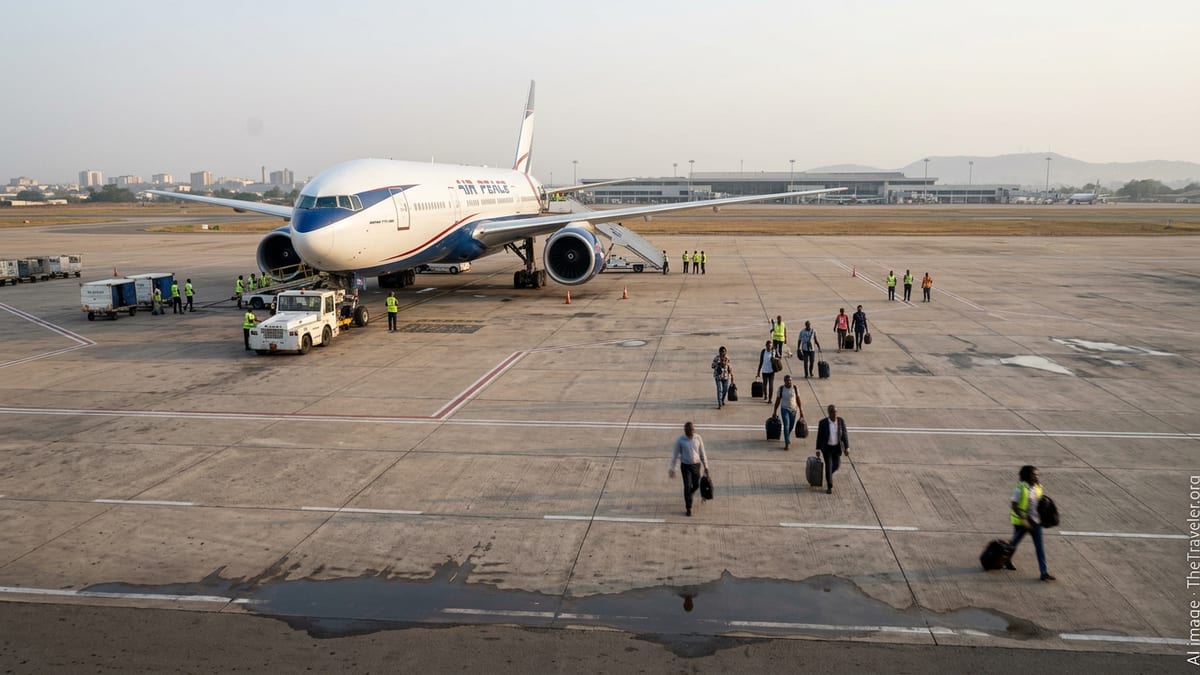
Emergency Return on High-Profile Abuja–London Route
Reports from Nigerian and international aviation outlets indicate that an Air Peace flight operating between Abuja and London recently returned to Nnamdi Azikiwe International Airport after departure, following what has been described as an in-flight technical issue. The aircraft, serving one of the airline’s most high-profile routes, was said to have circled before landing back in Abuja so engineers could assess the situation.
Publicly available flight tracking data referenced in local coverage suggest that the jet did not proceed on the planned westbound path over the Sahel toward Europe, but instead turned back relatively early in the journey. Passengers were later disembarked while checks were carried out, with subsequent reports noting schedule disruptions and the need for reaccommodation on later services.
The incident comes at a sensitive time for Nigeria’s international aviation ambitions, as Abuja and Lagos seek stronger direct links to major global hubs. The Abuja–London corridor, in particular, has been portrayed in domestic commentary as a test of how well Nigerian carriers can compete with established foreign airlines on safety, reliability, and service.
While no serious injuries have been reported in open sources in connection with the return, the decision to bring the aircraft back to Abuja rather than continue has drawn attention from regulators and the traveling public alike, sharpening focus on how incidents are handled in real time.
NCAA Opens Scrutiny of Airline Operations
Following the emergency return, the Nigeria Civil Aviation Authority has initiated a formal examination of Air Peace’s operations on the route, according to multiple Nigerian news reports summarizing the regulator’s stance. The process typically involves reviewing technical logs, crew reports, and maintenance records to determine the root cause of any incident and assess whether existing procedures were followed correctly.
Publicly available information on past NCAA actions shows that the authority has increasingly adopted a visible posture on enforcement, including previous suspensions and sanctions involving other domestic carriers in cases where safety protocols were deemed inadequate. Against that backdrop, the decision to examine Air Peace’s long-haul operation is being viewed by analysts as part of a broader effort to demonstrate a consistent regulatory approach.
Aviation commentators quoted in regional business coverage note that such regulatory reviews are standard practice globally whenever an aircraft returns to base for technical reasons. The NCAA’s involvement is therefore seen not only as a response to public concern but also as an effort to document and learn from operational events in a growing market.
Industry watchers are closely monitoring whether the current scrutiny will remain limited to a technical investigation or expand into a wider audit of the airline’s international procedures, including crew training, dispatch decision-making, and maintenance planning for long-range flights.
Implications for Air Peace’s International Expansion
Air Peace has invested heavily in building its international network, positioning itself as Nigeria’s primary homegrown competitor on key long-haul routes linking the country with Europe and beyond. The Abuja–London service has been a flagship element of that strategy, complementing busy Lagos–London operations and tapping into strong demand from business travelers, diaspora communities, and government traffic.
Recent business and aviation reporting has highlighted how the airline’s London services have been central to marketing campaigns emphasizing national pride and self-reliance in air travel. Competitive fares at launch helped stimulate interest, even as observers warned that sustaining long-haul operations would require robust maintenance, access to spare parts, and predictable schedules.
The emergency return has therefore arrived at a delicate moment, with analysts warning that repeated operational disruptions on a marquee route could erode hard-won consumer confidence. Travel agents and corporate travel planners in Nigeria and the United Kingdom already factor perceived reliability into booking decisions, and incidents of this nature are likely to influence how itineraries are structured, including choices around minimum connection times and travel insurance.
At the same time, some aviation experts referenced in Nigerian commentary have argued that an early, precautionary return to base can demonstrate responsible decision-making, provided investigations confirm that all safety protocols were properly followed. In that view, transparency over findings and corrective measures may ultimately prove more important than the incident itself.
Passenger Experience and Travel Disruption
For passengers on the affected Abuja–London flight, the emergency return translated into delays, missed onward connections, and unexpected overnight stays. Social media reactions and traveler accounts shared with local media outlets describe a mix of anxiety during the return leg and frustration over rebooking and accommodation arrangements once back on the ground in Abuja.
Travel industry observers note that how airlines handle disruptions can significantly influence long-term loyalty. Clear communication at the airport, timely updates about revised departure times, and prompt arrangements for meals, hotels, and alternative flights are considered best practice in the international market, even when carriers are operating in challenging cost environments.
Nigeria’s aviation consumer-protection framework, shaped by policies from agencies such as the Federal Competition and Consumer Protection Commission as well as sector-specific regulations, has increasingly emphasized transparent handling of delays and cancellations. Previous public advisories have highlighted concerns over sudden schedule changes, lack of information, and disputes about passenger entitlements.
Against that regulatory backdrop, the recent Air Peace incident is expected to refocus attention on how Nigerian airlines support passengers when flight plans are disrupted, particularly on long-haul services where ground infrastructure and rebooking options can be more complex than on domestic routes.
Broader Questions for Nigeria’s Aviation Safety Regime
The scrutiny of Air Peace is unfolding amid a period of growing passenger traffic at Nnamdi Azikiwe International Airport in Abuja and other major Nigerian gateways. Recent data shared in aviation analyses show that Abuja has handled millions of passengers annually, with domestic and regional carriers using the capital as a hub for connecting traffic across West Africa and beyond.
Safety performance in this expanding environment remains a central concern for regulators, airlines, and international partners. Nigeria’s attainment and maintenance of various international safety certifications in past years has been cited in industry reports as evidence of progress, but recurring incidents and operational challenges continue to test public confidence.
Aviation specialists writing in Nigerian business media point to recurring themes: pressure on airlines from volatile currency markets and fuel costs, the high expense of aircraft leasing, and the need to invest steadily in maintenance and crew training. These factors, they argue, can strain operators and create conditions in which robust regulatory oversight becomes even more important.
For travelers, the latest Air Peace episode serves as a reminder to stay informed about carrier performance and to allow greater flexibility in planning long-haul journeys to and from Nigeria. As the NCAA review proceeds and more technical details emerge, the outcome is likely to influence not only Air Peace’s international trajectory but also perceptions of how effectively Nigeria manages safety in a rapidly evolving aviation market.