

More news on this day
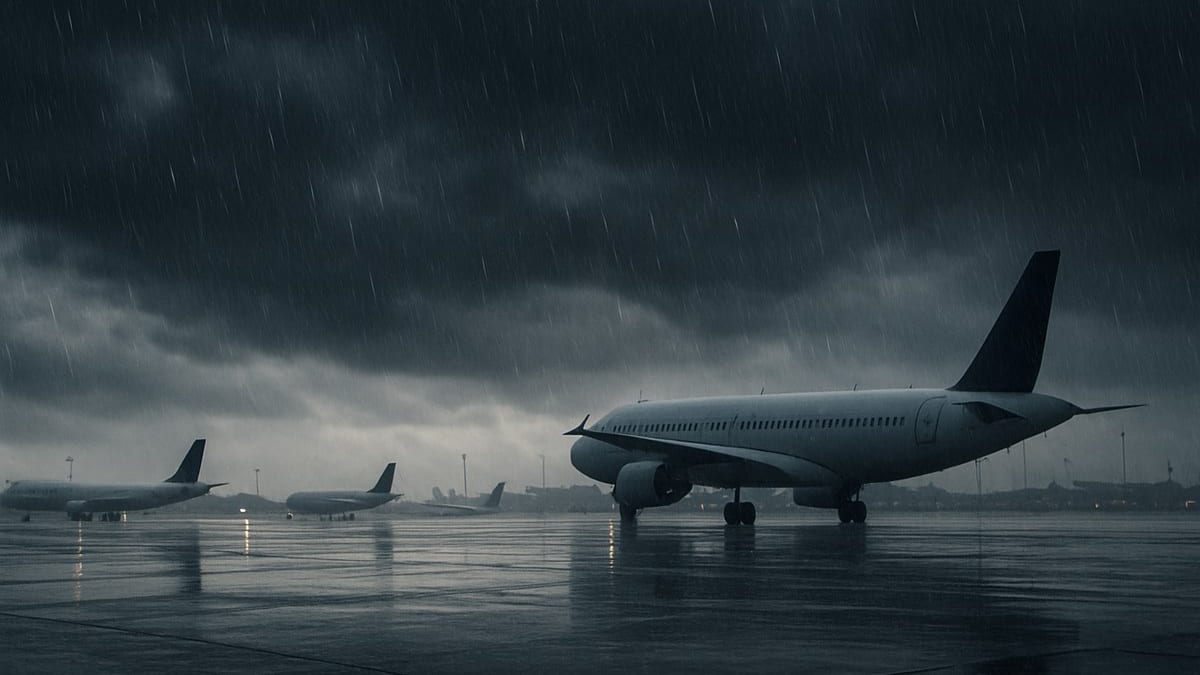
Nigerian and international travelers using the country’s airports are being urged to prepare for more frequent flight delays and cancellations as the rainy season sets in, with aviation regulators pointing to hazardous weather patterns that could disrupt schedules through December.
Get the latest news straight to your inbox!
Regulator Flags Weather Risks as Rains Return
Recent public statements and circulars from the Nigeria Civil Aviation Authority (NCAA) and other aviation agencies highlight an expectation of increased operational disruptions as the country enters its wet season in stages from the southern coastal belt to the far north. Rain, thunderstorms, low cloud and reduced visibility are cited as recurring hazards for both domestic and international services.
Seasonal outlooks from the Nigerian Meteorological Agency indicate that convective storms, heavy rainfall and turbulence are likely to intensify along key air corridors, particularly around major hubs such as Lagos, Abuja and Port Harcourt. These conditions can force pilots to delay departures, hold in the air, divert to alternate airports or cancel flights outright when safety margins are affected.
Regulatory documents already in circulation note that rainfall typically tapers off as late as November or December in parts of southern Nigeria, extending the period during which weather can interfere with aviation. As a result, industry observers expect heightened schedule volatility not only in mid-year but right through the popular end-of-year travel period.
Publicly available information from the NCAA also underscores that airlines are obliged to prioritize safety over punctuality when faced with adverse weather, a stance that often translates into last-minute schedule changes during the peak of the rainy season.
Data Underscore Persistent Disruption Risk
Flight operations data released in recent years show that delays and cancellations have become a structural challenge in Nigeria’s aviation market, with weather repeatedly flagged as a major factor during both the rainy and harmattan periods. Statistics shared by senior NCAA officials for 2024 indicated that in a single month, thousands of domestic flights were operated and nearly half experienced delays, with dozens cancelled.
Consumer-protection reports from the same period describe a sharp rise in refund claims and complaints during busy travel windows, especially around December. While airline scheduling practices, fleet shortages and technical issues all contribute, analysts note that seasonal weather patterns often act as a trigger, compounding underlying capacity constraints.
Studies on passenger rights and liability for flight delays in Nigeria point to a growing volume of disputes over missed connections, lost hotel nights and additional expenses linked to disruptions. Legal reviews emphasize that, under the country’s aviation consumer-protection framework, compensation obligations can be limited when the primary cause of delay or cancellation is classified as a safety or weather issue.
Industry commentary suggests that with the onset of heavier rains and the memory of recent flooding seasons still fresh, operators are likely to build more conservative buffers into schedules. Even so, passenger-facing impacts are expected to remain significant through the end of the year.
Rainy Season Adds Pressure on Busy Hubs
Major Nigerian airports are already seeing the intersection of weather challenges and operational bottlenecks. Recent coverage of disruptions at Nnamdi Azikiwe International Airport in Abuja described temporary slowdowns and longer processing times, with airlines warning of knock-on effects for departures when terminal or apron operations are constrained.
Separate reports on domestic carriers highlight episodes where low visibility and storm cells over regional airports have forced aircraft to divert or wait out deteriorating conditions. In one widely reported case this month, a Lagos–Ibadan–Abuja rotation was delayed after adverse weather prevented safe landing at the scheduled time, illustrating how a localized storm can ripple through multiple legs of a route.
Airport infrastructure enhancements, including runway and taxiway works and additional navigation aids, are underway at several facilities, but analysts indicate that such projects can themselves temporarily limit capacity. During the rainy season, any reduction in available runway time or ground-handling efficiency can quickly translate into queues, missed slots and extended waiting periods for passengers.
Observers note that hubs like Lagos and Abuja handle a disproportionate share of Nigeria’s connecting traffic, meaning that a single weather-induced closure or flow restriction can affect travelers heading to and from secondary cities and international destinations in Europe, the Middle East and within Africa.
Guidance for Travelers Booking Through December
Travel and aviation analysts recommend that passengers planning trips within, into or out of Nigeria between now and December factor in the elevated risk of disruption when arranging itineraries. Public information from the NCAA on passenger rights stresses that when delays stretch beyond several hours or flights are cancelled, airlines are expected to provide care such as refreshments, communication assistance and, in some cases, accommodation.
However, regulation and practice can diverge, and reports from recent peak seasons describe instances where travelers had to press carriers to honor obligations or seek redress through complaint channels. Because weather can qualify as an operational constraint outside an airline’s control, direct financial compensation is not guaranteed, especially on international routes governed by complex contractual and treaty frameworks.
Commentary from consumer advocates suggests practical steps for minimizing disruption, including choosing earlier flights in the day, allowing longer connection times and avoiding tight same-day links with critical events such as weddings, business meetings or onward long-haul departures. Flexible tickets and comprehensive travel insurance are also frequently cited as helpful safeguards during Nigeria’s rainy months.
Passengers are further encouraged, in public advisories, to monitor forecasts and airline communication channels closely in the 24 hours before travel. With convective storms capable of forming quickly along flight paths, same-day schedule changes are likely to remain common as operators seek safe weather windows.
Regulators, Airlines and Meteorologists Coordinate Response
Available documentation from the NCAA, the Nigerian Meteorological Agency and the Nigerian Safety Investigation Bureau indicates ongoing coordination around seasonal climate predictions and operational safety guidance. Seasonal Climate Prediction reports now routinely include specific sections for aviation, outlining how forecast rainfall, thunderstorms and wind patterns could affect flight operations at major airports.
Regulatory circulars in recent years have reminded pilots and airlines to respect weather minima, adhere to diversion protocols and ensure that contingency fuel and alternates are planned with seasonal volatility in mind. These communications also reference the need for airlines to maintain transparent communication with passengers when schedules are altered for safety reasons.
Government officials have simultaneously highlighted efforts to strengthen airline fleets and expand airport infrastructure, arguing that additional aircraft and upgraded facilities should help absorb shocks from weather and other disruptions. Investment-focused conferences and public briefings emphasize that a larger, better-financed fleet can provide spare capacity to re-route passengers when individual flights are delayed or grounded by storm activity.
For Nigerian travelers and visitors alike, the message emerging from these public materials is clear: weather-related disruptions are an expected feature of the coming rainy season, and while safety systems are designed to manage the risk, flexibility and preparation will be essential for anyone flying in or out of the country through December.