

More news on this day
Increasingly volatile spring weather patterns and a tightly stretched charter market are emerging as twin threats to smooth team travel for the 2026 NCAA championship season, prompting fresh warnings that flight delays and cancellations could ripple across next year’s tournament calendar.
Get the latest news straight to your inbox!
Climate signals point to wetter, stormier springs
Public climate assessments indicate that much of the United States is trending toward wetter late winters and early springs, particularly across the Midwest and Northeast where many tournament sites are located. Warmer air holds more moisture, and studies show that heavy downpours are becoming more frequent in several regions that regularly host NCAA basketball, baseball and other spring championships.
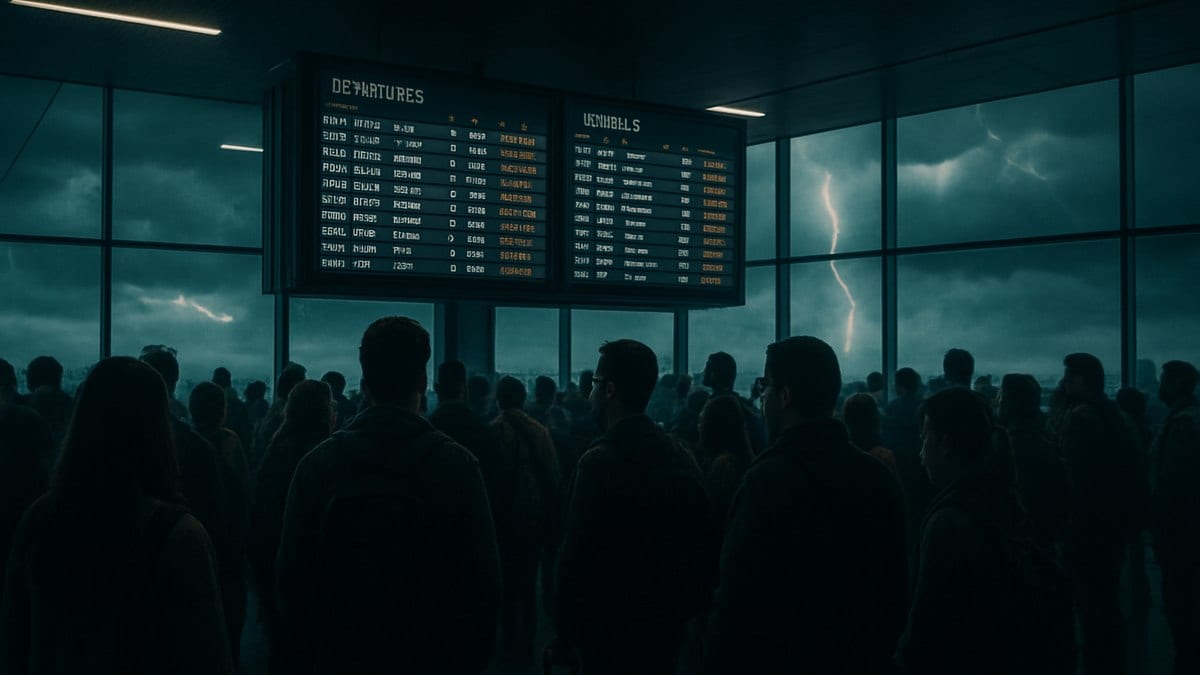
Recent seasons have illustrated how quickly those conditions can upend air travel. A powerful mid March 2026 storm system brought blizzard conditions to parts of the Upper Midwest while spawning severe thunderstorms, high winds and flooding from the Plains to the East Coast. Aviation tracking data and news coverage from that week documented thousands of delayed or cancelled flights at major hubs just as conference tournaments and early round games were underway.
Aviation safety regulators consistently warn that intense rain, low visibility and wind shear can force runway closures or significantly slow departures and arrivals. When coupled with tight crew scheduling and air traffic control constraints, a single day of heavy spring storms can take multiple days for the commercial system to fully absorb, leaving traveling teams and fans vulnerable to rolling disruptions.
Forecast centers are not yet issuing detailed outlooks for March and April 2026, but seasonal modeling discussed in recent climate and weather coverage suggests that the pattern of wet, unstable springs across key tournament regions is unlikely to ease in the near term. That backdrop is informing how organizers and travel coordinators are starting to plan for next year’s championship logistics.
Charter capacity already strained by March travel surge
Well before climate considerations enter the picture, March and early April are among the busiest periods of the year for U.S. airlines and charter operators. Spring break crowds, business travel and a growing schedule of sports and entertainment events compress demand into a relatively short window, leaving limited slack in available aircraft and crews.
Coverage in national and regional outlets this spring has highlighted how the men’s and women’s basketball tournaments sit at the center of that crunch. Dozens of teams rely on dedicated charters to move quickly between early round pods, regional sites and Final Four venues, sometimes on back to back days. Industry executives describe the tournament period as one of the most complex stretches of the year for coordinating aircraft positioning, crew rest requirements and ground handling.
NCAA championship travel memos made public in recent seasons already flag charter availability, federal crew duty rules and airline staffing as pressure points during tournament week. Those documents underscore that even in relatively benign weather, shifting tipoff times, television windows and last minute bracket outcomes can force rapid changes in flight schedules that leave little room for error.
When major weather systems sweep across multiple hubs, that thin margin can quickly vanish. Reports from the March 2026 storm sequence showed teams and fan charters queuing for limited departure slots or being rerouted through secondary airports to avoid the worst conditions, lengthening travel days and compressing recovery time before games.
Recent disruptions offer a preview of 2026 risks
Travel snags during the 2025 and 2026 editions of March basketball have offered a tangible preview of what a wetter, more volatile spring climate could mean for future tournaments. In several widely reported cases, college programs found themselves stuck on the tarmac or grounded at regional airports while weather and operational issues delayed their NCAA bound flights.
Social media posts and fan forum discussions this March chronicled teams waiting hours for replacement aircraft, along with smaller schools contending with tight connection windows at busy hubs. In some instances, sides arrived at host cities later than expected, forcing practice schedules, media appearances and rest periods to be compressed into a narrower timeline.
While none of these episodes ultimately forced a forfeit, they underscored the vulnerability of a complex national bracket that depends on precise air links between more than a dozen host cities. Observers note that as the NCAA weighs potential expansion of both the men’s and women’s fields in coming years, every additional team and site adds another layer to an already intricate travel puzzle.
The broader commercial network has also shown signs of strain. Flight tracking services recorded thousands of spring weather related cancellations during the mid March 2026 storm system alone, affecting passengers far beyond the sports world. For tournament planners, those numbers serve as a reminder that their charter operations do not exist in isolation from the rest of the aviation ecosystem.
Organizers weigh earlier departures and backup plans
In response to these overlapping pressures, recent NCAA travel guidance has encouraged schools to build in more flexibility on departure times and routings for upcoming championships. Publicly available memos emphasize that teams may be asked to leave earlier than preferred on peak travel days, or to stage from alternate airports if capacity at primary hubs becomes constrained.
Some athletic departments are already experimenting with earlier arrivals at host cities, especially for opening round games that fall on historically problematic travel days. While that approach can increase hotel and per diem costs, administrators argue that it reduces the risk that an unexpected weather delay or mechanical issue will jeopardize a scheduled tipoff.
Travel planners are also paying closer attention to ground options. Bus legs between nearby sites, once primarily a cost saving measure, are increasingly viewed as a hedge against flight disruptions for shorter regional hops. In regions with robust rail links, a small number of schools have begun examining whether certain segments could be shifted off of airplanes entirely when game spacing allows.
Industry analysts note that any large scale shift away from air travel remains unlikely given the national footprint of the tournaments and tight turnaround between rounds. However, a growing emphasis on redundant plans suggests that the era of assuming a smooth flight into every host city is coming to an end.
Fans and host cities prepare for a bumpier travel season
The implications of wetter springs and constrained aviation capacity extend well beyond the teams themselves. Millions of fans travel each year to follow their schools through the bracket, and many rely on the same storm sensitive commercial routes that are already showing signs of stress.
Travel industry reporting this year has advised tournament followers to consider booking earlier flights, building overnight buffers before critical games and purchasing flexible tickets where possible. Insurance providers, meanwhile, have reported increased interest in policies that cover weather related delays and missed events during the peak sports travel season.
Host cities are also watching the changing climate and aviation landscape closely. Municipal tourism bureaus and arena operators invest heavily in March and April events, and local economies benefit from packed hotels and restaurants during tournament weeks. When flights are delayed or diverted, those spending patterns can shift, with some visitors arriving late or abandoning trips entirely.
As the 2026 championship cycle approaches, the combination of wetter spring weather and a tightly wound aviation system is prompting a more cautious tone from organizers and travel experts alike. While the spectacle on the court remains the focus, the journey to get teams and fans to those games is looking increasingly like its own form of high stakes bracketology.