

More news on this day
Norwegian Cruise Line Holdings has introduced a new Alaska Travel Conservation Initiative that places contemporary art at the center of its message on environmental stewardship, unveiling a slate of finalists whose work will be used to highlight the state’s fragile ecosystems to passengers planning voyages north.
Get the latest news straight to your inbox!
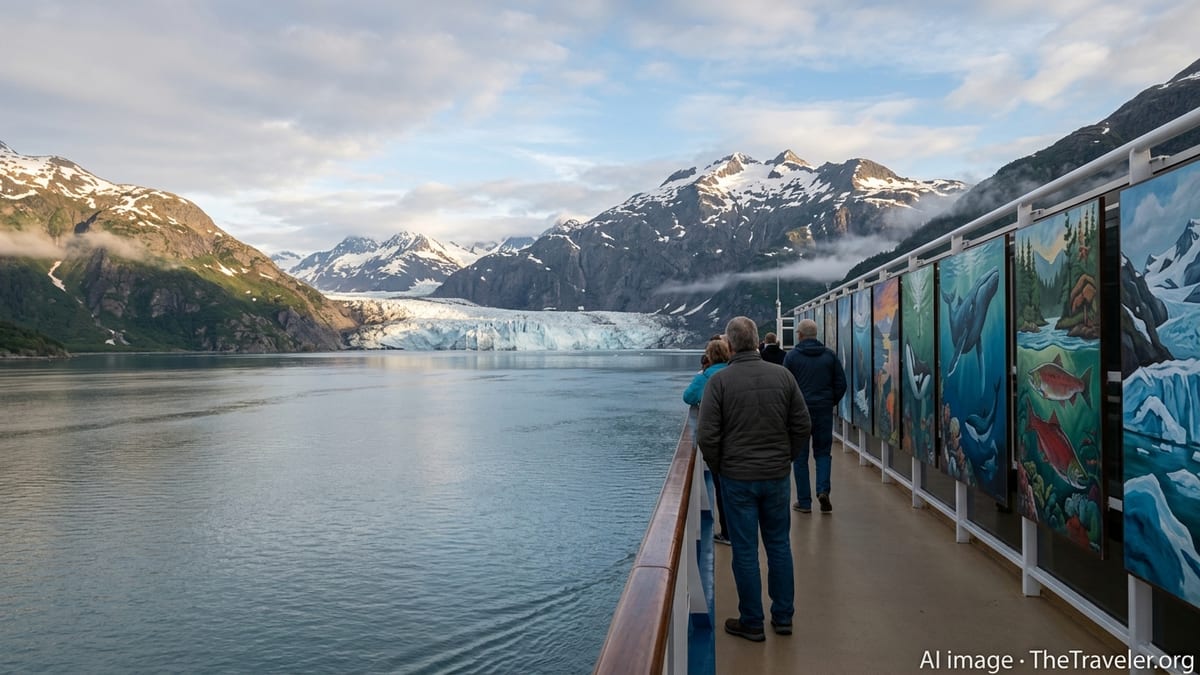
Art at the Heart of a New Alaska Initiative
Norwegian Cruise Line Holdings, parent company of Norwegian Cruise Line, Oceania Cruises and Regent Seven Seas Cruises, has been expanding its sustainability messaging in key destinations, and Alaska is once again emerging as a focal point. The company’s latest Alaska Travel Conservation Initiative elevates visual artists as central storytellers, with new artworks set to interpret themes such as glacier preservation, marine wildlife protection and the cultural significance of coastal communities.
Publicly available information indicates that the program’s art finalists have been selected for their ability to communicate conservation themes in ways that resonate with travelers who may be visiting Alaska for the first time. The works are expected to appear across trip-planning channels and onboard touchpoints, positioning art as both an educational tool and a visual signature for the initiative.
The move builds on a broader industry trend in which cruise companies are weaving environmental narratives into the guest experience, from ship design to shore excursions. In the case of Norwegian Cruise Line Holdings, which already links some of its ship hull artwork to marine conservation themes, the new focus on Alaska-specific art underscores the commercial and symbolic importance of the region to its portfolio.
While full details of individual finalist pieces have not been widely disclosed, reports suggest that the selected artworks emphasize recognizable aspects of Alaska’s landscape, including glaciers, fjords and migratory wildlife. The goal is to translate scientific and policy discussions about conservation into imagery that can be immediately grasped by a global audience of cruise guests.
Linking Conservation Messaging With Alaska Tourism
Alaska’s economy has long relied heavily on seasonal visitors, and cruise traffic represents a substantial share of that activity. Industry and government data in recent years have highlighted the role of cruise passengers in supporting small businesses and tour operators in Southeast Alaska communities. At the same time, debates around emissions, port congestion and ecosystem pressure have driven new expectations for how travel brands communicate their environmental impact.
Within this context, Norwegian Cruise Line Holdings’ art-focused conservation initiative is being framed as a way to make sustainability more visible and tangible to travelers. According to published coverage of the company’s activities in Alaska, previous efforts have included direct financial support to port communities, partnerships that promote locally made goods and participation in voluntary tourism best-practice programs. The new art component adds a cultural dimension to these measures.
By communicating conservation themes through visual media, the company appears to be seeking a balance between promoting Alaska as a bucket-list destination and acknowledging the vulnerabilities of its natural environment. Artworks tied to the initiative are expected to highlight not only charismatic wildlife such as whales and bears, but also less visible themes like ocean health and the impact of climate change on glaciers and coastal infrastructure.
Travel analysts note that Alaska itineraries continue to be among the most sought-after routes in North American cruising, with capacity on large ships frequently expanding to meet demand. In this environment, initiatives that stress conservation and local benefit have become an important part of how brands distinguish their offerings and respond to growing interest in responsible and sustainable travel.
Showcasing Alaska’s Landscapes and Communities Through Art
The finalists selected for Norwegian Cruise Line Holdings’ Alaska Travel Conservation Initiative are expected to draw heavily on the region’s distinctive geography and community life. Although the company has not widely circulated a complete roster of participating artists, the submissions described in related materials feature motifs such as mountain ranges, tidewater glaciers, salmon runs and Indigenous cultural symbols that speak to Alaska’s layered history.
Observers of cruise-related retail and destination programming note that partnerships with local and regional creators have been increasing across the industry, especially in Alaska. Retail programs curated for cruise guests now often include work by resident artisans, ranging from glass art and textiles to photography and carved pieces. By linking visual art to a formal conservation initiative, Norwegian Cruise Line Holdings is reinforcing that pattern and giving artists a more prominent platform within the travel experience.
For Alaska communities that host cruise ships each summer, the initiative’s emphasis on conservation-themed art aligns with a broader effort to ensure that tourism growth also supports cultural preservation. Destination programming tied to the finalists’ works may encourage guests to seek out galleries, museums and artisan markets on shore, spreading tourism spending beyond immediate waterfront areas and into locally owned businesses.
Industry commentary suggests that visually compelling conservation messages can also influence how travelers choose excursions. Guests who encounter art focused on marine mammals or protected wilderness areas may be more inclined to book lower-impact tours such as guided hikes, small-boat wildlife viewing or visits to conservation centers, rather than only high-volume sightseeing options.
Extending a History of Conservation-Themed Design
Norwegian Cruise Line Holdings has previously aligned shipboard art with environmental messaging, particularly in the Alaska market. One of its most visible examples is hull artwork featuring humpback whales, created in partnership with a marine life artist and designed to highlight the beauty of Alaska’s waters and the importance of protecting marine ecosystems. The new Alaska Travel Conservation Initiative builds on this history by extending conservation themes into a broader visual ecosystem that begins before guests even board a ship.
Corporate responsibility reports from the company have long emphasized ocean health, waste reduction and collaborations with environmental organizations. Integrating conservation themes into both large-scale ship design and curated art programs allows those priorities to be communicated in formats that are not limited to technical documents or policy statements.
According to publicly available sustainability disclosures, Norwegian Cruise Line Holdings has been tracking and publicizing its progress on environmental targets, including reductions in emissions and waste streams. By tying a new art program directly to an Alaska initiative, the company is likely positioning the finalists’ works as visual ambassadors for these broader metrics, giving guests a way to connect high-level goals with the specific landscapes they are visiting.
The prominence given to the art finalists also responds to a wider shift in traveler expectations. Surveys of cruise passengers and independent travelers alike indicate rising demand for trips that feel both memorable and meaningful, with a clear sense that their purchases contribute positively to destinations. A conservation-focused art program offers one way to signal that alignment without requiring travelers to navigate complex technical information about vessel operations or regulatory frameworks.
Implications for Future Cruise Travel in Alaska
The unveiling of art finalists for Norwegian Cruise Line Holdings’ Alaska Travel Conservation Initiative comes at a time when the outlook for cruise travel in the state remains strong, but increasingly shaped by environmental and community concerns. Local discussions about ship size, port infrastructure and seasonal congestion have highlighted the need for closer coordination between cruise brands, municipalities and resident businesses.
In this evolving landscape, initiatives that give visual and narrative space to conservation may play a role in how coastal communities assess the presence of large vessels. While art alone does not resolve disputes over emissions, crowding or resource use, it can help broaden public awareness of the stakes involved and demonstrate a willingness by operators to foreground environmental themes in their marketing and onboard programming.
For travelers, the presence of conservation-focused art across planning materials, embarkation spaces and ship interiors may shape expectations about what an Alaska cruise entails. Instead of viewing the voyage solely as a scenic trip, guests are being encouraged to see themselves as participants in a broader conversation about how tourism interacts with sensitive ecosystems and small communities.
As future Alaska seasons take shape, observers will be watching how Norwegian Cruise Line Holdings and its peers embed conservation initiatives into concrete actions, from itinerary planning and port collaborations to emission-reduction projects. The new art finalists represent an early and visible component of that process, offering a creative lens on the challenges and possibilities facing one of the world’s most iconic cruise destinations.