

More news on this day
Nepal Airlines has canceled a fresh round of Kathmandu–Doha flights in mid-April as Qatari airspace remains restricted, underscoring how the prolonged Middle East closures are continuing to upend travel plans for workers and tourists across the region.
Get the latest news straight to your inbox!
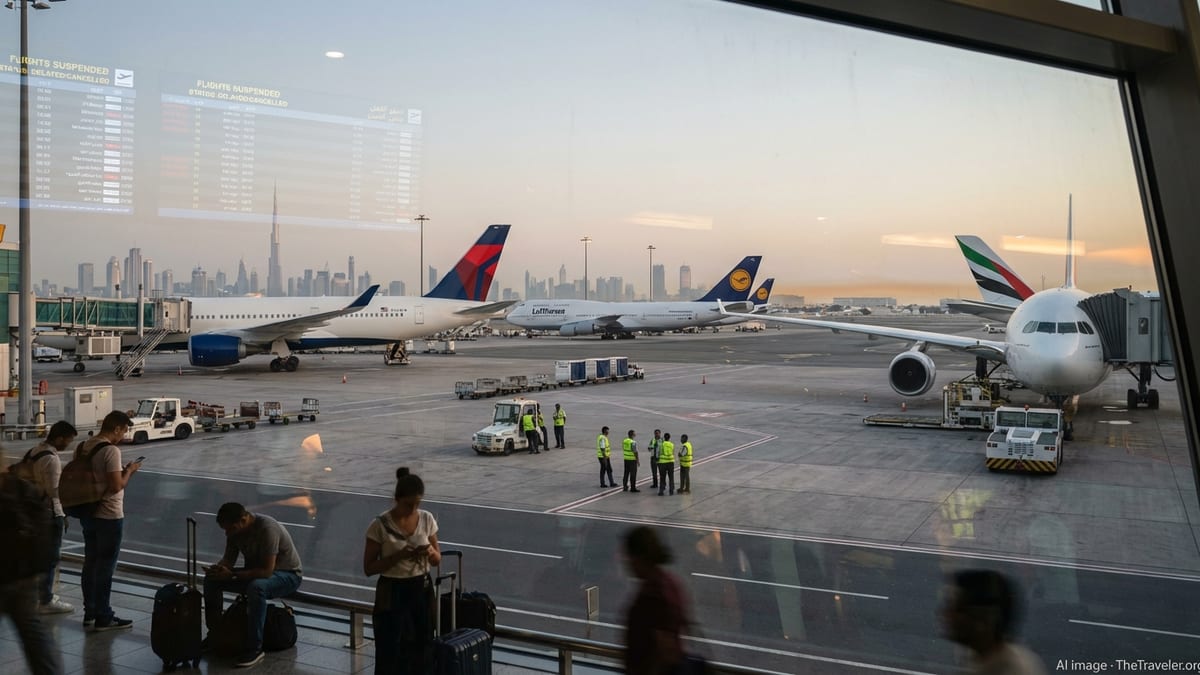
Fresh Cancellations Announced for Mid-April Departures
According to publicly available notices from Nepal Airlines dated April 10, 2026, flights on the Kathmandu–Doha route have been canceled for April 13, 14 and 15. The update cites the ongoing situation in the Middle East and the continued closure of key airspace as the reason for grounding the services. The affected rotations include regularly scheduled services that connect Tribhuvan International Airport in Kathmandu with Doha’s Hamad International Airport.
The new round of cancellations follows earlier disruptions to the same route in March, when the airline withdrew several Doha flights as regional air corridors shut down. Previous advisories show that Kathmandu–Doha services were already suspended on select dates in early and late March as carriers struggled to find viable routings into Qatar and neighboring Gulf states.
Passengers booked on the canceled departures are being directed, via airline notices, to check updated schedules and contact sales offices or travel agents for rebooking and refund options. While specific compensation policies may vary depending on the fare and point of purchase, the latest updates stress that operations to Doha remain highly dependent on evolving overflight permissions in the wider Middle East.
Reports from Nepal’s aviation community indicate that demand for Doha flights is particularly strong among Nepali migrant workers heading to and from Qatar, meaning even a handful of cancellations can strand significant numbers of travelers in both Kathmandu and the Gulf.
Qatari Airspace Closure Ripples Across Global Networks
The suspension of Nepal Airlines flights to Doha is part of a broader pattern of disruption triggered after airspace over Qatar and several neighboring states was closed in late February 2026 amid a sharp escalation in regional conflict. Travel industry updates and airline statements describe how the closure of Qatari airspace effectively shut down one of the world’s most important hub-and-spoke systems, forcing widespread cancellations, diversions and tactical route changes.
Qatar Airways, which normally operates a dense global network through Doha, has been running only a limited schedule under special approvals while its regular commercial operations remain curtailed. Travel advisories note that even where some flights are now operating into Doha, connectivity remains far from normal, with fewer frequencies, longer routings and constrained onward options for transit passengers.
Analyses of the wider aviation impact of the 2026 Iran war highlight that several Middle East airspaces, including those of Qatar and other Gulf states, have been fully or partially closed at various points, cutting key corridors between Europe, Africa and Asia. Airlines that can reroute have done so at the expense of longer flight times and higher fuel burn, but carriers with shorter-range fleets or tighter margins have in some cases been forced to suspend routes altogether.
For Nepal Airlines and other regional operators, Doha’s partial shutdown removes a crucial bridge between South Asia and the Gulf labor markets, where millions of expatriate workers travel regularly on relatively thinly served point-to-point routes.
Knock-on Effects for Nepali Travelers and Gulf Labor Flows
The latest Kathmandu–Doha cancellations come at a sensitive time for Nepali travelers, many of whom rely on predictable Gulf connections to manage employment contracts, medical visits and family emergencies. When flights are cut with only days of notice, travelers can face overstays, missed reporting dates or costly last-minute rebookings on alternative carriers, if seats are available at all.
Coverage of Nepal’s aviation sector in recent weeks has already documented the suspension of Nepal Airlines flights to Dammam and disruptions on other Middle East routes as tensions have spread. Local reporting indicates that dozens of Nepal-bound services from Gulf hubs have been affected since late February, with travelers waiting hours at airports before being told that their flights cannot operate due to airspace restrictions.
Travel assistance organizations and industry advisories are urging passengers bound for Doha or other Gulf destinations to maintain flexible plans, closely monitor airline notices and avoid heading to the airport until their flight status is clearly confirmed. Some reports suggest that rerouting via alternative hubs, such as Istanbul or Southeast Asian gateways, is possible in limited cases, but added journey time and higher costs remain significant barriers.
For recruitment agencies and employers in Qatar, the disruption is also complicating workforce planning. Delays in worker arrivals and departures can affect construction timelines, service staffing and compliance with visa and contract conditions, adding an economic dimension to what began as a security-driven airspace decision.
Regional Airlines Adjust Schedules as Restrictions Drag On
The travel turmoil affecting Nepal Airlines’ Doha services mirrors broader adjustments by carriers across Asia and the Middle East. Philippine Airlines, for example, has publicly announced an extension of its suspension of Manila–Doha flights until at least the end of May, citing concerns about airspace safety and infrastructure risk tied to the ongoing conflict.
Other airlines have adopted a hybrid approach, operating limited frequencies on select days or focusing on destinations that can be reached without transiting the most heavily restricted skies. Industry tracking shows that some Gulf carriers have incrementally restored a portion of their networks by flying through approved corridors over Saudi Arabia or other neighboring states, but schedules remain sharply reduced compared with pre-crisis levels.
Business travel consultants and global mobility firms are advising corporate clients to avoid nonessential itineraries that rely on Doha or other Gulf hubs until there is more clarity on the timeline for a full reopening of regional airspace. Where trips are unavoidable, recommendations include booking flexible fares, allowing additional connection time and preparing contingency plans in case of last-minute cancellations.
Despite these adaptations, the overall picture remains one of constrained capacity and elevated uncertainty. Every incremental schedule change reverberates across interconnected networks, leaving airlines such as Nepal Airlines with limited room to maneuver when key destinations like Doha are repeatedly taken offline.
What Passengers on Nepal Airlines’ Doha Route Should Do Now
For travelers holding tickets on Nepal Airlines’ Kathmandu–Doha flights in April, publicly available guidance points first to confirming the exact status of their booking. Because cancellations have been targeted at specific dates, some flights may still operate if airspace permissions and operational conditions allow, while others in the same week may be withdrawn at short notice.
Passengers on the April 13–15 canceled services are generally being offered rebooking onto later dates or refunds, in line with the options outlined in the airline’s notices. Travel experts suggest documenting all communication with carriers and agents, retaining receipts for incidental expenses, and checking whether travel insurance policies include disruption coverage related to airspace closures and conflict.
Those who must reach Qatar for time-sensitive reasons may wish to explore itineraries on other airlines that bypass Qatari airspace by connecting through alternative hubs still operating near-normal services. However, seat availability and onward connectivity can fluctuate day to day as carriers tweak their schedules in response to changing risk assessments.
With no firm public timeline yet for a full reopening of Qatari and neighboring airspace, industry observers anticipate that ad hoc changes will continue to shape the Kathmandu–Doha market in the coming weeks. For now, Nepal Airlines’ latest cancellations highlight that the Middle East airspace crisis remains far from resolved, and that its effects are being felt acutely in smaller aviation markets that depend on a handful of Gulf routes to stay connected to the wider world.