

More news on this day
Nepal Airlines has canceled multiple flights between Kathmandu and Doha for mid-April as closures and restrictions in Middle East airspace continue to upend travel plans across one of the world’s busiest aviation corridors.
Get the latest news straight to your inbox!
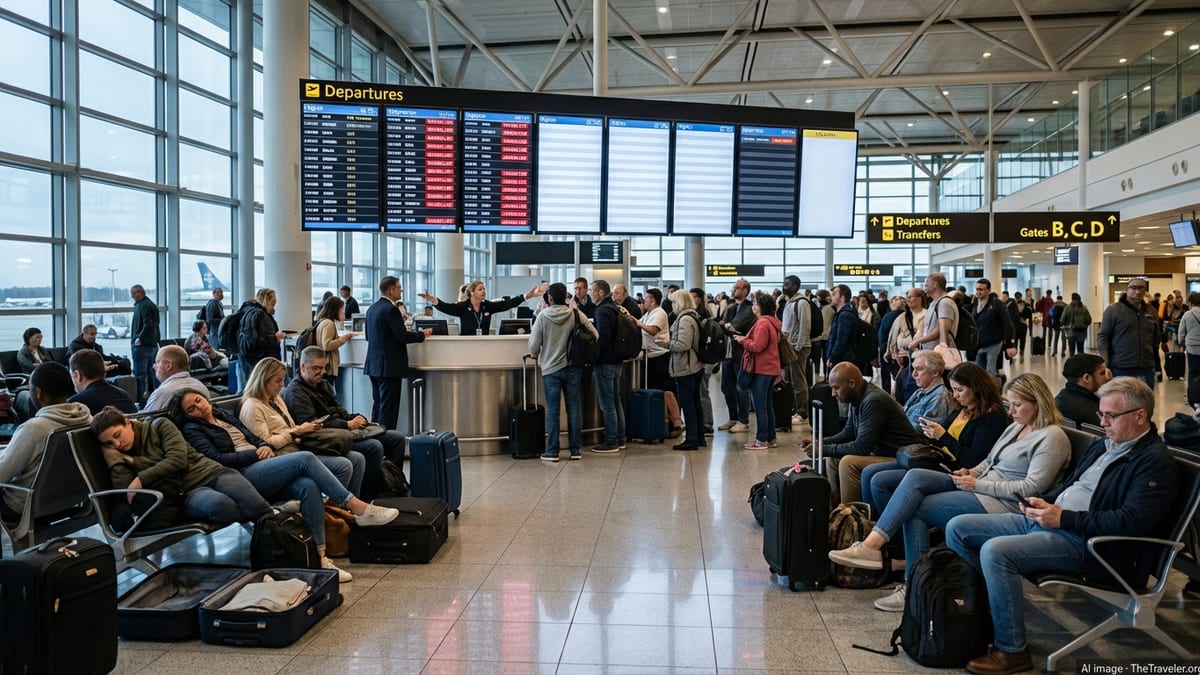
Nepal Airlines Pulls Doha Services for Mid-April
Publicly available information from Nepal Airlines shows that the carrier has canceled its scheduled flights to Doha on April 13, 14 and 15, citing the ongoing situation in the Middle East and the closure of affected airspace. The decision affects services on the Kathmandu–Doha route, a key link for Nepali migrant workers and connecting passengers traveling onward to Europe and North America.
The airline’s latest notice, dated April 10, indicates that Doha-bound operations remain untenable while Qatari airspace is restricted, even as the carrier continues to monitor conditions and adjust its wider Middle East schedule. Earlier advisories had already warned of disruptions on routes to Dubai and Dammam as the conflict pushed regional air traffic into narrower, more congested corridors.
Nepal’s flag carrier has been gradually scaling back exposure to the most volatile parts of the Gulf network since late February, when hostilities in the region escalated into direct strikes that triggered widespread airspace closures. Reports indicate that services to Dammam were among the first to be suspended, with regulators in Kathmandu acknowledging dozens of cancellations in a single day as airlines scrambled to re-route or ground aircraft.
For travelers booked on the affected Doha services, Nepal Airlines is advising through public updates that options may include rebooking on later dates or seeking refunds according to the fare rules that apply to each ticket. The carrier is also encouraging passengers to stay in close contact with their travel agents or airline sales offices as schedules remain fluid.
Regional Airspace Closures Ripple Through the Gulf
The cancellations by Nepal Airlines are part of a wider pattern of upheaval across Middle East aviation following the latest phase of conflict involving Iran, Israel and allied forces. According to published coverage and aviation risk bulletins, airspace over Qatar and several neighboring states has been subject to closures or tight restrictions since February 28, when missile and drone attacks prompted emergency measures around key hubs such as Doha, Dubai and Abu Dhabi.
Analyses from aviation data providers describe the situation as one of the most significant shocks to Gulf connectivity in recent years, with millions of passengers affected by cancellations, diversions and extended delays. Estimates compiled from airline schedules suggest that, at the peak of the disruption, more than a third of planned departures from the region failed to operate, straining aircraft and crew resources as carriers attempted to reconfigure networks overnight.
Industry updates indicate that Qatar’s Doha Flight Information Region has been operating on a limited basis, allowing only tightly controlled corridors for essential services such as repatriation, cargo and a small number of passenger flights. Qatar Airways has reported that most of its regular schedule remains suspended, with a reduced pattern of special operations subject to daily operational and security clearances.
Other Gulf and regional airlines have taken similar decisions. Public advisories from carriers in the United Arab Emirates, Oman and the Philippines describe temporary suspensions on routes touching Doha and other Gulf gateways, underscoring how interlinked the region’s hub-and-spoke model has become. Even countries whose domestic airspace remains open have seen their national airlines cut routes to conflict-adjacent cities because viable overflight paths are no longer available or are considered too risky.
Impact on Nepali Travelers and the Labor Corridor to Qatar
The Kathmandu–Doha route holds particular significance for Nepal, serving both as a gateway for outbound migrant workers heading to Qatar and the wider Gulf, and as a connection point for long-haul journeys to Europe and the Americas. Thousands of Nepali citizens are employed in Qatar’s construction, services and hospitality sectors, and commercial flights between the two countries form a critical part of that labor corridor.
When flights are canceled or heavily curtailed, many workers face immediate practical and financial challenges. Travel experts following the situation note that outbound workers trying to reach job sites may lose income or risk contract complications if they are unable to depart on time, while those returning home can be left paying for accommodation and daily expenses while they wait for new bookings. Families relying on remittances may also see delays in the money they depend on for household needs.
In recent weeks, local media in Nepal have reported scenes of frustration at Tribhuvan International Airport, with passengers bound for Gulf destinations including Doha, Kuwait, Dubai, Sharjah, Abu Dhabi, Dammam and Riyadh forced to turn back after learning of last-minute cancellations tied to airspace restrictions. Check-in halls have periodically filled with travelers seeking clarification on whether their flights would depart, only to be told that regional closures made operations impossible.
For those attempting to reach onward destinations in Europe or North America via Doha, the disruption has been even more complex. Some passengers have been rerouted through alternative hubs in Asia, including itineraries that string together multiple carriers and extended layovers. However, these alternatives are limited by aircraft availability, visa rules for transit, and the broader strain on global networks as airlines collectively seek to avoid conflict zones.
Global Airlines Scramble to Reroute Around the Conflict
The airspace shutdown over parts of the Middle East has forced a major rethinking of how airlines connect Asia with Europe, Africa and the Americas. Flight tracking and schedule analyses referenced in industry reports show that carriers have widely diverted traffic north and south of the conflict area, often adding hours of flying time to avoid Iranian, Iraqi or Qatari-controlled skies.
These diversions come with significant operational and financial costs. Longer routings translate into higher fuel burn, increased crew duty times and tighter aircraft rotations, which in turn reduce the number of flights that can be operated with existing fleets. Some airlines have responded by consolidating frequencies, temporarily suspending marginal routes or prioritizing the highest-demand city pairs where aircraft can be most efficiently deployed.
The Middle East’s role as a transfer bridge between continents has amplified the impact. Hubs in Doha, Dubai and Abu Dhabi typically handle vast volumes of connecting traffic, meaning that a canceled or delayed flight into one of these hubs can cascade across multiple onward legs. Travel management companies report that even passengers who are not flying directly to the Gulf may be affected if their itineraries rely on connections through the region or on codeshare services operated by Gulf carriers.
For Nepal Airlines and other smaller national carriers, the challenge is particularly acute. Limited fleet sizes and tight schedules leave little buffer to absorb long detours or sudden airspace closures, making outright suspension the safer option when risk levels spike. As a result, airline planners have had to weigh the importance of maintaining strategic routes like Doha against the operational realities of a conflict that shows few immediate signs of resolution.
What Passengers Can Expect in the Coming Weeks
Public advisories from aviation regulators and travel industry updates suggest that passengers planning to fly through the Middle East in April should expect continued uncertainty. While some airports in the region are gradually restoring a portion of their schedules, airspace restrictions and shifting security assessments mean that cancellations can still be announced with little notice.
Travel agencies and corporate travel managers are generally recommending that passengers booked to or via Doha regularly check their flight status, maintain updated contact information with airlines, and allow for flexible travel dates where possible. Many carriers, including those in the Gulf, have introduced ad hoc waivers that allow for free rebooking or refunds within specified windows, though the exact terms depend on the airline and ticket type.
For travelers in Nepal specifically, the cancellation of Nepal Airlines’ mid-April Doha flights highlights the importance of monitoring not only local departure information but also developments in regional airspace control. Even if Kathmandu’s airports are functioning normally, downstream closures along the route can still force last-minute schedule changes, as seen with previous suspensions to Dammam and other Gulf destinations.
Industry observers note that a meaningful easing of disruptions will likely depend on a sustained reduction in regional tensions and a clear, coordinated reopening of affected flight information regions. Until then, passengers using Middle East hubs, including those on the Nepal–Qatar corridor, may need to plan for longer journeys, more complex routings, and the possibility that travel plans could shift rapidly in response to events well beyond their home countries.