

More news on this day
Nepal Airlines has suspended its busy Kathmandu–Doha service for multiple days in April as a deepening airspace crisis over the Middle East forces carriers to reroute or cancel flights, disrupting travel plans for thousands of passengers between Nepal, the Gulf and onward long-haul destinations.
Get the latest news straight to your inbox!
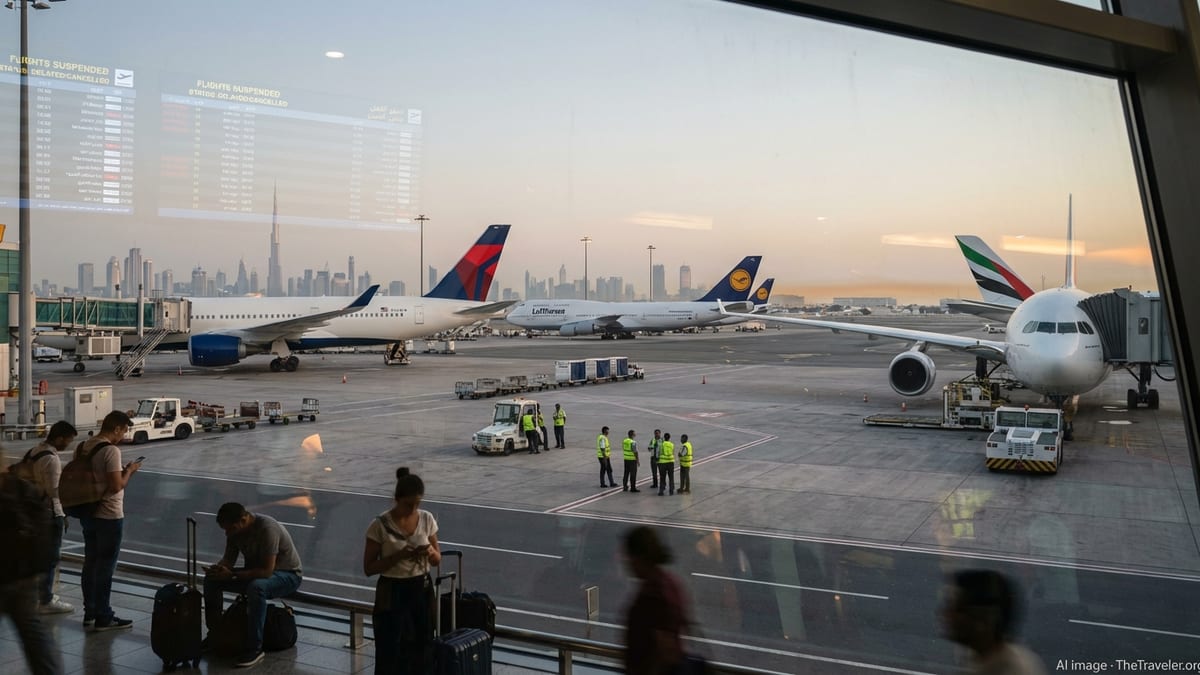
Wave of Cancellations Hits Kathmandu–Doha Corridor
According to public notices issued by Nepal Airlines Corporation, flights between Kathmandu and Doha are being repeatedly cancelled in response to airspace closures affecting key Middle Eastern states. The latest advisory, dated April 10, 2026, announces the cancellation of Kathmandu–Doha flight RA 253 on April 13, 14 and 15, citing the ongoing situation in the region and the closure of affected routes.
These April cancellations follow a pattern that began in early March, when the airline first scrubbed multiple rotations on its Kathmandu–Doha service. Earlier notices show that flights RA 239 and RA 240 on various dates in early and mid-March were withdrawn for the same reason, indicating that what began as a short-term disruption has evolved into a sustained suspension of regular operations on one of Nepal Airlines’ most important international links.
Coverage in regional travel industry media characterizes the move as a suspension of Kathmandu–Doha operations across the affected days rather than isolated one-off cancellations, reflecting the airline’s limited ability to plan reliably while overflight permissions remain uncertain. Schedules on the carrier’s own platforms continue to list Doha as a destination, but with frequent updates urging travelers to monitor advisories closely and verify departures before proceeding to the airport.
The timing of the disruption is especially sensitive for Nepal, where Doha has long served as a vital gateway not only to Qatar but also to Europe, North America and other parts of the Middle East via onward connections on partner and foreign carriers.
Middle Eastern Airspace Crisis Ripples Across the Region
The latest disruption to Nepal Airlines’ Doha route stems from a broader airspace crisis linked to heightened geopolitical tensions in West Asia. Published reports describe a patchwork of restrictions and closures imposed by countries including Qatar, the United Arab Emirates and Saudi Arabia, forcing carriers to shutter certain routes outright while experimenting with lengthy detours around restricted zones.
Travel and aviation outlets note that the current situation escalated in late February 2026, when security concerns prompted the shutdown of key transit corridors. Since February 28, many regular flights between South Asia and Gulf hubs have either been suspended or subject to last-minute changes, with national carriers and major Gulf airlines alike scrambling to adjust networks around fast-moving restrictions.
For Nepal Airlines, whose Middle East network also includes Dubai and Dammam, these constraints have translated into a rolling series of cancellations to and from the Gulf. Government updates on special evacuation and relief flights for Nepali nationals in the region underline that normal commercial services have been heavily curtailed, with only selected operations running under specific permissions.
This evolving environment has effectively turned the Kathmandu–Doha route into a flashpoint for wider instability in regional air connectivity, underscoring how quickly geopolitical shifts can reverberate through airline schedules, airport hubs and the travel plans of ordinary passengers.
Migrant Workers and Families Face the Sharpest Impact
The suspension of Kathmandu–Doha services is hitting Nepal’s migrant workforce particularly hard. Publicly available labor migration data highlights Qatar as one of the top destinations for Nepali workers, many of whom rely on direct flights between Kathmandu and Doha to reach jobs in construction, hospitality and domestic services across the Gulf.
Travel-focused coverage of the crisis reports that thousands of migrant workers and their families have seen itineraries abruptly upended, with some passengers stranded in Kathmandu after outbound flights were cancelled and others stuck in transit across the region while trying to return home. Accounts shared by passengers on social platforms describe long waits for rebooking, difficulties reaching airline call centers and the financial strain of arranging accommodation, new tickets or extended stays.
The disruption also affects families who use the Kathmandu–Doha corridor for reunions and visits, as well as students and medical travelers connecting through Qatar to Europe and the Americas. In many cases, travelers had chosen routes via Doha precisely because of historically reliable schedules and strong global connectivity, only to find that option suddenly constrained by circumstances beyond any individual carrier’s control.
Reports from Nepal’s tourism and trekking community indicate that some foreign visitors returning from the Himalayas are now facing unexpected layovers or complex rerouting as they attempt to exit the country without access to their original Doha connections.
Tourism and Transit Traffic Scramble for Alternatives
For Nepal’s tourism industry, the Kathmandu–Doha disruptions arrive at a time when visitor numbers had been recovering on the back of strong trekking seasons and renewed international interest. Travel media reporting on the airspace crisis notes that while flights within Nepal and to many Asian gateways are continuing, the loss of predictable Doha links complicates itineraries for travelers whose long-haul journeys were built around Qatar’s role as a global hub.
Tour operators and trekking agencies are advising clients to consider alternative routings through other Gulf or South Asian hubs where operations remain more stable. Some travelers are being shifted to connections via Delhi, Istanbul, Bangkok or Kuala Lumpur, often at higher cost and with longer total travel times than initially planned.
Industry observers point out that Nepal’s dependence on a limited number of foreign and national carriers for long-haul connectivity leaves it exposed when any single hub faces prolonged disruption. The present crisis highlights the importance of diversified access points into the country, especially for key source markets in Europe and North America that have come to rely on one-stop connections via Doha.
Despite the turbulence, tourism stakeholders stress that conditions within Nepal remain calm and that domestic flights to major trekking and adventure destinations are operating, positioning the country as open for visitors who can secure alternative international routes.
Airline Advisories Urge Passengers to Monitor Updates
Nepal Airlines’ recent notices emphasize that passengers holding tickets on Kathmandu–Doha services should regularly check for schedule changes and advisories. The carrier has encouraged travelers to verify flight status shortly before departure and to stay informed through its official channels for the latest information on cancellations or revised timings.
Travel news coverage of the situation suggests that rebooking options depend on seat availability on alternative dates or routes and may vary according to ticket type and point of purchase. Many passengers are being advised to work through their original booking platforms, including travel agencies and online portals, to explore refund or reissue possibilities.
Observers in the regional aviation sector note that the duration of the airspace crisis remains uncertain, making it difficult for airlines such as Nepal Airlines to publish firm restoration dates for the Kathmandu–Doha route. The pattern of rolling multi-day cancellations, as seen in March and again for April 13 to 15, indicates that carriers are planning in short increments while watching for any relaxation of restrictions.
Until clearer guidance emerges from relevant airspace authorities, travelers between Nepal and the Gulf can expect continued volatility in schedules, with Kathmandu–Doha services remaining one of the most visible casualties of the ongoing Middle Eastern airspace crisis.