

More news on this day
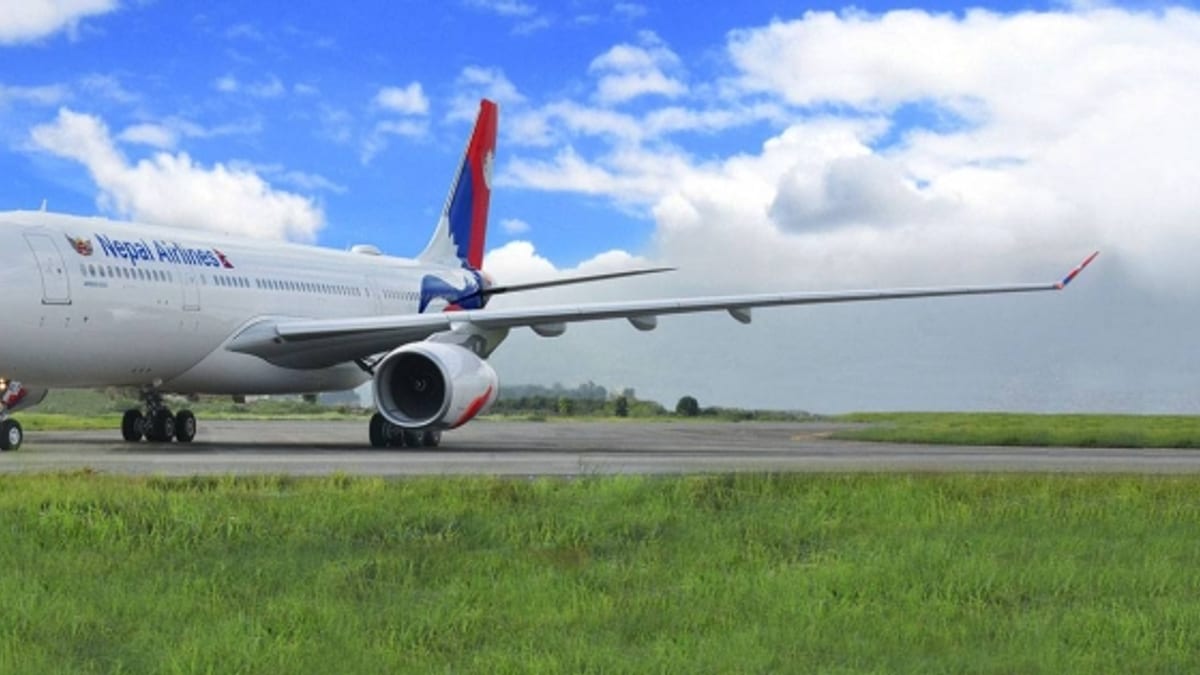
Nepal Airlines has begun operating special flights between Kathmandu and key Gulf destinations to bring home hundreds of stranded Nepali travelers, as conflict-driven airspace closures continue to upend normal links between Nepal and the Middle East.
Get the latest news straight to your inbox!
Emergency flights scheduled as regular services remain suspended
According to publicly available notices and media coverage, Nepal Airlines Corporation is running a series of special services between April 3 and April 5 from Kathmandu to Dubai in the United Arab Emirates and Dammam in Saudi Arabia. The flights are designed to repatriate Nepali citizens who were unable to travel after widespread cancellations on Gulf routes beginning in late February.
Regular Nepal Airlines flights to Doha, Dubai and Dammam have been suspended at least through April 7, following the closure of sections of Middle Eastern airspace and heightened security risks along traditional corridors. The national flag carrier previously announced that all tickets on those cancelled services would be fully refunded, reflecting the scale of disruption to its schedule.
Published reports indicate that the first of the new special flights will operate on April 3 from Dubai to Kathmandu, with additional rotations planned from Dubai and Dammam over the following days. Passenger manifests shared in local coverage suggest that several hundred Nepalis are expected to return on these services alone, on top of other emergency flights mounted by foreign airlines.
The move comes as demand for outbound and inbound travel between Nepal and the Gulf remains high, particularly among migrant workers, short-term visitors and those on connecting itineraries to Europe, North America and East Asia that typically rely on Gulf hub airports.
Conflict in West Asia ripples across Nepal–Gulf air corridors
The travel disruption stems from the conflict that escalated in late February in West Asia, triggering missile and drone exchanges and prompting several regional states to partly or fully close their airspace. International analysis of the situation notes that airlines have been forced to reroute or suspend flights across multiple Gulf and Levant destinations because of heightened safety and insurance concerns.
For Nepal, which has no direct non-stop link to Europe or North America, Gulf carriers and Nepal Airlines services to Gulf hubs form a critical bridge to the wider world. When operators reduced frequencies or halted flights, schedules between Kathmandu and major centers such as Doha, Dubai, Abu Dhabi, Dammam and Kuwait City were immediately affected, stranding passengers on both sides of the route.
Local outlets tracking aviation movements in Kathmandu report that more than a dozen flights on some days in early March were cancelled as the situation unfolded. This included services by foreign airlines as well as Nepal-based carriers, amplifying uncertainty for travelers who depend on transit connections through Gulf hubs.
The continuing volatility has encouraged governments and airlines in the region to organize targeted repatriation and rescue operations. The Nepal Airlines special flights to Dubai and Dammam form part of this wider patchwork of ad hoc services that are stepping in where regular scheduling has broken down.
Stranded travelers turn to limited alternative routes
The cancellation of most direct Nepal–Gulf flights has forced travelers to improvise. Travel reports describe Nepali workers and visitors attempting to return home via complex routings through South Asia and Southeast Asia, often at significantly higher cost and with extended layovers.
In some cases, passengers bound for Nepal from Gulf countries have been advised to reroute through cities such as Istanbul, Delhi, Doha on remaining corridors, or Kuala Lumpur, depending on which airlines are still serving their origin points. However, capacity on these alternatives is constrained, and last-minute fares have risen sharply.
Guides published for the Nepali diaspora in the Gulf region characterize travel from certain locations as particularly challenging. Routes from Bahrain and some smaller Gulf states currently rely on multi-stop itineraries, adding time, complexity and expense, while also exposing travelers to the risk of further disruptions as the situation evolves.
Against this backdrop, the dedicated Nepal Airlines flights from Dubai and Dammam are being framed in local coverage as a rare direct option for those who have been waiting weeks to secure a seat home. Seats on the special services are expected to be in high demand, especially for passengers who already hold unused tickets from previously cancelled departures.
National carrier balances rescue effort and financial strain
The decision to mount special flights comes at a time when Nepal’s aviation sector is already under financial pressure. Publicly available economic reporting from Kathmandu highlights a steep rise in jet fuel prices in recent days, driven in part by the same conflict that has disrupted Gulf airspace. Aviation fuel supplied to domestic airlines has reportedly climbed to record levels, increasing operating costs across the board.
For Nepal Airlines, which has limited long-haul capacity and a history of financial constraints, operating lightly loaded repatriation flights or adjusting schedules on short notice can be particularly challenging. Offering full refunds on cancelled Gulf services adds another layer of strain, even as the carrier seeks to maintain public confidence and fulfill its role as the state-backed airline.
Industry analysts quoted in local economic coverage have long warned that unexpected geopolitical shocks place disproportionate stress on smaller national airlines with concentrated route networks. The current episode underscores those vulnerabilities, as a single regional conflict has upended a large share of Nepal Airlines’ international portfolio in a matter of weeks.
Nevertheless, the rollout of special flights suggests that the company and the government are prepared, at least in the short term, to prioritize the safe return of citizens over purely commercial considerations, even as higher fuel bills and volatile demand complicate planning.
What travelers between Nepal and the Gulf should expect next
Advisories from Nepal Airlines and regional aviation authorities emphasize that the situation remains fluid, and travelers are being encouraged to monitor airline notices and airport flight information closely. Further schedule changes are possible if the conflict escalates or if additional airspace restrictions are introduced.
For now, the special services between Kathmandu, Dubai and Dammam are intended as a short-term bridge to clear at least part of the backlog of stranded passengers. Observers note that a broader normalization of Nepal–Gulf traffic will depend on security assessments by multiple governments, insurance decisions, and the operational choices of large Gulf carriers that dominate transit traffic.
Travel experts following the issue expect that even after airspace fully reopens, route patterns could take weeks or months to stabilize. Airlines may initially operate reduced frequencies, divert flights along longer paths to skirt sensitive airspace, or prioritize certain hubs over others, all of which could affect connectivity and fares.
Until then, Nepali citizens and other travelers with plans involving the Gulf are being advised in public reports to build in extra time, maintain flexible itineraries where possible, and verify the status of both their outbound and return flights. For many, securing a seat on one of Nepal Airlines’ new special flights represents the most direct route through an increasingly uncertain travel landscape.