

More news on this day
The Netherlands has become the latest EU country to issue an urgent warning to UK tourists over looming disruption at European border crossings, as stricter biometric checks are rolled out across the Schengen area and fully enforced from April 10.
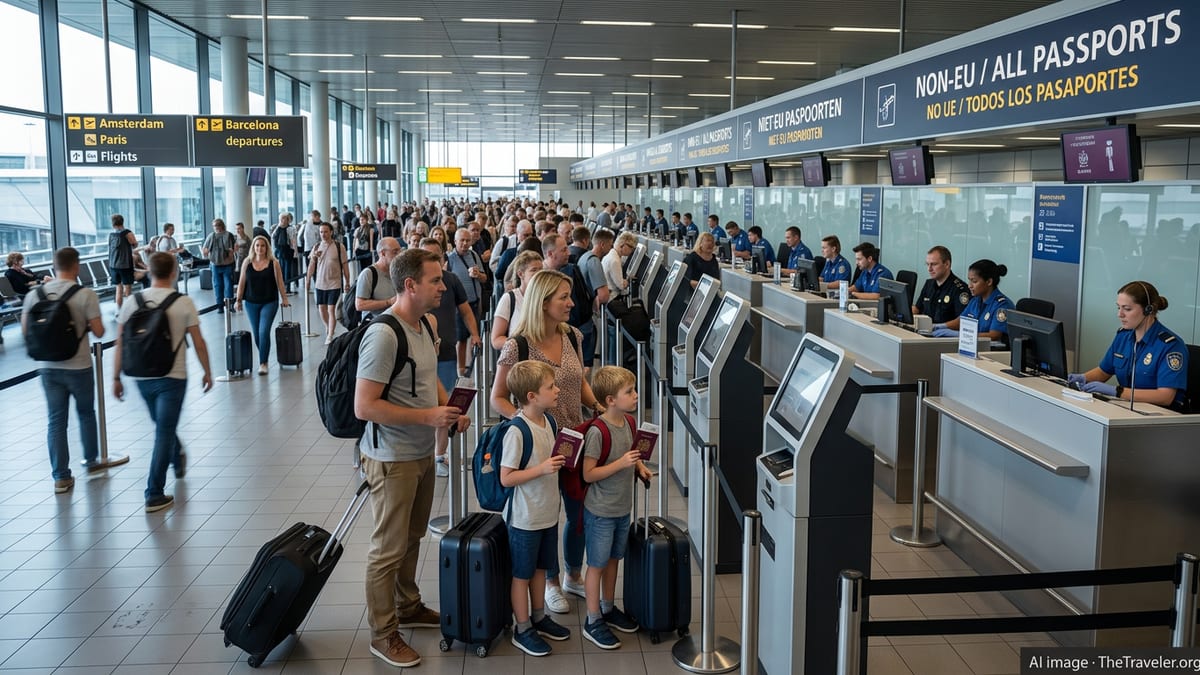
Netherlands Aligns With Europe on New UK Travel Warning
The Dutch government has moved to step up communication with UK visitors ahead of the peak spring and summer travel seasons, highlighting that all non-EU nationals, including British passport holders, will be subject to biometric checks under the European Union’s new Entry/Exit System. The system, which has been gradually introduced since late 2025, records fingerprints, facial images and detailed entry and exit data at the external borders of the Schengen zone.
Officials in The Hague have echoed concerns voiced by other EU states that UK travellers are still underestimating the impact of the change. The Foreign Ministry has warned that queues at airports and ferry ports could be significantly longer as border guards capture biometric data for the first time from millions of holidaymakers and business travellers.
The Netherlands’ warning brings it in line with messages already issued by Italy, France, Germany, Spain, Portugal and Greece, as governments attempt to prevent a repeat of recent scenes of congestion at major hubs. It also underlines that the April 10 enforcement date is a hard deadline for full deployment of the technology at all participating external border points.
Biometric Entry/Exit System Becomes Mandatory From April 10
From April 10, every non-EU traveller entering or leaving the Schengen area will be registered in the Entry/Exit System at the first border they cross into the zone. The scheme is designed to replace manual passport stamping and automate the calculation of how long a visitor has spent in the bloc, tightening enforcement of the 90-days-in-180 rule that applies to UK tourists post-Brexit.
Under the rules, first-time entrants can expect to have their passport scanned, their facial image captured and, in many cases, their fingerprints taken at a manned desk or self-service kiosk. Subsequent trips should be quicker, as the system will recognise returning passengers, but authorities are warning that the initial mass registration of travellers this year is likely to slow the process at busy airports and ports.
EU agencies overseeing the system have set April 10 as the date by which all participating countries must have the technology in place at external borders. While member states retain limited powers to temporarily scale back biometric checks at times of exceptional congestion, national governments, including the Netherlands, are advising travellers to plan for the system to be in full effect during the Easter and summer peaks.
Long Queues and Local Backlash Drive Stronger Messaging
The tougher tone from the Netherlands and other EU destinations follows weeks of reports of long queues at border control in parts of Europe where the system is already operating. Travel industry groups and airport operators have warned that processing times for non-EU passengers have increased sharply as officers take extra minutes to complete biometric enrolment for each person.
In Spain, Italy, Portugal, France, Germany, Greece and other countries that rely heavily on UK visitors, tourism bodies have raised the alarm over the potential hit to visitor experience if delays become entrenched. Regional hotel associations and airport authorities have pressed national governments to communicate clearly with source markets such as the UK so that travellers arrive better prepared and allow more time for border formalities.
Dutch tourism officials share those concerns. Schiphol Airport, which handles millions of British passengers each year, has been under pressure to avoid a repeat of previous summer disruption. The latest guidance is part of a broader campaign to set expectations with UK travellers, with airlines, ferry companies and rail operators also being urged to pass on advice about likely waiting times.
What UK Tourists to Europe Should Expect at the Border
For UK holidaymakers flying to Amsterdam, Paris, Rome, Barcelona, Lisbon, Athens or other popular destinations after April 10, the most immediate change will be the extra time required at passport control. Travellers who have not yet been registered in the new system should be prepared to complete a one-off biometric enrolment, which will feel more like a full immigration interview than the quick passport stamp they were used to before Brexit.
Border guards will scan the passport, verify identity, and capture a facial image using a camera or kiosk. In many cases, fingerprints will also be taken electronically. Families can expect that each adult and older child travelling on a UK passport will have to go through the process individually, which is likely to slow queues at peak times such as school holidays and bank holiday weekends.
Once registered, subsequent trips within the Schengen area should be faster, though additional checks may still be carried out at random or during periods of heightened security. However, officials across Europe stress that the system is new, and teething problems are expected. UK tourists are therefore being advised to arrive earlier at departure airports, allow generous connection times, and avoid tight onward travel plans immediately after landing.
Industry and Governments Race to Limit Disruption
European governments and the travel industry are working to reinforce staffing levels and upgrade infrastructure before the April deadline, but many admit that the pace of change is challenging. Airlines have warned of knock-on effects if passengers are held up at border control, including missed connections, delayed departures and pressure on baggage and ground handling systems.
In response, several countries, including the Netherlands, have invested in new biometric kiosks and expanded border control areas at key airports. Training programmes for border officials have been accelerated, while contingency plans allow for temporary easing of biometric requirements in moments of acute congestion to keep passenger flows moving.
Despite those efforts, the overarching message to UK travellers is clear: the days of rapid, stamp-based entry into Europe are ending. With biometric controls set to become the norm across the continent from April 10, British visitors are being urged to build in extra time, carry all necessary documentation and stay alert to the latest guidance from both their carrier and the destination country’s authorities.