

More news on this day
The Netherlands has sharply increased value-added tax on short-stay accommodation from 9 percent to 21 percent as of January 1, 2026, a fiscal shift already feeding through to higher hotel prices, tighter travel budgets and renewed debate over the country’s competitiveness as a tourism destination.
Get the latest news straight to your inbox!
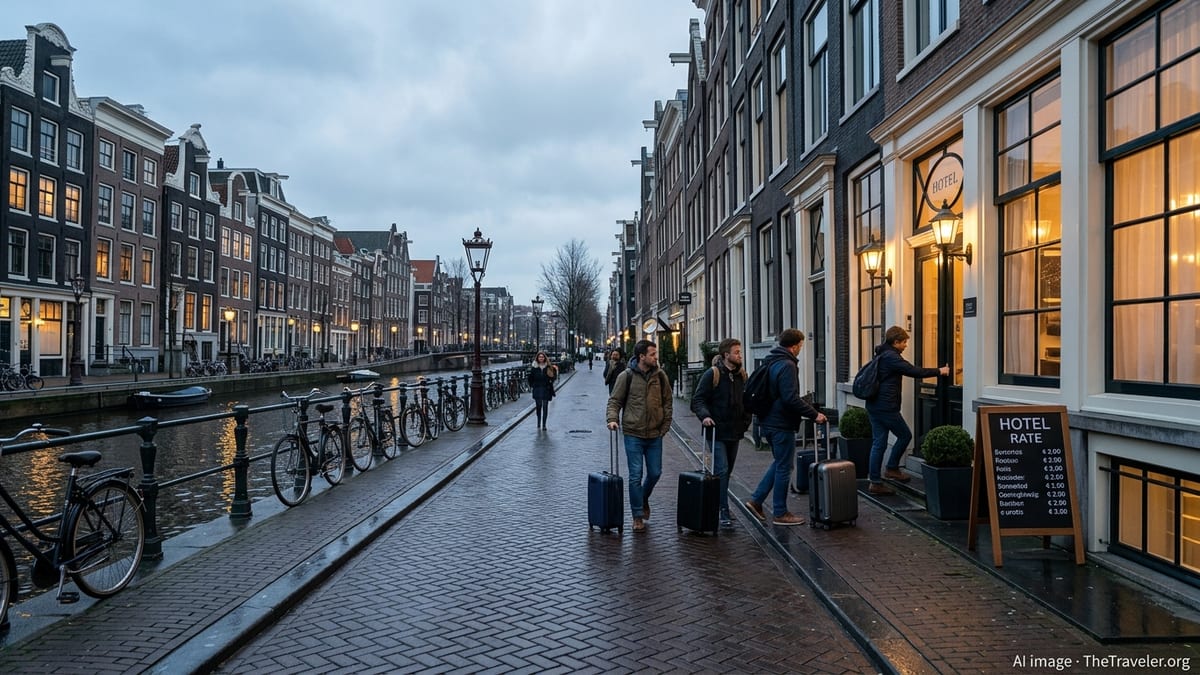
Sharp Tax Rise Hits Hotels, Holiday Parks and Short-Stay Rentals
The new 21 percent VAT rate applies to a wide spectrum of paid overnight stays, including hotels, holiday homes, bed and breakfasts, hostels, furnished mobile homes and many platform-based short-stay rentals. Published government and advisory notices indicate that what was previously taxed at the reduced 9 percent rate now falls under the standard rate, significantly increasing the tax burden per night.
Guidance from Dutch business and tax agencies explains that the change is tied to the check-in date rather than the booking date. Stays taking place in 2026 are taxed at 21 percent even if they were booked and fully paid for in 2025. This has prompted many accommodation providers to update their terms and issue revised invoices for bookings that span the changeover.
Camping remains one of the few exceptions. Public information from the Netherlands Chamber of Commerce notes that camping still benefits from the 9 percent rate, creating a price gap between campsites and other forms of leisure accommodation. Industry analyses suggest this may channel some cost-conscious travelers toward camping and glamping options that can still market a lower all-in price.
Tax consultancies estimate that abolishing the reduced rate for accommodation is part of a broader effort to simplify the VAT system and close a budget deficit. Forecasts published around the 2025 budget cycle projected that raising VAT on hotels, culture and other previously reduced-rate services would generate several billion euros in additional annual revenue from 2026 onward.
Tourism Growth Slows as Prices Climb for Visitors and Locals
Early 2026 tourism outlooks already reflect the impact of the higher VAT on overnight stays. National tourism demand studies cited by Dutch media report that expected growth in overnight tourism is barely above zero this year and at its lowest level since before the pandemic, excluding the crisis years. Analysts link the slowdown to a combination of weaker household purchasing power and the step change in accommodation taxes.
For domestic travelers, the price increase is immediate and highly visible. In popular coastal and countryside destinations, hotel and holiday park operators have warned in open statements and published commentary that Dutch families will face significantly higher bills for traditional summer breaks within their own country. Some consumer groups argue that the measure risks pushing middle-income households to shorten trips or skip them entirely.
Urban destinations feel the pressure in different ways. In Amsterdam, where municipal tourist tax is layered on top of national VAT, estimates from local information portals calculate that the combined burden on hotel rooms can now reach roughly one-third of the pre-tax room rate. This reinforces Amsterdam’s status as one of Europe’s most expensive city-break destinations and fuels ongoing political debates about balancing visitor revenue against liveability for residents.
Travel analysts note that the Netherlands had already been pursuing policies to manage mass tourism, including caps on new hotel development and tighter rules on short-term rentals. The VAT rise adds a powerful price signal on top of those regulatory measures, inadvertently supporting efforts to slow growth in visitor numbers while increasing per-night tax revenue.
Competitive Gap With Germany, Belgium, Denmark and Lithuania
The new Dutch rate of 21 percent on short-stay accommodation places the country at the upper end of the European spectrum, but it does not stand alone. Several neighboring or nearby countries have also increased or maintained relatively high tax levels on hotel stays, creating a patchwork of incentives across the region.
Publicly available tax comparisons show that Germany still applies a reduced 7 percent VAT rate to hotel accommodation, well below its standard 19 percent rate. Belgium, by contrast, has approved reforms that raise VAT on hotel stays and comparable services from 6 percent to 12 percent in 2026, narrowing but not closing the gap with the Dutch 21 percent. Lithuania has gradually withdrawn some temporary reduced rates introduced during the pandemic, reverting more accommodation to standard VAT treatment.
Denmark remains a special case in northern Europe, applying its full 25 percent VAT rate broadly to goods and services, including hotels and other forms of short-stay accommodation. The United Kingdom, which operates outside the EU framework, currently taxes hotel stays at its standard VAT rate, set above many continental peers. The combination of these policies means travelers comparing destinations in the North Sea and Baltic regions face noticeably different tax components embedded in nightly rates.
Industry briefings highlight that the Netherlands now sits closer to Denmark and the UK in the taxation league table, and further away from Germany and Belgium on the specific issue of hotel VAT. Tourism market observers warn that this relative disadvantage could be particularly acute for Dutch border regions, where consumers can easily cross into neighboring countries offering lower VAT on accommodation and, in some cases, cheaper dining and shopping.
Border Regions and Business Travel Feel the Strain
Destinations near Germany and Belgium appear especially exposed to cross-border price sensitivity. Studies and commentary from regional tourism boards and trade associations indicate that hotels and holiday parks in the eastern and southern provinces are already reworking their pricing strategies, wary of losing cost-conscious guests to resorts just across the border with lower VAT-inclusive rates.
Business travel and meetings are also coming under scrutiny. Conference organizers and corporate travel managers working with tight budgets are reassessing the cost of hosting events in Dutch cities compared with venues in neighboring countries. Consultancy briefings suggest that higher VAT on room nights, combined with elevated catering and venue costs, may nudge some international events toward alternative hubs in Germany or Belgium that can offer lower tax-inclusive packages.
At the same time, some analysts argue that the Netherlands retains structural advantages that partially offset the tax hike. These include strong transport connectivity, a dense network of midscale and upscale hotels, and the continued appeal of destinations such as Amsterdam, Rotterdam and the Dutch coast. For segments where convenience and brand strength matter more than marginal price differences, the impact of higher VAT could be limited in the short term.
However, long-range forecasts emphasize that even modest shifts in traveler behavior can compound over time. If a portion of repeat visitors and corporate clients gradually divert to lower-tax destinations, local businesses in hospitality, retail and culture could face sustained pressure on occupancy rates and ancillary spending.
Consumers and Operators Adapt to a Higher-Tax Travel Landscape
Faced with steeper accommodation costs, travelers are already adjusting their tactics. Travel planning platforms and consumer media report rising interest in visiting during shoulder seasons, booking farther in advance and choosing smaller cities or secondary destinations to keep total trip costs manageable. Longer stays in self-catered properties, where guests can reduce restaurant spending, are also gaining attention.
Accommodation providers, for their part, are experimenting with bundling and dynamic pricing to soften the perceived impact of the VAT jump. Some hotels are promoting value-added packages that include breakfast, public transport cards or museum access, aiming to spread the tax-inclusive cost over a broader set of services. Others are emphasizing loyalty programs and direct booking discounts to retain price-sensitive repeat guests.
Policy-focused commentators point out that the VAT rise sits within a larger European conversation about how tourism should be taxed in an era of climate concerns, housing shortages and pressure on public services. Advocates of higher tourism taxation argue that visitors should contribute more to local infrastructure and environmental mitigation. Critics counter that abrupt increases risk undermining the competitiveness of destinations and pushing travelers toward locations with looser regulations and lower standards.
In the Netherlands, the coming peak travel seasons of 2026 and 2027 will provide the first clear evidence of how the new 21 percent VAT on short-stay accommodation reshapes patterns of domestic and international tourism, and whether neighboring countries with lower hotel tax burdens succeed in capturing a larger share of northern Europe’s travel demand.