

Staying connected in the Netherlands is easy, but the sheer range of SIM cards, eSIMs and roaming options can be confusing if you are just visiting for a few days or weeks. The country has some of the best mobile networks in Europe, fast 5G, and competitive prepaid data offers, yet prices and convenience vary depending on whether you buy at Amsterdam Schiphol Airport, in the city, or online before you fly. This guide breaks down the best options for tourists, how coverage really compares, and which plans make sense for different types of trips and travelers.
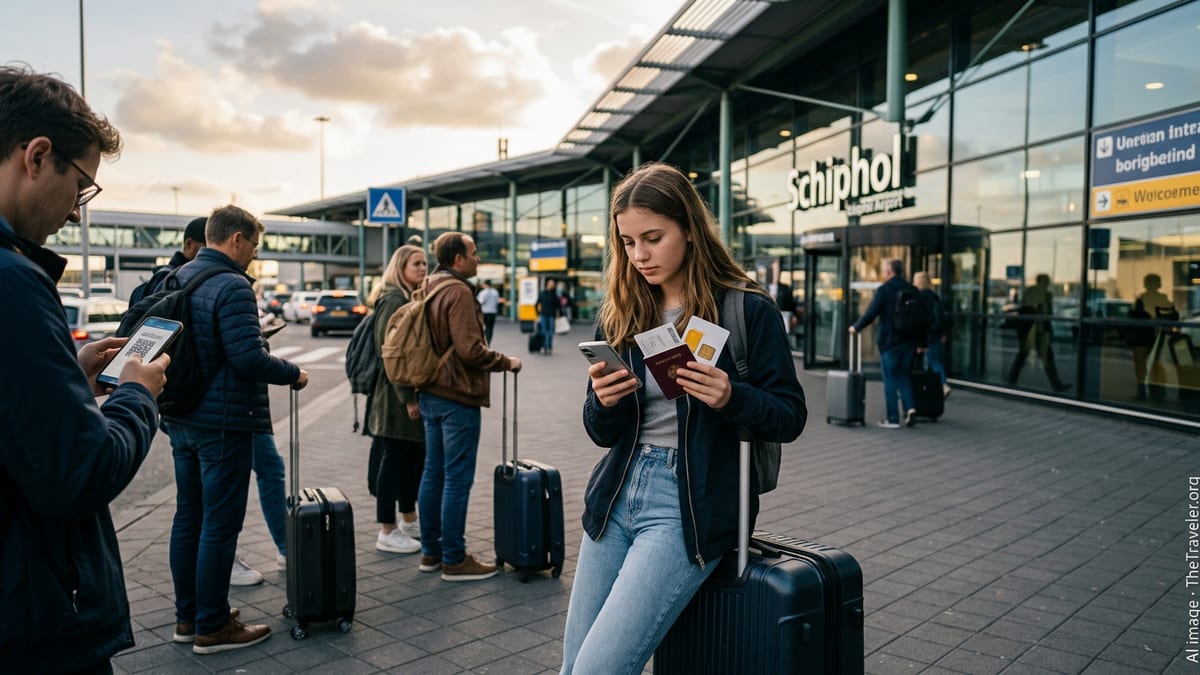
How Mobile Networks Work in the Netherlands
The Dutch mobile market is dominated by three infrastructure networks: KPN, Vodafone and Odido, which was previously known as T Mobile Netherlands. All the other brands you might see, from low cost virtual operators to tourist focused SIMs, ultimately ride on one of these three networks. For short term visitors, that means your main decision is not only which brand or plan to buy, but also which underlying network it uses for coverage and speeds.
Independent testing in 2024 and 2025 consistently ranks KPN as having the best overall mobile network quality, with very strong nationwide 4G and increasingly dense 5G. Odido typically comes a close second and often leads in 5G availability and peak data rates in cities, while Vodafone usually sits in third place but still performs at an outstanding level by European standards. In practice, everyday users report that all three deliver reliable 4G almost everywhere you are likely to go as a tourist, from Amsterdam’s canal belt to smaller historic towns.
The Netherlands also benefits from excellent overall connectivity, with mobile broadband coverage well above European averages and high population density that makes it economical to deploy new sites. As a result, even when you leave the Randstad cities for places like the Hoge Veluwe National Park or the Frisian lakes, you are likely to hold at least a 4G signal suitable for maps and messaging. Rural pockets can still experience weaker signals or slower data, but true dead zones are relatively rare compared with many larger countries.
Another important point is that 3G has been largely phased out, and the focus is now on 4G and 5G. If you bring an older device that does not support at least 4G LTE bands used in Europe, your experience will be limited. Most recent iPhones and Android phones from North America, Asia and Europe work well, but if you use a niche or very old handset it is worth checking band compatibility in advance, especially for 5G.
SIM Card vs eSIM: Which Is Better for Tourists
For visitors, the main choice is between buying a physical prepaid SIM card after arrival or activating an eSIM before or just after landing. Both options give you local Dutch data at far lower prices than typical roaming charges from non European carriers, and both usually allow you to use your phone as a hotspot for your laptop or travel companions. The better option depends on your device, your budget, and how comfortable you are with setting things up yourself.
A physical SIM card is straightforward and still feels familiar for many travelers. You visit a kiosk or phone shop, show identification if required, pay for a starter pack and the staff can normally help with activation on the spot. This can be reassuring if you are not confident with smartphone settings or if you want a local Dutch phone number for calls and SMS. The trade off is that airport SIMs in Amsterdam often cost more for the same data than cards bought in the city, and you have to physically swap out your home SIM, which increases the risk of misplacing it during your trip.
eSIMs remove that physical friction. If your phone supports eSIM, you can purchase a Netherlands or Europe regional data plan from a digital provider before you travel, scan a QR code or follow an in app process, and arrive with data ready the moment the plane doors open. Many popular travel eSIM brands partner with KPN, Odido or Vodafone for connectivity, and some can automatically select the best of several networks. You keep your home SIM in the device for calls and two factor texts while the eSIM handles data, which is particularly convenient for short city breaks.
There are reasons some travelers still prefer a physical SIM. A few eSIMs provide data only and no local Dutch number, which may be inconvenient if you need voice calls for restaurant bookings or local services. Additionally, if you change phones during your trip, transferring an eSIM can be more complex than simply moving a plastic card. Nevertheless, for most modern smartphones and typical tourist needs, an eSIM has become the most flexible and time efficient option.
Coverage and Speeds: What to Expect Across the Country
The Netherlands is compact and heavily urbanized, and its mobile networks reflect that. You can expect fast 4G and increasingly solid 5G in Amsterdam, Rotterdam, The Hague, Utrecht and Eindhoven, as well as strong performance in medium sized cities such as Haarlem, Delft, Leiden and Groningen. Independent network tests in 2024 put KPN in first place in overall quality, with Odido and Vodafone rated only slightly lower and all three carrying an outstanding rating by European standards.
5G deployment is already at a high level in the Netherlands compared with many European neighbors. KPN and Odido both emphasize growing 5G coverage and high data rates, while Vodafone offers 5G on several frequency bands including the important 3.5 GHz band that boosts capacity and speeds. However, network tests and user reports still suggest that the practical difference between 4G and 5G for everyday tasks such as maps, messaging and social media is modest. Where you will notice 5G is in very dense areas, crowded events or when downloading large files.
Outside major cities, 4G remains the workhorse. Towns, highways and even many rural roads are typically well served, so you can rely on navigation apps when driving or cycling through the countryside. Signals may weaken in some remote or forested areas, but they rarely drop out completely. If you plan to do a lot of train travel, expect coverage to be good on most intercity routes, with occasional short tunnels or isolated stretches where speeds dip.
For tourists, the key takeaway is that the underlying Dutch networks are strong enough that you do not need to obsess over small coverage differences when choosing a prepaid SIM or eSIM. KPN generally leads in overall coverage, Odido often tops specific 5G metrics, and Vodafone remains competitive. Any of the three will comfortably handle typical holiday use, from streaming music and checking museum hours to uploading photos in real time.
Buying a SIM Card at Amsterdam Schiphol and in Dutch Cities
Many visitors first encounter Dutch SIM cards at Amsterdam Schiphol Airport, where kiosks and specialist shops offer tourist focused packages. The Airport Telecom Shop in Schiphol Plaza sells prepaid SIMs and phone accessories, and there are often branded stands from operators or international calling specialists between the arrival exits. These airport options are convenient if you want data immediately, but they are usually more expensive per gigabyte than what you can find a short time later in the city.
At Schiphol you might find offers from brands that specifically target tourists, including operators like Lebara or L Mobi which use one of the main Dutch networks behind the scenes. These packs often bundle a modest amount of data with local and sometimes international call credit. Pricing changes frequently, but traveler reports suggest that airport SIMs can cost considerably more than similar or better value prepaid bundles sold in regular city shops. If your first destination in the Netherlands is central Amsterdam and you can tolerate a short period relying on airport Wi Fi or an existing eSIM, it can be cheaper to wait.
Once in the city, you have more choice and lower prices. Each of the three main networks operates branded stores in central shopping districts and larger malls. Staff can explain current prepaid offers, help you choose an appropriate package, and set up the SIM for you. Local supermarket chains and convenience stores often sell starter packs from low cost virtual operators as well, which can be good value if you mostly need data and do not care which network is behind the brand.
Regardless of where you buy, you will usually need to show identification such as a passport and sometimes provide an address, which can be your hotel or other temporary accommodation. Activation is normally quick, and in most cases your data will work within minutes. English is widely spoken in the Netherlands, particularly in Amsterdam and other major cities, so language is rarely an obstacle when getting set up in person.
Best eSIM Options for the Netherlands
eSIM adoption has accelerated rapidly among frequent travelers, and the Netherlands is no exception. A growing number of providers sell Netherlands specific or Europe wide eSIM plans that use the KPN, Odido or Vodafone networks. You typically purchase either through a website or mobile app, receive an installation QR code, and activate it by adding a new mobile plan in your phone’s settings. Most plans are prepaid, with fixed data allowances and durations ranging from a few days to a month or more.
Netherlands specific eSIM brands tend to highlight fast 4G and 5G data on the major networks, with small starter packages suitable for short city breaks and larger bundles for heavy users. Europe regional eSIMs, available from widely used travel providers, let you roam seamlessly across multiple countries without swapping profiles. These can be appealing if the Netherlands is just one stop on a longer itinerary that includes neighboring Belgium, Germany or France. Prices for low data starter plans are generally modest, and community compiled price trackers suggest that several well known eSIM brands offer 1 GB of Europe data for around the equivalent of a few euros for a week of validity.
When comparing eSIM providers, consider not only price but also how they connect you. Some eSIMs use a single Dutch network, while others are multi network and can switch automatically between KPN, Vodafone and Odido for better coverage or capacity. Multi network access can be an advantage if you will travel widely across the country or spend time in less typical tourist regions where one operator might have a stronger signal than the others.
Customer support and backup connectivity also matter. Because eSIMs are often self service, you are the one scanning QR codes, entering activation codes and checking that roaming is enabled. Look for clear instructions, 24 hour support channels in English, and the ability to top up or extend your plan without needing a physical store. It is also wise to download any necessary configuration details to your phone before boarding your flight in case airport Wi Fi is congested or unreliable when you land.
Costs, Data Allowances and EU Roaming Rules
Dutch mobile prices for residents are competitive, and tourists benefit from the same underlying cost structure, though short term packages can sometimes be priced at a premium. As a visitor you are mainly looking at prepaid offers, either physical SIMs or eSIMs, with fixed data allowances rather than open ended postpaid contracts. Typical tourist friendly plans include a few gigabytes for light users, mid range bundles suited to navigation and social media, and large or unlimited style options for streaming and tethering.
In general, buying in the city yields better value than purchasing at the airport. City center shops and supermarkets often sell starter packs with decent data at modest prices, and online eSIM providers can undercut both, particularly for small data amounts. The trade off is that city and online options require a bit more planning and confidence than simply accepting the first offer you see in arrivals. As with any fast moving consumer market, exact prices and bundles change regularly, so it is sensible to think in terms of rough tiers rather than memorizing specific euro amounts.
If you are coming from another European Union country and your home SIM is from an EU operator, you may be able to roam in the Netherlands at domestic rates under the EU “roam like at home” rules. These rules limit surcharges and set fair use caps for data, which can make roaming extremely convenient for EU residents. However, operators can apply reasonable limits or slower speeds once you exceed a certain usage threshold, so check your provider’s fair use policy before assuming that heavy streaming in the Netherlands will be treated the same as at home.
Travelers from outside the EU, including most visitors from North America, Asia and Oceania, are usually better off with a local SIM or travel eSIM than with their home carrier’s roaming packages. While some international roaming bundles have become more affordable, they still often cost far more per gigabyte than local Dutch or Europe regional options. Doing a quick comparison before departure ensures that you do not arrive to an unwelcome bill for background app updates or navigation on your first day.
Practical Setup Tips and Avoiding Common Pitfalls
Whether you choose a SIM card or eSIM, a bit of preparation can save you headaches when you land. First, confirm that your phone is unlocked and supports European 4G and, ideally, 5G bands. Carriers in some countries still lock devices to their own networks, which can prevent a Dutch SIM from working at all. If in doubt, contact your home carrier at least a week before departure and ask them to confirm the unlock status in writing or in your account notes.
For eSIM users, purchase and download the eSIM profile while you have stable Wi Fi at home. Most providers allow you to buy weeks in advance and activate when you land by toggling the line on in your phone settings. Take screenshots of your QR code and any written activation codes, and store them securely offline. This way, even if you cannot access email at the airport, you can still complete the setup. When installing, pay attention to which line is set for data, which for calls, and whether data roaming is enabled for the eSIM.
Physical SIM users should bring a SIM ejector tool or a small paperclip, as not every kiosk will have one handy. When you remove your home SIM, place it immediately in a clearly labeled part of your wallet, passport holder or phone case so you do not lose it. Once the Dutch SIM is inserted, follow the on screen prompts, and if data does not start working within a few minutes, check that the correct access point name (APN) has been applied. Staff in operator stores are used to helping tourists through this process, and instructions are generally available in English.
Finally, consider your backup options. If you rely heavily on ride hailing apps, mobile boarding passes or digital hotel confirmations, having a moment without connectivity can be stressful. Many travelers now combine a low cost eSIM for basic always on data with a physical SIM bought later for heavier use, or they keep offline maps and key documents stored on their phone in case of temporary network or setup issues. A little redundancy goes a long way when you are navigating a new country.
The Takeaway
For most visitors, the Netherlands is one of the easiest countries in Europe in which to stay connected. KPN, Vodafone and Odido all offer strong nationwide 4G and growing 5G, and a thriving ecosystem of virtual operators and travel eSIM brands sits on top of those networks. Whether you buy a prepaid SIM at Amsterdam Schiphol, pick one up in a city shop, or install an eSIM before you board your flight, you can expect broadly reliable and fast mobile data throughout your trip.
Choosing between a physical SIM and an eSIM mainly comes down to your device and your preferences for convenience versus in person assistance. Airport SIMs offer instant gratification but usually at a higher price per gigabyte, while city stores and online eSIMs reward a small amount of planning with better value. Whatever you decide, a bit of preparation on phone compatibility, unlock status and backup options will ensure you spend more time enjoying Dutch canals, museums and cafes, and less time troubleshooting connectivity.
FAQ
Q1. Is it better to buy a SIM card or use an eSIM in the Netherlands?
For most modern smartphones, an eSIM is more convenient because you can set it up before arrival, keep your home SIM active for calls and texts, and start using data as soon as you land. A physical SIM can still be a good choice if your device does not support eSIM or if you prefer in person help at a shop.
Q2. Which mobile network has the best coverage in the Netherlands?
Independent tests in 2024 and 2025 generally rank KPN as having the best overall coverage and quality, with Odido and Vodafone very close behind. For typical tourist routes and major cities, all three networks perform well enough for smooth everyday use.
Q3. Can I buy a prepaid SIM card at Amsterdam Schiphol Airport?
Yes, there are specialist shops and kiosks at Schiphol that sell prepaid SIM cards aimed at tourists. They are convenient if you want immediate connectivity but are often more expensive than similar offers in Amsterdam city center or from online eSIM providers.
Q4. Do I need a passport to buy a Dutch SIM card?
In most cases you will be asked to show identification such as a passport when purchasing and registering a Dutch SIM, especially from major operators or at official shops. Some smaller outlets may be more flexible, but it is safest to assume you will need ID.
Q5. Will my phone work with Dutch SIM cards and 5G networks?
Most recent iPhones and Android devices from major manufacturers work well with Dutch 4G and 5G networks. The key requirements are that your phone is unlocked and supports the European LTE and 5G bands used by KPN, Vodafone and Odido.
Q6. Are eSIM data plans in the Netherlands truly unlimited?
Some eSIM providers advertise unlimited style plans, but they usually include fair use policies or speed caps after a certain amount of high speed data. It is wise to read the small print and assume that extremely heavy use may be throttled or subject to limits.
Q7. Can I use a Netherlands SIM or eSIM while traveling to other EU countries?
Many Dutch SIMs and Europe regional eSIMs allow roaming in other EU countries at domestic style rates, often with fair use caps. If you plan to visit several countries, look for an offer that clearly lists EU roaming and check any data limits that apply outside the Netherlands.
Q8. How much data do I need for a one week trip to the Netherlands?
Light users who mainly rely on Wi Fi and use data for maps and messaging can often manage with 3 to 5 GB for a week. Heavier users who stream video, share many photos and tether laptops might prefer 10 GB or more to avoid running out.
Q9. Is public Wi Fi in the Netherlands good enough to skip a SIM card?
Cities like Amsterdam and Rotterdam offer plenty of Wi Fi in hotels, cafes and some public spaces, but coverage is inconsistent when walking around and can be insecure. Most travelers still prefer a local SIM or eSIM for reliable navigation, messaging and two factor authentication.
Q10. What should I do if my SIM or eSIM does not work after activation?
First, restart your phone, check that mobile data and roaming are enabled, and verify that the correct line is set for data. If it still fails, confirm APN settings in your mobile network menu and contact the provider’s customer support or visit a local shop for assistance.