

The Netherlands is one of Europe’s easiest countries to explore, but first-time visitors are often surprised by how seriously the Dutch take trains, bikes and rules. From tapping in with a bank card to staying out of the bike lane when you are on foot, a little preparation can save you from confusion, fines and awkward encounters. These practical tips bring you up to date on how travel really works in 2026 so you can move around the country with confidence and respect for local habits.
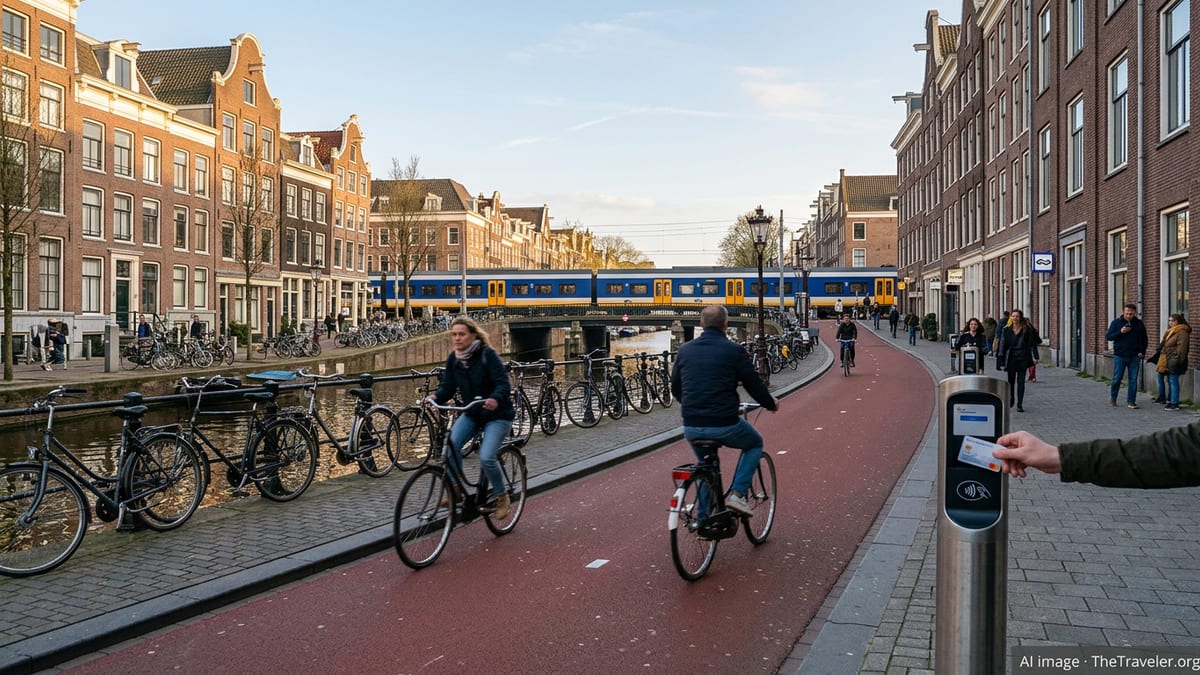
Understanding Dutch Trains in 2026
Rail travel is the backbone of public transport in the Netherlands, with frequent services connecting Amsterdam, Rotterdam, Utrecht, The Hague and almost every mid-size town. Schedules are dense on core routes, and even small stations often see at least two trains per hour during the day. The main operator on the national network is NS, but several regional companies also run services. As a visitor you barely notice the difference because the system is integrated and tickets are valid across operators for most ordinary journeys.
Trains tend to be clean and punctual by European standards, but short delays are common during peak hours or bad weather. Platform displays and in-carriage screens show real-time information, including the number of carriages and whether a train is expected to be busy. Announcements are usually made in Dutch first and then English on intercity and airport routes, so non-Dutch speakers are generally well covered. Night trains are limited, so if you plan late journeys check the timetable carefully and be prepared for replacement buses during engineering works.
Seating comes in two classes, standard and first class. First class offers slightly wider seats and a quieter environment, but for most tourists the price difference is not worth it on short runs. If you do buy first class, sit only in the carriages clearly marked with a large “1,” because inspectors strictly enforce class distinctions and fines for sitting in the wrong class are high. Keeping luggage close to you is important; Dutch trains have overhead racks and limited large-bag spaces near the doors, and blocking aisles is frowned upon.
On-board amenities are practical but not luxurious. Many intercity trains offer power outlets and free Wi-Fi, although signals can drop in tunnels or rural areas. Toilets are available on longer-distance services, but not always on small local trains. Food options are limited to vending machines and station shops, so pick up snacks and water before boarding. Drinking alcohol is allowed on many intercity services but may be banned on specific routes or at certain times, so check local notices if you intend to have a drink.
Train Tickets, OVpay and How to Tap In and Out
The biggest change for visitors in recent years is how you pay. Across Dutch public transport you can now simply tap your contactless debit or credit card or a mobile wallet at the gates or card readers using a system known as OVpay. For most tourists in 2026 this is the easiest option, because you avoid buying and topping up a separate card. Just remember that you must check in when you start your journey and check out at the end, every time you pass on or off the system, including when you change between some operators at the same station.
The older OV-chipkaart smart card is still in circulation but is gradually being phased out and is not necessary for short stays. Locals who commute often use subscription products linked to these cards or to the new OV-pass, which are not usually worth the administrative effort for visitors spending only a few days. If you prefer a traditional ticket, you can buy single-use paper or cardboard tickets from machines at major stations, but they often cost a little more than contactless fares and require you to select your journey in advance instead of being charged automatically by distance.
When tapping, hold a single card, phone or watch against the reader until you hear a beep and see confirmation on the display. If you accidentally tap with a wallet full of cards, the system may charge the wrong one. Inspectors can check whether you have a valid check-in, and travelling without one is treated as fare evasion even if you claim confusion. If you are unsure whether you checked in correctly, it is safer to ask staff at the station before boarding rather than hoping for the best.
One quirk that surprises many travellers is the difference between operators on the same platform. In some stations, changing from one rail company to another technically counts as ending one journey and starting a new one, so you must check out on the first set of gates and check in again for the second. Gates and poles are marked with the company logo, so follow signs closely. If a journey includes buses, trams or metros, you will also check in and out for each leg. It can feel repetitive, but it is central to how Dutch fares are calculated and skipping it can quickly become expensive in fines.
Taking Bikes on Trains and Renting OV-fiets
The Netherlands is built for bikes, and the rail system largely accommodates them, but not without conditions. On regular domestic trains you can bring a full-size bicycle only outside weekday peak hours, which typically means you may board with a bike from early morning until the start of the rush, then again in the late morning and midday, and from early evening through the night. During weekday rush hours in the morning and late afternoon large bikes are usually banned on many routes to keep carriages clear for commuters.
To take a standard bicycle on most NS trains you need a separate bike ticket, usually a day pass that allows you to take your bike on board for a flat fee. This is valid on a wide range of services but not on all high-speed or international trains, where reservations or different tickets may be required. Folded bicycles are often treated as luggage and can travel for free, provided they are properly folded and do not obstruct doors or aisles. Staff can ask you to move if your bike or bags block access, especially near the doors where space is tight.
Many visitors prefer to avoid bringing their own bike on board and instead use the national OV-fiets rental system. These bright blue bikes are available at hundreds of train stations and are intended for quick trips at your destination rather than long tours. You unlock them with a linked travel account and pay a low fixed price for up to 24 hours, making them ideal for riding from the station to a hotel, meeting or attraction. Because they are standard Dutch upright bikes, they also help you blend in and are less attractive to thieves than expensive rental models.
Whether you bring your own bike or rent one, remember that bike parking around stations can be chaotic. Many stations offer large underground or multi-level bike garages where short-term parking is free for the first day. Pay attention to signs about maximum parking time, as abandoned bikes are periodically removed. Always lock your frame to a fixed object with a sturdy lock; simple frame locks are common but not sufficient in high-theft city centres. If you will be away for more than one day, consider using supervised parking facilities where available.
Essential Dutch Cycling Rules and Fines
Cycling in the Netherlands looks relaxed, but it is governed by clear rules that authorities increasingly enforce with fines. You must cycle on bike paths where provided, or otherwise on the road, usually keeping to the right-hand side. Cycling on sidewalks is prohibited for adults and can lead to a ticket, and riding against traffic on one-way streets that are not explicitly open to bikes is also an offence. Pedestrians have priority on zebra crossings, and you should always stop or slow when someone is clearly about to cross.
Lighting is a major focus for Dutch police, especially in autumn and winter. If you ride in the dark or in poor visibility, you are required to have a white or yellow light in front and a red light at the rear, either fixed to the bike or to your body or bag as long as they are visible and not flashing wildly. Fines for missing or non-functioning lights are substantial, and officers seldom accept “my light just broke” as an excuse. Reflectors on pedals and wheels, a red rear reflector and a working bell are also mandatory equipment, though checks are more sporadic.
Using a handheld phone while cycling is illegal. If you want to navigate with your phone, use a handlebar mount or stop at the side of the bike path to check the map. Being caught with a phone in your hand, even at low speed, can result in a hefty fine similar to that for motorists. Wearing headphones is technically allowed, but if you cause an accident because you did not hear traffic, you can still be held responsible, so most locals keep the volume low or use only one earbud.
Perhaps the most important unwritten rule is to behave predictably. Signal turns with your arm, check behind you before changing lanes, and avoid sudden stops in the middle of the bike path to take photos or chat. Groups should ride in single file on narrow paths and move to the right when faster cyclists ring their bell. Tourists walking in cities often stray into bike lanes by mistake, so when you are on the bike, anticipate erratic behaviour from visitors and slow, patient older riders. This combination of strict rules and mutual awareness is what keeps such a dense cycling environment relatively safe.
How Not to Annoy Locals: On Foot, on Bike and on Trains
Beyond formal rules, much of the Dutch travel experience rests on courtesy and efficiency. On platforms and escalators, people typically stand on the right to let others pass on the left, especially in busy hubs such as Amsterdam Centraal or Utrecht Centraal. Blocking doors, escalators or ticket gates while you search for a card or check your phone irritates locals more than almost anything else. Prepare your ticket or bank card before you reach the gate, and move through promptly so the flow is not disrupted.
On trains and trams, taking up extra seats with bags is frowned upon when services are busy. If you leave a backpack on the seat next to you during peak hours, expect someone to ask if the spot is free. When travelling in groups, try to keep your voices at a moderate level; Dutch people converse quietly in public compared with some countries. Phone calls are best taken in vestibules between carriages rather than in a crowded quiet compartment, which is sometimes labelled and where talking is strongly discouraged.
On shared paths, Dutch cyclists expect pedestrians to stay out of the red-surfaced bike lanes and to keep dogs on short leashes away from wheel tracks. When walking, look both ways before crossing a bike lane, even if there is a zebra crossing, because bikes can move quickly and silently. In city centres, locals often commute at speed, especially in the morning and late afternoon, and sudden changes of direction by tourists taking photos can be dangerous. If you need to stop for a picture or to check directions, step aside out of the flow rather than pausing where people are riding.
In general, directness is part of Dutch culture. If you are blocking a door, leaving luggage in the aisle or drifting into the bike lane, someone is likely to tell you so bluntly. Do not take this personally; it is usually meant as a practical correction rather than a personal attack. A brief apology and quick adjustment is all that is expected and will usually be met with a nod or a smile.
Money, Tickets and Everyday Logistics
While the Netherlands is a highly cashless society, it is still wise to carry a small amount of euros for markets, public toilets and occasional small vendors. For transport, though, bank cards and mobile wallets are now the standard. International cards from major networks are widely accepted on ticket machines and on OVpay readers. If a machine rejects your card, try another one in the station or visit a staffed service desk where available.
Train fares are distance-based, so longer trips cost more, but the per-kilometre price is relatively consistent. Return tickets are often just twice the price of a one-way when bought as traditional e-tickets, but with OVpay you are simply charged for what you travel in each direction. Discount deals and weekend tickets exist, but most require registration and are aimed at residents. For short stays, it is rarely worth hunting for complex products unless you plan intensive, long-distance rail travel every day.
Always keep an eye on your balance or travel history if you use a dedicated transport card or app. Some visitors inadvertently check in twice and forget to check out, leading the system to charge a maximum default fare. If this happens with a local card you may be able to correct it online, but with a foreign bank card you sometimes need to contact customer service. To avoid confusion, many travellers switch off unnecessary contactless cards in their wallet and decide in advance which card or device they will use exclusively for transport.
Station facilities are generally well organised. Large stations offer luggage lockers, usually rented by the day, which are ideal if you want to explore a city between trains. Toilets in stations often require a small cash or card payment. Supermarkets and bakeries in or near stations provide better-value food than kiosk-style outlets on platforms. If you are catching a last train of the night, buy snacks and water before smaller shops close, because late-night options can be limited outside the largest cities.
Local Etiquette: Tipping, Cafes, Cannabis and Quiet Nights
Daily life etiquette in the Netherlands is straightforward and fairly relaxed, but norms differ slightly from those in North America or southern Europe. Tipping is appreciated but modest; rounding up the bill or leaving about 5 to 10 percent in restaurants with table service is normal, rather than the 15 to 20 percent expected in some countries. In casual cafes, bars and for takeaway food, small change or a simple “keep the change” gesture is enough. Service staff are usually paid a proper wage, so tips are a bonus, not a core part of income.
Tap water throughout the Netherlands is safe to drink and of high quality, so you can confidently refill bottles in accommodation or ask for tap water in many restaurants. Smoking rules are strict inside bars and restaurants, where tobacco and cannabis use is banned. Outdoor terraces are popular in good weather and may allow smoking, but always check for no-smoking signs and be aware of those around you. Public drunkenness is not well regarded, and some city centres use enforcement teams to keep nightlife under control, especially on weekends.
Cannabis is sold in licensed coffeeshops, but it is not legal in the open sense many visitors assume. These venues follow local rules about age, purchase limits and advertising. Consuming cannabis in streets and squares is increasingly restricted, particularly around schools and residential areas, and cities such as Amsterdam have tightened regulations in historic districts. If you choose to visit a coffeeshop, ask staff for advice about strength, start slowly and avoid combining cannabis with alcohol before cycling or navigating busy streets.
Noise rules are another area where visitors can stumble. Residential streets, canalside apartments and small-town neighbourhoods are often quiet at night, and locals expect low noise levels after late evening. Holiday rentals in dense old-city districts may share thin walls with long-term residents, so loud music or balcony gatherings can trigger complaints quickly. When in doubt, imagine the level of sound you would accept outside your own bedroom window and err on the side of quiet.
The Takeaway
Travel in the Netherlands is remarkably smooth once you understand a few essentials: tap in and out correctly on public transport, respect the central role of bikes in everyday life, and move with the flow rather than against it. The combination of dense rail links, widespread bike infrastructure and compact cities means you can cover a lot of ground without a car, but the same density also means that small mistakes, such as blocking a bike lane or forgetting to check out, have quick consequences.
By staying alert to signage, following basic cycling rules, and adopting the Dutch preference for efficiency and directness, you will find that trains, trams and bikes all fit together seamlessly. Add in an understanding of local etiquette around tipping, noise and cannabis, and your time in the Netherlands will feel less like a staged city break and more like a glimpse into the country’s everyday rhythm. With the right habits, you will move through stations, streets and canals as confidently as the locals you are sharing them with.
FAQ
Q1. Can I use my foreign bank card to pay for trains and other public transport in the Netherlands?
Yes, in most cases you can tap in and out directly with a contactless debit or credit card or compatible mobile wallet on trains, trams, buses and metros.
Q2. Do I still need an OV-chipkaart for a short visit in 2026?
No, most short-term visitors can rely on OVpay with a regular bank card or phone; the OV-chipkaart is mainly useful for residents with subscriptions.
Q3. What happens if I forget to check out when I leave a train or tram?
If you forget to check out, the system may charge you a default maximum fare. With local cards this can sometimes be corrected, but with foreign cards it is harder to fix.
Q4. Am I allowed to cycle on the sidewalk if the street feels unsafe?
No, adults are not allowed to ride on sidewalks, even if traffic feels busy. You should dismount and walk your bike on the pavement instead.
Q5. Do I need bike lights in Dutch cities if there are plenty of street lamps?
Yes, you must use proper front and rear lights when riding in the dark, even in well-lit areas. Police regularly fine cyclists without working lights.
Q6. Is using my phone for navigation on the bike path legal?
You may use your phone for navigation only if it is fixed in a holder or you are stopped. Holding a phone while cycling is illegal and can result in a significant fine.
Q7. Can I bring my bike on all Dutch trains?
You can bring a regular bike on many domestic trains outside weekday peak hours and usually only with a paid bike ticket. Folded bikes often count as luggage and travel more freely.
Q8. How much should I tip in Dutch restaurants and cafes?
In restaurants with table service, adding around 5 to 10 percent or rounding up the bill is customary. In casual cafes and bars, small change is appreciated but not mandatory.
Q9. Is it safe to drink tap water everywhere in the Netherlands?
Yes, tap water across the Netherlands is considered safe and high quality, so you can drink it and refill bottles without concern.
Q10. Can I smoke cannabis anywhere in Dutch cities as long as I buy it from a coffeeshop?
No, consumption is restricted. You should use cannabis discreetly, respect local bans in certain streets and squares, and never combine it with cycling or complex travel.