

More news on this day
Trafalgar’s first river cruise season in 2026 is expanding its footprint in northwestern Europe, with the Netherlands joining the United Kingdom, Germany and France as key gateways to the tour operator’s new Rhine and Danube sailings.
Get the latest news straight to your inbox!
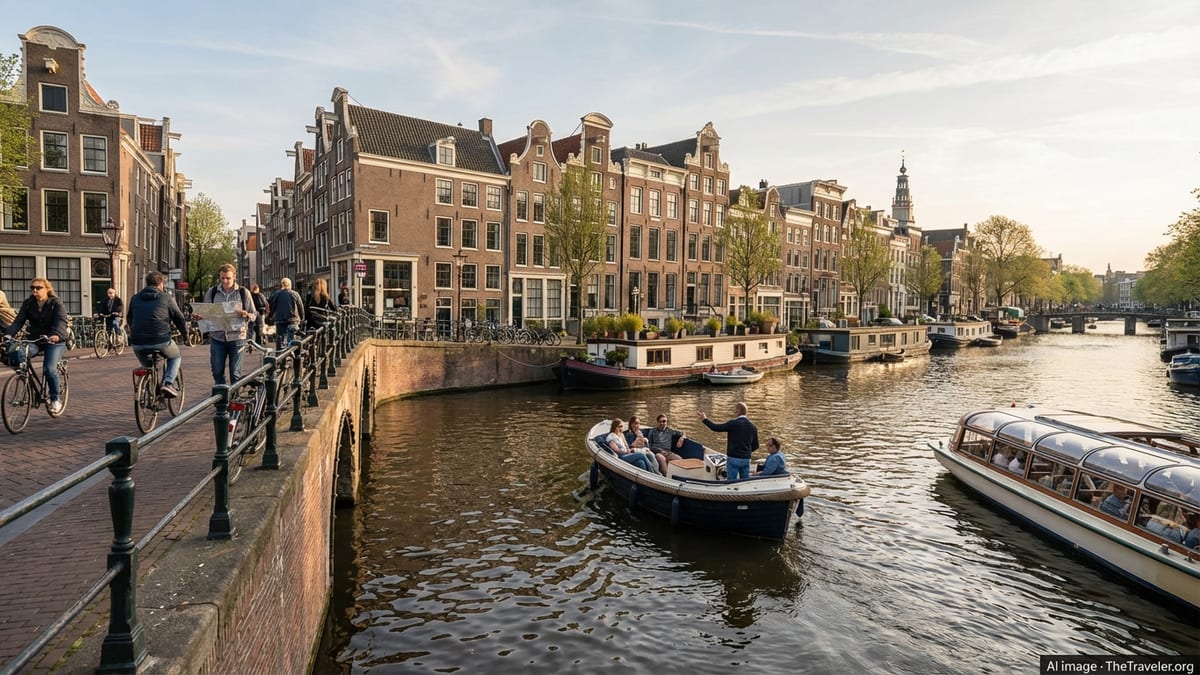
Dutch Gateways Anchor Trafalgar’s Rhine Focus
Recent brochures and program details indicate that Trafalgar’s 2026 river cruises will feature itineraries that include the Netherlands alongside Germany, France and Switzerland on the Rhine. Amsterdam is positioned as a primary embarkation and disembarkation point, giving travelers direct access to Dutch cultural highlights before or after time on the water.
The company’s published 2026 worldwide and European brochures outline at least one Rhine itinerary pairing a hotel stay in Amsterdam with a weeklong cruise calling in Germany, France and Switzerland. The Netherlands therefore becomes a central part of Trafalgar’s river launch, not just a brief stop but a fully integrated land and river hub that connects air gateways, rail links and river ports.
Publicly available information also shows that Dutch and German stretches of the Rhine will be a core focus of the inaugural season. This places Trafalgar among a growing number of operators using the Netherlands to frame Rhine journeys as multi-country, multi-modal experiences that blend big-city access with smaller riverside towns.
For travelers, the inclusion of the Netherlands means easier access to river cruising via Amsterdam’s international air connections and established tourist infrastructure. It also gives Trafalgar opportunities to layer its signature city sightseeing and local experiences onto pre- and post-cruise stays in and around Amsterdam.
Two New Ships Bring Trafalgar’s Touring Style to Europe’s Rivers
Trafalgar confirmed in earlier announcements that its debut river fleet will consist of two ships entering service in April 2026, focused on the Rhine and Danube. Trade and industry coverage names the vessels as Trafalgar Verity and Trafalgar Reverie, both positioned as contemporary river ships with a capacity suited to immersive, small-ship touring.
The Rhine program featuring the Netherlands, Germany and France is scheduled to operate primarily with Trafalgar Verity, combining classic river cruise comforts with land-style sightseeing patterns that the brand has developed over decades on coach tours. The Danube program, operated by Trafalgar Reverie, is expected to connect Germany, Austria, Slovakia and Hungary, providing an eastern counterpart to the western Rhine routes.
According to brochures and industry reporting, the itineraries are designed to mirror Trafalgar’s land products, with guided walking tours, cultural visits and culinary stops woven into each port call. The ships are set up to support that style, offering social spaces that facilitate hosted briefings and destination talks, along with dining programs that highlight regional cuisine from the countries visited.
The river launch also reflects Trafalgar’s broader corporate strategy of expanding into adjacent travel segments while keeping its recognizable brand identity. Analysts describe the move as a way to capture repeat guests who have historically traveled with the company on land but are now seeking a slower, water-based way to see central Europe.
Seamless Multi-Country Exploration Across the UK and Continental Europe
The Netherlands’ role in Trafalgar’s river program sits alongside overland tours in the United Kingdom, Germany and France that can be combined with the new cruises. Program descriptions suggest that travelers will be able to pair a UK or continental coach tour with a Rhine or Danube voyage, creating longer multi-country journeys that cross both sea and river.
Travel trade analyses of the 2026 program highlight that Trafalgar is emphasizing ease of movement between land and river components. The company’s portfolio for the year includes UK and Ireland tours, as well as classic Germany and France itineraries, that can be scheduled directly before or after a river sailing, using Amsterdam and other major hubs for transitions.
This approach is being framed as “seamless” European exploration, where luggage handling, transfers and sightseeing are coordinated within a single booking. For travelers who might otherwise piece together independent train journeys and hotels, the bundled structure is being presented as a more streamlined alternative that still delivers variety across countries and cultures.
The strategy also allows Trafalgar to leverage established supplier relationships and local guides across the UK and mainland Europe. As a result, the river cruises are positioned less as standalone products and more as pillars within a larger European network that includes coach, rail and city-stay components.
Positioning Within a Competitive River Cruise Market
Trafalgar’s 2026 launch enters a European river cruise market that has expanded steadily in recent years, with established operators on the Rhine and Danube adding ships and itineraries. Industry outlooks describe a landscape where choice is broad, but differentiation increasingly rests on brand identity and the quality of land experiences attached to a sailing.
Reports indicate that Trafalgar is leaning into its reputation as a land-tour specialist to stand out. Its river itineraries are described as emphasizing guided city immersion, local-hosted experiences and curated excursions, appealing to travelers who value structure and storytelling alongside scenic river sailing.
Published coverage also notes that the company has introduced early-booking savings and loyalty rewards tied to its broader family of brands, encouraging existing guests to try the rivers while retaining price competitiveness. This pricing layer is particularly relevant for the 2026 debut year, when demand for Europe remains strong but travelers are still cost-sensitive.
By anchoring one of its main cruises in the Netherlands and neighboring countries, Trafalgar is also aligning with traveler interest in itineraries that combine marquee cities with smaller historic towns. This mirrors broader market trends that favor varied, culturally rich routes over purely scenic or single-country cruises.
Regulation, Capacity and the Future of Dutch River Itineraries
The decision to embed the Netherlands in Trafalgar’s 2026 program comes as Dutch authorities prepare to introduce tighter controls on river traffic in the years ahead, especially around Amsterdam. Publicly available planning documents and local coverage describe forthcoming caps on ship calls and new sustainability requirements that will reshape how cruise lines use Dutch ports from 2027 onward.
Industry commentary suggests that 2026 could represent a transitional moment, with operators like Trafalgar able to launch classic Rhine itineraries that still start or end in Amsterdam before stricter limits come into full effect. For travelers, this may make the debut season particularly appealing, offering itineraries that use the Dutch capital as a cornerstone while the city’s longer-term cruise strategy evolves.
At the same time, the broader Dutch river cruise network is seeing increased interest in alternative ports and embarkation points. As operators assess capacity and regulations in Amsterdam, cities such as Rotterdam and other regional hubs are being examined for future adjustments, creating a more diversified map of Dutch river cruising beyond 2026.
For 2026 specifically, Trafalgar’s integration of the Netherlands into its Rhine product adds another option for travelers seeking a structured, multi-country European experience that connects the UK, the Low Countries and central Europe in a single itinerary, with the added convenience of coordinated logistics from river to road.