

More news on this day
New and expanded 2026 flight options from Bali to Lombok are turning one of Indonesia’s most in-demand holiday corridors into an easy island hop, as Garuda Indonesia, AirAsia, TransNusa and Lion Air deepen their presence across the route and surrounding networks.
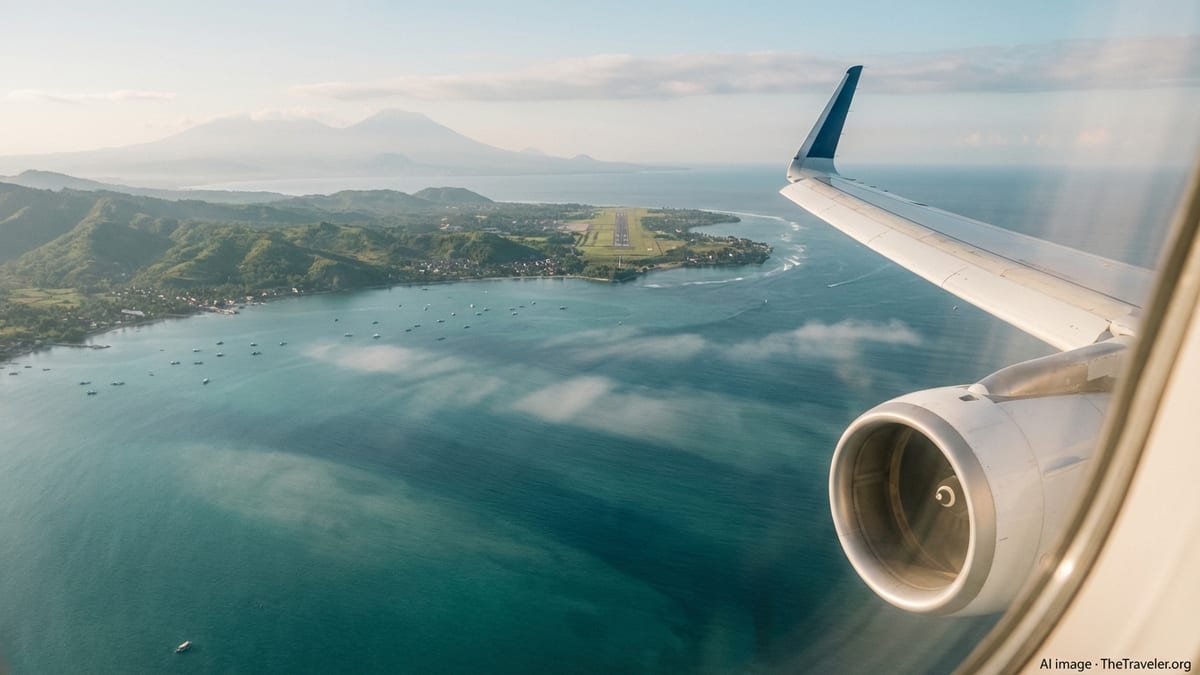
Stronger Air Links Between Bali and Lombok in 2026
Once a journey dominated by ferries and slow boat transfers, travel between Bali and Lombok is now increasingly defined by short, frequent flights. Schedules for 2026 show multiple daily services linking Denpasar’s I Gusti Ngurah Rai International Airport with Lombok’s Zainuddin Abdul Madjid International Airport, operated by a mix of full service and low cost carriers. What was once a half-day logistics challenge is turning into a sub-one-hour hop that can be easily slotted into a wider Indonesia itinerary.
While Wings Air and other regional operators continue to handle a large share of short-haul movements, Garuda Indonesia, TransNusa, AirAsia and Lion Air are expanding their networks around Lombok and Bali. Industry analysts say the combined effect is to give tourists far more flexibility on dates, departure times and fare levels, while improving onward connectivity to other parts of Indonesia and to Australia.
Airport schedule data for early 2026 indicates that the Denpasar to Lombok sector now benefits from roughly ten daily flights when all operators are included, with additional frequencies during peak travel periods. For visitors already in Bali, this means Lombok is increasingly treated as a side trip rather than a separate, logistically complex destination.
TransNusa and Lion Air Push Lombok as Bali’s Quieter Twin
TransNusa has emerged as a key player in the latest phase of Lombok’s aviation build-out. The carrier upgraded its Bali to Lombok operations in late 2025 by deploying Airbus A320 jets on the short hop across the Lombok Strait, replacing smaller commuter aircraft. The move not only improved comfort but also added capacity and a more premium feel to what is, for many visitors, their first contact with Lombok’s growing tourism scene.
In 2026, TransNusa is also drawing international attention to Lombok with the launch of direct services between Darwin and Lombok. The route, expected to operate several times per week using new-generation jets, will be Australia’s first non-stop link to the island. Tourism officials in West Nusa Tenggara see the connection as a strategic opportunity to position Lombok as a less crowded alternative to Bali for Australian holidaymakers, while still allowing easy onward hops to Denpasar.
Lion Air, meanwhile, is reinforcing Lombok’s domestic reach. New routes from Palangkaraya to Bali and Lombok, introduced in 2025 with Boeing 737 aircraft, are bedding in ahead of the 2026 high season. By tying Lombok into a wider web of secondary Indonesian cities, Lion Air is helping to channel both domestic tourists and connecting international travelers toward the island, many of whom combine it with stays in Bali or the Gili Islands.
Garuda Indonesia and AirAsia Add Competitive Depth
Garuda Indonesia’s role in the Bali and Lombok market is evolving from pioneering daily connections to acting as a premium anchor amid intensifying low cost competition. The flag carrier maintains links into Lombok via Jakarta, providing full service options that appeal to long haul passengers arriving on intercontinental flights who prefer through-checked baggage, inclusive meals and lounge access. Travel agents say these services remain important for higher-end guests bound for Lombok’s luxury resorts and villa developments.
AirAsia, part of the broader low cost ecosystem criss-crossing Indonesian skies, is not yet a dominant player on the short Bali to Lombok hop itself, but its expanding 2025 and 2026 network is reshaping how travelers reach both islands. New and planned routes from Jakarta and Bali to Australian and Asian cities provide additional one-stop combinations that can feed into Bali-based stays, with many visitors then adding a low cost sector onward to Lombok. The result is more price competition and a wider spread of origin markets for both islands.
Industry observers note that the traditional lines between low cost and full service are blurring in 2026, with promotional fares from Garuda and other full service carriers sometimes narrowing the gap with bare-bones low cost tickets once baggage and add-ons are included. For Bali and Lombok, that dynamic is expected to keep prices keen across the year while preserving a range of service levels for different types of travelers.
Island Hopping Made Easier for Bali-Based Tourists
The practical effect of these airline moves is a simpler island-hopping experience for tourists who use Bali as their main base. Instead of committing to fixed ferry schedules or overnight transfers, visitors can now plan spontaneous side trips to Lombok, often deciding only a few days in advance. With flight times of around 30 to 50 minutes, a three or four night stay on Lombok can slot neatly into a two-week Bali holiday.
Travel planners report rising demand for twin-center itineraries that combine Bali’s busy beach enclaves such as Canggu, Seminyak and Uluwatu with Lombok’s quieter southern bays and the foothills of Mount Rinjani. Short-haul flights operated by TransNusa, Lion Air and regional affiliates enable early-morning departures from Bali and midday arrivals in Lombok, giving travelers nearly a full extra day on the ground.
Improved air links also make it easier to access the Gili Islands off Lombok’s northwest coast. Many visitors now fly into Lombok, transfer by road to the pier and take a short boat crossing to Gili Trawangan, Gili Air or Gili Meno, then return via Bali. As airlines add capacity and refine schedules in 2026, operators expect more travelers to adopt this circular routing rather than backtracking on ferries.
Tourism Outlook for Bali and Lombok in 2026
With Bali once again ranked among the world’s top destinations for 2026 and Indonesia targeting higher visitor arrivals, stronger intra-island connectivity is seen as crucial to spreading tourism benefits. Officials in Lombok and West Nusa Tenggara have long argued that better air access is the missing ingredient for unlocking investment in hotels, eco-resorts and supporting infrastructure away from Bali’s crowded southern coast.
TransNusa’s jet upgrade, Lion Air’s new domestic links and the broader network effects created by Garuda Indonesia and AirAsia are being watched closely by hoteliers and developers. Early signs suggest an uptick in bookings for Lombok’s southern surf towns and emerging eco-friendly properties along the island’s eastern and southeastern shores, helped by marketing that presents Lombok as a complementary, not competing, partner to Bali.
For travelers, the message is clear. In 2026, Bali is no longer a standalone destination but a gateway to a wider archipelago experience. With more airlines flying more often between Bali and Lombok, and fresh international routes feeding into both islands, the classic beach holiday is quietly evolving into a multi-island adventure, stitched together in under an hour at 30,000 feet.