

More news on this day
Travelers from India heading to Germany, Austria, and Italy will soon have many more ways to get there, following a significant expansion of the partnership between Air India and the Lufthansa Group that deepens codeshares and paves the way for a new joint business on India–Europe routes.
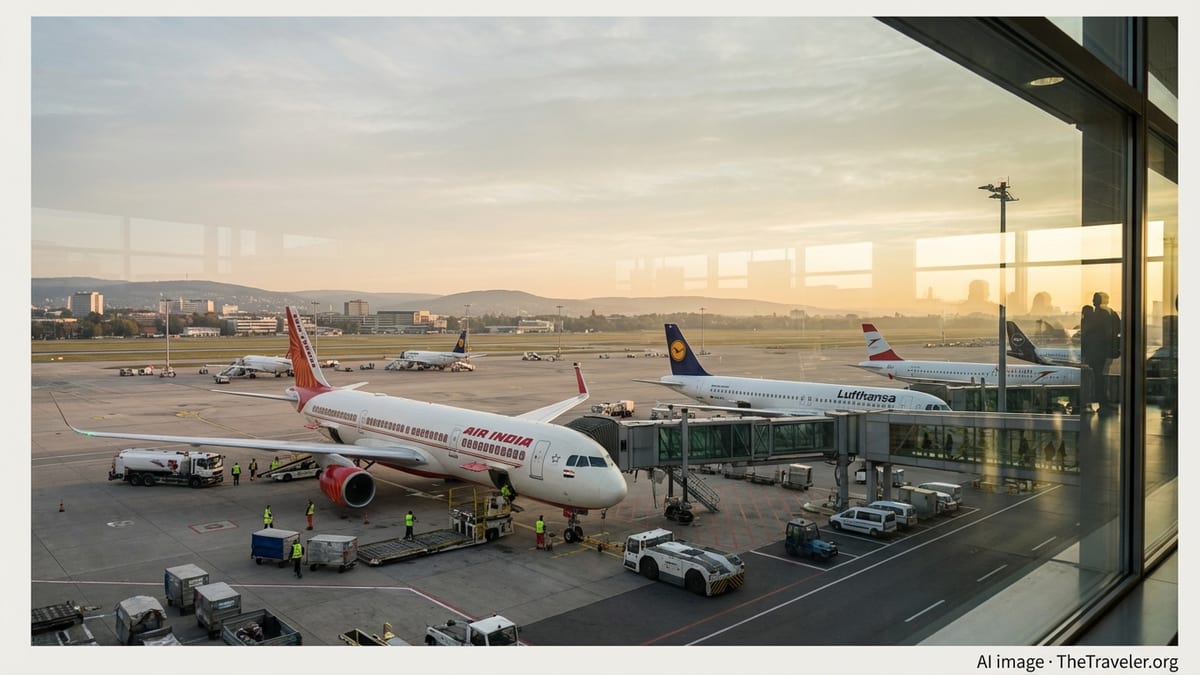
A Deeper Partnership Linking India and Central Europe
The renewed collaboration between Air India and the Lufthansa Group marks one of the most ambitious connectivity upgrades yet between India and continental Europe. Building on their Star Alliance relationship and an already extensive codeshare, the two sides have agreed to expand commercial cooperation and work toward a joint business that more tightly coordinates schedules, fares, and network planning between India and Europe.
Underpinning this shift is a February 2026 memorandum of understanding that outlines how Air India and Lufthansa Group carriers will deepen their cooperation on flights linking India with key European hubs. The move follows a major codeshare expansion announced in February 2025, which increased shared routes to nearly 100 and added dozens of new city pairs for travelers moving between the Indian subcontinent and Europe.
For passengers, the headline impact is straightforward: more flight options and better-timed connections into Central Europe, particularly Germany, Austria, and Italy, along with improved through-ticketing and baggage handling. For the airlines, the partnership represents a strategic response to sharply rising India–Europe demand, as both leisure and business travel rebound and diversify beyond traditional gateway cities.
As the relationship matures from a simple codeshare into a broader joint business framework, travelers can expect a more seamless experience across brands, with Air India and Lufthansa Group carriers planning schedules as if they were a single network on India–Europe routes while remaining independent airlines.
More Seats and Better Schedules to Germany
Germany is at the heart of the new cooperation, with Lufthansa’s Frankfurt and Munich hubs anchoring much of the expanded connectivity. The existing codeshare already allows Air India to place its AI code on a wide range of Lufthansa-operated flights from Frankfurt to major German cities such as Berlin, Hamburg, Stuttgart, Nuremberg, Bremen, Dresden, Düsseldorf, and Hannover, among others. This effectively turns Frankfurt into a one-stop gateway to Germany for travelers originating in Indian cities.
At the same time, Lufthansa Group carriers attach their designator codes to Air India’s services from Delhi and Mumbai, including trunk routes into Germany and Switzerland. On the busy Delhi–Frankfurt corridor, travelers can now find multiple daily frequencies marketed under Lufthansa flight numbers, even when the flights are operated by Air India aircraft. This arrangement spreads departures through the day, giving Indian travelers greater choice of timing and same-day onward connections within Germany.
Behind the scenes, the joint business roadmap is expected to further refine these schedules. Coordinated planning between Air India and Lufthansa could reduce long layovers and create more tightly timed banks of arrivals and departures in Frankfurt and Munich. For visitors heading to secondary German cities for trade fairs, automotive centers, universities, or family visits, that means shorter total journey times and fewer overnight waits.
The expanded cooperation also targets corporate travel. German and Indian companies with operations in automotive, engineering, pharmaceuticals, and technology sectors increasingly require frequent, predictable connectivity between metropolitan centers such as Mumbai, Bengaluru, and Chennai and German industrial cities. With harmonized timetables and aligned corporate sales efforts, the Air India–Lufthansa partnership positions itself as a compelling option for these high-yield travelers.
Vienna’s Growing Role for Accessing Austria and Central Europe
A key element of the new landscape is Air India’s codeshare with Austrian Airlines, which joined the partnership in 2025. By placing the AI code on Austrian’s flights beyond Vienna, Air India now effectively connects its India–Vienna sectors to a lattice of Central European destinations. From Vienna, passengers can travel on a single Air India ticket to cities such as Salzburg, Innsbruck, and Graz within Austria, or onward to neighboring countries.
For Indian travelers, Vienna is increasingly emerging as an alternative entry point to Europe, complementing Frankfurt and Zurich. The Austrian capital’s smaller size and efficient transfers can mean shorter security and immigration queues, which is particularly attractive for families and older travelers seeking a smoother experience. Once in Vienna, codeshared Austrian Airlines flights open up access to key business and cultural cities across the region, while keeping baggage checked through from India.
The partnership is also a boost for tourism boards in Austria that have been actively courting visitors from India. With more one-stop options via Vienna, itineraries that combine the imperial sights of Vienna with alpine stays in Tyrol or Salzburg’s lakes region become easier to plan and price. Travel agencies in India are expected to package such routes with rail passes and local tours, taking advantage of the predictable schedules and through-fare structures that joint planning allows.
As the Air India–Lufthansa collaboration deepens, Vienna is positioned not only as a gateway to Austria but also as a central node for multi-country trips that blend Austria with adjacent parts of Germany and Italy, thanks to fast rail and short regional flights that are now better integrated into the overall network.
Gateway to Italy and the Wider Mediterranean
Italy is another major beneficiary of the expanded partnership, both through Lufthansa’s strong presence and via Lufthansa Group airlines with extensive Italian networks. From Frankfurt, Munich, Vienna, and Zurich, passengers can connect under a single Air India booking to major Italian cities such as Rome and Milan, as well as to popular leisure destinations including Venice, Florence, Naples, and cities along the Adriatic and Tyrrhenian coasts.
While Air India does not currently operate its own nonstops to all these Italian points, the codeshare structure means that its customers can still travel there using partner aircraft, benefiting from aligned baggage rules and support if disruptions occur. Indian travelers making pilgrimages, attending trade shows, enrolling in Italian design and culinary schools, or simply exploring the country’s historic cities now have more schedule choices and more departure points within India.
For the Lufthansa Group, the joint business plan with Air India promises to fill seats to Italy during traditionally softer shoulder periods by tapping demand from India’s rapidly growing middle class. Integrated revenue management across the India–Europe flow and deeper coordination on marketing campaigns could make it easier to promote multi-city itineraries such as Delhi–Frankfurt–Rome and return via Milan–Munich–Mumbai, all on aligned partner carriers.
In the medium term, the expanded cooperation could also influence where new capacity is deployed. If demand patterns justify it, the airlines will be well positioned to upgauge aircraft or add frequencies on key legs feeding Italian hubs, knowing that they can jointly market these flights and leverage their shared customer base in both Europe and India.
What the Expanded Codeshare Means for Day-to-Day Travelers
Beyond the strategic announcements, the Air India–Lufthansa partnership is designed to make practical aspects of travel more straightforward. With nearly 100 codeshare routes in place across Europe, Australia, the Americas, and the Indian subcontinent, passengers booking through either airline gain access to a far larger virtual network than either carrier offers alone, particularly when it comes to reaching smaller cities in Germany, Austria, and Italy.
On a typical itinerary, an Indian traveler might fly Air India from Mumbai to Frankfurt, then board a Lufthansa-operated flight to Hamburg, both segments appearing under a single airline code. Checked baggage is tagged to the final destination, missed connections are handled under common policies, and check-in is usually available for the entire journey at the point of origin. These are not new features in global aviation, but their extension to more city pairs and additional partner carriers, including Austrian Airlines and Swiss International Air Lines, materially improves the experience for many travelers.
Frequent flyers also benefit. Because Air India and the Lufthansa Group carriers are all members of Star Alliance, travelers can earn and redeem miles across the expanded network and enjoy alliance-wide perks such as priority check-in, additional baggage allowances, and lounge access. For regular business travelers shuttling between India and Central Europe, this creates a consistent, familiar experience regardless of which specific airline operates each leg.
The new joint business framework is expected to enhance coordination on irregular operations. Weather disruptions in Europe or airspace constraints can wreak havoc on long-haul journeys; with closer cooperation, Air India and Lufthansa Group carriers can more easily rebook affected passengers across each other’s flights while maintaining through-ticket protections and minimizing disruption to complex itineraries involving multiple stops across Germany, Austria, and Italy.
India’s Expanding Global Aviation Footprint
The closer tie-up with Lufthansa Group is part of a broader pattern in which Air India is using partnerships to amplify its global reach. As it pursues a major fleet and network expansion under its new ownership, the airline has been steadily signing new codeshare and interline agreements, including pacts with carriers in regions such as the Baltics and Africa. The Lufthansa collaboration, however, stands out for its scale and for the central role Europe plays in India’s outbound travel market.
By anchoring a joint business with one of Europe’s largest aviation groups, Air India gains both market access and strategic leverage. The arrangement gives the Indian carrier an attractive platform for funneling passengers into Europe’s heartland, while reserving its own aircraft for core trunk routes and long-haul markets where it can compete more directly. In parallel, Lufthansa Group secures deeper access to India’s fast-growing aviation sector at a time when both business and leisure flows between the two regions are expanding.
For Germany, Austria, and Italy, the partnership promises a more reliable pipeline of visitors, students, and business travelers from India. Tourism boards and local airports are likely to court this traffic with joint marketing initiatives, familiarization trips for travel agents, and targeted campaigns highlighting off-season city trips, alpine getaways, and cultural circuits that tie together multiple destinations across Central Europe.
The evolution toward a joint business on India–Europe routes also signals that both partners are planning for the long term. Such arrangements typically involve multi-year commitments and require regulatory scrutiny, but they offer a framework in which airlines can jointly plan investments, aircraft deployment, and product upgrades tailored to the specific needs of India–Europe customers.
Planning a Multi‑Country Itinerary Across Germany, Austria, and Italy
For travelers, the most immediate opportunity created by the enhanced partnership is the ability to design efficient, multi-country trips across Central Europe, using a combination of Air India and Lufthansa Group services. A traveler might fly from Delhi to Frankfurt, spend several days exploring German cities, then continue by codeshared flights or rail to Vienna and onward to Italian cities like Venice or Milan, returning home from a different hub such as Munich or Zurich.
Because the network behind these itineraries is now more closely integrated, published fares often allow for open-jaw tickets and stopovers, making such multi-point journeys more accessible. Travel agents and online platforms can construct complex routings within a single booking reference, which simplifies everything from visa planning to hotel arrangements. For example, business travelers attending a conference in Berlin can easily add side trips to Vienna or northern Italy, while students heading to a semester abroad in Germany can plan short breaks in Austria or Italy using the same ticket.
The combination of strong hub airports in Frankfurt, Munich, Vienna, and Zurich with extensive regional networks means that itineraries can be tailored to individual preferences and seasonal attractions. In winter, skiers may prioritize fast access from India to alpine resorts in Austria and northern Italy, while in summer the focus might shift to city breaks, lakes, and coastal experiences. The expanded partnership ensures that, behind the scenes, airlines are aligning flight times to support these evolving patterns of demand.
As Air India and Lufthansa Group move ahead with their joint business plans, travelers from India to Germany, Austria, and Italy can expect an increasingly connected experience: more choices of routes and schedules, smoother transitions between airlines, and a broader canvas on which to paint their European journeys.