

More news on this day
Air Center Helicopters is working with Airbus Helicopters on a new generation of inlet barrier filter technology designed to shield engines from the fine dust and sand that plague tourism and charter flights across the southern United States and key African safari and coastal hubs, promising lower maintenance bills and greater aircraft availability.
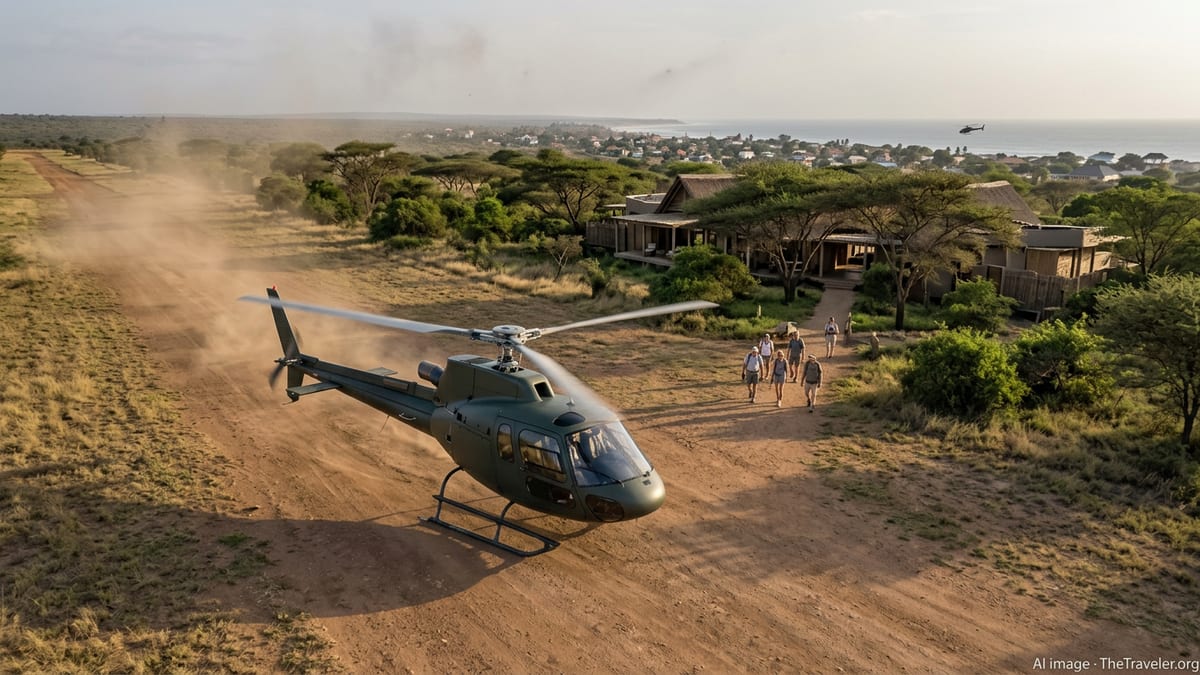
New Filtration Focus on Dust-Belt Tourism Corridors
The collaboration centers on refining inlet barrier filter, or IBF, systems for popular Airbus workhorses used in sightseeing, utility and charter roles, notably in regions where helicopters routinely operate from unprepared strips, beaches and desert fringes. Those conditions can rapidly erode turbine blades and compressors, driving up overhaul costs and grounding aircraft at the height of the tourist season.
By optimizing IBF performance on these types, Air Center Helicopters and Airbus aim to offer operators a certified, factory-backed solution tailored to repeated operations in so-called dust belts. That includes heli-tour concentrations in the US Southwest and Gulf Coast, along with safari gateways and offshore-access bases from Namibia and South Africa to Kenya and Tanzania. In each of these markets, reliability has become a competitive differentiator as operators push for higher aircraft utilization.
The enhanced IBF concept builds on filtration solutions already flying on Airbus light singles such as the H125, which are widely used for aerial work and passenger flights. The next step is to adapt those learnings to mixed tourism and utility profiles, where aircraft may combine scenic flights with load lifting, firefighting support or medevac missions in the same day.
For Air Center Helicopters, which has built a global reputation on expeditionary contracts in challenging environments, the project is an extension of existing work to harden fleets against foreign object damage and erosion. Its operational feedback from sandy, coastal and semi-arid theaters is feeding directly into the specifications for the new IBF configuration.
Engineering for Finer Dust and Lower Lifecycle Costs
Traditional engine protection systems on helicopters have often focused on preventing larger particles and obvious debris from entering the intake, while leaving operators exposed to performance losses from exceptionally fine dust. New-generation IBF designs prioritize capturing those smaller particles without imposing an unacceptable drag penalty on the engine, a balance that is central to the Airbus and Air Center effort.
The partners are concentrating on media geometry, pressure-drop characteristics and bypass-door logic to keep engine margins robust in hot-and-high conditions while still delivering significant erosion relief. Improved filtration is expected to slow compressor fouling and reduce hot-section damage, directly extending time-on-wing and deferring costly shop visits that can hit operators hardest during peak travel months.
Airbus has been progressively integrating IBF options into its catalog for light and medium helicopters, reflecting a wider industry shift toward proactive engine protection in harsh environments. The work with Air Center Helicopters is positioned as a practical, field-driven evolution of that strategy, with particular focus on aircraft flying frequent short sectors with multiple landings in dusty conditions.
Indirect savings are also part of the equation. Operators in dust-prone tourism markets report that unplanned engine removals can trigger charter cancellations and knock-on schedule disruptions far beyond the cost of parts and labor. A more capable IBF system that stabilizes engine health profiles could help tour companies and charter providers maintain more predictable capacity throughout the year.
Implications for US Southwest and Gulf Tourism Flights
In the United States, the target beneficiaries range from Grand Canyon and desert-scenic operators to beach and oil-support charter providers along the Gulf of Mexico. Many of these businesses run lean fleets of Airbus singles and twins, where the loss of just one aircraft for unscheduled engine work can significantly cut daily seat capacity.
An optimized IBF package, tailored to these operations, is expected to reduce ingestion of desert dust, salt-laden spray and fine beach sand that can combine to accelerate corrosion and erosion in turbine engines. By maintaining cleaner compressor sections over hundreds of flight hours, operators may be able to stretch inspection intervals within approved limits and avoid the abrupt performance degradation that precedes major maintenance events.
The tourism profile also places particular emphasis on passenger comfort and predictability. Helicopters flying repetitive sightseeing routes must be available on tightly timed rotations to meet daily booking peaks. When engines remain healthier for longer, operators can spend less time shuffling schedules around maintenance slots and more time selling premium window seats on clear-weather days.
Because many US tour and charter providers also support firefighting, medical and utility missions, improvements in engine durability offer resilience benefits well beyond the visitor economy. A fleet that spends less time in engine shops is better positioned to respond quickly during wildfire seasons and disaster-relief deployments, roles that increasingly intersect with tourism in gateway communities.
Boost for African Safari and Coastal Helicopter Markets
Across Africa, where infrastructure constraints and long distances make helicopters vital to tourism connectivity, the potential value of a more capable IBF is equally pronounced. Aircraft serving high-end safari lodges, remote island resorts and coastal excursion markets often operate from dusty bush strips and salt-sprayed helipads, combining harsh intake environments with high ambient temperatures.
Engine erosion and compressor fouling are persistent concerns for operators flying deep into wildlife reserves or along remote coastlines, where maintenance support is limited and spare engines can be days away. A refined IBF tailored to these conditions could help keep aircraft on wing during critical migration or holiday periods, when cancellations are particularly damaging to local economies and brand reputations.
Airbus has steadily expanded its footprint on the continent, with types such as the H125 and newer H160 taking on roles from corporate shuttle to offshore transport. Integrating advanced intake protection into those fleets fits with a broader push to offer support packages that account for African operating realities, including pervasive dust, seasonal harmattan winds and rudimentary refueling sites.
For tourism boards and lodge owners, more reliable helicopter access translates into smoother guest transfers and greater confidence in marketing itineraries that rely on rotary-wing links. Fewer weather and maintenance-related disruptions also support conservation-focused tourism models that depend on precise timing for wildlife viewing and community visits.
Next Steps Toward Certification and Fleet Uptake
The new IBF configuration being developed by Air Center Helicopters and Airbus is moving through design refinement and test planning, with the goal of securing the necessary regulatory approvals for selected helicopter types used heavily in tourism and utility roles. Flight testing in representative dust environments is expected to validate filtration efficiency, engine performance margins and cockpit indications for crews.
Once certified, the system is anticipated to be offered both as a line-fit option on new aircraft and as a retrofit kit for helicopters already in service. Retrofit potential is particularly important in Africa and the US Southwest, where many operators fly mature fleets and need incremental upgrades rather than full fleet renewals to stay competitive.
Industry observers say the initiative reflects a broader trend in rotorcraft operations, where engine protection and predictive maintenance are becoming central to business models built around high aircraft utilization. By aligning IBF design more closely with the realities of dust-prone tourism flying, Air Center Helicopters and Airbus are positioning filtration technology as a frontline tool in controlling operating costs.
If the performance targets are met, the partnership could serve as a template for further collaborations between OEMs and specialized operators focused on extreme environments, from high-altitude mountain tourism to polar logistics. For now, operators in dusty US and African tourism hubs are watching closely, hopeful that improved filtration will keep their helicopters flying longer, cleaner and more profitably.