

More news on this day
A cluster of fast-rising cities from East Asia to the Middle East is stepping into the global aviation spotlight, as new and emerging routes link Hangzhou, Riyadh, Nha Trang, Pontianak and Western Sydney in ways that could significantly alter how travelers move around the world.
Get the latest news straight to your inbox!
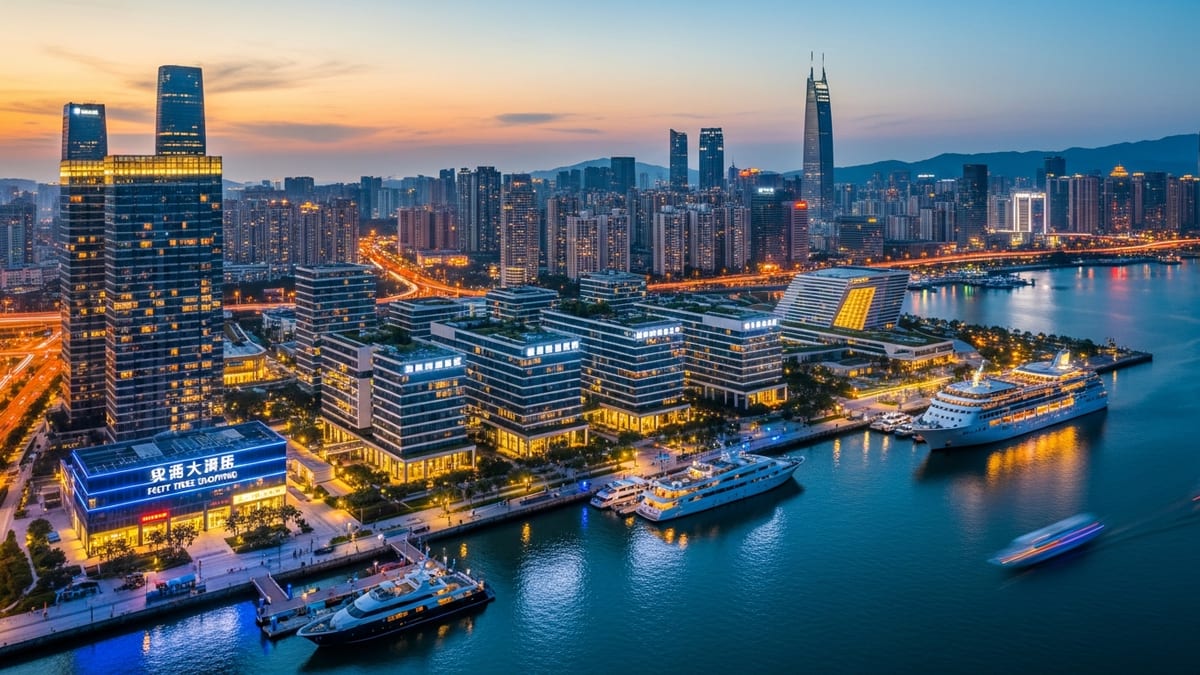
Western Sydney Positions Itself as a New Global Gateway
Western Sydney International Airport is moving rapidly from construction site to operational hub, with passenger services scheduled to begin in late 2026. The airport has been billed as a second international gateway for Australia’s largest city, designed to relieve pressure on Sydney Kingsford Smith and to draw long-haul services closer to the fast-growing suburbs of Greater Western Sydney.
Singapore Airlines has already committed to daily non-stop flights between Singapore Changi and Western Sydney International from November 23, 2026, subject to regulatory approvals. Publicly available information from the airline indicates that these flights are intended to complement existing services into Sydney’s primary airport, creating a dual-airport strategy that mirrors arrangements in cities such as London and Tokyo. The move signals confidence that Western Sydney can sustain premium long-haul demand from day one.
Infrastructure around the new airport is also taking shape. A dedicated metro line is under construction to connect Western Sydney International with the wider Sydney rail network, and new motorway links and bus routes are being rolled out to bring the terminal within easier reach of regional centers such as Penrith, Liverpool and Campbelltown. Planning documents for the precinct describe an “aerotropolis” concept, positioning the airport as the anchor for logistics, advanced manufacturing and visitor economy projects stretching across the western suburbs.
Industry analysts note that Western Sydney’s lower operating costs and 24-hour operations are likely to appeal to both full-service and low-cost carriers. As additional airlines finalize their plans for inaugural services, expectations are growing that Western Sydney will attract routes from Southeast Asia, the Pacific and potentially the Middle East, providing new one-stop options between secondary cities in Asia and regional Australia.
Hangzhou and Riyadh: Emerging Nodes on the China–Middle East Corridor
Hangzhou, capital of China’s Zhejiang province and home to a major technology and manufacturing base, is steadily expanding its long-haul reach. While direct services linking Hangzhou Xiaoshan International Airport to Riyadh remain in development, publicly available route maps show a growing web of one-stop connections that pair Hangzhou with the Saudi capital via hubs in Doha, Guangzhou and other regional centers. This is part of a broader trend in which Chinese coastal cities are deepening air links with the Gulf.
Riyadh itself is undergoing a rapid aviation transformation. Saudi Arabia’s current expansion plans for King Khalid International Airport and the proposed Riyadh Air hub are intended to position the city as a powerful connector between Asia, Europe and Africa. New and recently announced services from Chinese cities such as Shenzhen and Guangzhou to Riyadh highlight rising demand for business, tourism and investment flows between China and the kingdom.
For travelers in eastern China, enhanced connectivity through Hangzhou to the Middle East offers a new alternative to long-established gateways such as Beijing and Shanghai. One-stop itineraries via regional hubs are already shortening total travel times to destinations in the Gulf and onward to Africa and Europe. Travel industry observers suggest that if direct Hangzhou–Riyadh flights are introduced, they could quickly become a preferred option for technology and manufacturing executives shuttling between the Yangtze River Delta and Saudi Arabia’s mega-projects.
On the Saudi side, stronger links to cities like Hangzhou support the country’s strategy to diversify inbound tourism and attract visitors who combine business trips with leisure stays at new coastal resorts and cultural destinations. The result is a two-way corridor that could see Hangzhou and Riyadh elevated from secondary stops on long-haul itineraries to primary anchors in their own right.
Nha Trang’s New International Links Extend Vietnam’s Tourism Reach
On Vietnam’s south-central coast, Nha Trang is emerging as one of the country’s most dynamic beach destinations, backed by a rapidly expanding route network at nearby Cam Ranh International Airport. In 2025, Vietnam Airlines launched a new direct service between Nha Trang and Busan in South Korea, operating daily flights using narrow-body aircraft. Company planning documents describe the route as part of a broader push to resume or inaugurate up to 15 international services.
The Nha Trang–Busan connection taps directly into South Korea’s strong appetite for beach holidays in Vietnam, while also giving Vietnamese travelers a new non-stop option to one of Korea’s largest cities. Tour operators report that combined flight-and-stay packages built around the route are already helping to smooth seasonality, filling hotel rooms outside traditional peak travel months.
As Nha Trang consolidates its position with links to Busan and other North Asian cities, the destination is increasingly integrated into longer multi-stop itineraries across Asia and the Pacific. Travelers can now combine a coastal stay with onward journeys through hubs such as Seoul, Tokyo and Sydney, creating new patterns of movement that bypass older, more congested gateways.
Local tourism authorities and airport planners have indicated in public documents that additional route development is a priority, with an eye on more direct services to Northeast Asia and potentially the Middle East. If realized, these connections would position Nha Trang as both a stand-alone holiday hotspot and a viable link in broader transcontinental journeys.
Pontianak Connects Borneo to the Global Travel Grid
Pontianak, capital of Indonesia’s West Kalimantan province on the island of Borneo, is preparing for a step-change in connectivity. Supadio International Airport has traditionally focused on domestic services within Indonesia and short cross-border links, but recent carrier announcements and schedule filings point to growing interest in new regional routes that would tighten Pontianak’s links to Southeast Asian hubs.
Additional services to cities such as Kuala Lumpur, Singapore and Jakarta would effectively plug Pontianak into the global long-haul network by providing more frequent and better-timed one-stop options to Europe, the Middle East and North Asia. Aviation analysts note that even modest increases in capacity at secondary airports like Pontianak can have an outsized impact on local economies, improving access for business travelers, students and visiting friends and relatives.
There is also increasing attention on Borneo’s potential as a destination for eco- and adventure tourism. Improved air access to Pontianak, alongside other gateways on the island, would make it easier for international visitors to reach rainforests, river systems and cultural sites that have historically been difficult to access. Travel trade publications suggest that tour operators are watching route developments closely and are ready to scale up product offerings once more robust air links are in place.
For residents, the benefits are practical as well as aspirational. Expanded connectivity means shorter travel times to medical services, education hubs and labor markets across the region. By shifting Pontianak from a relatively isolated point on the map to a better-integrated node in the regional network, new routes promise to reshape mobility patterns across West Kalimantan.
A New Web of One-Stop Journeys Across the Asia–Pacific
Viewed together, developments in Western Sydney, Hangzhou, Riyadh, Nha Trang and Pontianak illustrate how global air travel is being rewired away from a small set of dominant megahubs. Instead, a growing number of mid-sized cities are cultivating their own connectivity, supported by new infrastructure, targeted route incentives and shifting demand from travelers who value convenience and time savings as much as marquee airport brands.
The emergence of Western Sydney as a second long-haul gateway, the strengthening ties between eastern China and the Gulf, the rapid internationalization of Nha Trang’s beach market and Pontianak’s bid to become a more accessible gateway to Borneo all point in the same direction. Travelers will increasingly be able to start and end journeys closer to where they actually live, while still tapping into an expansive lattice of one-stop options across continents.
For airlines, these changes open opportunities to deploy smaller, fuel-efficient aircraft on long, thin routes that would have been uneconomical in the past. For destinations and local economies, the payoff comes in the form of more diversified visitor flows, new investment prospects and a gradual rebalancing of tourism away from saturated city centers and toward rising regions. As these routes launch and mature over the next several years, they are set to play a central role in reshaping how the world flies.