

More news on this day
Azerbaijan Airlines’ new Baku–Shymkent service, starting June 28, 2025, is poised to do more than connect two cities: it quietly creates a new, convenient gateway for international travellers to reach some of Central Asia’s least-discovered cultural landscapes.
A Strategic New Link Between the Caspian and the Steppe
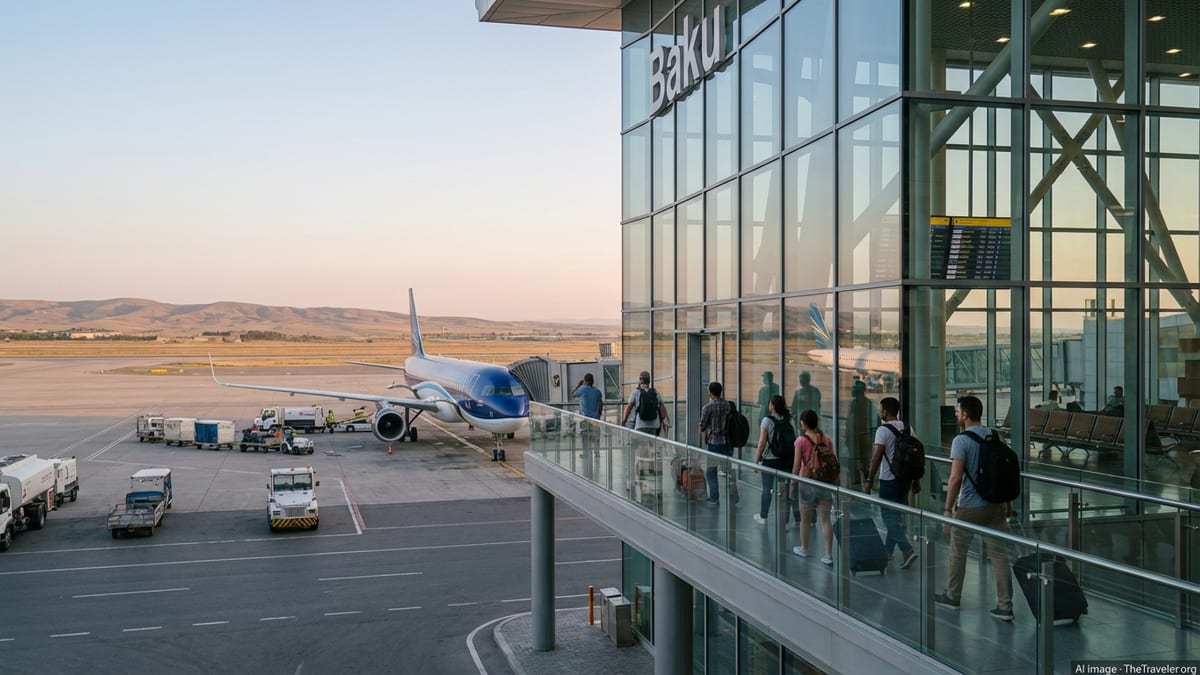
The launch of regular Baku–Shymkent flights by Azerbaijan Airlines, commonly known as AZAL, marks the latest step in a fast‑evolving aviation map across the Caspian region. From June 28, 2025, the national carrier will operate three weekly flights between the Azerbaijani capital and southern Kazakhstan’s largest city, slotting neatly into its expanding Central Asian network.
Departures from Baku are scheduled on Mondays, Wednesdays and Saturdays, with return services from Shymkent on Tuesdays, Thursdays and Sundays. Operated by narrow‑body aircraft suitable for regional routes, the flights are designed to offer seamless connections through Baku’s Heydar Aliyev International Airport, a growing hub for traffic between Europe, the Middle East and Asia.
The route is significant not only because it is the first direct link between the two cities, but also because it gives international travellers an additional entry point into Kazakhstan beyond the better‑known gateways of Almaty and Astana. For visitors arriving from Western Europe, the Gulf or the Caucasus, a single, timed connection in Baku could now place Shymkent and surrounding regions within easy reach.
For Azerbaijan, the move underscores a broader strategy of positioning Baku as a regional connector. The city already offers direct flights to Almaty, Astana, Aktau and Atyrau, as well as to key Uzbek destinations such as Tashkent and Samarkand. Adding Shymkent strengthens Baku’s role as a practical springboard into Central Asia for both tourists and business travellers.
Shymkent: Kazakhstan’s Big City That Still Flies Under the Radar
Unlike the glass‑and‑steel skylines of Astana or the mountain‑backed boulevards of Almaty, Shymkent has long flown under the international tourism radar. Yet it is Kazakhstan’s third‑largest city, and one of the country’s most engaging urban centres for travellers who prefer markets to megamalls and leafy parks to high‑rise districts.
Shymkent’s character is shaped by centuries as a Silk Road trading town. While the city itself is largely modern, visitors quickly encounter a lively street life that blends Turkic, Persian and Soviet influences. Teahouses, family‑run restaurants and small bazaars dominate many neighbourhoods, and hospitality tends to be personal and unhurried.
The new direct link from Baku is expected to make short breaks and two‑centre itineraries far more feasible. Travellers can now spend a few days exploring the historic alleys and waterfront of Baku, then continue on to Shymkent to experience a different side of the Turkic world in a single trip. For regional visitors from the Caucasus or the Black Sea coast, Shymkent becomes an attractive long‑weekend option rather than a complex multi‑stop journey.
Local tourism authorities and hoteliers in Shymkent are preparing for a gradual rise in foreign arrivals as air connectivity improves. While the city’s existing visitor base is dominated by domestic and regional travellers, the new route could draw more independent tourists, food‑focused travellers and overland enthusiasts looking for a softer landing into Central Asia.
Gateway to Silk Road Icons: Turkistan, Sayram and the South Kazakhstan Heartland
For many travellers, Shymkent’s greatest appeal lies beyond the city limits. The new flights effectively shorten the distance to some of Kazakhstan’s most important Silk Road and spiritual sites, many of which remain far less crowded than counterparts in Samarkand or Bukhara.
Chief among these is Turkistan, around three hours by road or rail from Shymkent. The city is home to the mausoleum of Khoja Ahmed Yasawi, a masterpiece of Timurid architecture and a UNESCO World Heritage site. The complex, with its azur‑tiled facades and imposing brickwork, is a major pilgrimage destination in the Turkic world, yet it remains surprisingly tranquil on weekdays compared with more famous monuments further west.
Closer still is Sayram, often described as one of the oldest continuously inhabited settlements in Kazakhstan. Here, visitors find modest shrines, old cemeteries and fragments of mud‑brick architecture that speak quietly of centuries of trade and spiritual scholarship. For those drawn to the layered history of the Silk Road, these destinations offer a rare chance to explore without crowds, tour buses or heavy commercialization.
By linking Baku directly to Shymkent, AZAL effectively plugs these sites into the wider international aviation grid. A traveller could now fly from a European capital to Baku and be standing in front of the Yasawi mausoleum within a day, using a single intermediate hub. For tour operators, that makes it far easier to package southern Kazakhstan into regional Caucasus–Central Asia itineraries.
Nature at the Doorstep: Canyons, Peaks and National Parks
The regions around Shymkent are as compelling for nature lovers as they are for history enthusiasts. Within a few hours’ drive of the city lie mountain valleys, high pastures and deep canyons that have, until now, been more popular with hikers from Almaty than with international visitors.
Among the highlights is Aksu‑Zhabagly Nature Reserve, one of Central Asia’s oldest protected areas. Nestled in the western Tien Shan range, it is known for alpine meadows, dramatic peaks and a remarkable diversity of flora and fauna. Spring brings carpets of wild tulips, while summer and early autumn are ideal for trekking, birdwatching and horse‑riding on traditional trails.
Further afield, Sairam‑Ugam National Park offers rugged canyons, turquoise rivers and villages where traditional pastoral life continues largely unchanged. These landscapes have long been appreciated by domestic visitors, but limited international air access has kept them off most global travel radars. The new Baku–Shymkent flights begin to change that equation.
Adventure travel specialists in both Azerbaijan and Kazakhstan are already examining how to weave these natural attractions into cross‑border itineraries, pairing Caspian Sea panoramas and Caucasus foothills in Azerbaijan with Tien Shan hikes and canyon routes in southern Kazakhstan. With direct air connectivity, such trips become logistically simpler, reducing long overnight train journeys or multiple domestic flights.
Baku’s Growing Role as a Central Asian Hub
The new service also reflects a broader aviation trend: Baku’s airport is steadily positioning itself as a convenient transfer point for journeys into Central Asia and beyond. Over the past few years, AZAL and partner airlines have introduced or expanded routes to key cities including Tashkent, Samarkand, Almaty, Astana and Atyrau, alongside existing networks into the Middle East, South Asia and major European hubs.
For travellers, this means that itineraries once routed awkwardly through distant hubs can now be reconfigured through a compact, modern airport on the Caspian Sea. A passenger from the Gulf, for example, could connect in Baku to reach Shymkent rather than backtracking through multiple time zones. Visitors from parts of Eastern Europe or the Caucasus can access Central Asia with just one short connection.
From the perspective of Azerbaijan and Kazakhstan, the route strengthens economic and cultural ties. Both governments have prioritised closer cooperation across sectors such as energy, logistics, tourism and education. By making it easier for entrepreneurs, students and tourists to move between the countries, the Baku–Shymkent link complements overland freight corridors and emerging trans‑Caspian transport initiatives.
The service also plugs into a wider story of Central Asian skies opening up. Kazakhstan is investing heavily in airport infrastructure at Shymkent and other regional centres, adding new terminals and runways to support a dense matrix of domestic and international flights. As these facilities come online, they make routes like Baku–Shymkent more commercially viable and more attractive to passengers.
Who Stands to Benefit Most From the New Route
While the immediate beneficiaries of the Baku–Shymkent connection will be residents of both cities, the impact is likely to ripple far wider. For one, the route offers an appealing option to travellers already familiar with Almaty, Astana or Tashkent who are seeking a fresh angle on Central Asia.
Cultural travellers and history enthusiasts can now more easily reach Turkistan and Sayram, while outdoor travellers gain simpler access to the western Tien Shan. Food‑minded visitors, meanwhile, will find Shymkent a rewarding base for exploring hearty southern Kazakh cuisine and cross‑border culinary influences from nearby Uzbekistan.
For business travellers, the service shortens journeys between key energy and logistics centres in the Caspian basin. Baku and southern Kazakhstan share interests in hydrocarbons, transport corridors and agricultural trade. Direct air links reduce travel time for meetings, site visits and conferences, supporting closer cross‑border collaboration.
The route also has potential benefits for diaspora communities and families split between Azerbaijan, Kazakhstan and neighbouring states. Easier air travel often translates into more frequent visits, reinforcing the social and cultural ties that underpin formal diplomatic and economic cooperation.
How Travellers Can Use Baku as a Springboard
For international passengers, the most practical outcome of the new flight is this: planning multi‑stop journeys that combine the Caucasus and Central Asia becomes far simpler. Rather than stitching together a patchwork of regional airlines and overnight trains, travellers can now build trips around a core set of reliable connections through Baku.
A typical itinerary might begin with several days in the Azerbaijani capital, exploring its UNESCO‑listed Old City, seafront promenade and nearby mud volcanoes or fire‑worship sites. From there, a short flight east delivers visitors directly into Shymkent, where they can spend time in local markets, sample plov and shish kebabs, and arrange side trips to Turkistan or the Tien Shan foothills.
Travellers with more time can extend onward to Almaty or Astana by domestic flight or rail, or loop back through other Caspian cities such as Aktau or Atyrau before returning to Baku and onward home. Because AZAL and partner airlines are steadily diversifying their networks, these kinds of multi‑country journeys are likely to become more flexible over time.
For now, the key point is that the barrier to entry for Central Asia’s lesser‑known destinations is dropping. With the Baku–Shymkent route in place, travellers who might once have hesitated at the perceived complexity of visiting southern Kazakhstan can instead approach it as an easy second step after a city break on the Caspian.
A Quiet Shift That Could Redraw Regional Travel Maps
A single new route rarely grabs global headlines, but the Baku–Shymkent launch is quietly emblematic of how air networks are reshaping travel possibilities across Eurasia. By linking a dynamic Caspian capital with a historically rich yet under‑visited corner of Kazakhstan, the service adds another strand to a web of connections that is steadily making Central Asia more accessible.
For now, Shymkent and its surrounding heartlands remain among the region’s best‑kept secrets: places where ancient mausoleums rarely see queues, national parks still feel wild and markets are geared more to locals than to tour groups. With convenient flights now in place, that may begin to change, but not overnight.
What is clear is that Baku’s role as a bridge between continents is only set to grow. As airlines experiment with new point‑to‑point links and governments invest in airport infrastructure, travellers willing to look beyond the obvious capitals will find it increasingly easy to thread together their own routes through the Caucasus and Central Asia.
For those ready to explore, the new Baku–Shymkent flight offers a straightforward invitation: use the Caspian hub as a launchpad, and let southern Kazakhstan’s cities, steppe landscapes and mountain valleys reveal themselves at a slower, more rewarding pace.